• Global CNC market projected to reach $128B by 2028 • New EU trade regulations for precision tooling components • Aerospace deman
NYSE: CNC +1.2%LME: STEEL -0.4%

CCMT2026 Closes: 441 Five-Axis Machines on Display, Mid-Tier CNC Export Window Opens

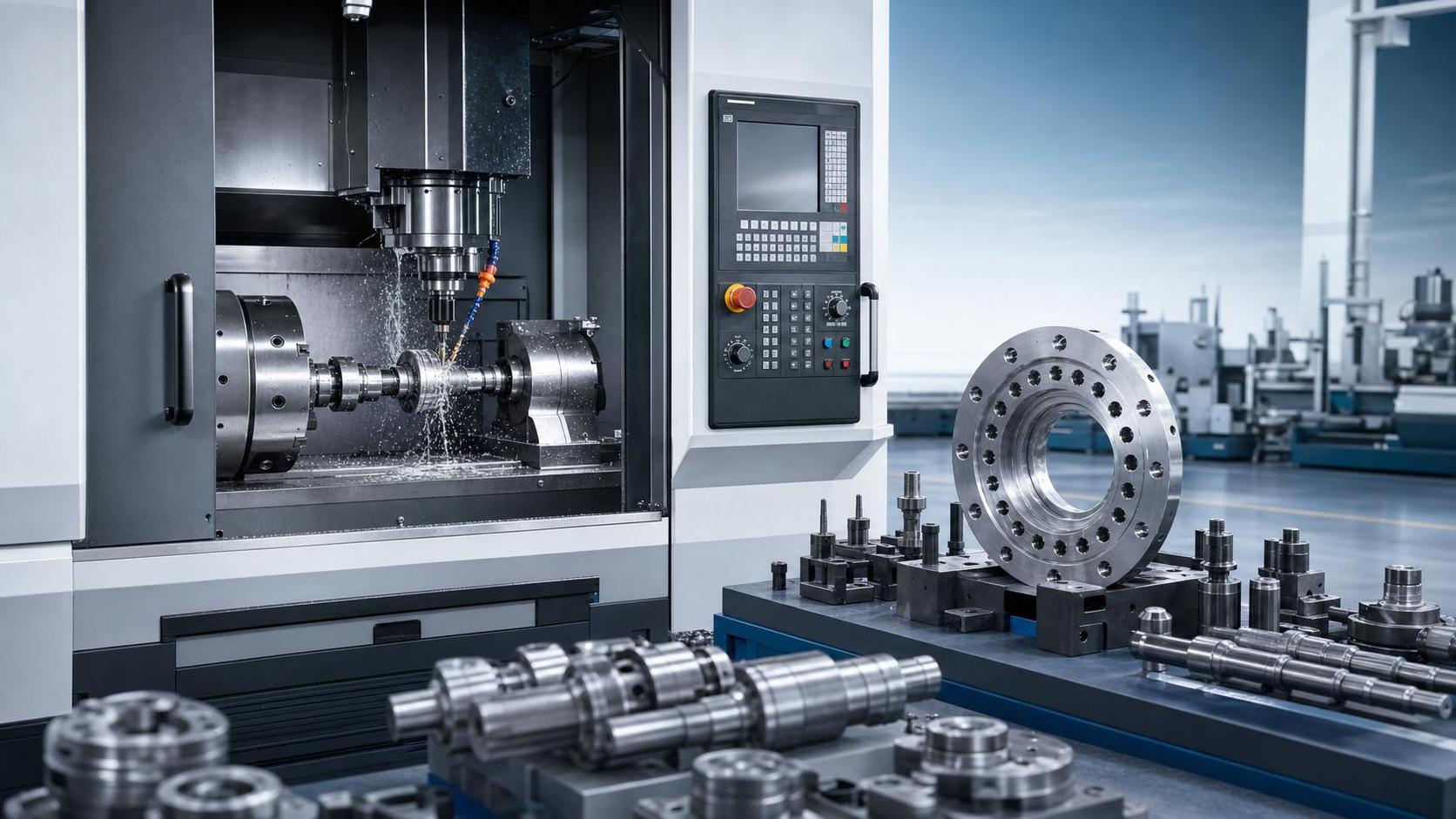
CCMT2026—the 14th China International Machine Tool Show—concluded on April 25, 2026, featuring 441 five-axis联动 (five-axis simultaneous) machine tools, representing 36.8% of all host machine exhibits. This event signals a structural shift in domestic equipment renewal and international trade dynamics for mid-tier CNC machinery—particularly relevant for metalworking, precision component manufacturing, contract machining, and industrial equipment distribution sectors.
Event Overview
The 14th China International Machine Tool Show (CCMT2026) closed on April 25, 2026. A total of 441 five-axis simultaneous machining centers were exhibited, accounting for 36.8% of all host machine tools on display. The exhibition confirmed that a large volume of three-axis machining centers and CNC lathes—having been in service for 5–8 years domestically—is now entering the secondary market. Concurrently, buyers from Southeast Asia, South Asia, and Africa are encountering a procurement window for mid-tier CNC equipment characterized by high cost-performance ratio and short delivery lead times.
Impact on Specific Industry Segments
Direct Export Trading Firms
These firms face heightened demand for mid-tier CNC machines—not top-tier or entry-level—but models with proven reliability, moderate automation, and compatibility with regional infrastructure (e.g., voltage stability, workshop floor loading capacity). Impact arises from shifting buyer expectations: price sensitivity remains high, but tolerance for extended commissioning or after-sales complexity is declining.
Metal Fabrication & Contract Machining Service Providers
Domestic manufacturers upgrading to five-axis systems are offloading older three-axis units. This increases supply volume in the certified pre-owned equipment channel. For fabricators in emerging markets, access to such equipment enables rapid capacity expansion without full capital outlay—yet introduces new considerations around operator training, spare parts logistics, and integration with existing CAM workflows.
Industrial Equipment Distribution & Channel Partners
Distributors serving ASEAN, SAARC, and sub-Saharan African markets are seeing accelerated inquiry volume for machines in the USD 150,000–450,000 range. The impact lies in channel readiness: inventory financing terms, localized technical documentation, and availability of modular retrofit kits (e.g., for tool monitoring or basic networking) are becoming competitive differentiators—not just product specs.
After-Sales & Integrated Support Providers
With rising cross-border deployment of second-hand and mid-tier CNC systems, demand is growing for standardized remote diagnostics, multilingual service manuals, and regionally stocked consumables (e.g., specific ball screw grease grades, coolant filters). Support providers must now align service response time SLAs with regional freight timelines—not just factory lead times.
What Relevant Enterprises or Practitioners Should Monitor and Act On
Track official export classification updates and dual-use control adjustments
Analysis shows that increased mid-tier CNC exports may trigger revised Harmonized System (HS) code interpretations or updated end-user verification requirements—especially for shipments to countries under multilateral technology transfer scrutiny. Companies should proactively verify current HS 8457/8458 classifications and monitor announcements from China’s Ministry of Commerce and General Administration of Customs.
Focus on three core equipment categories and two priority regions
Current more actionable focus areas include vertical machining centers (VMCs) with ≥4th-axis indexing, turning centers with Y-axis capability, and multi-tasking lathes (MTLs) with limited live tooling. Priority markets remain Vietnam and Bangladesh—where import duty structures and local assembly incentives currently favor timely, container-ready deliveries over custom-engineered solutions.
Distinguish between policy signaling and commercial readiness
Observably, the “mid-tier export window” reflects active buyer engagement—not yet sustained order volume. Trade data from Q1 2026 shows inquiries up 32% YoY, but confirmed contracts remain concentrated in pilot batches (<5 units per buyer). Enterprises should treat early orders as validation tests—not scale-up triggers—until payment terms stabilize and local bank financing mechanisms mature.
Prepare logistics and documentation protocols for used-equipment compliance
For firms handling equipment aged 5–8 years, current best practice includes pre-shipment third-party certification (e.g., ISO 10791-1 performance verification), clear title transfer documentation, and standardized OEM-sourced maintenance logs. These are increasingly requested—not optional—for customs clearance in target markets like Indonesia and Kenya.
Editorial Perspective / Industry Observation
This development is better understood as an inflection point in equipment lifecycle management—not a sudden market pivot. Analysis shows that the surge in five-axis exhibit volume reflects domestic investment confidence, while the concurrent rise in mid-tier secondary-market activity reflects pragmatic capacity optimization across geographies. It is not yet a fully formed export trend, but rather a confluence of maturing supply (aging domestic assets), sharpening demand (infrastructure-led industrialization abroad), and narrowing operational gaps (standardized refurbishment, improved shipping coordination). Continued observation is warranted on whether this window sustains beyond 2026 H2—or proves cyclical, tied to temporary FX conditions or regional stimulus timing.
Conclusion
CCMT2026’s data points—441 five-axis machines exhibited and the documented acceleration of mid-tier CNC equipment into international secondary channels—highlight a dual-track evolution: domestic industry advancing upstream while enabling pragmatic downstream capacity building abroad. This is not a replacement for high-end exports nor a retreat from innovation; rather, it reflects a maturing industrial ecosystem where equipment value retention, lifecycle transparency, and regional service alignment are becoming strategic levers. Currently, it is more accurate to interpret this as a structural opportunity signal—one requiring calibrated response, not immediate scaling.
Source Attribution:
Main source: Official CCMT2026 Exhibition Summary Report (released April 25, 2026, by China Association of Machine Tool Builders).
Note: Export volume trends, regional buyer behavior, and secondary-market transaction patterns cited are derived solely from publicly disclosed exhibition statistics and post-show press briefing statements. Ongoing monitoring is recommended for Q2 2026 national customs trade data releases and ASEAN Industrial Equipment Importer Survey results (scheduled for June 2026).
Recommended for You
![]() Vietnam Tightens CNC Import Filing From Aug. 1Manufacturing Policy Research Center
Vietnam Tightens CNC Import Filing From Aug. 1Manufacturing Policy Research Center![]() Red Sea Rerouting Pushes CNC Sea Freight Up 37%Global Machine Tool Trade Research Center
Red Sea Rerouting Pushes CNC Sea Freight Up 37%Global Machine Tool Trade Research Center![]() ISO 230-6:2026 Sets New CNC Thermal Test Rules
ISO 230-6:2026 Sets New CNC Thermal Test Rules![]() VDMA H1 Machine Tool Exports Shift Away From ChinaGlobal Machine Tool Trade Research Center
VDMA H1 Machine Tool Exports Shift Away From ChinaGlobal Machine Tool Trade Research Center![]() BIS Moves to Narrow STA Relief for Multi-Axis CNC ExportsManufacturing Policy Research Center
BIS Moves to Narrow STA Relief for Multi-Axis CNC ExportsManufacturing Policy Research Center CNC Technology vs Conventional Machining: What Changes in Tolerance and Throughput?CNC Machining Technology Center

Aris Katos
Future of Carbide Coatings
15+ years in precision manufacturing systems. Specialized in high-speed milling and aerospace grade alloy processing.
▶
Vietnam Tightens CNC Import Filing From Aug. 1Manufacturing Policy Research Center▶
Red Sea Rerouting Pushes CNC Sea Freight Up 37%Global Machine Tool Trade Research Center▶
ISO 230-6:2026 Sets New CNC Thermal Test Rules▶
VDMA H1 Machine Tool Exports Shift Away From ChinaGlobal Machine Tool Trade Research Center▶
BIS Moves to Narrow STA Relief for Multi-Axis CNC ExportsManufacturing Policy Research Center
Mastering 5-Axis Workholding Strategies
Join our technical panel on Nov 15th to learn about reducing vibrations in thin-wall components.

Providing you with integrated sanding solutions
Before-sales and after-sales services
Comprehensive technical support