• Global CNC market projected to reach $128B by 2028 • New EU trade regulations for precision tooling components • Aerospace deman
NYSE: CNC +1.2%LME: STEEL -0.4%

eVTOL Mass Production Drives CNC Export Growth

Low-altitude economy has entered its规模化元年 (scale-up year) in 2026, with China’s eVTOL industry advancing into an intensive airworthiness certification phase. As of April 2026, total assembly bases in Wuhan, Chengdu, and Zhuhai have commenced mass production, each achieving annual output exceeding 100 units. This development is directly stimulating demand for high-precision CNC machining equipment—particularly five-axis联动 centers—among export-oriented manufacturers serving eVTOL supply chains in the Middle East and Southeast Asia. Trade enterprises, precision component suppliers, and international equipment distributors should monitor this shift closely.
Event Overview
On April 21, 2026, a deep-dive analysis indicated that China’s eVTOL industry entered an airworthiness certification surge phase. Total assembly bases in Wuhan, Chengdu, and Zhuhai began large-scale operations, with individual facilities reaching annual production capacity of over 100 units. These facilities require ultra-precision CNC machining for titanium alloy airframe frames and beams, composite rotor hubs, and flight control system housings. Multiple domestic five-axis machining center manufacturers confirmed a 67% year-on-year increase in Q1 2026 export orders from eVTOL-related clients, primarily destined for low-altitude infrastructure partners in the Middle East and Southeast Asia.
Industries Affected by This Development
Direct Export Trading Enterprises
These firms are directly handling cross-border sales of high-end CNC equipment. The 67% YoY export order growth reflects rising demand from overseas eVTOL integrators and infrastructure developers—not general industrial buyers. Impact manifests as increased order volume, tighter delivery windows, and heightened technical specification alignment requirements (e.g., ISO 10791-6 compliance for dynamic accuracy).
Precision Machining Component Suppliers
Suppliers producing structural parts for eVTOL airframes or rotors face stricter dimensional tolerances (often ±5 µm) and surface finish demands (Ra ≤ 0.4 µm). The expansion of domestic eVTOL assembly lines increases upstream demand for certified titanium billets and pre-machined blanks—especially those meeting AMS 4911 or ASTM B348 Grade 5 standards.
International Equipment Distribution Partners
Distributors operating in the Middle East and Southeast Asia report accelerated procurement cycles from local aviation joint ventures and urban air mobility (UAM) infrastructure consortia. Their role shifts toward technical coordination—not just logistics—as end users increasingly require on-site calibration support and process validation documentation aligned with CAAC or EASA guidance.
Supply Chain Service Providers (Logistics, Certification, Customs)
Providers supporting high-value CNC exports must adapt to new documentation needs: dual-language technical manuals, airworthiness-relevant conformity declarations, and enhanced traceability for critical-path components (e.g., spindle assemblies, rotary tables). Delays in customs clearance for equipment classified under HS Code 8457.10 (numerically controlled machining centers) are emerging as a bottleneck in key ASEAN ports.
What Relevant Enterprises or Practitioners Should Focus On
Monitor official airworthiness roadmap updates from CAAC and partner regulators
The April 2026 analysis highlights an ‘intensive certification phase’—not full type certification completion. Enterprises should track CAAC’s published eVTOL type certification timelines and any revisions to CCAR-21R5 Annexes related to production organization approval (POA), as these directly affect qualification requirements for exported tooling and fixtures.
Track order composition shifts—not just aggregate growth
The 67% YoY export order increase applies specifically to five-axis CNC centers used in eVTOL structural part manufacturing—not general-purpose machines. Firms should distinguish between orders tied to airframe production (demanding A/B axis tilt-table configurations) versus flight control housing lines (requiring high-speed spindle + thermal stability features), as service and spares strategies differ significantly.
Prepare for extended technical validation cycles in target markets
Orders from Middle Eastern and Southeast Asian infrastructure partners often include mandatory third-party verification of machine positioning accuracy per ISO 230-2, conducted onsite prior to acceptance. Exporters should allocate additional lead time (typically +12–18 weeks) and budget for travel, calibration equipment transport, and interpreter coordination.
Review export classification and end-use assurance protocols
Five-axis CNC machines capable of machining aerospace-grade titanium may fall under dual-use export controls. Firms must verify whether their specific model variants trigger EAR99 or Wassenaar Arrangement Category 2 controls—and ensure end-user statements explicitly exclude military applications, as required by destination-country import regulations.
Editorial Perspective / Industry Observation
From industry perspective, this development is better understood as an early-stage signal—not yet a mature market outcome. The 67% export order growth reflects initial infrastructure build-out, not sustained serial production volume. Analysis来看, it signals growing confidence among overseas low-altitude ecosystem builders in Chinese eVTOL supply chain readiness—but does not yet indicate broad-based adoption across non-Chinese OEMs. Observation来看, the geographic concentration (Middle East & Southeast Asia) suggests infrastructure-led deployment models are currently outpacing consumer or commercial UAM use cases. Current more appropriate interpretation is that this marks the beginning of export-enabled capability validation—not a self-sustaining trade channel.
This event underscores how regulatory milestones (airworthiness certification progress) can rapidly translate into tangible equipment demand—even before aircraft enter service. For stakeholders, it reinforces that low-altitude economy growth is currently being driven less by end-user adoption and more by sovereign infrastructure investment and industrial policy alignment.
Conclusion
The reported CNC export growth is a concrete indicator of eVTOL industrialization accelerating beyond pilot projects—yet remains tightly coupled to national-level certification timelines and bilateral infrastructure cooperation frameworks. It should be interpreted not as broad-based global demand, but as targeted, policy-aligned procurement in early-adopter regions. Rational assessment requires distinguishing between certification-driven capital expenditure and long-term operational scale-up.
Source Attribution
Main source: Deep-dive analysis published on April 21, 2026. No additional sources or background data were used. The 67% YoY export order growth figure, geographic distribution (Middle East & Southeast Asia), and facility-level production capacity (100+ units/year per base) are all explicitly confirmed in the source material. Ongoing monitoring is recommended for CAAC’s official airworthiness certification status updates and subsequent quarterly export shipment data from China’s General Administration of Customs.
PREVIOUS ARTICLE
Recommended for You
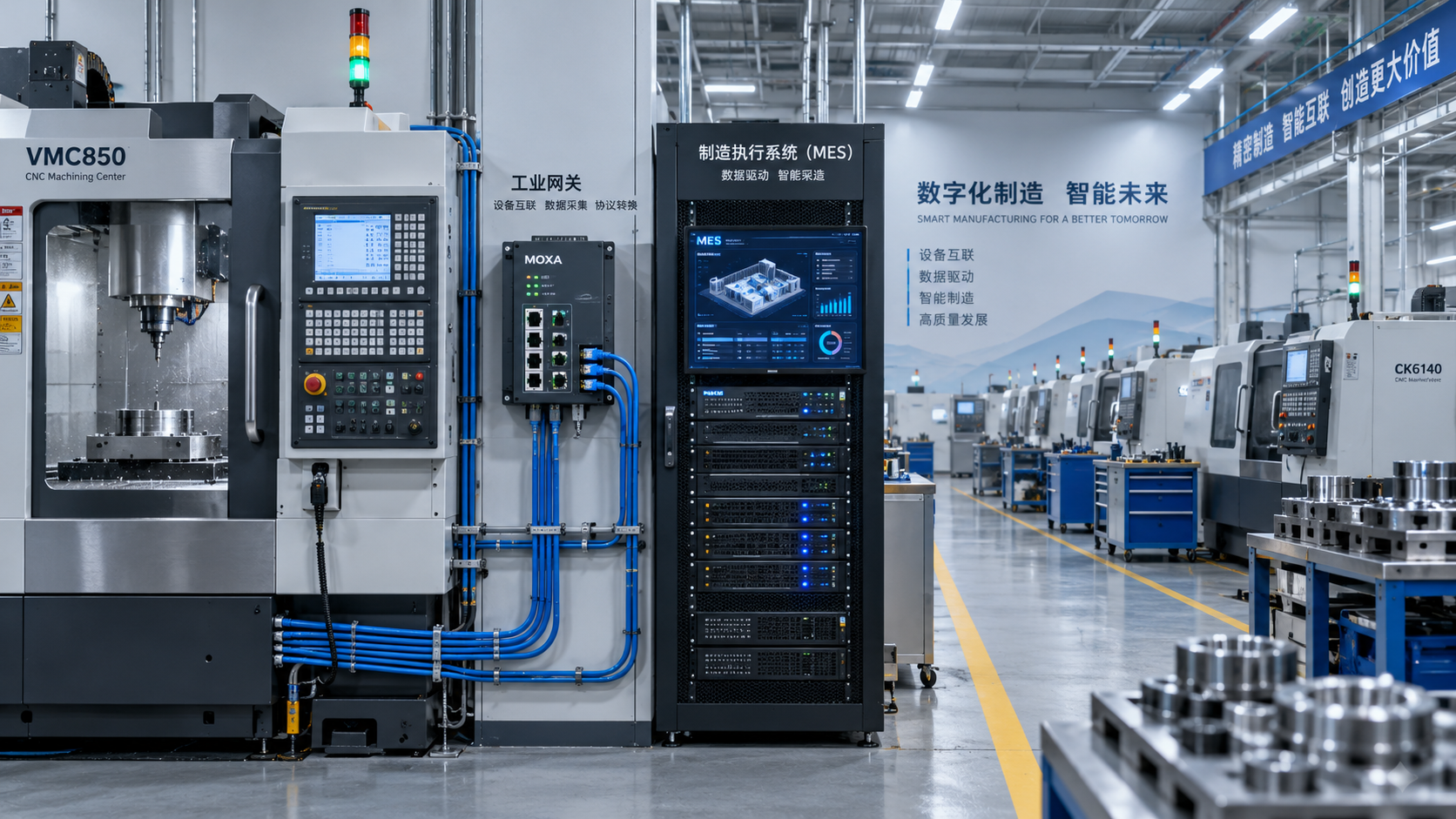
 Digital Manufacturing for Smart Factories: Connecting Legacy Machines to MESMachine Tool Industry Editorial Team
 How to Select a CNC Metal Lathe for Tight-Tolerance Shaft and Sleeve PartsCNC Machining Technology Center
 How to Select an Industrial Lathe for High-Volume Shaft ProductionMachine Tool Industry Editorial Team
 Selecting Machine Tools for Automotive Parts: Accuracy, Throughput, and AutomationMachine Tool Industry Editorial Team
 Industrial Machining: Selecting Processes for Tight-Tolerance Metal PartsCNC Machining Technology Center
 Manufacturing Technology Trends That Improve Throughput and Quality ControlManufacturing Market Research Center




Aris Katos
Future of Carbide Coatings
15+ years in precision manufacturing systems. Specialized in high-speed milling and aerospace grade alloy processing.
▶
日本高端机床出口管制生效,五轴CNC审批趋严Global Machine Tool Trade Research Center▶
Japan Tightens Controls on High-End Machine Tool ExportsGlobal Machine Tool Trade Research Center▶
US Proposes 25% Tariff on China CNC Servo DrivesGlobal Machine Tool Trade Research Center▶
US Adds 37 Chinese Machine Tool Firms to Export ListGlobal Machine Tool Trade Research Center▶
US Tightens CNC Export Curbs, Adds 52 China EntitiesGlobal Machine Tool Trade Research Center
Mastering 5-Axis Workholding Strategies
Join our technical panel on Nov 15th to learn about reducing vibrations in thin-wall components.

Providing you with integrated sanding solutions
Before-sales and after-sales services
Comprehensive technical support