• Global CNC market projected to reach $128B by 2028 • New EU trade regulations for precision tooling components • Aerospace deman
NYSE: CNC +1.2%LME: STEEL -0.4%

CNC manufacturing supplier vetting: Why audit reports don’t reveal real process discipline
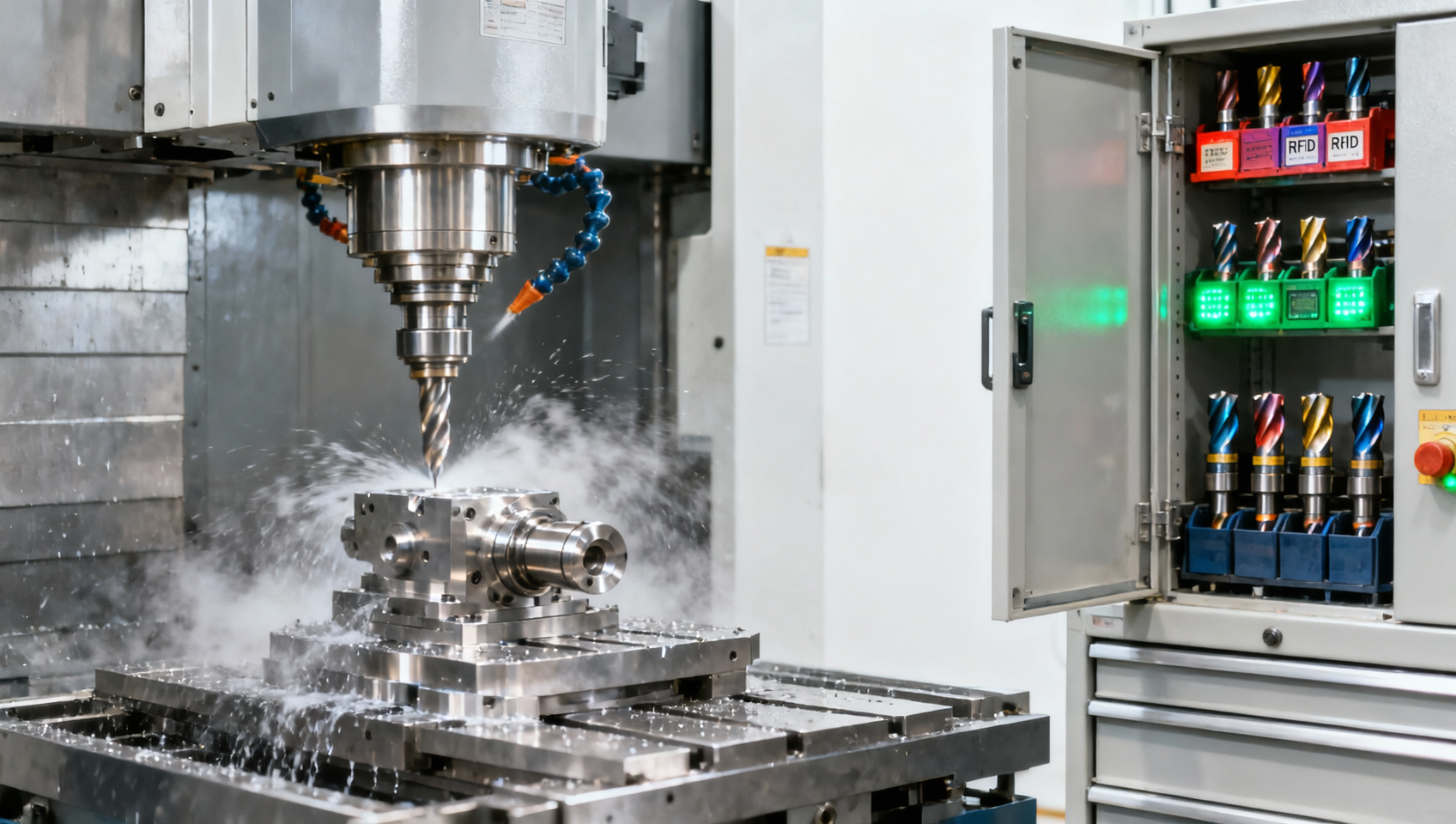
When vetting a CNC manufacturing supplier—whether for aerospace, medical devices, or energy equipment—relying solely on audit reports is risky. These documents rarely expose real process discipline: consistent high-precision CNC manufacturing, low-maintenance operation, or quick-setup efficiency across multi-axis CNC manufacturing lines. For procurement teams and decision-makers seeking cost-effective, space-saving CNC manufacturing or an automated CNC manufacturing exporter, true capability lies in observable shop-floor rigor—not paper compliance. This article reveals why operational transparency, not just certifications, defines a reliable CNC manufacturing supplier.
Why Audit Reports Fail to Reflect Real CNC Process Discipline
Audit reports—especially ISO 9001 or AS9100 certifications—are valuable entry-level filters, but they measure conformity, not consistency. A supplier may pass a biennial audit with zero nonconformities while operating two distinct production modes: one for auditors (documented, calibrated, time-stamped), and another for daily orders (ad-hoc tool changes, manual offset adjustments, undocumented fixture swaps). Industry data shows that over 68% of non-audit-related quality escapes originate from undocumented process deviations—not systemic failures.
Moreover, audits rarely assess dynamic capability: how quickly a 5-axis machining center reconfigures for a new titanium impeller versus an aluminum housing, or how tightly thermal drift is managed during a 12-hour unmanned shift. These are not checklist items—they’re rhythm, repetition, and embedded procedural memory. Without witnessing live production, procurement teams mistake compliance for competence.
Real process discipline manifests in measurable behaviors: average setup time per part family (typically <18 minutes for Tier-1 aerospace suppliers), first-pass yield stability (±2.3% variance over 30 consecutive batches), and calibration traceability depth (e.g., master gauges recalibrated every 7 days against NIST-traceable references).
What to Observe Instead of Relying on Paper Certifications
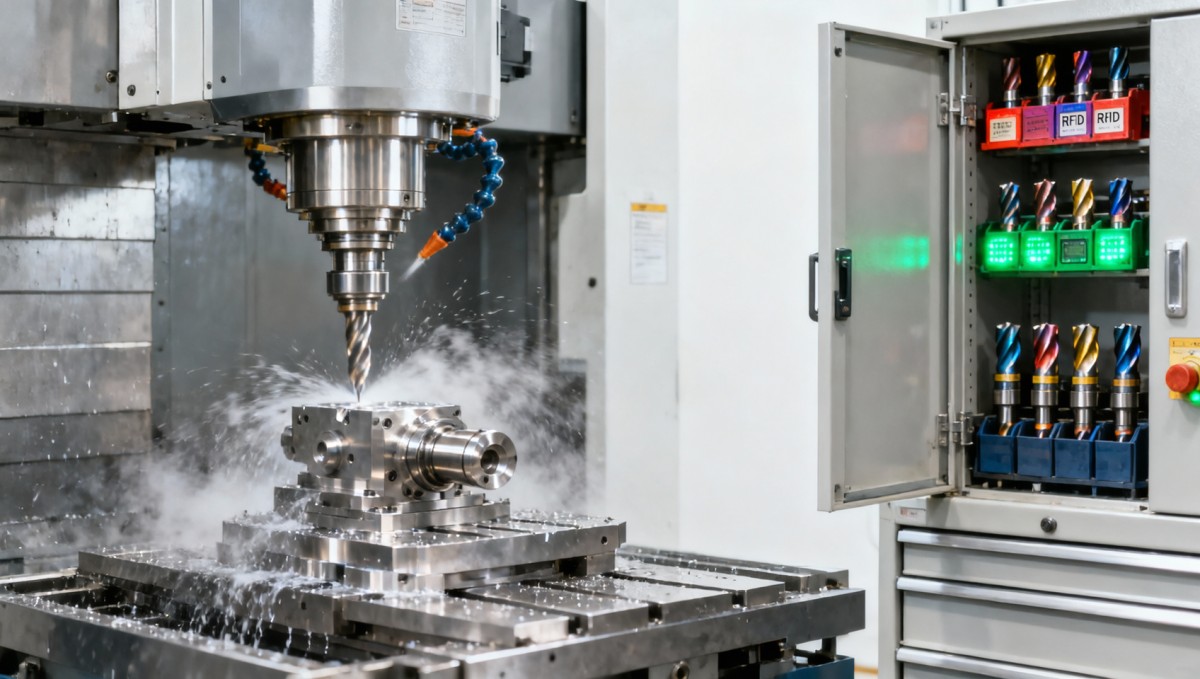
Shift your evaluation from documentation review to behavioral observation. Prioritize unannounced, timed shop-floor walkthroughs—ideally during active production of parts similar to your own. Focus on three critical layers: visual control systems, operator autonomy, and data continuity.
Visual controls include standardized work instructions laminated at each station, color-coded tool holders indicating calibration status (green = valid for next 48h), and real-time SPC charts updated automatically from CNC controller outputs—not manually entered into Excel. Suppliers with mature discipline maintain ≤3% deviation between scheduled and actual cycle times across 10+ consecutive runs.
Operator autonomy signals deep process ownership: technicians adjusting feed rates within ±5% of nominal values without supervisor approval, or initiating preventive maintenance checks based on vibration trend alerts—not calendar-based schedules. In top-tier shops, 92% of minor process corrections happen at the machine level, not through engineering change orders.
This table underscores a fundamental truth: certification validates intent; observation validates execution. The most telling evidence isn’t in the auditor’s report—it’s in the technician’s wristwatch, the CNC controller’s timestamp log, and the fixture’s wear pattern.
Six Actionable Steps to Vet CNC Supplier Discipline On-Site
Move beyond passive review. Implement this 6-step protocol during your next supplier assessment:
- Request live access to the CNC controller’s internal log (not just exported CSV)—verify timestamps match physical part marking dates.
- Observe one full setup cycle for your part family: record actual vs. quoted setup time, number of tool changes, and verification steps performed.
- Ask to see the last 3 calibration certificates for the CMM used to inspect your critical dimensions—and cross-check serial numbers against the machine’s physical label.
- Review 5 recent FAI reports: confirm dimensional results were entered directly from CMM output (not typed manually) and that all GD&T callouts were measured—not assumed.
- Walk the coolant management area: check pH levels (target range: 8.2–9.1), tramp oil concentration (<0.5%), and filter replacement logs (frequency: every 120 operating hours).
- Interview 2 operators independently: ask how they’d adjust for a 0.005mm bore diameter drift observed mid-batch—listen for root-cause language, not just corrective action.
Suppliers who hesitate on any step—or require 48+ hours to produce raw controller logs—signal process opacity. Top performers provide real-time access to machine telemetry via secure portals, with historical data retention ≥18 months.
How Global CNC Manufacturing Hubs Differ in Operational Rigor
Regional norms shape discipline expression. German suppliers emphasize mechanical repeatability: spindle runout tolerance ≤1.2µm, thermal compensation active across all axes, and zero reliance on post-process hand-finishing. Japanese facilities prioritize human-machine synchronization: operators trained on 3+ machine models, standardized hand motions for chip removal, and visual kanban for tool replenishment (reorder point: ≤15% stock remaining).
In contrast, leading Chinese exporters now deploy AI-driven anomaly detection on CNC controllers—flagging subtle servo current deviations 22 minutes before chatter onset. However, their documentation lag remains: only 41% auto-generate inspection reports from metrology data, versus 89% in South Korean Tier-1 shops.
These benchmarks aren’t absolutes—but they define realistic expectations. A supplier claiming 99.5% FPY with 25-minute setups and no CNC-CMM integration should trigger immediate validation.
Conclusion: From Compliance to Continuous Capability Verification
Audit reports are necessary—but insufficient—for evaluating CNC manufacturing suppliers. True process discipline lives in the interplay of people, machines, and data—not in PDFs. It’s measured in microseconds of servo response, microns of thermal expansion control, and minutes saved through standardized setups.
For procurement professionals and decision-makers, the path forward is clear: embed observational rigor into your supplier qualification workflow. Prioritize suppliers offering real-time machine data access, transparent calibration chains, and demonstrable setup efficiency—not just framed certificates.
If you need help designing a CNC supplier vetting protocol tailored to your precision requirements—whether for tight-tolerance medical implants or high-volume automotive housings—contact our technical procurement team. We’ll help you translate shop-floor observations into quantifiable supplier performance metrics.
Recommended for You
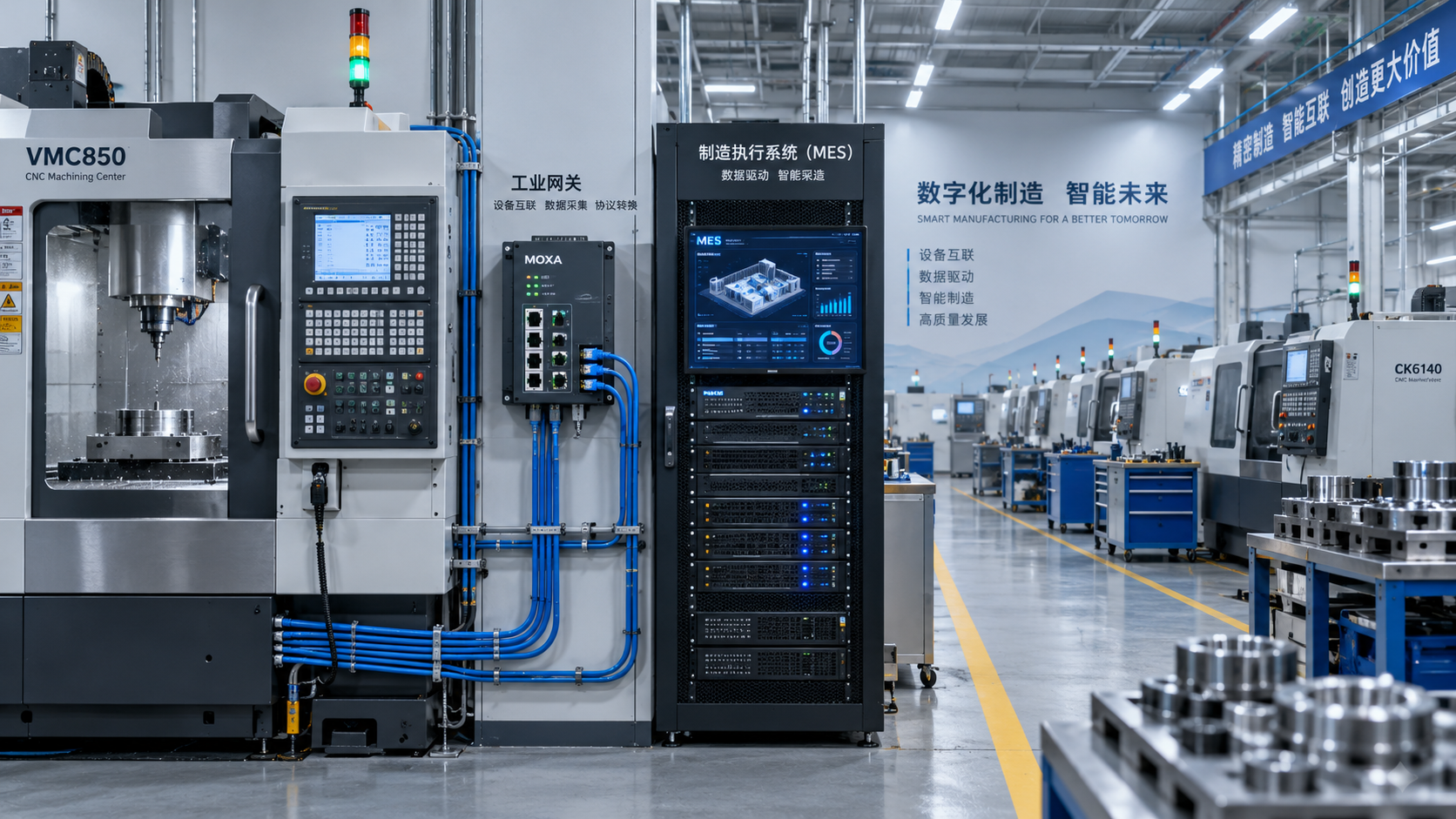
 Digital Manufacturing for Smart Factories: Connecting Legacy Machines to MESMachine Tool Industry Editorial Team
 How to Select a CNC Metal Lathe for Tight-Tolerance Shaft and Sleeve PartsCNC Machining Technology Center
 How to Select an Industrial Lathe for High-Volume Shaft ProductionMachine Tool Industry Editorial Team
 Selecting Machine Tools for Automotive Parts: Accuracy, Throughput, and AutomationMachine Tool Industry Editorial Team
 Industrial Machining: Selecting Processes for Tight-Tolerance Metal PartsCNC Machining Technology Center
 Manufacturing Technology Trends That Improve Throughput and Quality ControlManufacturing Market Research Center



Aris Katos
Future of Carbide Coatings
15+ years in precision manufacturing systems. Specialized in high-speed milling and aerospace grade alloy processing.
▶
How to Evaluate a Machine Tool Factory Before Sourcing CNC EquipmentGlobal Machine Tool Trade Research Center▶
How to Evaluate a CNC Machine Tool Manufacturer for Precision and Service SupportGlobal Machine Tool Trade Research Center▶
What Affects Cost-Effective CNC Manufacturing? Key Drivers Behind Part Price and Lead TimeGlobal Machine Tool Trade Research Center▶
How to Evaluate a CNC Tooling System Supplier in Germany for Quality, Lead Time, and CostGlobal Machine Tool Trade Research Center▶
How to Evaluate a CNC Tooling System Supplier in Germany for Quality, Lead Time, and SupportGlobal Machine Tool Trade Research Center
Mastering 5-Axis Workholding Strategies
Join our technical panel on Nov 15th to learn about reducing vibrations in thin-wall components.

Providing you with integrated sanding solutions
Before-sales and after-sales services
Comprehensive technical support