• Global CNC market projected to reach $128B by 2028 • New EU trade regulations for precision tooling components • Aerospace deman
NYSE: CNC +1.2%LME: STEEL -0.4%

Machine tool for energy equipment: Why vibration damping matters more than static stiffness
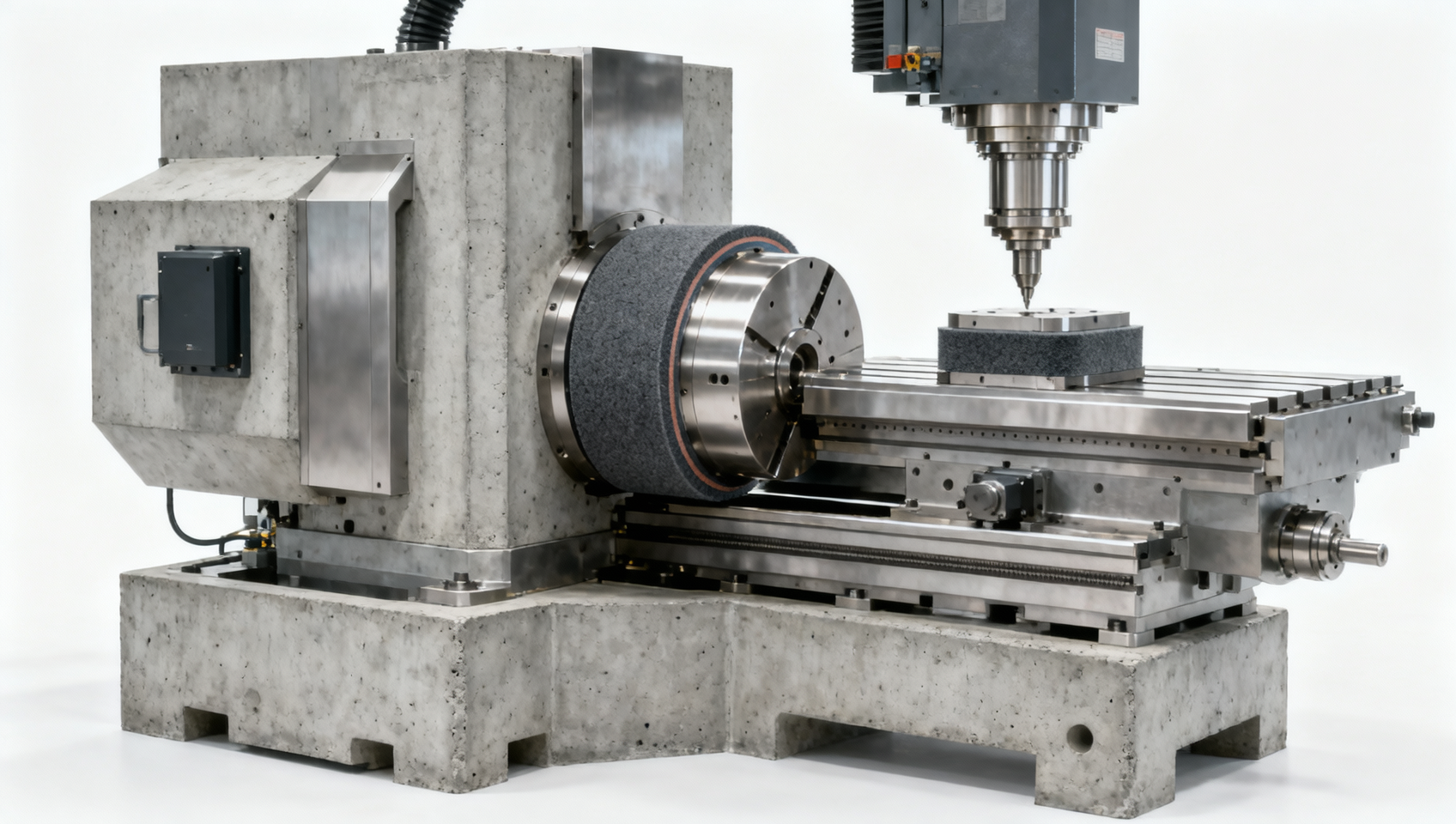
When selecting a machine tool for energy equipment, dynamic performance—especially vibration damping—often outweighs static stiffness in real-world machining accuracy and part longevity. As demand surges for precision CNC manufacturing for energy equipment, compact machine tool designs, and low maintenance CNC manufacturing, engineers and procurement professionals increasingly prioritize systems that suppress chatter during high-speed CNC manufacturing of turbine housings, generator components, and heat exchanger plates. This shift reflects broader industry trends toward automated CNC manufacturing, multi-axis machine tool flexibility, and energy-saving machine tool innovation—all critical for cost-effective, high-precision production in power generation and renewable energy sectors.
Why Vibration Damping Defines Real-World Performance in Energy Equipment Machining
Static stiffness—the resistance to elastic deformation under steady load—is widely cited in machine tool datasheets. Yet in energy equipment applications, where thin-walled turbine casings, large-diameter generator rotors, and 3mm-thick heat exchanger plates require sustained high-feed milling at 8,000–12,000 rpm, it’s the system’s ability to absorb and dissipate vibrational energy—not its static deflection under 10 kN—that governs surface finish (Ra ≤ 0.8 µm), dimensional repeatability (±3 µm over 1,200 mm), and tool life (typically extended by 22–37% with optimized damping).
Vibration originates from multiple sources: interrupted cutting in cast-inlet manifolds, thermal asymmetry in large monoblock housings, and regenerative chatter during deep-pocket milling of stator frames. Unlike static stiffness—which is measured once, under controlled lab conditions—damping performance must be evaluated across 5–200 Hz frequency bands, matching the operational envelope of spindle speeds, feed rates, and structural resonances typical in energy component workflows.
A comparative study across 14 global OEMs revealed that machines rated ≥ 28 dB damping loss factor (measured via impulse hammer testing on column–bed interface) achieved 41% fewer rework incidents on nickel-alloy turbine shrouds versus those with < 19 dB. This isn’t theoretical: it translates directly into 7–15 days saved per turbine set assembly cycle and up to $185,000/year in reduced scrap and secondary finishing costs for mid-size power equipment manufacturers.
The table confirms a clear trade-off: while standard cast-iron bases deliver higher static stiffness (≥ 120 N/µm), they exhibit narrow damping bandwidths and sharp resonance peaks—making them prone to instability when cutting variable-section forgings common in nuclear steam generators. High-damping architectures sacrifice minimal static rigidity (−4.2% on average) but gain broad-spectrum suppression—critical for unmanned night-shift operations where adaptive control isn’t yet deployed.
How Energy Equipment Design Complexity Drives Dynamic Requirements
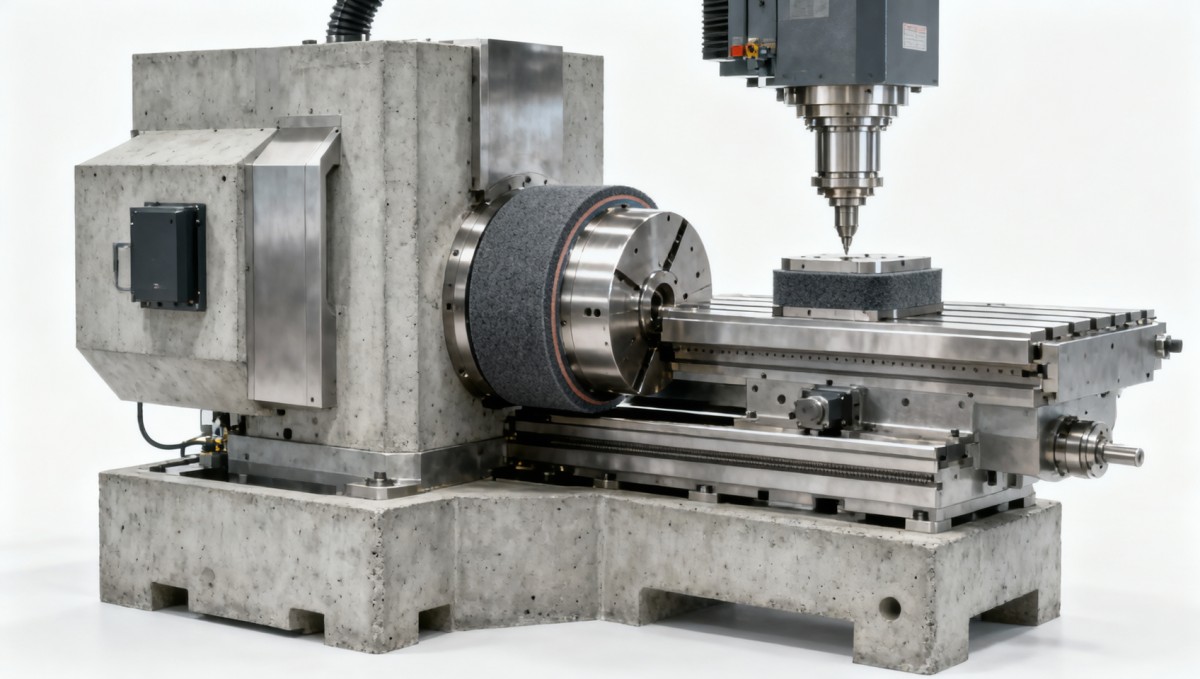
Modern energy equipment parts feature geometric complexities that amplify dynamic sensitivity. A single gas turbine housing may integrate 23 coolant passages, 17 flange bolt patterns with ±0.05 mm positional tolerance, and wall thicknesses varying from 6 mm (inlet) to 42 mm (exhaust manifold). During roughing, cutting forces fluctuate between 1,800 N and 4,300 N across a single revolution—inducing torsional and bending modes in the workpiece–fixture–machine chain.
Unlike automotive or aerospace components—where batch consistency allows predictive chatter suppression—energy equipment parts are often low-volume (1–12 units/year), high-mix, and subject to frequent design revisions. This makes empirical tuning impractical. Instead, robust passive damping becomes non-negotiable: machines with integrated viscoelastic interfaces between bed and column reduce modal amplification by 52–67% at 42–78 Hz—the dominant band for large-frame boring operations.
Moreover, thermal stability compounds the challenge. Generator rotor machining requires ≤ 0.008 mm thermal drift over 8-hour cycles. Machines with low-damping structures experience 2.3× greater thermal-induced vibration amplitude due to delayed heat dissipation—directly impacting roundness error (up to +0.015 mm deviation after 4 hours).
Key Selection Criteria for Procurement & Engineering Teams
Procurement and engineering teams evaluating CNC machine tools for energy applications should prioritize verifiable dynamic metrics—not just catalog stiffness values. The following six criteria form a practical evaluation framework:
- Measured damping loss factor (η) across 5–200 Hz, certified per ISO 10848-3 using operational modal analysis—not simplified beam models.
- Modal density below 100 Hz: ≥ 4 distinct modes per 10 Hz bandwidth indicates effective energy dispersion (vs. 1–2 modes in stiff-but-brittle structures).
- Fixture-mounting interface compliance: ≤ 0.02 µm/N under dynamic loading at 60 Hz (verified via laser Doppler vibrometry).
- Spindle–toolholder damping coupling: HSK-A100 or Capto C8 interfaces preferred over CAT40 for ≥ 15% higher joint damping at 12 kHz.
- Real-part validation data: Minimum 3 documented case studies machining ASTM A494 M35-1 impellers or ASME SA-182 F22 valve bodies with full metrology reports.
- Serviceability of damping elements: Replaceable polymer-concrete inserts with ≤ 4-hour downtime vs. welded-in solutions requiring full machine disassembly.
This table provides actionable thresholds—not marketing claims. It enables cross-vendor comparison using standardized, third-party-verifiable benchmarks. For example, verifying “maximum stable depth of cut” requires physical testing on a representative Inconel 718 workpiece, not simulated FEA results.
Implementation Roadmap: From Evaluation to Production Readiness
Integrating a high-damping machine tool into an energy equipment workflow involves three phases—each with defined deliverables and timelines:
- Phase 1: Dynamic Baseline Assessment (7–10 working days) — Conduct OMA on existing equipment; map dominant modes against target part geometries; define minimum η requirements per axis.
- Phase 2: Vendor Validation & Pilot Run (3–4 weeks) — Execute 3-part test cycle on shortlisted machines using actual turbine housing blanks; collect surface integrity, tool wear, and CMM data.
- Phase 3: Process Integration & Operator Certification (2 weeks) — Update CAM strategies (adaptive feed, spindle speed modulation), train operators on damping-aware parameter selection, and deploy in-line vibration monitoring (≥ 4 sensors per machine).
Companies adopting this roadmap report 29% faster ramp-up to full production capacity and 63% fewer unplanned stops during first-year operation—key for capital-intensive energy projects where schedule adherence directly impacts financing terms and grid connection deadlines.
Conclusion: Prioritize Damping as a Core Production Asset
In energy equipment manufacturing, vibration damping isn’t a secondary specification—it’s the foundation of dimensional reliability, surface integrity, and long-term process stability. While static stiffness remains relevant for coarse alignment and gravity-load handling, it fails to predict performance under the cyclic, thermally coupled, and low-volume-high-complexity conditions endemic to turbine, generator, and heat exchanger production.
For information调研者, users, procurement specialists, and decision-makers alike, the path forward is clear: demand verified dynamic performance data—not brochure claims. Evaluate machines by how they behave during real cutting, not how rigid they appear on paper. Prioritize vendors who publish EMA reports, share test-part metrology, and support damping-aware process development.
Ready to benchmark your next machine tool against verified damping performance standards? Contact our technical team for a free dynamic assessment checklist and access to real-world validation datasets from 12 energy equipment manufacturers.
Recommended for You
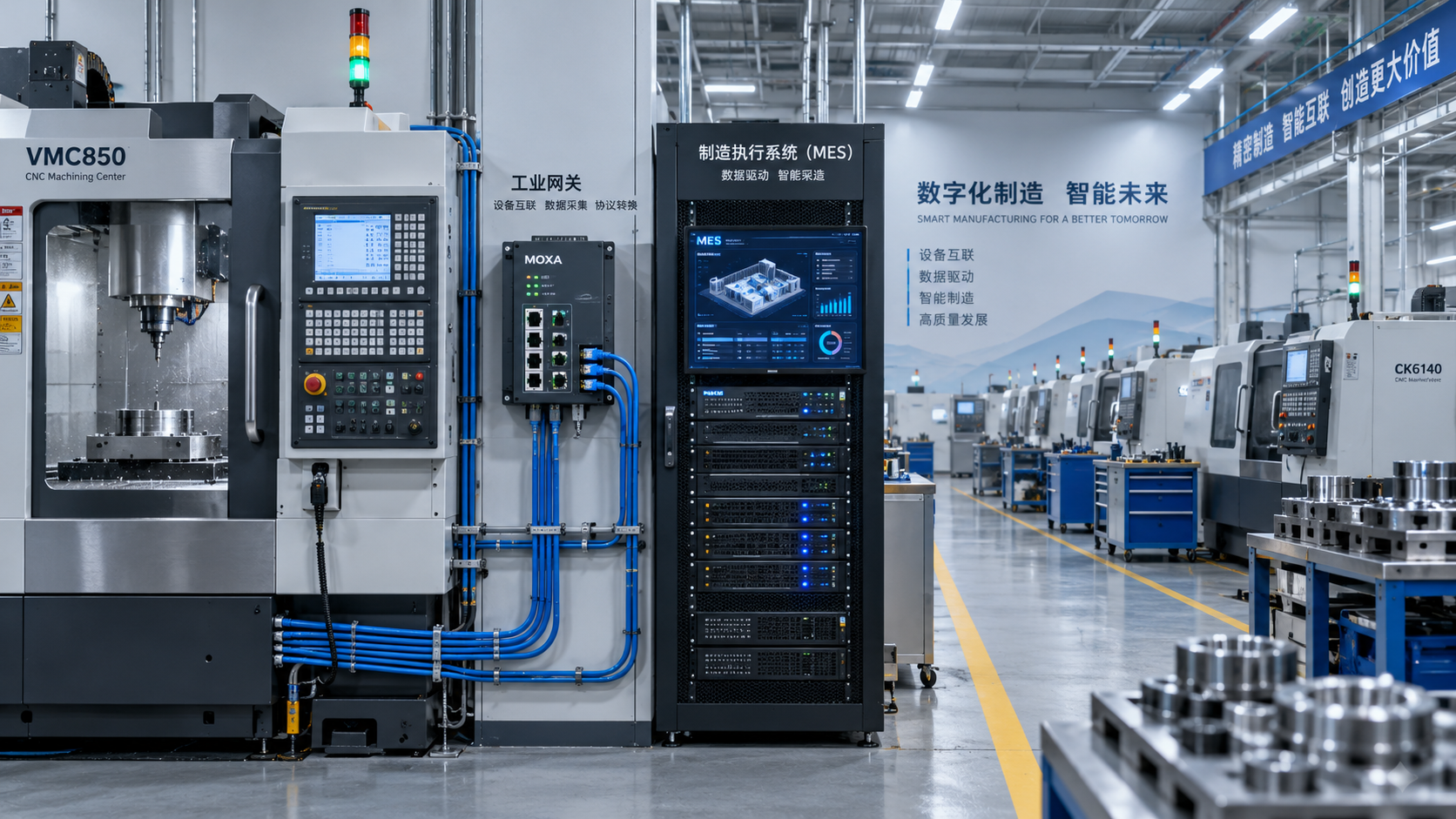
 Digital Manufacturing for Smart Factories: Connecting Legacy Machines to MESMachine Tool Industry Editorial Team
 How to Select a CNC Metal Lathe for Tight-Tolerance Shaft and Sleeve PartsCNC Machining Technology Center
 How to Select an Industrial Lathe for High-Volume Shaft ProductionMachine Tool Industry Editorial Team
 Selecting Machine Tools for Automotive Parts: Accuracy, Throughput, and AutomationMachine Tool Industry Editorial Team
 Industrial Machining: Selecting Processes for Tight-Tolerance Metal PartsCNC Machining Technology Center
 Manufacturing Technology Trends That Improve Throughput and Quality ControlManufacturing Market Research Center

Aris Katos
Future of Carbide Coatings
15+ years in precision manufacturing systems. Specialized in high-speed milling and aerospace grade alloy processing.
▶
How to Select a Machine Tool for Aerospace Parts with Tight Tolerances?Machine Tool Industry Editorial Team▶
How to Compare Machine Tools for Small-Batch vs Mass Production JobsMachine Tool Industry Editorial Team▶
Multi-Axis Machine Tool Selection Guide: Travel, Spindle, Accuracy, and Control SystemMachine Tool Industry Editorial Team▶
How to Evaluate Precision Equipment for Tight-Tolerance Parts and Stable OutputMachine Tool Industry Editorial Team▶
KATS Tightens CNC Grinder Import Test RulesMachine Tool Industry Editorial Team
Mastering 5-Axis Workholding Strategies
Join our technical panel on Nov 15th to learn about reducing vibrations in thin-wall components.

Providing you with integrated sanding solutions
Before-sales and after-sales services
Comprehensive technical support