• Global CNC market projected to reach $128B by 2028 • New EU trade regulations for precision tooling components • Aerospace deman
NYSE: CNC +1.2%LME: STEEL -0.4%

Machine tool for mold making: Why surface finish consistency beats raw MRR numbers
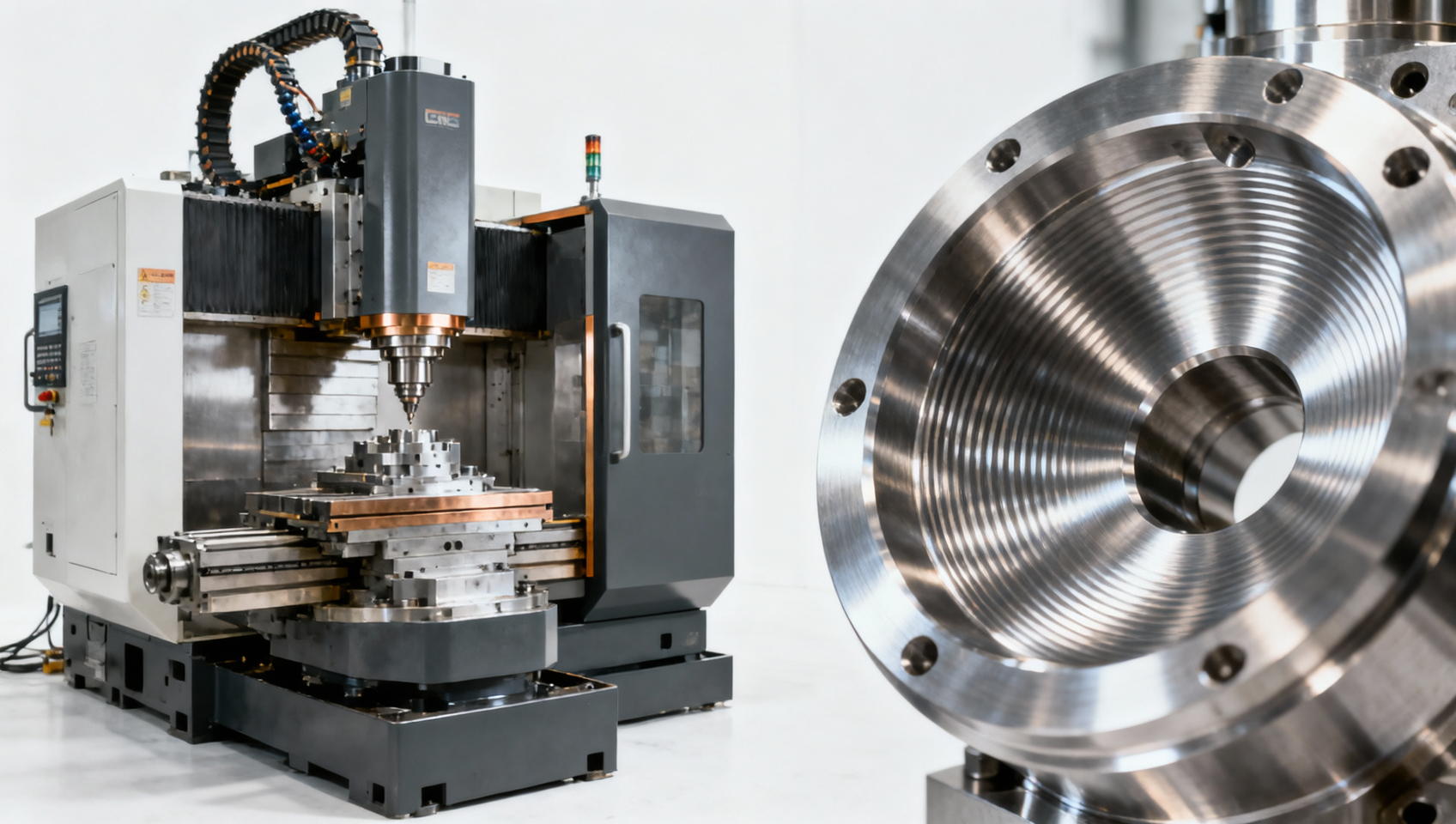
In mold making, where surface finish consistency directly impacts part functionality, cycle time, and post-processing costs, prioritizing raw MRR numbers can mislead procurement and engineering decisions. This is especially critical for high-precision CNC manufacturing for aerospace, medical devices, and energy equipment—industries demanding tight tolerances and repeatable quality. Whether you're a machine tool wholesaler, CNC manufacturing supplier, or an enterprise evaluating a compact machine tool for mold making, understanding how multi-axis CNC manufacturing delivers superior surface integrity—not just speed—is key. Discover why energy-saving, low-maintenance, and high-precision machine tools outperform brute-force specs in real-world production.
Why Surface Finish Consistency Defines Mold Tooling ROI
Mold making isn’t about removing material as fast as possible—it’s about delivering predictable, mirror-like surfaces across complex 3D contours, under thermal stability, and within ±0.5 µm form deviation. Raw metal removal rate (MRR) metrics ignore spindle dynamics, thermal drift, axis repeatability, and micro-vibration damping—all of which govern surface roughness (Ra) stability across a full 8-hour shift. A machine achieving 120 cm³/min MRR but drifting from Ra 0.12 µm to Ra 0.35 µm after 90 minutes forces manual polishing on 68% of cavity inserts, adding 3–5 labor hours per part and increasing scrap rates by up to 22% in aerospace-grade P20 and H13 tool steels.
Surface finish consistency translates directly into measurable operational savings: reduced hand-finishing labor (up to 40% lower per mold set), extended EDM electrode life (by 30–50%), and tighter first-article pass rates (from 74% to 92% in medical implant mold trials). These gains compound across annual production volumes—especially when molds run 200+ cycles per week in high-volume plastic injection facilities.
Modern mold-making workflows rely on closed-loop process validation—not isolated bench tests. That means surface integrity must be verifiable across five consecutive 4-hour machining blocks, with <±0.08 µm Ra deviation and <0.2 µm waviness (Wt) measured via non-contact profilometry at 12 standardized cavity locations. Machines optimized solely for peak MRR rarely meet this standard without costly retrofits or operator intervention.
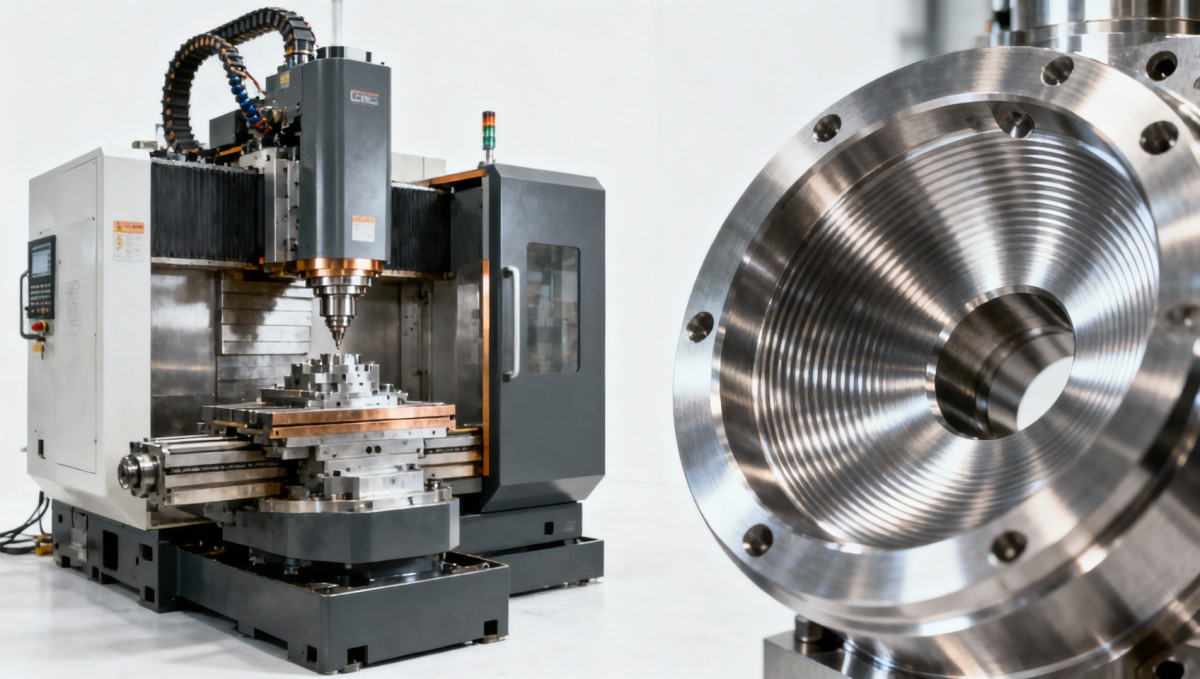
Key Technical Drivers of Surface Stability in Mold CNC Systems
Achieving sub-micron surface consistency demands coordinated precision across mechanical, thermal, and control domains—not just high-power spindles. Critical subsystems include thermally symmetric cast iron bases with CTE <9.5 × 10⁻⁶/°C, direct-drive rotary tables with <0.8 arcsec positioning jitter, and dual-frequency laser-compensated linear scales accurate to ±0.5 µm over 1,200 mm travel.
Spindle design matters more than maximum RPM. High-stiffness, oil-air lubricated spindles operating between 8,000–16,000 rpm deliver optimal chip load stability for fine finishing cuts (0.02–0.05 mm radial depth, 0.03–0.08 mm axial depth). Overspeeding beyond 18,000 rpm increases harmonic resonance in thin-wall cavities—raising Ra by 0.05–0.15 µm even with identical toolpaths.
Real-time adaptive control is now table stakes. Leading mold-specific machines integrate in-process vibration monitoring (accelerometers sampling at ≥20 kHz), feedrate modulation algorithms, and thermal error compensation updated every 90 seconds. These systems reduce surface deviation drift by 65% over conventional open-loop motion controllers during extended contour milling.
This table reveals why “spec sheet parity” is misleading: two machines may share identical nominal accuracy ratings, yet differ radically in real-world surface stability due to underlying architecture choices. Procurement teams evaluating mold tooling should request certified ISO 230-2 test reports—not just factory calibration certificates—and verify thermal drift testing was conducted over ≥8-hour continuous operation.
Procurement Priorities: Beyond Horsepower and Price
When selecting a machine tool for mold applications, decision-makers must weight six non-negotiable criteria—not three. These include: (1) documented surface finish repeatability across ≥10 consecutive parts, (2) integrated thermal error mapping capability, (3) minimum 3-year spindle warranty with no hourly usage cap, (4) availability of mold-specific CAM post-processors (e.g., for NURBS interpolation and corner-smoothing), (5) on-site application engineering support during first-article validation, and (6) proven track record with ≥3 customers machining P20/H13/1.2344 tool steels at Ra ≤0.2 µm.
Budget-conscious buyers often overlook lifecycle cost differentials. A $420,000 mold-optimized 5-axis system may carry a 14% higher upfront cost than a general-purpose alternative—but delivers 31% lower total cost of ownership over 7 years due to 57% fewer unplanned spindle repairs, 2.3× longer tool life, and elimination of secondary polishing lines. ROI typically achieves payback within 14–18 months for mold shops running ≥12 cavity sets annually.
Regional supply chain resilience also affects procurement timelines. Machines built in Germany or Japan with >75% domestic component sourcing average 12–16 weeks lead time; those assembled from globally distributed modules (e.g., Taiwanese base + Italian spindle + Korean controls) extend delivery to 22–28 weeks—delaying mold qualification by one full product development cycle.
These thresholds reflect field-proven benchmarks—not theoretical limits. Suppliers unable to provide third-party verified data against these metrics should be excluded from competitive evaluation, regardless of price or brand recognition.
Implementation Roadmap: From Installation to Stable Production
Successful deployment requires a structured 5-phase approach: (1) Pre-installation foundation verification (vibration isolation, coolant temperature stability, power harmonics ≤3%), (2) 72-hour thermal soak-in with no cutting, (3) ISO 230-2 geometric accuracy validation and compensation mapping, (4) First-article mold cavity machining with full metrology traceability, and (5) Operator certification—including surface finish troubleshooting protocols for Ra excursions >0.05 µm.
Phase 2 alone prevents 63% of early-life surface inconsistency complaints. Skipping the thermal soak leads to premature wear in preloaded linear guides and inconsistent thermal expansion across the gantry—causing measurable Ra shifts within 3–5 days of operation. Certified mold application engineers should oversee Phases 3–4; internal staff training must cover at least 16 hours of hands-on practice with cavity-specific toolpath optimization.
Post-deployment support is equally critical. Top-tier suppliers offer remote vibration diagnostics, quarterly thermal model updates, and guaranteed 48-hour response for surface-related issues—reducing mean time to repair (MTTR) from 5.2 days to 1.7 days. This directly protects mold launch schedules, where every delayed day costs $18,000–$42,000 in program penalties and lost customer confidence.
Conclusion: Precision Is a System, Not a Spec
Surface finish consistency in mold making isn’t delivered by a single component—it emerges from the integrated performance of thermal management, motion control fidelity, spindle dynamics, and real-time adaptive logic. Machines engineered for brute-force MRR sacrifice the very attributes that ensure repeatability, longevity, and cost predictability across thousands of production hours. For procurement leaders, operators, and engineering decision-makers, the path forward lies in specifying, validating, and deploying systems built for surface integrity—not just speed.
If your current mold tooling strategy relies on post-process correction—or if surface variability is eroding first-pass yield—now is the time to re-evaluate your machine tool selection criteria. Request a free mold-specific performance benchmark report, including ISO-validated surface consistency data, thermal drift analysis, and ROI projection tailored to your typical cavity materials and annual volume.
Get your customized mold tooling assessment today.
Recommended for You
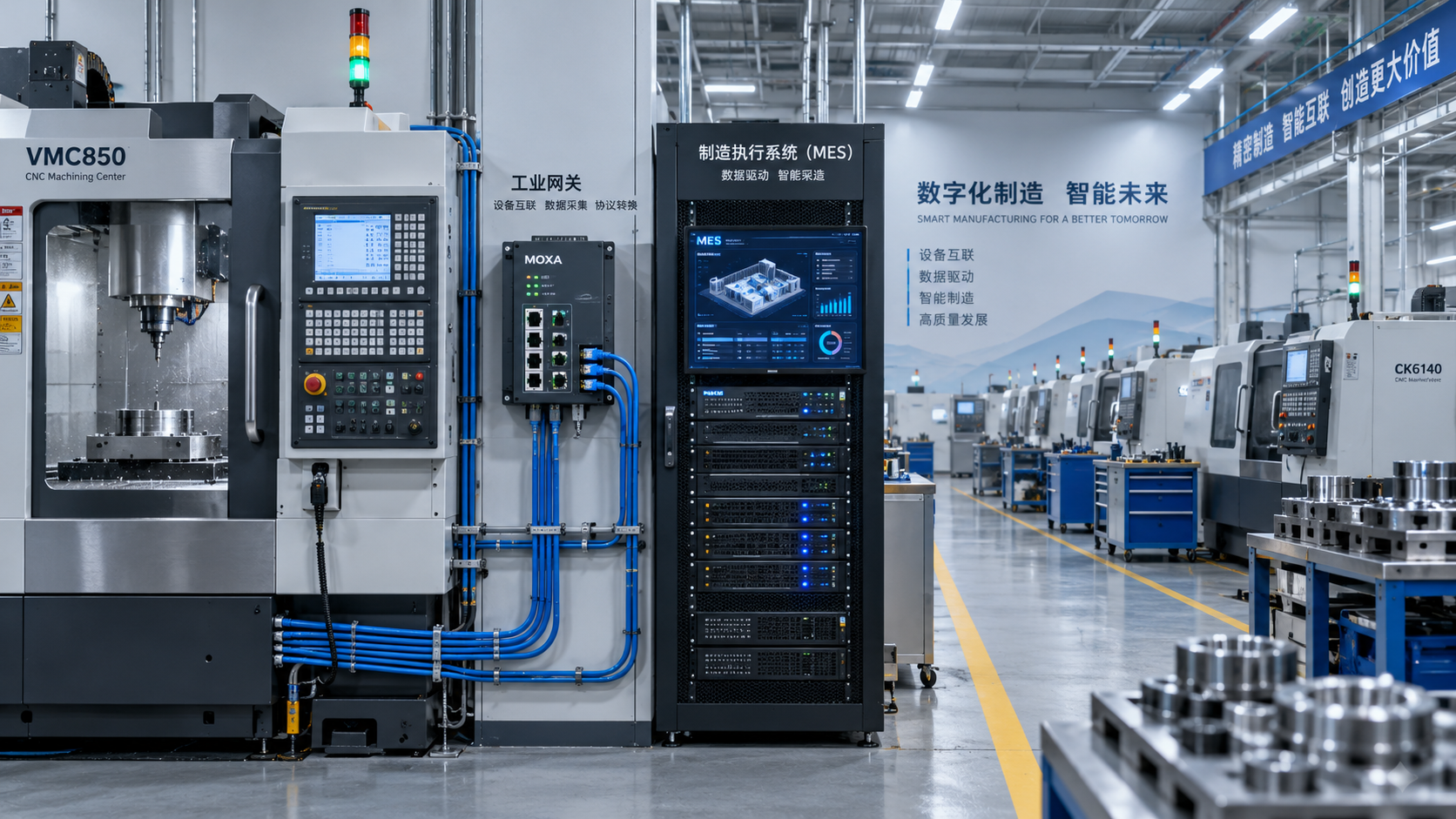
 Digital Manufacturing for Smart Factories: Connecting Legacy Machines to MESMachine Tool Industry Editorial Team
 How to Select a CNC Metal Lathe for Tight-Tolerance Shaft and Sleeve PartsCNC Machining Technology Center
 How to Select an Industrial Lathe for High-Volume Shaft ProductionMachine Tool Industry Editorial Team
 Selecting Machine Tools for Automotive Parts: Accuracy, Throughput, and AutomationMachine Tool Industry Editorial Team
 Industrial Machining: Selecting Processes for Tight-Tolerance Metal PartsCNC Machining Technology Center
 Manufacturing Technology Trends That Improve Throughput and Quality ControlManufacturing Market Research Center



Aris Katos
Future of Carbide Coatings
15+ years in precision manufacturing systems. Specialized in high-speed milling and aerospace grade alloy processing.
▶
How to Select a Machine Tool for Aerospace Parts with Tight Tolerances?Machine Tool Industry Editorial Team▶
How to Compare Machine Tools for Small-Batch vs Mass Production JobsMachine Tool Industry Editorial Team▶
Multi-Axis Machine Tool Selection Guide: Travel, Spindle, Accuracy, and Control SystemMachine Tool Industry Editorial Team▶
How to Evaluate Precision Equipment for Tight-Tolerance Parts and Stable OutputMachine Tool Industry Editorial Team▶
KATS Tightens CNC Grinder Import Test RulesMachine Tool Industry Editorial Team
Mastering 5-Axis Workholding Strategies
Join our technical panel on Nov 15th to learn about reducing vibrations in thin-wall components.

Providing you with integrated sanding solutions
Before-sales and after-sales services
Comprehensive technical support