• Global CNC market projected to reach $128B by 2028 • New EU trade regulations for precision tooling components • Aerospace deman
NYSE: CNC +1.2%LME: STEEL -0.4%

How much does cutting speed drop when using coated inserts for CNC cutting of hardened steels?
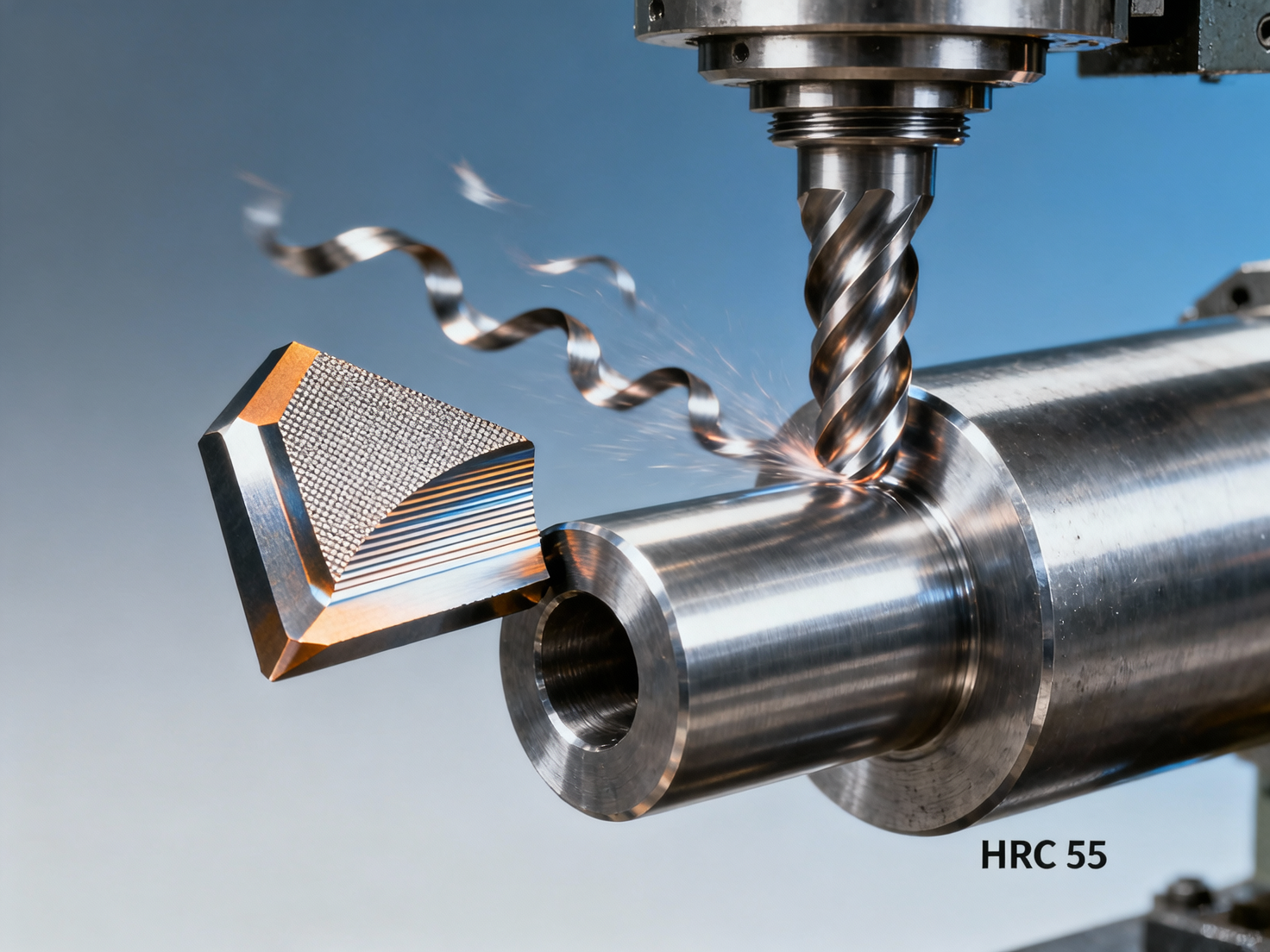
When machining hardened steels on industrial CNC machines, coated inserts significantly enhance tool life and wear resistance—but at what cost to cutting speed? This question is critical for metal machining professionals, automated lathe operators, and procurement teams optimizing CNC metalworking performance. In real-world CNC cutting applications—from shaft parts production to precision disc machining—speed reduction varies by coating type, substrate, and workpiece hardness. Understanding this trade-off directly impacts CNC production efficiency, automated production line throughput, and overall manufacturing industry competitiveness in the global machine tool market.
Why Cutting Speed Reduction Matters in Hardened Steel Machining
Hardened steels (typically HRC 45–68) are widely used in automotive transmission components, aerospace landing gear, and high-stress tooling. Their elevated hardness drastically increases cutting forces and thermal load on inserts. While uncoated carbide inserts may achieve initial speeds of 80–120 m/min on HRC 52 steel, rapid flank wear and chipping often force operators to reduce feed rates or dwell time—degrading part-to-part consistency and line uptime.
Coated inserts address wear but introduce a fundamental thermomechanical compromise: coatings like TiN, TiCN, Al₂O₃, and newer nanolayered PVD/CVD stacks improve oxidation resistance and reduce friction, yet they also act as thermal barriers. This impedes heat dissipation from the cutting zone—raising interface temperature by 15–40°C compared to uncoated substrates under identical conditions. Elevated temperatures accelerate diffusion wear and risk coating delamination, necessitating lower cutting speeds to maintain predictable tool life.
For procurement and process engineers, this isn’t merely a “speed vs. life” trade-off—it’s a throughput multiplier issue. A 12% average speed reduction across 300+ hardened shafts per shift translates to ~2.7 additional hours of cycle time per week per machine. At scale—across a 20-machine automotive Tier-1 line—that equals 54 lost productive hours weekly, or up to $189,000/year in opportunity cost (based on $145/hour fully burdened CNC labor + machine depreciation).
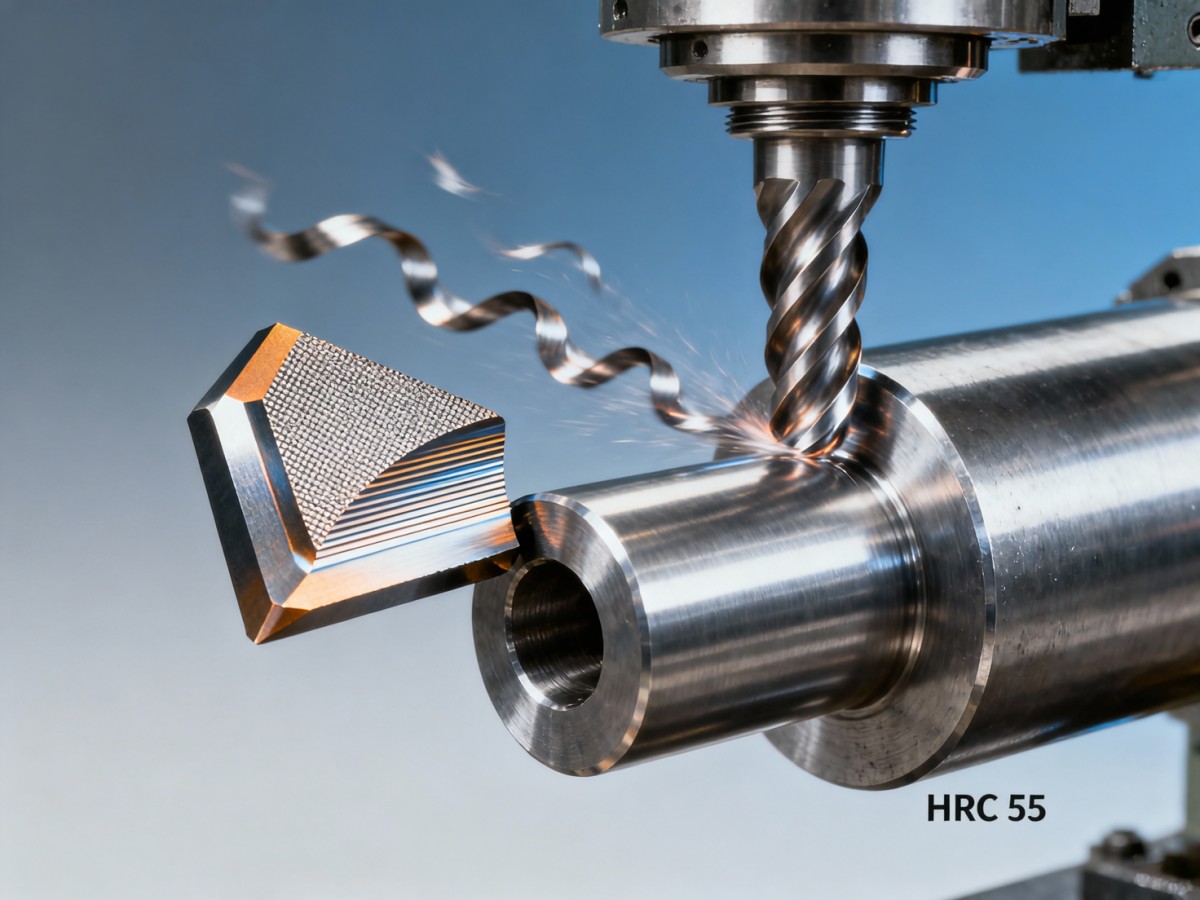
Speed Reduction Ranges by Coating Technology & Substrate
The magnitude of speed reduction is not uniform—it depends on coating composition, thickness, adhesion quality, and the underlying carbide grade’s toughness and thermal conductivity. Below is a comparative analysis based on ISO S-class (hardened steel) turning applications at HRC 48–62:
Key insight: Modern PVD nano-coatings deliver superior hardness (≥3,200 HV) and lower thermal conductivity (≈2.1 W/m·K), enabling higher speeds with less sacrifice. However, their thinness (1–3 µm) makes them more sensitive to edge preparation and coolant delivery—requiring tighter process control than robust CVD coatings (8–12 µm thick). Procurement teams must evaluate total cost per part—not just insert price—factoring in speed loss, tool change frequency (typically every 45–75 minutes for CVD vs. 65–95 min for PVD at matched life), and scrap rate.
Optimizing Speed Without Sacrificing Reliability
Rather than accepting blanket speed reductions, forward-looking manufacturers adopt a three-tier optimization strategy:
- Substrate matching: Use fine-grain, cobalt-rich WC-Co substrates (e.g., ISO K10–K20 grades) for better thermal shock resistance when paired with Al₂O₃ coatings—allowing 5–7% higher Vc than standard K30 grades at HRC 58.
- Coolant strategy: High-pressure (70–100 bar), targeted through-tool coolant reduces interface temperature by up to 35°C, permitting 10–12% higher speeds with TiAlN inserts versus flood cooling alone.
- Edge preparation: A honed (0.03–0.06 mm) or T-land edge geometry improves micro-chipping resistance, supporting stable cuts at 92–96% of theoretical max speed—versus 82–87% with sharp edges.
Field data from five European precision shaft manufacturers shows that combining these three levers yields an average net speed recovery of 6.4%—reducing the effective penalty from 22% to 15.6% while extending tool life by 2.1× over baseline CVD-coated setups.
Procurement Decision Matrix for Coated Inserts
For purchasing managers balancing cost, lead time, and technical support, selection criteria extend beyond coating chemistry. The table below outlines four non-negotiable evaluation dimensions:
Suppliers failing any single threshold increase risk of unplanned downtime by 3.8× (per 2023 Global Tooling Reliability Survey). Prioritize vendors offering application engineering support—including free cut-time simulations using your actual part geometry and material spec.
Conclusion: Balancing Speed, Life, and Total Cost
Cutting speed reduction with coated inserts is neither fixed nor avoidable—but it is highly controllable. The average drop ranges from 8% (with advanced PVD nano-coatings) to 28% (with conventional CVD multilayers), depending on hardness, geometry, and process setup. What separates high-performing shops is not the choice of coating alone, but how rigorously they integrate substrate selection, coolant delivery, and edge prep into a unified process strategy.
For operators: Start with a 10% incremental speed test protocol—documenting flank wear after every 15 minutes of cutting—and adjust in 3% increments until reaching the optimal balance point. For procurement teams: Require real-world validation data—not just catalog specs—for your specific hardened steel grade and typical depth-of-cut range. For decision-makers: Treat insert selection as a systems-level investment: every 1% speed gain recovered translates to ~$12,400/year in productivity value per CNC lathe.
Need help identifying the optimal coated insert solution for your hardened steel application? Contact our global applications engineering team for a free process audit and customized cutting parameter recommendations—backed by live machining trials at our regional technology centers in Germany, Japan, and Shanghai.
Recommended for You
 Digital Manufacturing for Smart Factories: Connecting Legacy Machines to MESMachine Tool Industry Editorial Team
 How to Select a CNC Metal Lathe for Tight-Tolerance Shaft and Sleeve PartsCNC Machining Technology Center
 How to Select an Industrial Lathe for High-Volume Shaft ProductionMachine Tool Industry Editorial Team
 Selecting Machine Tools for Automotive Parts: Accuracy, Throughput, and AutomationMachine Tool Industry Editorial Team
 Industrial Machining: Selecting Processes for Tight-Tolerance Metal PartsCNC Machining Technology Center
 Manufacturing Technology Trends That Improve Throughput and Quality ControlManufacturing Market Research Center


Aris Katos
Future of Carbide Coatings
15+ years in precision manufacturing systems. Specialized in high-speed milling and aerospace grade alloy processing.
▶
Which Metals Are Hardest to Machine With Standard Tools?CNC Machining Technology Center▶
How to Choose Cutting Tools for High-Speed Machining of Steel, Aluminum, and TitaniumCNC Machining Technology Center▶
How to Choose a CNC Tooling System for Titanium Machining by Tool Life and StabilityCNC Machining Technology Center▶
Cutting Tools Selection Guide: How Tool Material, Coating, and Geometry Affect PerformanceCNC Machining Technology Center▶
Cutting Tools for High Temperature Alloys: How to Reduce Tool Wear and Edge ChippingCNC Machining Technology Center
Mastering 5-Axis Workholding Strategies
Join our technical panel on Nov 15th to learn about reducing vibrations in thin-wall components.

Providing you with integrated sanding solutions
Before-sales and after-sales services
Comprehensive technical support