• Global CNC market projected to reach $128B by 2028 • New EU trade regulations for precision tooling components • Aerospace deman
NYSE: CNC +1.2%LME: STEEL -0.4%

Uncoated vs Coated Carbide Tools for Steel: How to Choose for Tool Life
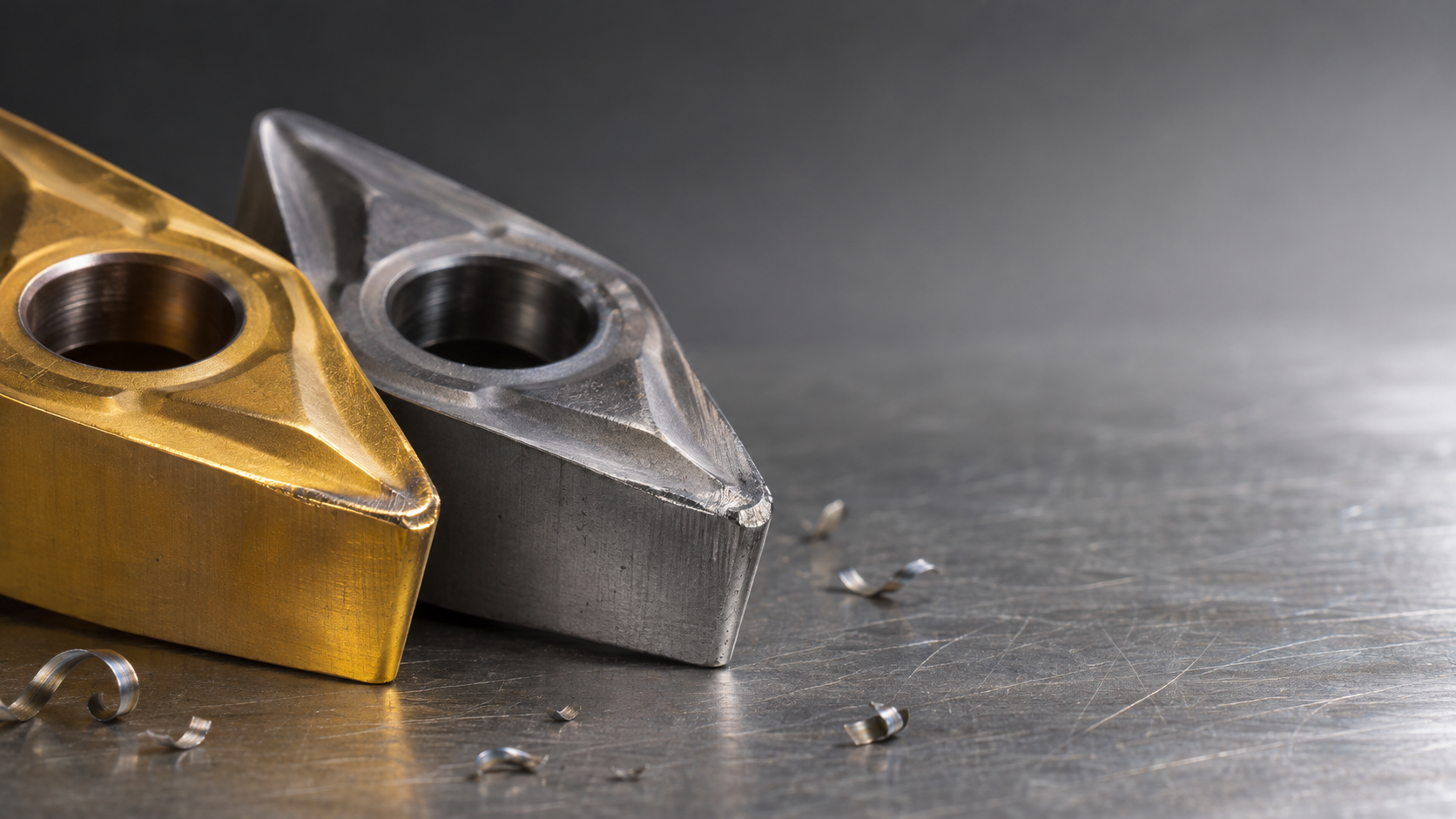
For most stable steel machining operations where heat and gradual flank wear limit tool life, a coated carbide tool is the better starting point. Uncoated carbide is worth considering when a sharp edge matters more than thermal protection, cutting speeds are relatively low, or the coating cannot prevent the dominant failure mode. Neither choice guarantees longer life: substrate grade, edge preparation, tool geometry, coolant, and cutting conditions can change the result.
The distinction matters when a turning insert wears out before the planned change interval or a milling cutter begins to chip unpredictably. Switching to a coated grade may reduce wear, but it will not necessarily cure vibration or an interrupted cut. Comparing carbide vs coated cutting tools for steel therefore starts with a clarification: both tools normally have a carbide substrate; the question is whether a coating, combined with its substrate and edge geometry, improves performance in the actual operation.
Start with the failure that limits tool life
Examine used edges before comparing catalogs. An insert that reaches a predictable flank-wear limit has a different problem from one that fractures without warning. The first may benefit from better wear and heat resistance; the second may need a tougher substrate, a stronger edge, or a more stable setup before coating selection becomes decisive.
Wear patterns can overlap. Built-up material may break away and take carbide with it, making adhesion look like pure chipping. A worn coating does not by itself prove that the coating was unsuitable: the underlying grade or cutting conditions may have overloaded the edge.
Where coating tends to earn its place
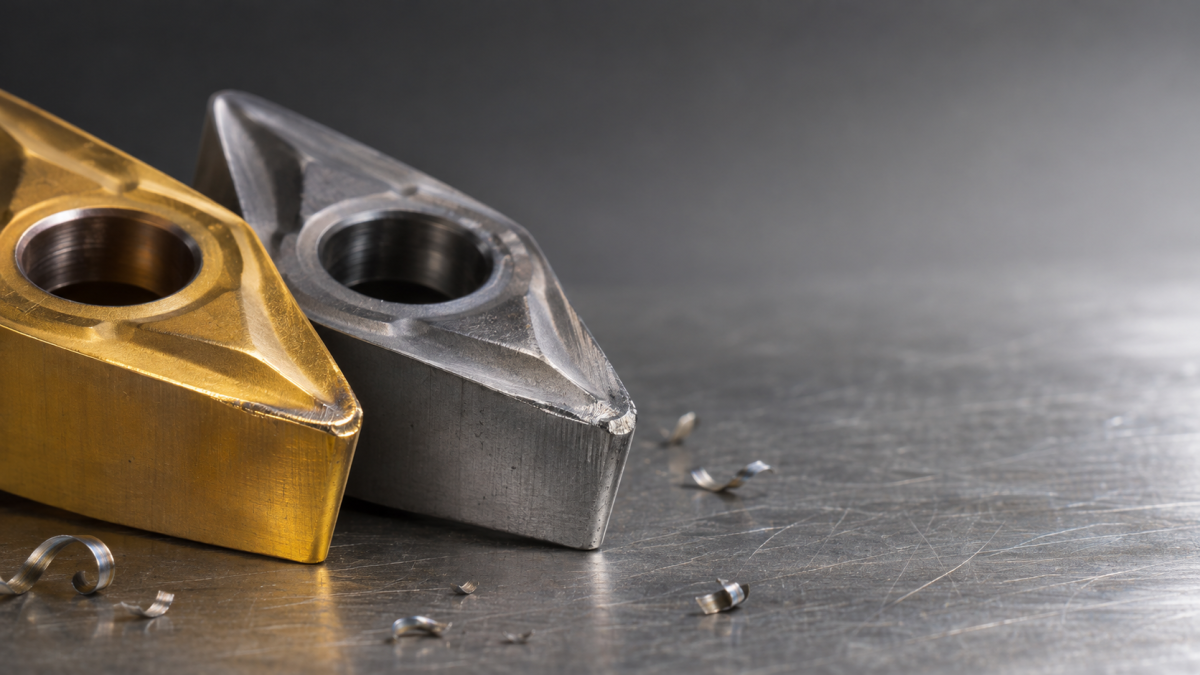
Coatings provide a barrier between the carbide and the cutting environment. Depending on their composition and application, they can improve resistance to abrasion, heat, or chemical wear. In continuous turning of steel, a coated insert is often a sensible baseline because the edge remains engaged and can experience sustained heat at the chip interface. The benefit is most relevant when the existing tool wears gradually rather than failing by impact.
Coated tools are also common in steel milling, but the evaluation is less straightforward. Each tooth enters and leaves the cut, creating mechanical and thermal cycles. A coating selected for wear resistance still needs a substrate and edge preparation capable of handling those impacts. A very wear-resistant combination is not automatically the best choice for a loose fixture, a thin-walled component, or a heavily interrupted surface.
Coating families are not interchangeable. Aluminum-containing coatings are often selected for hot cutting, while other layers may contribute wear resistance or help reduce chemical interaction. Physical vapor deposition (PVD) coatings can be used on relatively sharp edges; chemical vapor deposition (CVD) coatings are often associated with wear-resistant turning grades. These are useful starting distinctions, not rules that determine the outcome without regard to the complete insert specification.
When an uncoated edge deserves a trial
Uncoated carbide can be useful at lower cutting speeds, in light finishing cuts, or where a sharp edge helps reduce cutting forces and control a tendency toward built-up edge. It may also be a practical candidate when a short operation does not generate enough wear for a coating to provide a meaningful advantage. The relevant comparison is not simply coated versus bare: a sharper geometry or different substrate may be responsible for the improvement.
There are limits. A sharp uncoated edge can be vulnerable to chipping in an interrupted cut, and reduced thermal protection may become a disadvantage as speed or contact time rises. Likewise, a coated insert can be supplied with a sharp geometry. Check the actual edge preparation instead of treating “coated” as a synonym for “blunt.”
Match the choice to the steel and the cut
“Steel” covers materials with very different machining behavior. Note the grade, condition, hardness, and whether the surface has scale or a hardened layer. Low-carbon steels can be prone to adhesion and built-up edge; harder or abrasive conditions may accelerate wear or expose a fragile edge to chipping. Alloy content and heat treatment also affect the load and temperature at the cutting zone. A tool that performs well on one steel condition should not be transferred automatically to another.
Operation type matters just as much. In continuous turning, prioritize the wear pattern and the stability of the edge over the full engagement. For interrupted turning, such as a shaft with keyways, impact resistance and secure workholding become more important. In milling, inspect individual teeth: one damaged tooth may indicate runout or uneven loading rather than a coating problem shared by the whole cutter.
Finishing and roughing place different demands on the edge. Finishing may favor low cutting forces, a suitable nose or corner geometry, and consistent surface quality. Roughing may favor a tougher cutting edge and chipbreaker that can handle greater load. When changing between uncoated and coated inserts, keep the intended geometry and application class as comparable as possible; otherwise the result cannot be attributed to the coating alone.
Speed, feed, and depth are part of the selection
Cutting speed strongly influences temperature and wear. If a coated grade is chosen for its hot-wear resistance but is run far below its suitable range, the expected advantage may not appear. Conversely, increasing speed solely because an insert is coated can shorten life or cause an unstable process. Begin within the tool supplier’s recommended range for the specific steel and operation, then adjust against the observed failure mode.
Feed and depth of cut affect chip formation and edge loading. Too light a cut can cause rubbing rather than clean shearing; excessive loading can chip or fracture the edge. A change in coating does not correct a chipbreaker operating outside its intended range. Record these settings when evaluating alternatives, including the radial and axial engagement for milling.
Coolant can change the comparison
Coolant affects lubrication, chip evacuation, and temperature at the edge, but its effect depends on the operation and the tool grade. In turning, a consistent supply directed to the cutting zone may help chip control and manage heat. In milling, intermittent contact already produces temperature changes; coolant that reaches the teeth irregularly can add thermal shock in some conditions. Dry machining or air may be appropriate for certain milling grades and applications, subject to supplier guidance and the machine’s requirements.
Do not compare one tool under dry conditions with another under flood coolant and attribute the difference entirely to coating. Confirm concentration, delivery direction, flow consistency, and filtration where applicable. On deep or enclosed cuts, poor chip evacuation can damage an otherwise suitable edge, masking any benefit from the coating.
Compare usable life, not insert price alone
A lower purchase price can be attractive, particularly for short runs, but the practical measure is the cost of producing acceptable parts. A longer-lasting edge may reduce tool changes and interruptions; it may also allow a stable process to run at a different productive setting. Against that, a more expensive grade has little value if it fails unpredictably or requires frequent inspection to protect the workpiece.
Define the end-of-life condition before testing. It might be a specified flank-wear limit, a surface-finish requirement, dimensional drift, a burr limit, or the first sign of unacceptable chipping. Use the same criterion for each candidate. Count usable parts or cutting time per edge, and record rejected parts and unplanned stops separately. For indexed inserts, also confirm how many usable edges the geometry provides.
Consistency deserves its own assessment. An edge that occasionally lasts longer but sometimes breaks early may be a poor choice for unattended operation. Conversely, a predictable wear pattern can make scheduled replacement possible even when another grade produces a higher best-case result.
Run a comparison that can support a decision
- Document the baseline. Record the steel specification and condition, operation, tool geometry, substrate and coating if known, cutting parameters, coolant, overhang, and observed failure mode. Photograph or retain representative worn edges where practical.
- Select a relevant alternative. For gradual thermal or abrasive wear, choose a coated grade intended for the steel and operation. For adhesion or low-force finishing, consider a sharp uncoated grade or a comparable sharp coated option. Keep geometry and edge preparation as close as the available tools allow.
- Control the conditions. Use equivalent material condition, setup, engagement, and coolant delivery. Begin at safe, supplier-supported parameters. If a candidate requires different settings, record them and distinguish a same-parameter comparison from an optimized-process comparison.
- Inspect at planned intervals. Look at flank and rake wear, adhesion, chipping, surface condition, and chip formation. Stop before an edge reaches a condition that could damage the component or machine.
- Repeat across edges. A single edge can be affected by local material variation, runout, or setup changes. Compare repeatability as well as the longest observed life, using the same end-of-life rule.
If the coated candidate wears more slowly but chips earlier, investigate edge toughness, interruption, and setup before rejecting coatings as a category. If the uncoated candidate produces a cleaner finish but wears too quickly, a sharper coated geometry or a different operating range may be a better next comparison. Where wear patterns or thermal cracks remain difficult to interpret, review the used edges and operating record with the tool supplier before changing several variables at once.
PREVIOUS ARTICLE
NEXT ARTICLE
Recommended for You
![]() Japan Machine Tool Orders Rise 42% in October to Record HighGlobal Machine Tool Trade Research Center
 Uncoated vs Coated Carbide Tools for Steel: How to Choose for Tool LifeCNC Machining Technology Center
![]() Tesla Sets Up Company at EMAG Headquarters; 220 Staff May Join Robot ProjectMachine Tool Industry Editorial Team
 Shaft Parts for Energy Equipment: Material and Load Selection CriteriaCNC Machining Technology Center
![]() Changzhou Reports Strong Growth in Machine Tool and Robot ImportsGlobal Machine Tool Trade Research Center
 What Is CNC Production? From CAD Design to Finished Metal PartsCNC Machining Technology Center


Aris Katos
Future of Carbide Coatings
15+ years in precision manufacturing systems. Specialized in high-speed milling and aerospace grade alloy processing.
▶
Uncoated vs Coated Carbide Tools for Steel: How to Choose for Tool LifeCNC Machining Technology Center▶
Choosing machining tools for thin-wall electronics housingsCNC Machining Technology Center▶
What Tool Life Can You Expect from Ceramic Inserts?CNC Machining Technology Center▶
Can Inconel Be Machined Without Excessive Tool Wear?CNC Machining Technology Center▶
Which Metals Are Hardest to Machine With Standard Tools?CNC Machining Technology Center
▶
Mastering 5-Axis Workholding Strategies
Join our technical panel on Nov 15th to learn about reducing vibrations in thin-wall components.

Providing you with integrated sanding solutions
Before-sales and after-sales services
Comprehensive technical support