• Global CNC market projected to reach $128B by 2028 • New EU trade regulations for precision tooling components • Aerospace deman
NYSE: CNC +1.2%LME: STEEL -0.4%

Production Process Variations That Trigger Repeat Rework
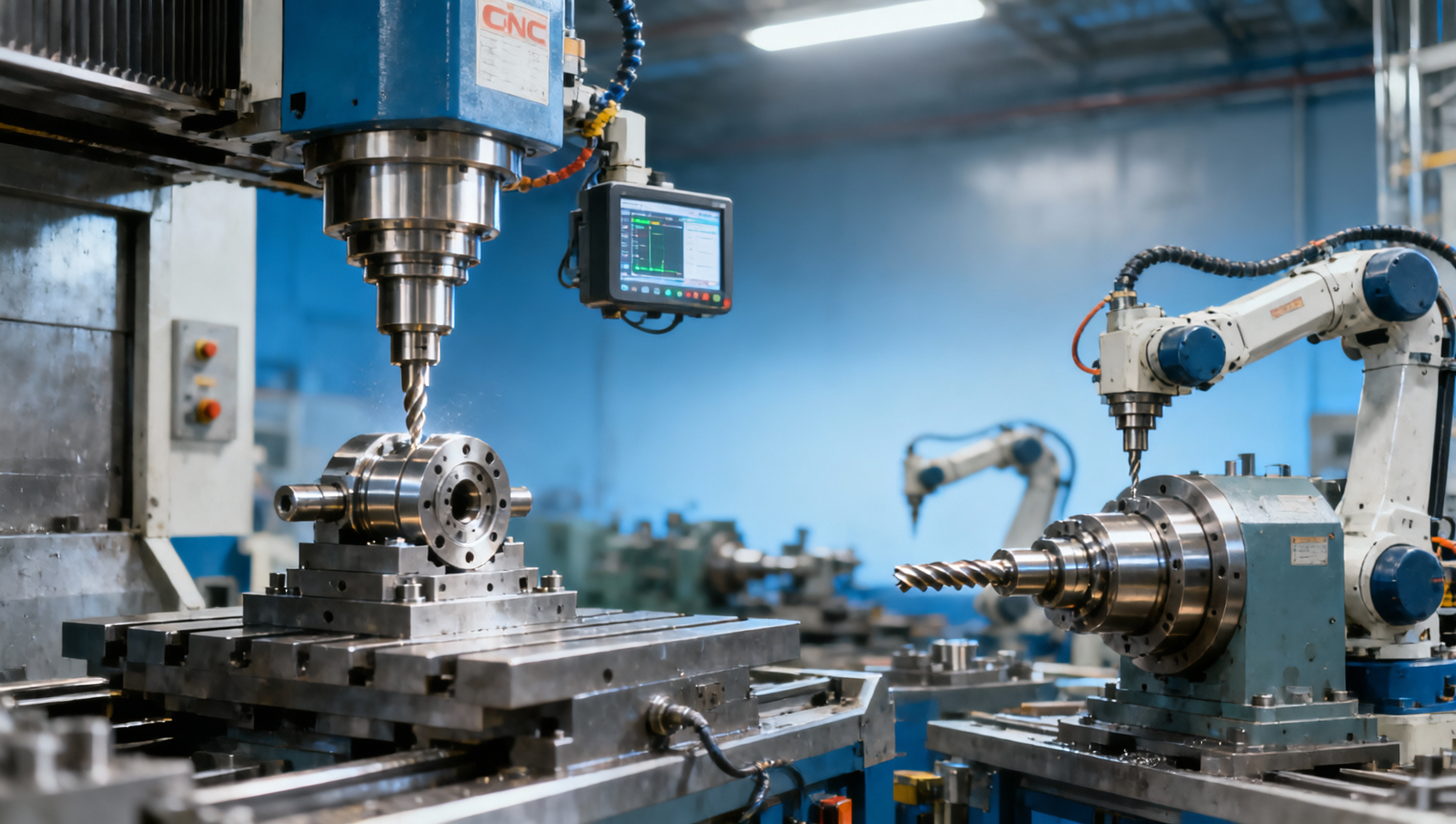
In Global Manufacturing, even minor Production Process variations can trigger repeat rework, raising costs and disrupting automated production across metal machining operations. From industrial CNC and CNC milling to automated lathe, metal lathe, and vertical lathe systems, understanding how CNC programming, tooling, and Industrial Automation interact is essential for operators, buyers, and decision-makers seeking stable CNC production and better quality outcomes.
Why small production process variations create big rework problems
Repeat rework rarely starts with one dramatic failure. In most CNC production environments, it begins with small shifts that look acceptable at first: a tool offset drifting by a few hundredths of a millimeter, coolant concentration changing over 1–2 shifts, clamping force becoming inconsistent after repeated cycles, or an updated CNC programming file not matching the latest fixture condition. When these variations stack up, the same part family may fail dimensional checks, surface finish targets, or assembly fit more than once.
For operators, the immediate pain is unstable machining behavior and repeated correction. For procurement teams, the hidden problem is not just scrap cost, but delayed delivery, extra inspection, and lower machine utilization. For business decision-makers, repeat rework damages capacity planning because a line designed for one-pass output becomes trapped in a loop of correction, verification, and rescheduling.
In metal machining, the process window is often narrower than expected. A bore tolerance of ±0.01 mm, a flatness requirement under 0.02 mm, or a concentricity target within routine production limits can still become unstable if machine warm-up, material batch behavior, and tool wear progression are not aligned. This is especially true in automated lathe cells, vertical lathe operations, and multi-machine CNC milling lines running medium to large batch volumes.
The practical lesson is simple: repeat rework is not only a quality issue. It is a process control issue across programming, machine condition, tooling, material handling, inspection timing, and Industrial Automation logic. Once companies identify where variation enters the cycle, they can reduce rework faster than by inspecting harder at the end.
Typical variation sources that trigger recurring rework
- Program-to-machine mismatch, such as an approved CNC programming revision being loaded on one machine but not on the full line.
- Tool wear compensation updated too late, especially after 50–200 parts depending on material, insert grade, and cutting parameters.
- Fixture or chuck variation causing part seating differences between operators, shifts, or machine stations.
- Thermal instability during start-up, after lunch breaks, or when long-cycle machining changes spindle and structure temperature.
- Inspection sequence gaps, where the first nonconforming signal appears only after a full tray, pallet, or batch has already been processed.
These sources matter across automotive, aerospace-support machining, energy equipment, electronics housings, and general industrial components. The more automated the line, the more important it becomes to define a stable baseline rather than rely on operator correction alone.
Where rework usually starts in industrial CNC and automated lathe lines
Many teams ask whether repeat rework is caused by the machine, the program, the tool, or the operator. In practice, it often begins at the interfaces between them. A CNC machine tool may still be within normal mechanical condition, but if tool life rules, part loading position, and probing logic are not synchronized, output becomes inconsistent. That is why root-cause reviews should follow process flow instead of department boundaries.
In CNC milling, variation often appears first in datum transfer, cutter engagement, or chip evacuation. In metal lathe and vertical lathe work, common starting points include jaw wear, chuck pressure fluctuation, bar or blank runout, and thermal growth over extended turning cycles. On automated lines, robot pick-and-place repeatability and part orientation checks may add another layer of instability if not validated every shift.
A useful way to investigate repeat rework is to separate the process into 4 checkpoints: incoming material, machine-tool-fixture state, cutting execution, and post-process verification. This helps teams identify whether the issue is random noise or a predictable drift pattern. Predictable drift is far easier to fix because it usually points to a measurable threshold, such as tool wear length, coolant contamination interval, or fixture maintenance cycle.
The table below highlights common variation points and their direct link to rework in CNC production. It is especially useful for buyers and plant managers who need a structured framework before comparing machine tools, automation upgrades, or service support plans.
This comparison shows why repeat rework is seldom solved by a single adjustment. A machine upgrade may help, but without process discipline in programming, tooling, and handling, the same defect can return within days or after the next material lot change.
How operators and engineers can narrow the root cause faster
A practical response is to compare first-piece data, mid-batch trend data, and end-of-shift results. If only late-batch parts fail, tool wear or thermal drift is more likely. If the first parts already vary between machines, look first at fixture zero, program revision, or setup method. If random defects appear every 20–40 parts, focus on chip build-up, loading repeatability, or unstable probing.
This method shortens troubleshooting time and improves communication between quality, production, maintenance, and purchasing. It also gives buyers a more realistic checklist when evaluating machine tool suppliers or automation integrators.
What buyers and plant leaders should evaluate before selecting machines or process upgrades
When repeat rework becomes frequent, many companies rush to ask for a new CNC machine, a different automated lathe, or a higher-end vertical lathe. Sometimes that is justified, but often the better question is whether the next investment will reduce variation at the source. Procurement decisions should therefore evaluate not only machine specifications, but also process stability support, integration readiness, and service response.
For information researchers and sourcing teams, 5 core dimensions usually matter most: rigidity and thermal behavior, CNC programming compatibility, tooling and fixture ecosystem, in-process inspection options, and after-sales technical support. If one of these areas is weak, repeat rework can continue even after capital investment. This is especially relevant in mixed production plants that switch between shaft parts, discs, housings, and structural components in cycles of 1 day to 2 weeks.
Decision-makers should also distinguish between stable large-batch production and flexible small-batch production. A machine optimized for long runs may not perform equally well in frequent changeover environments. Conversely, a highly flexible setup may carry a higher initial price but reduce rework and downtime across variable orders. The real cost calculation should consider the full process, not only the purchase order value.
The following table can be used as a procurement and selection guide when reviewing CNC production equipment, fixture packages, or automation support. It translates technical concerns into purchasing criteria with clearer business impact.
For many buyers, this framework changes the conversation from “Which machine is cheaper?” to “Which solution is less likely to produce repeat rework under our actual mix, tolerance, and changeover conditions?” That is the more useful decision lens in B2B manufacturing.
A practical 5-point selection checklist
- Verify the tolerance range, material family, and batch size you really run, not only the ideal benchmark part.
- Review whether the machine, fixture, and tooling package are proposed as one process solution rather than separate items.
- Ask how program control, offsets, and revisions are managed across multiple machines or shifts.
- Confirm in-process inspection capability, especially if defect detection must occur before a full pallet or tray is completed.
- Check support timing, spare part planning, and training scope for operators, setters, and maintenance staff.
This checklist is valuable whether you are sourcing a single CNC milling machine, upgrading a metal lathe cell, or planning a connected Industrial Automation line for multiple part families.
How to reduce repeat rework in day-to-day CNC production
The most effective rework reduction plans are operational, not theoretical. Plants that improve fastest usually build a short closed-loop routine combining setup verification, in-process monitoring, and response thresholds. Instead of waiting for final inspection to expose defects, they define control points at the first part, the first 5 parts, and recurring intervals such as every 20, 50, or 100 parts depending on process risk.
For operators, this means clear rules on when to stop the machine, change inserts, recheck offsets, clean fixtures, or call for engineering support. For supervisors, it means visual traceability across shifts. For management, it means less dependence on firefighting and more confidence in delivery performance. Even in highly automated production, human decision rules still matter because the line only reacts to the controls and thresholds built into it.
A practical implementation model often works in 3 stages over 2–6 weeks. Stage 1 maps the defect pattern and isolates the repeatable trigger. Stage 2 sets control limits for tooling, clamping, and program management. Stage 3 stabilizes the process through training, documentation, and periodic review. This phased approach is realistic for general manufacturing plants that cannot stop production for a full redesign.
Below is a typical control sequence that can be adapted to CNC machine tool lines, machining centers, automated lathe cells, and mixed manual-automatic production environments.
A 6-step execution routine for more stable output
- Standardize first-piece approval with machine ID, tool set, fixture status, and program revision confirmed before batch release.
- Create wear-based checkpoints for critical tools, using part count or cycle time rather than waiting for visible failure.
- Set cleaning and seating checks for fixtures, jaws, and contact faces at planned intervals such as every shift or every batch change.
- Use probing or offline inspection to detect trend drift before a full lot is produced.
- Record recurring defects by part feature, machine station, and shift so the same issue is not treated as unrelated events.
- Review outcomes weekly or monthly, then adjust thresholds, training, or tooling strategy based on actual recurrence.
Where standards and compliance fit in
While repeat rework is mainly a process issue, compliance still matters. Many manufacturers align process documentation, traceability, and corrective action records with broader quality management systems such as ISO 9001. In regulated or demanding sectors, internal validation may also reference customer drawings, PPAP-style submissions, first article inspection practices, or documented calibration intervals. The point is not paperwork for its own sake, but consistent control over the process conditions that affect part conformity.
This is especially important for exporters and multinational suppliers serving customers in China, Germany, Japan, South Korea, and other manufacturing hubs where process consistency, documentation clarity, and response speed strongly influence supplier approval and repeat orders.
Common questions, misconceptions, and next-step decisions
Teams dealing with repeat rework often share the same questions: Is the machine no longer capable? Is the automation causing the problem? Should we replace tooling, revise the process, or request external support? The right answer depends on whether the variation is structural, procedural, or operational. The FAQ below addresses the most common decision points across industrial CNC, CNC milling, metal lathe, and automated production lines.
How do we know whether rework is caused by machine accuracy or process variation?
Start by checking whether the deviation is stable, progressive, or random. A stable offset may indicate setup or program logic. A progressive drift over 2–4 hours often points to thermal growth or tool wear. Random changes usually suggest clamping inconsistency, chip interference, or handling variation. Before replacing equipment, compare results across machines, shifts, and tool sets using the same part and measurement method.
Which production environments are most vulnerable to repeat rework?
The highest risk usually appears in three situations: frequent changeovers, unattended or lightly attended automation, and mixed-part production with tight tolerances. In these environments, even small inconsistencies in offsets, fixture loading, or program revisions can multiply quickly. Plants switching jobs daily or weekly should place extra focus on setup confirmation and revision control.
What should procurement teams ask when rework is already affecting delivery?
Ask suppliers for process-oriented answers, not only machine catalog data. Useful questions include expected support timing, trial part validation method, control compatibility with your existing CNC programming flow, available probing or measurement options, and recommended tooling-fixture interface strategy. If delivery risk is high, also ask what can be implemented in 7–15 days versus what requires a longer 4–8 week improvement plan.
Is more automation always the best solution?
Not always. Industrial Automation improves consistency only when the upstream process is already defined. If loading orientation, tool life rules, datum strategy, or inspection timing are unstable, automation can simply produce defects faster. The best sequence is often to stabilize the machining process first, then automate repeatable steps with clear control logic and feedback signals.
Why choose us for process evaluation, machine selection, or sourcing support?
We focus on the global CNC machining and precision manufacturing industry, connecting machine tool trends, process knowledge, and international sourcing insight for practical decision-making. That means we can help you compare CNC machine tool options, assess whether rework is more likely tied to programming, tooling, fixturing, or automation, and narrow the gap between technical review and purchasing action.
You can contact us for concrete topics such as parameter confirmation, machine and line selection, typical delivery cycle ranges, fixture and tooling matching, process upgrade planning, sample support discussion, documentation expectations, and quotation communication. If your team is facing unstable CNC production, repeated dimensional correction, or uncertainty between upgrading equipment and optimizing process control, a focused consultation can save significant time before the next sourcing or investment decision.
PREVIOUS ARTICLE
Recommended for You
 Digital Manufacturing for Smart Factories: Connecting Legacy Machines to MESMachine Tool Industry Editorial Team
 How to Select a CNC Metal Lathe for Tight-Tolerance Shaft and Sleeve PartsCNC Machining Technology Center
 How to Select an Industrial Lathe for High-Volume Shaft ProductionMachine Tool Industry Editorial Team
 Selecting Machine Tools for Automotive Parts: Accuracy, Throughput, and AutomationMachine Tool Industry Editorial Team
 Industrial Machining: Selecting Processes for Tight-Tolerance Metal PartsCNC Machining Technology Center
 Manufacturing Technology Trends That Improve Throughput and Quality ControlManufacturing Market Research Center

Aris Katos
Future of Carbide Coatings
15+ years in precision manufacturing systems. Specialized in high-speed milling and aerospace grade alloy processing.
▶
Industrial Machining: Selecting Processes for Tight-Tolerance Metal PartsCNC Machining Technology Center▶
How Does Precision Machining Differ From Standard Machining?CNC Machining Technology Center▶
CNC Precision: Which Tolerances, Materials, and Processes Fit Your Part?CNC Machining Technology Center▶
How to Choose Metal Machining Processes for Tight Tolerances and Production VolumeCNC Machining Technology Center▶
Production Process Explained: Key Stages, Controls, and Quality CheckpointsCNC Machining Technology Center
Mastering 5-Axis Workholding Strategies
Join our technical panel on Nov 15th to learn about reducing vibrations in thin-wall components.

Providing you with integrated sanding solutions
Before-sales and after-sales services
Comprehensive technical support