• Global CNC market projected to reach $128B by 2028 • New EU trade regulations for precision tooling components • Aerospace deman
NYSE: CNC +1.2%LME: STEEL -0.4%

EU REACH Adds Restrictions on 3 Metalworking Fluid Additives

The European Chemicals Agency (ECHA) officially updated Annex XVII of the EU REACH Regulation on 27 May 2026, introducing new restrictions on N,N-dimethylformamide (DMF), triethanolamine (TEA), and certain alkylphenol ethoxylates (APEOs) in metalworking fluids. This development directly affects manufacturers and exporters of high-end cutting fluids, water-soluble coolants, and associated CNC lubrication systems — particularly those based in China supplying the EU market.
Event Overview
On 27 May 2026, ECHA adopted an amendment to REACH Annex XVII, adding DMF, TEA, and specific APEOs to the list of restricted substances in metalworking fluids. The restriction applies when the concentration of any of these substances exceeds 0.1% by weight. Affected products placed on the EU market from 1 January 2027 onward must be accompanied by a notification and a documented assessment of technically and economically feasible alternatives.
Impact on Specific Industry Segments
Export-oriented manufacturers (e.g., Chinese producers of water-soluble coolants and CNC-compatible lubricants): These companies face direct compliance obligations for EU-bound shipments. Non-compliant formulations may be rejected at EU borders or subject to enforcement actions post-import. Impact manifests in reformulation timelines, testing costs, and potential loss of market access if alternatives are not validated before the 2027 deadline.
p>Raw material suppliers (e.g., distributors of DMF, TEA, or APEO-containing surfactants): Demand for these substances in metalworking fluid applications is expected to decline in the EU supply chain. Suppliers must track formulation shifts among their downstream customers and prepare technical documentation supporting substitution pathways — especially for TEA and APEOs, which serve functional roles in emulsification and corrosion inhibition.Formulators and compounders of metalworking fluids: These entities bear primary responsibility for compliance verification and notification. They must reassess existing product portfolios, conduct compositional screening, and update safety data sheets (SDS) and labeling. Reformulation efforts may require compatibility testing with base oils, biocides, and other additives — potentially extending time-to-market for revised grades.
Distributors and importers of industrial lubricants into the EU: As legal “only representatives” or importers under REACH, they assume liability for compliance of imported batches. They must obtain and retain evidence of substance concentration assessments and alternative solution documentation from non-EU suppliers — adding administrative and verification burdens to procurement workflows.
Key Points for Enterprises and Practitioners to Monitor and Address
Track official guidance and transitional provisions
While the restriction enters into force on 1 January 2027, ECHA or the European Commission may issue clarifications on scope interpretation (e.g., whether ‘metalworking fluids’ includes neat oils, grinding fluids, or only water-miscible types). Monitoring updates from national REACH helpdesks and ECHA’s official communications remains essential.
Identify and prioritize high-risk SKUs
Companies should audit current product lines for DMF, TEA, and APEO content — focusing first on formulations where these substances exceed 0.1% and are marketed to EU-based machine tool operators or contract manufacturers. Prioritization helps allocate reformulation resources efficiently ahead of the deadline.
Distinguish regulatory signal from operational implementation
This amendment reflects a tightening of chemical safety expectations in industrial maintenance products, but it does not yet mandate immediate phase-outs across all applications. Until 2027, existing stocks meeting pre-amendment specifications remain compliant. Businesses should avoid premature inventory write-offs while initiating controlled transition planning.
Prepare technical and regulatory documentation now
Developing and validating alternatives takes time. Firms should begin compiling analytical test reports, alternative substance safety profiles, performance benchmarking data, and preliminary notifications — even before finalizing reformulated products — to streamline submission readiness by Q4 2026.
Editorial Perspective / Industry Observation
Observably, this amendment signals a broader regulatory shift toward stricter control of legacy additives in industrial process fluids — especially those with endocrine-disrupting or persistent properties. Analysis shows that DMF, TEA, and APEOs were selected not solely on acute toxicity, but on concerns related to environmental persistence (APEOs), reproductive effects (DMF), and metabolic breakdown products (TEA derivatives). From an industry perspective, the 2027 timeline suggests regulators expect feasible alternatives to already exist or be readily developable — indicating that R&D investment in green surfactants and amine-free stabilizers has likely matured enough for commercial deployment. However, the requirement to document and justify alternatives introduces a new layer of technical accountability beyond simple concentration limits — making this less a binary compliance checkpoint and more a catalyst for systematic formulation transparency.
Concluding, this REACH update marks a concrete step in the EU’s strategy to reduce hazardous substance use in industrial maintenance contexts. It is neither a sudden disruption nor a distant policy signal — rather, it represents an enforceable, near-term obligation with cascading implications across global supply chains for metalworking fluids. Current interpretation should focus on its role as a compliance trigger requiring targeted, evidence-based action — not as a general indicator of broader regulatory trends unrelated to the three specified substances or metalworking applications.
Source: European Chemicals Agency (ECHA) – Official Annex XVII amendment published 27 May 2026.
Notes for ongoing observation: Final text of the amendment, including exact definitions of ‘certain APEOs’ and scope exclusions (if any), remains pending official publication in the Official Journal of the European Union. Stakeholders should monitor ECHA’s website and national helpdesk bulletins for confirmed implementation details.
Recommended for You
![]() PSA Launches Fast-Track Customs for CNC CargoGlobal Machine Tool Trade Research Center
PSA Launches Fast-Track Customs for CNC CargoGlobal Machine Tool Trade Research Center![]() ITC Opens 337 Probe Into Chinese CNC Tool CoatingsMachine Tool Industry Editorial Team
ITC Opens 337 Probe Into Chinese CNC Tool CoatingsMachine Tool Industry Editorial Team![]() Japan Adds 5-Axis CNC Gear Grinders to Export ControlsMachine Tool Industry Editorial Team
Japan Adds 5-Axis CNC Gear Grinders to Export ControlsMachine Tool Industry Editorial Team![]() Mexico IMMEX Upgrade Ties CNC Duty Relief to Local AssemblyGlobal Machine Tool Trade Research Center
Mexico IMMEX Upgrade Ties CNC Duty Relief to Local AssemblyGlobal Machine Tool Trade Research Center![]() EU CE Rule Takes Effect for CNC Safety CertificationManufacturing Policy Research Center
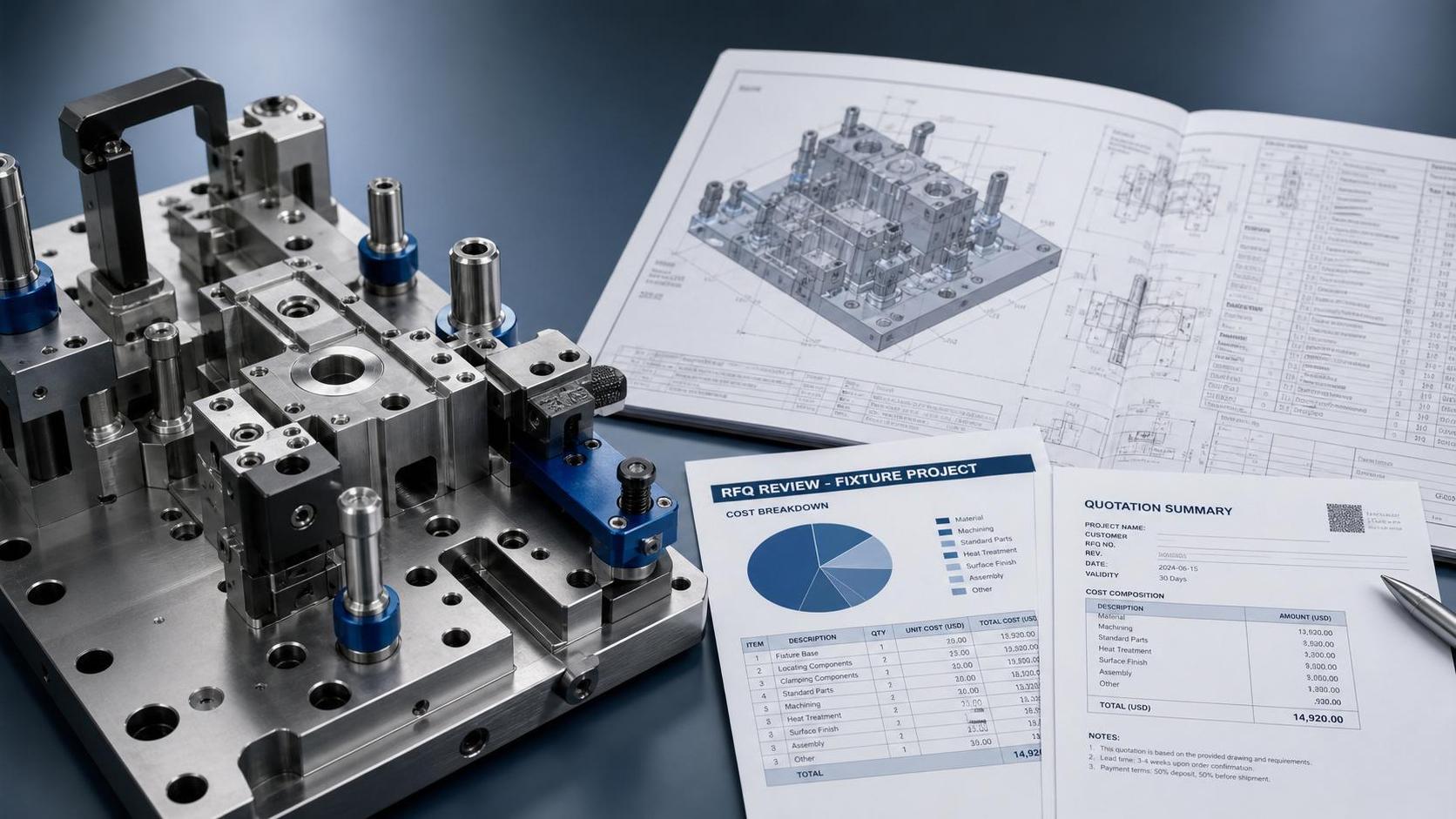
EU CE Rule Takes Effect for CNC Safety CertificationManufacturing Policy Research Center Fixture Design Cost Breakdown: What Buyers Should Review Before RFQ and ApprovalCNC Machining Technology Center

Aris Katos
Future of Carbide Coatings
15+ years in precision manufacturing systems. Specialized in high-speed milling and aerospace grade alloy processing.
▶
PSA Launches Fast-Track Customs for CNC CargoGlobal Machine Tool Trade Research Center▶
ITC Opens 337 Probe Into Chinese CNC Tool CoatingsMachine Tool Industry Editorial Team▶
Japan Adds 5-Axis CNC Gear Grinders to Export ControlsMachine Tool Industry Editorial Team▶
Mexico IMMEX Upgrade Ties CNC Duty Relief to Local AssemblyGlobal Machine Tool Trade Research Center▶
EU CE Rule Takes Effect for CNC Safety CertificationManufacturing Policy Research Center
Mastering 5-Axis Workholding Strategies
Join our technical panel on Nov 15th to learn about reducing vibrations in thin-wall components.

Providing you with integrated sanding solutions
Before-sales and after-sales services
Comprehensive technical support