• Global CNC market projected to reach $128B by 2028 • New EU trade regulations for precision tooling components • Aerospace deman
NYSE: CNC +1.2%LME: STEEL -0.4%

India Plans 15% Safeguard Duty on Imported CNC Machines

On August 1, 2026, India is set to begin a six-month trial application of a 15% safeguard duty on imported CNC lathes and machining centers under HS codes 8458.11 and 8458.19, following a notice issued by the Ministry of Commerce and Industry on July 13, 2026. For exporters, importers, procurement teams, and supply chain service providers, this is not just a tariff update: it directly affects quotation structures, delivery planning, local inventory decisions, and the lead time required for compliance and certification-related preparation.
What Has Been Officially Announced
The confirmed information shows that India's Ministry of Commerce and Industry issued a notice on July 13, 2026 regarding imported CNC lathes and machining centers classified under HS codes 8458.11 and 8458.19. According to the notice, India plans to launch a safeguard investigation on these imported products and to impose a temporary 15% safeguard duty from August 1, 2026 for 180 days. The event summary further indicates that the move will directly affect export quotations and delivery scheduling for suppliers from China, South Korea, and Southeast Asia, while importers will need to reassess local stock arrangements and the advance timing of certification and compliance work.
Where the Immediate Pressure Is Likely to Appear
Export pricing and contract execution may tighten first
From an industry perspective, the first impact point is likely to be in export-facing commercial activity. Suppliers shipping CNC lathes and machining centers into India may need to revisit pricing validity, contract terms, and shipment timing because the announced 15% temporary duty changes the landed cost basis. What deserves closer attention is whether existing quotations, pending purchase orders, and delivery commitments still align with the new trade condition once the duty period begins.
Import-side planning may shift toward stock and timing control
For importers and procurement-side businesses, the issue is not limited to duty cost. The summary makes clear that local inventory strategy will need to be reassessed. In practice, this means businesses involved in India-bound procurement may need to pay closer attention to order sequencing, stock coverage, and the timing relationship between customs-facing documentation, product readiness, and local delivery requirements. Observably, any delay in administrative preparation can interact with the temporary duty window and affect supply continuity.
Compliance and certification preparation may need earlier coordination
The event summary also points to certification and compliance lead times as a practical concern. For companies handling technical documents, qualification files, inspection records, or product-related compliance preparation, the relevant change is procedural rather than theoretical: work that was previously arranged closer to shipment may now require earlier coordination. This matters particularly where procurement, import clearance, and project delivery depend on synchronized documentation.
Supply chain service providers may face more schedule-sensitive execution
Logistics coordinators, trade service firms, and other supply chain intermediaries may also be affected because the timing of shipment, customs processing, and handover becomes more commercially sensitive under a temporary safeguard measure. Analysis shows that even without additional confirmed detail, a short-duration trade measure of 180 days can increase the importance of document accuracy, classification consistency, and delivery scheduling discipline across the transaction chain.
What Companies Should Monitor in the Next Stage
Check product classification and document consistency
Businesses dealing with CNC lathes and machining centers for the Indian market should closely verify whether their products fall within HS codes 8458.11 or 8458.19 as referenced in the notice. It is more appropriate to understand this as a basic compliance review step: classification, commercial documents, and technical descriptions should remain internally consistent, especially where quotations and shipment preparation are already underway.
Review quotation validity and delivery commitments
For exporters and distributors, current quotations and uncompleted transactions deserve immediate review in light of the announced August 1, 2026 start date and 180-day duration. Analysis shows that the practical issue is not only cost absorption, but also whether lead times, contract language, and delivery promises still reflect the changed import condition during the temporary measure period.
Bring compliance and certification work further forward
Where transactions depend on certifications, technical submissions, inspection-related materials, or other compliance files, companies should pay attention to the timing of preparation rather than assume that existing schedules remain workable. The input does not provide execution detail on how this timing will be handled in every case, so this should be treated as a monitoring point rather than a confirmed procedural outcome.
Watch for later wording, implementation practice, and market response
Because the provided information confirms a safeguard investigation together with a temporary duty arrangement, companies should continue to follow later official wording and implementation practice. What deserves closer attention is whether procurement documents, buyer requirements, and operational interpretations begin to change during the 180-day period. At this stage, those developments should be monitored, not assumed.
Why This Looks More Like an Execution Signal Than a Closed Outcome
Observably, this development should not be read as a routine tariff headline alone. It combines two elements: the opening of a safeguard investigation and the immediate use of a temporary duty for six months. Analysis shows that this creates a real operating signal for companies already selling into or sourcing for the Indian market, especially where pricing, shipment timing, and compliance preparation are interdependent. At the same time, it would be premature to treat every downstream consequence as settled, because the provided information does not define all implementation details, later clarifications, or market-side adjustments.
How the Market May Best Read This Update for Now
At this stage, the event is best understood as a concrete near-term trade rule change with direct operational implications, rather than as a fully settled long-term market outcome. The temporary 15% safeguard duty from August 1, 2026 creates an immediate need to reassess quotations, delivery plans, inventory positioning, and compliance lead times for affected CNC machine imports. A neutral reading is that the rule change is already important for ongoing business decisions, while its fuller execution impact still requires continued observation.
Basis of This Article and What Still Needs Verification
This article is generated on the basis of the user-provided news title, event date, and event summary. For events of this type, relevant source categories usually include official notices, releases from regulatory authorities, customs or trade administration information, industry association updates, standards-related documents, and reporting by established trade or business media. No specific official source link was provided in the input, so the exact official publication link remains to be verified on an ongoing basis. Further monitoring is still needed for any detailed implementation language, compliance interpretation, procurement document changes, market feedback, and enterprise-level execution practices that may emerge after the announced start date.
NEXT ARTICLE
Recommended for You
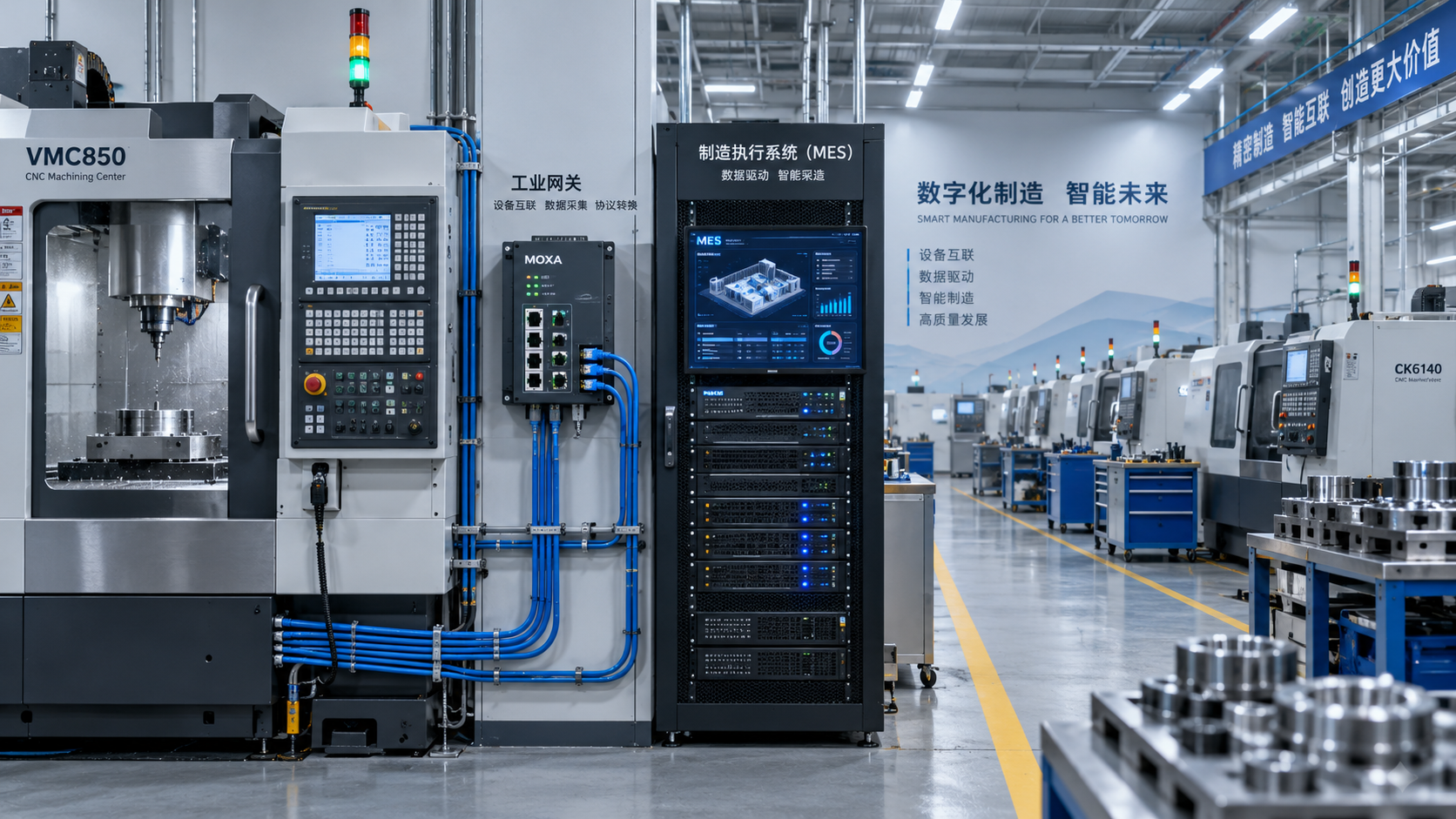
 Digital Manufacturing for Smart Factories: Connecting Legacy Machines to MESMachine Tool Industry Editorial Team
 How to Select a CNC Metal Lathe for Tight-Tolerance Shaft and Sleeve PartsCNC Machining Technology Center
 How to Select an Industrial Lathe for High-Volume Shaft ProductionMachine Tool Industry Editorial Team
 Selecting Machine Tools for Automotive Parts: Accuracy, Throughput, and AutomationMachine Tool Industry Editorial Team
 Industrial Machining: Selecting Processes for Tight-Tolerance Metal PartsCNC Machining Technology Center
 Manufacturing Technology Trends That Improve Throughput and Quality ControlManufacturing Market Research Center





Aris Katos
Future of Carbide Coatings
15+ years in precision manufacturing systems. Specialized in high-speed milling and aerospace grade alloy processing.
▶
日本高端机床出口管制生效,五轴CNC审批趋严Global Machine Tool Trade Research Center▶
Japan Tightens Controls on High-End Machine Tool ExportsGlobal Machine Tool Trade Research Center▶
US Proposes 25% Tariff on China CNC Servo DrivesGlobal Machine Tool Trade Research Center▶
US Adds 37 Chinese Machine Tool Firms to Export ListGlobal Machine Tool Trade Research Center▶
US Tightens CNC Export Curbs, Adds 52 China EntitiesGlobal Machine Tool Trade Research Center
Mastering 5-Axis Workholding Strategies
Join our technical panel on Nov 15th to learn about reducing vibrations in thin-wall components.

Providing you with integrated sanding solutions
Before-sales and after-sales services
Comprehensive technical support