• Global CNC market projected to reach $128B by 2028 • New EU trade regulations for precision tooling components • Aerospace deman
NYSE: CNC +1.2%LME: STEEL -0.4%

How an Automated Production Line affects maintenance needs
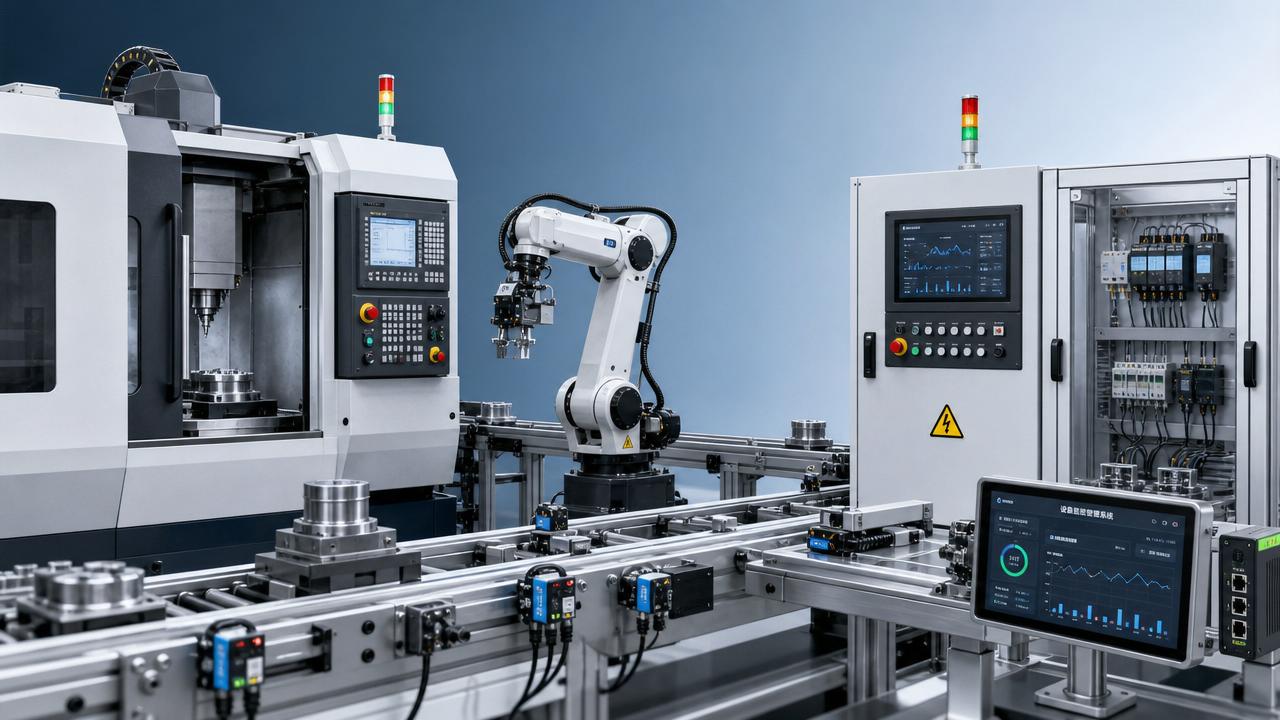
An Automated Production Line can greatly improve output, precision, and consistency, but it also changes how after-sales maintenance teams plan inspections, respond to faults, and manage spare parts. As CNC systems and automation become more connected, maintenance needs shift from basic repair work to preventive strategies, data-based monitoring, and faster technical support.
For after-sales maintenance personnel in the CNC machine tool and precision manufacturing sector, this shift is not a small operational detail. It affects service schedules, technician skills, spare-parts planning, fault isolation, and customer communication across the full equipment lifecycle.
A conventional standalone CNC machine may allow localized troubleshooting, but an Automated Production Line links machine tools, conveyors, robots, sensors, control cabinets, safety systems, and software into one interdependent process. When one node stops, the full line may lose 20% to 100% of its planned output.
That is why maintenance requirements in automated manufacturing are becoming broader and more time-sensitive. Teams are expected to reduce unplanned downtime, support remote diagnostics, and restore production within tight response windows such as 2 to 4 hours for key faults.
Why an Automated Production Line changes maintenance work
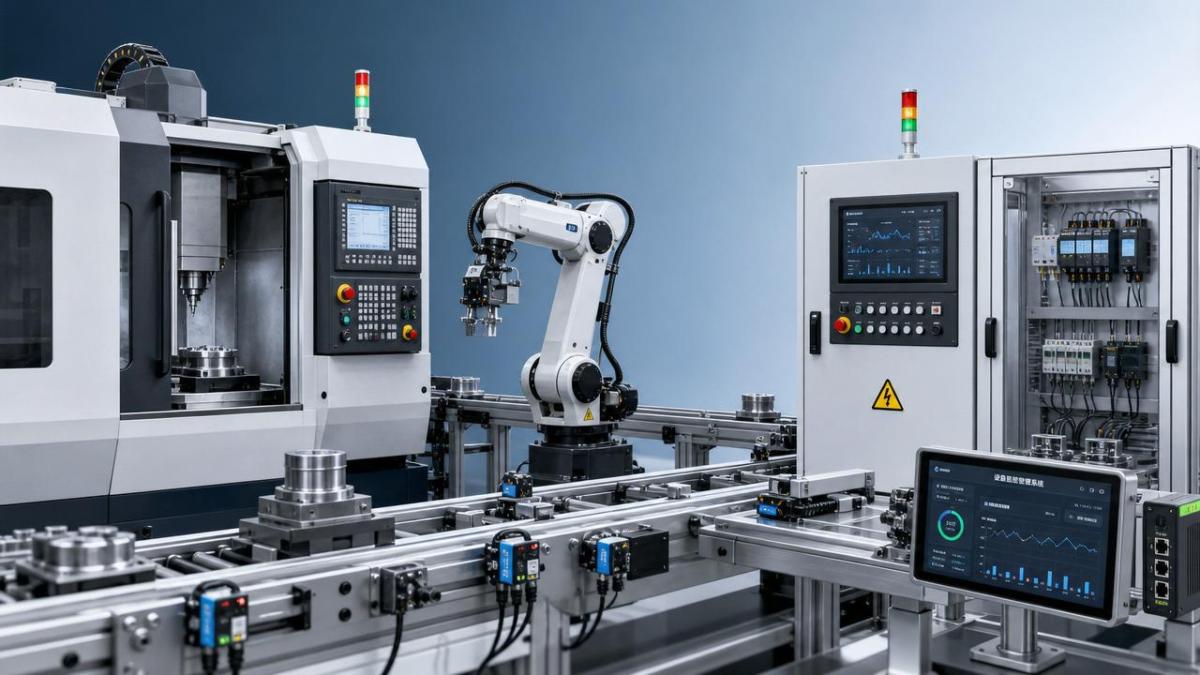
The main difference is system dependency. In a manual or semi-automatic workshop, one lathe or machining center can often be serviced without shutting down the whole area. In an Automated Production Line, robotic loading, pallet transfer, probing, tool management, and PLC communication are tightly linked.
This means maintenance is no longer only about spindle alarms, axis backlash, lubrication, or coolant issues. It also includes communication faults, servo coordination, sensor drift, safety interlock logic, robot teaching offsets, and upstream-downstream timing errors.
From single-machine repair to system-level support
After-sales teams must now evaluate the line as a complete production unit. A fault in a 24V sensor, barcode reader, pneumatic valve, or conveyor stop can block multiple CNC stations. In many factories, one minor electrical issue can idle 3 to 8 machines at the same time.
This raises the cost of delayed diagnosis. A repair that once had a local impact for 30 minutes may now cause 2 to 6 hours of cumulative production loss, especially in automotive, electronics, and high-mix precision machining environments.
Maintenance shifts toward prediction and coordination
A modern Automated Production Line generates more operational data than standalone machines. Vibration trends, spindle load history, cycle time deviations, alarm frequency, temperature changes, and tool-life records can all support preventive maintenance decisions.
Instead of waiting for failure, service teams increasingly set inspection cycles at 250, 500, or 1,000 operating hours depending on machine duty. High-speed machining cells, multi-axis systems, and robot-assisted stations often require shorter review intervals than low-utilization lines.
Typical maintenance impact points
- More subsystems to inspect: CNC, PLC, servo drives, robot controller, vision system, and safety circuit.
- Shorter acceptable response times: critical lines may require remote feedback within 15 to 30 minutes.
- Higher spare-parts complexity: one line may involve 50 to 200 regularly referenced components.
- Greater software dependency: ladder logic, HMI screens, communication settings, and parameter backup become essential.
The table below shows how maintenance needs typically change when a manufacturer moves from standalone CNC equipment to an Automated Production Line.
The key takeaway is that line automation increases both maintenance depth and maintenance reach. Service teams need broader technical coverage, faster escalation routines, and stronger coordination with operators, production managers, and spare-parts planners.
What after-sales maintenance teams must manage differently
An Automated Production Line does not simply increase the number of components. It changes how teams prioritize work. The most effective maintenance organizations usually divide service into 3 layers: routine inspection, predictive monitoring, and rapid fault recovery.
1. Inspection planning becomes more structured
Routine maintenance on automated lines should be scheduled by risk level, not only by calendar date. A spindle running 18 to 20 hours per day needs a different service rhythm than an indexing table used only in one shift.
Many after-sales teams use 4 maintenance layers: daily visual checks, weekly function tests, monthly subsystem review, and quarterly line-level validation. This structure helps catch small failures before they stop the full production flow.
Core daily and weekly checks
- Check alarms, cycle time deviations, and emergency stop records.
- Inspect lubrication, air pressure, coolant condition, and chip removal.
- Verify robot gripper repeatability, sensor response, and transfer positioning.
- Review tool-life alarms, offset changes, and spindle load spikes over the last 24 to 72 hours.
2. Fault response must be faster and more systematic
In a connected manufacturing line, maintenance speed depends on diagnosis discipline. Teams should first define whether the stop is mechanical, electrical, pneumatic, software-related, or process-interlock related. This can reduce unnecessary disassembly and save 30 to 90 minutes per event.
A strong fault process often follows 5 steps: confirm alarm source, isolate affected station, verify upstream and downstream conditions, check recent parameter changes, and restore with test cycles before full production restart.
3. Spare-parts management becomes a service priority
Spare-parts strategy matters more in automation because downtime costs spread across multiple stations. Keeping only mechanical wear parts is no longer enough. Critical parts usually include sensors, I/O modules, servo cables, pneumatic valves, relays, HMI touch panels, and encoder-related items.
For many CNC-based automated cells, it is practical to classify spares into A, B, and C groups. A-parts are line-stopping components that should be stored on site. B-parts are needed within 24 to 72 hours. C-parts can follow standard procurement cycles.
The following table provides a practical spare-parts and response framework for after-sales maintenance teams working with an Automated Production Line.
The practical message is clear: fast maintenance depends as much on preparation as on technical skill. Without the right spare parts, backups, and alarm history, even experienced technicians may struggle to restore a line quickly.
Key risks in automated CNC lines and how to reduce them
In the CNC machine tool industry, line failures often come from interface problems rather than major hardware breakdown. A spindle can run normally while a robot handshake signal, part-clamp confirmation, or conveyor-ready status causes the actual stop.
For after-sales maintenance personnel, reducing these risks requires both technical routines and documentation discipline. Small configuration errors can return repeatedly if parameter changes are not recorded in service reports.
Common risk areas
- Communication instability between CNC, PLC, and robot controller.
- Sensor contamination from coolant mist, chips, or fine dust over 2 to 6 weeks of production.
- Insufficient air quality causing valve sticking, pressure fluctuation, or gripper failure.
- Untracked software adjustments after commissioning or process optimization.
- Mismatch between preventive maintenance plans and actual machine utilization rates.
Control measures that usually work
A practical maintenance plan should define measurable thresholds. Examples include compressed air pressure ranges, coolant concentration bands, vibration alert levels, and maximum alarm recurrence counts within 7 days. Once thresholds are exceeded, teams can escalate before full failure occurs.
For high-value machining lines in aerospace, energy equipment, and automotive supply chains, many service teams also perform monthly backup verification and quarterly emergency recovery drills. This improves restart confidence when a controller, panel, or software file is replaced.
How to build a stronger maintenance model for an Automated Production Line
The best maintenance model combines field service capability with digital support. This is especially important in global CNC and precision manufacturing, where customers may operate lines across multiple plants, shifts, and product variants.
Use data for preventive maintenance
When spindle load, cycle time, or alarm trends are reviewed weekly, recurring faults become easier to predict. A 5% to 8% increase in cycle time at one station may indicate fixture wear, chip evacuation problems, or robot handling inconsistency before a major stop appears.
Even simple monitoring can help. Teams that compare the last 30 days of alarms with the previous 30 days often identify repeated failure points, helping them adjust spare-parts stocking and inspection frequency with more precision.
Strengthen technician training
An Automated Production Line requires multi-skill technicians. Mechanical experience alone is no longer enough. Effective after-sales teams often train personnel in 4 areas: CNC diagnostics, PLC logic reading, robot basic recovery, and industrial communication troubleshooting.
A practical training cycle may run every 3 to 6 months, with scenario-based drills for emergency stop recovery, sensor replacement, backup restoration, and line restart validation. This reduces dependence on one senior specialist and improves service continuity.
Standardize service records
Maintenance records should capture more than the replaced part number. Useful reports include alarm code, root cause, affected station, downtime duration, temporary action, permanent corrective action, and whether software parameters changed during service.
Over a 6 to 12 month period, this data becomes a strong basis for service improvement, customer planning, and future line upgrades. It also helps maintenance teams justify spare-parts budgets and recommend targeted retrofit actions.
Questions maintenance teams should ask during line review
- Which 3 fault types caused the most downtime in the last quarter?
- Are critical spares available on site for the top 10 failure points?
- Have CNC, PLC, and robot backups been updated after the latest process changes?
- Do current inspection intervals match actual utilization and production intensity?
Practical guidance for service planning and customer support
For equipment suppliers, integrators, and service organizations in the CNC sector, maintenance planning is also a customer retention issue. A reliable Automated Production Line support model reduces emergency visits, improves restart speed, and strengthens trust in long-term service contracts.
Customers usually value 4 things most: quick diagnosis, clear spare-parts advice, realistic preventive schedules, and transparent escalation routes. When these elements are defined early, service delivery becomes more predictable for both sides.
What customers expect from after-sales maintenance
- Remote initial response within an agreed window such as 30 minutes to 2 hours.
- On-site support rules for critical failures, including holiday and night-shift conditions.
- Clear recommendations on consumables, wear parts, and annual replacement items.
- Support for software backup, parameter recovery, and process restart after faults.
An Automated Production Line delivers major production benefits, but it also raises the standard for maintenance readiness. In CNC machining, precision manufacturing, and robot-assisted production, the strongest service teams are those that combine preventive routines, spare-parts discipline, digital diagnostics, and structured fault recovery.
If you are evaluating maintenance plans, upgrading service procedures, or preparing support for a new automated line, the right strategy can reduce downtime, improve lifecycle stability, and protect production targets across complex manufacturing environments. Contact us today to discuss your maintenance challenges, get a tailored support plan, or learn more about practical solutions for Automated Production Line service and CNC after-sales operations.
Recommended for You
 Digital Manufacturing for Smart Factories: Connecting Legacy Machines to MESMachine Tool Industry Editorial Team
 How to Select a CNC Metal Lathe for Tight-Tolerance Shaft and Sleeve PartsCNC Machining Technology Center
 How to Select an Industrial Lathe for High-Volume Shaft ProductionMachine Tool Industry Editorial Team
 Selecting Machine Tools for Automotive Parts: Accuracy, Throughput, and AutomationMachine Tool Industry Editorial Team
 Industrial Machining: Selecting Processes for Tight-Tolerance Metal PartsCNC Machining Technology Center
 Manufacturing Technology Trends That Improve Throughput and Quality ControlManufacturing Market Research Center

Aris Katos
Future of Carbide Coatings
15+ years in precision manufacturing systems. Specialized in high-speed milling and aerospace grade alloy processing.
▶
Digital Manufacturing for Smart Factories: Connecting Legacy Machines to MESMachine Tool Industry Editorial Team▶
Selecting Machine Tools for Automotive Parts: Accuracy, Throughput, and AutomationMachine Tool Industry Editorial Team▶
Smart Manufacturing for Small Businesses: Where Automation Delivers the Fastest ROIMachine Tool Industry Editorial Team▶
How Smart Manufacturing Technology Improves OEE Across Industry 4.0 Production LinesMachine Tool Industry Editorial Team▶
How to Evaluate an Automation Line for Electronics Production Before InvestmentMachine Tool Industry Editorial Team
Mastering 5-Axis Workholding Strategies
Join our technical panel on Nov 15th to learn about reducing vibrations in thin-wall components.

Providing you with integrated sanding solutions
Before-sales and after-sales services
Comprehensive technical support