• Global CNC market projected to reach $128B by 2028 • New EU trade regulations for precision tooling components • Aerospace deman
NYSE: CNC +1.2%LME: STEEL -0.4%

Hainan Sanya AI Tech Conference Launches, Embodied AI Production Lines Accelerate Global Deployment

The 2026 Hainan (Sanya) Artificial Intelligence Technology Conference opened on May 19, 2026, with a focus on the integration of physical AI and intelligent manufacturing. This event signals emerging implications for industrial automation suppliers, overseas factory upgrade projects, and cross-border equipment integration services — particularly in markets adopting ISO/IEC 23053:2025 and OPC UA over TSN standards.
Event Overview
The 2026 Hainan (Sanya) Artificial Intelligence Technology Conference commenced on May 19, 2026. It centered on ‘physical AI’ and its convergence with smart manufacturing. Several Chinese automation line integrators showcased modular flexible assembly units compliant with ISO/IEC 23053:2025 (Industrial Embodied AI System Framework), interoperable with ABB and Fanuc robot interfaces, and supporting OPC UA over TSN communication. These solutions have undergone small-batch validation at VinFast’s facilities in Vietnam and Stellantis’ plants in Mexico. Reported delivery cycles are now compressed to 12 weeks.
Which Subsectors Are Affected
Industrial Automation System Integrators
These firms face increasing pressure to align product architecture with ISO/IEC 23053:2025 — a newly published international standard. The validation at VinFast and Stellantis indicates early market acceptance of modular, protocol-agnostic embodied AI units, potentially reshaping tender requirements in overseas smart factory upgrades.
Robotics Component Suppliers
Suppliers of motion controllers, safety modules, and real-time I/O hardware must verify compatibility with both ABB/Fanuc native interfaces and OPC UA over TSN stacks. The emphasis on plug-and-play interoperability means interface certification — not just functional performance — is becoming a differentiator in export bids.
Contract Manufacturers Serving Global OEMs
Firms operating in Vietnam, Mexico, and other nearshoring hubs may encounter tighter integration timelines. With validated delivery cycles reduced to 12 weeks, procurement teams will likely prioritize vendors pre-qualified for ISO/IEC 23053:2025 compliance and TSN-enabled commissioning — shifting evaluation criteria beyond cost and lead time alone.
Cross-Border Engineering & Commissioning Service Providers
Service providers supporting overseas line deployment must now accommodate dual-stack commissioning workflows: legacy fieldbus-based validation alongside TSN-synchronized distributed control testing. The small-batch validations suggest demand for localized engineering support capable of bridging robotics OEM protocols and enterprise-level OPC UA information models.
What Enterprises or Practitioners Should Focus On Now
Monitor official adoption signals in key target markets
While ISO/IEC 23053:2025 is newly published, its inclusion in verified deployments at VinFast and Stellantis implies early-stage institutional uptake. Observably, Vietnamese and Mexican industrial policy documents issued after Q2 2026 should be reviewed for references to this standard in smart manufacturing incentives or technical specifications.
Assess readiness for OPC UA over TSN integration in current product roadmaps
Analysis shows that TSN capability is no longer optional for new-generation embodied AI units targeting export. Firms should audit whether their existing control hardware supports IEEE 802.1AS-2020 timing synchronization and IEEE 802.1Qbv time-aware shaping — prerequisites for OPC UA over TSN conformance.
Distinguish between pilot validation and scalable deployment
The reported 12-week delivery cycle applies only to small-batch verification at two sites. Current more relevant is whether these units can maintain cycle time under full-line integration scope — including MES connectivity, digital twin synchronization, and cybersecurity certification (e.g., IEC 62443). Procurement teams should request evidence beyond functional testing reports.
Prepare documentation packages aligned with international factory acceptance test (FAT) protocols
Export-ready embodied AI units require FAT documentation covering not only mechanical and electrical checks but also protocol conformance (e.g., UA Expert validation logs), timing jitter measurements (<1 µs), and robot interface handshake sequences. Preparing these in advance reduces on-site commissioning delays in overseas factories.
Editorial Perspective / Industry Observation
This event is better understood as an early signal — not yet a market inflection point — of embodied AI moving from lab demonstration to production-grade interoperability. The fact that multiple Chinese integrators launched standardized, export-validated units simultaneously suggests coordinated upstream readiness (e.g., chip-level TSN support, middleware development) rather than isolated innovation. However, widespread adoption hinges on OEMs incorporating ISO/IEC 23053:2025 into formal RFP language — which has not yet occurred outside pilot contexts. From industry perspective, the significance lies less in the conference itself and more in the convergence of three elements: a ratified international framework, vendor-ready implementations, and real-world validation at globally recognized automotive plants.
Conclusion
The 2026 Sanya AI Conference marks the first public alignment of embodied AI system architecture with internationally recognized industrial interoperability standards — backed by tangible overseas validation. It does not indicate immediate market transformation, but rather confirms that foundational technical and procedural conditions for scalable export of modular intelligent production units are now in place. Currently, this is best interpreted as a capability milestone: one that shifts competitive advantage toward vendors with documented conformance, not just conceptual prototypes.
Source Attribution
Main source: Official announcements and exhibitor disclosures from the 2026 Hainan (Sanya) Artificial Intelligence Technology Conference, held May 19, 2026. Note: Validation status at VinFast and Stellantis facilities, delivery cycle data, and protocol compliance claims are based solely on statements released during the event. Further confirmation of scale-up, certification scope, and OEM procurement policy updates remains subject to ongoing observation.
PREVIOUS ARTICLE
Recommended for You
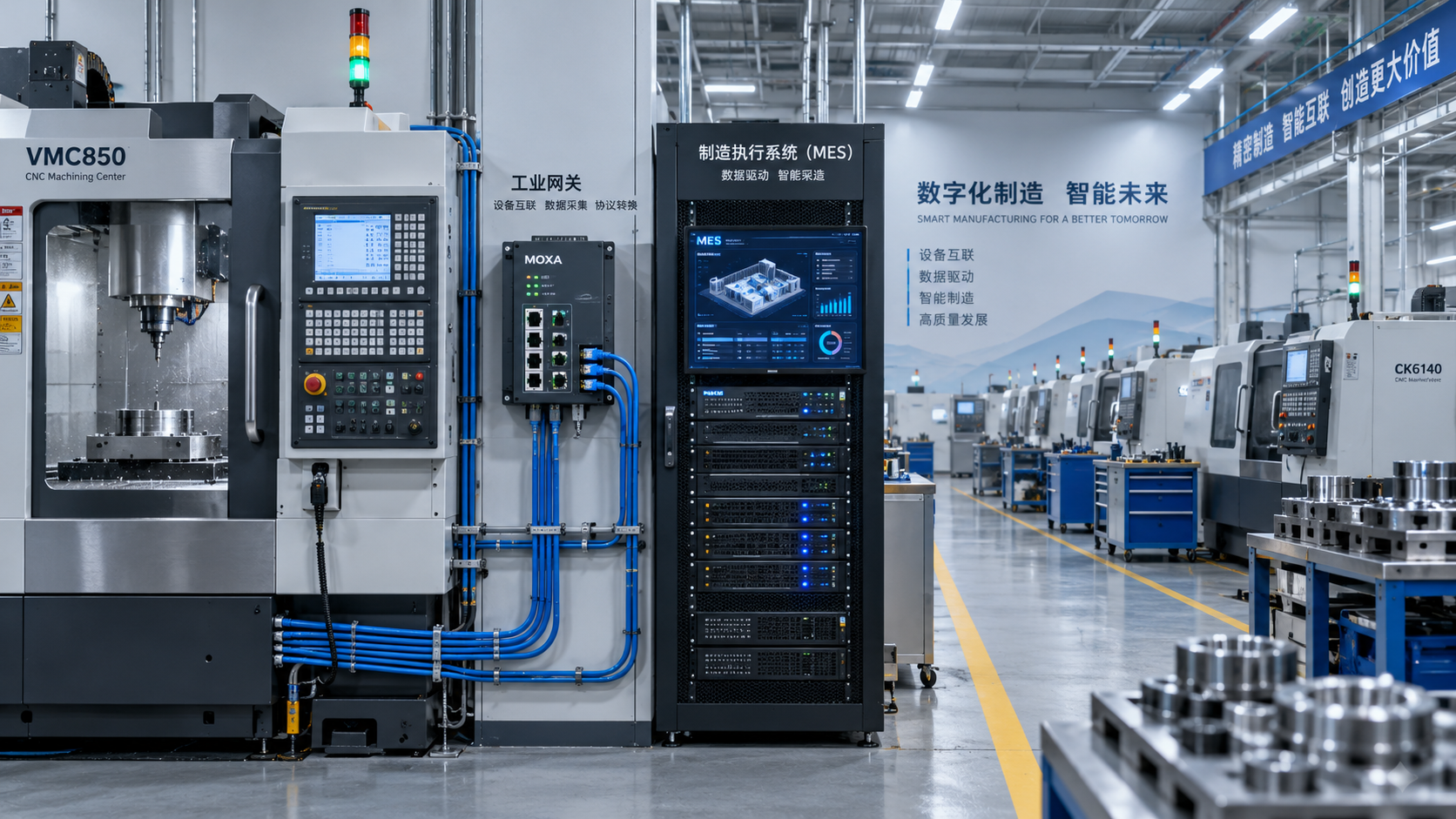
 Digital Manufacturing for Smart Factories: Connecting Legacy Machines to MESMachine Tool Industry Editorial Team
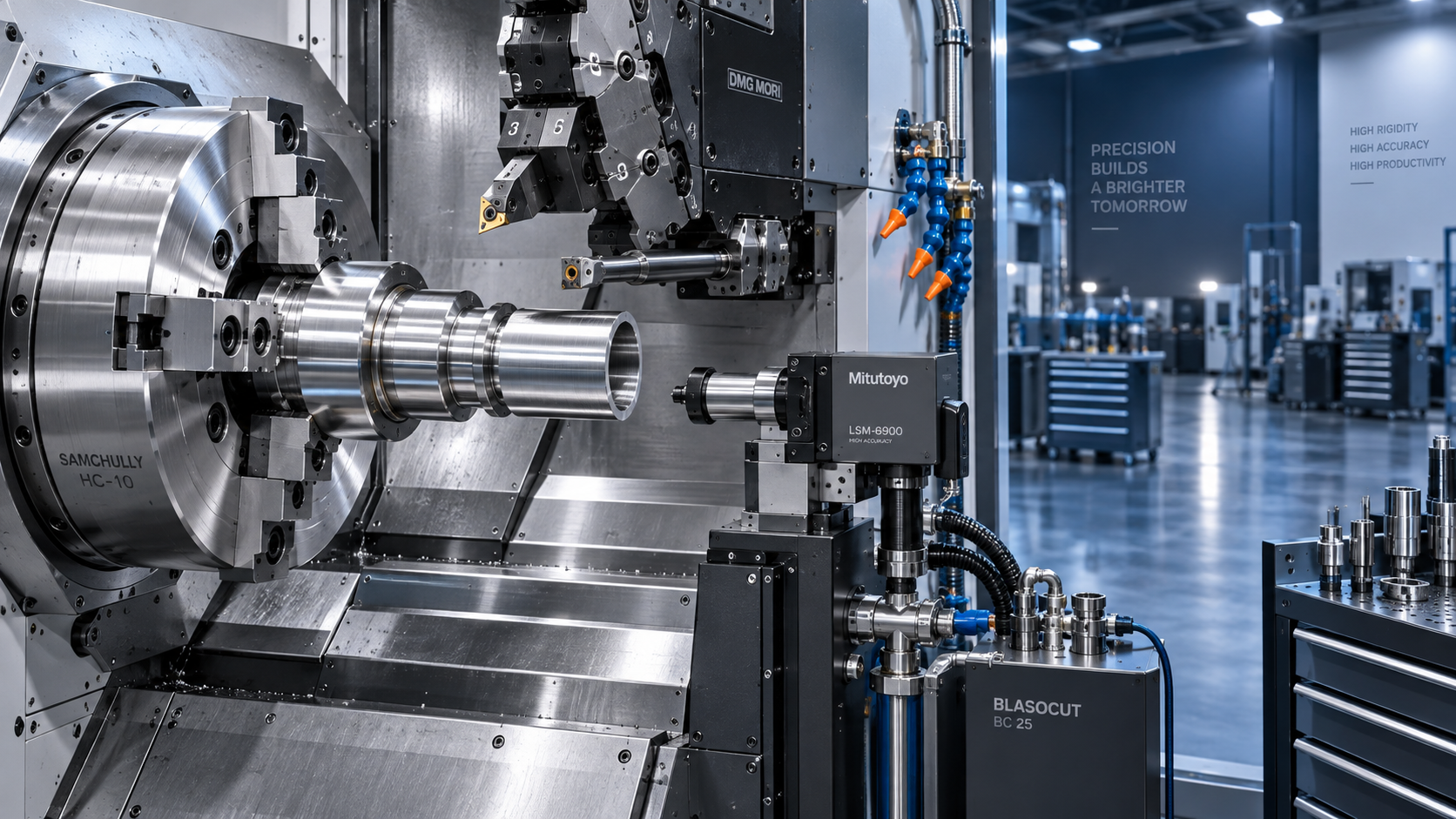
 How to Select a CNC Metal Lathe for Tight-Tolerance Shaft and Sleeve PartsCNC Machining Technology Center
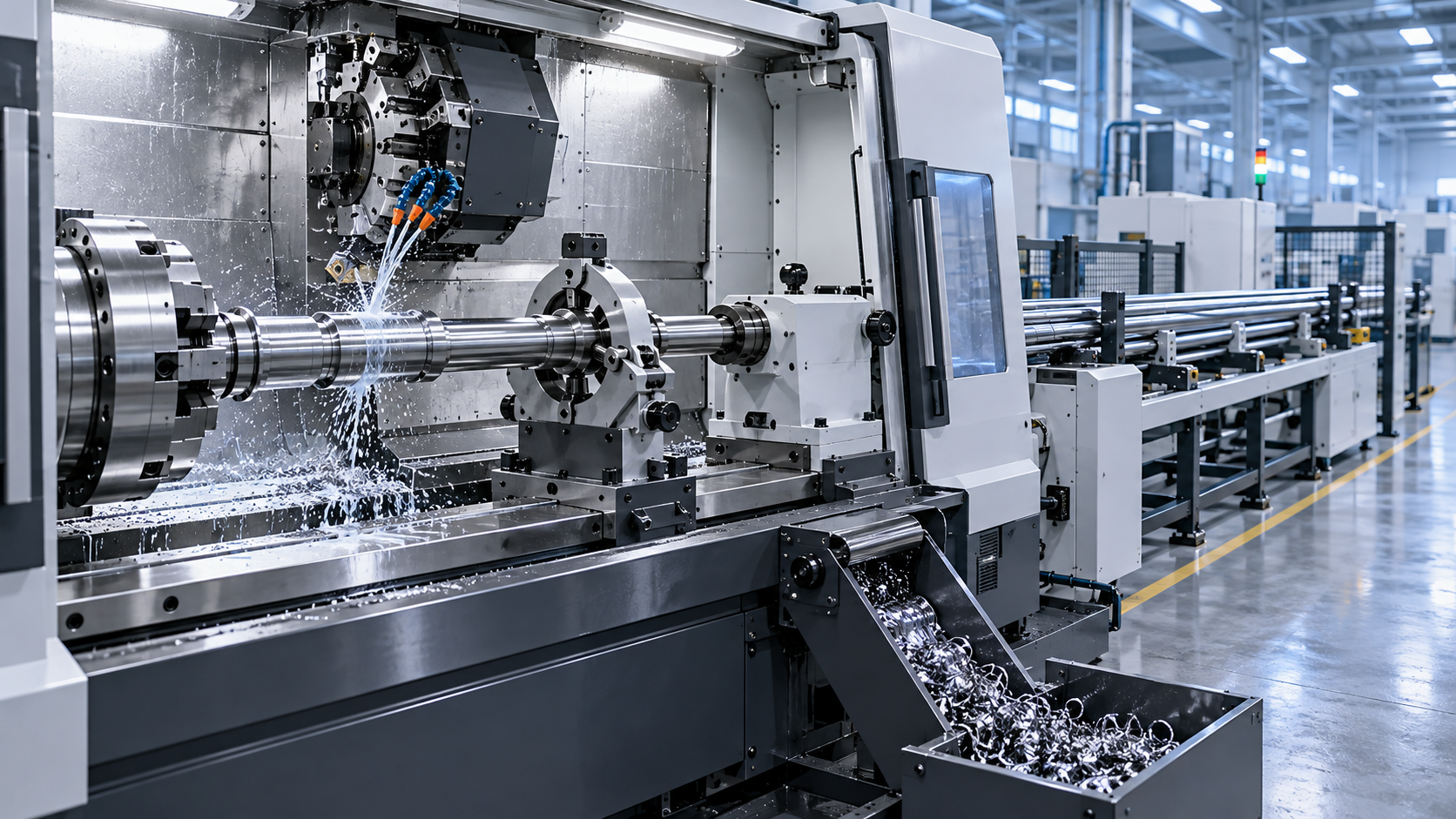
 How to Select an Industrial Lathe for High-Volume Shaft ProductionMachine Tool Industry Editorial Team
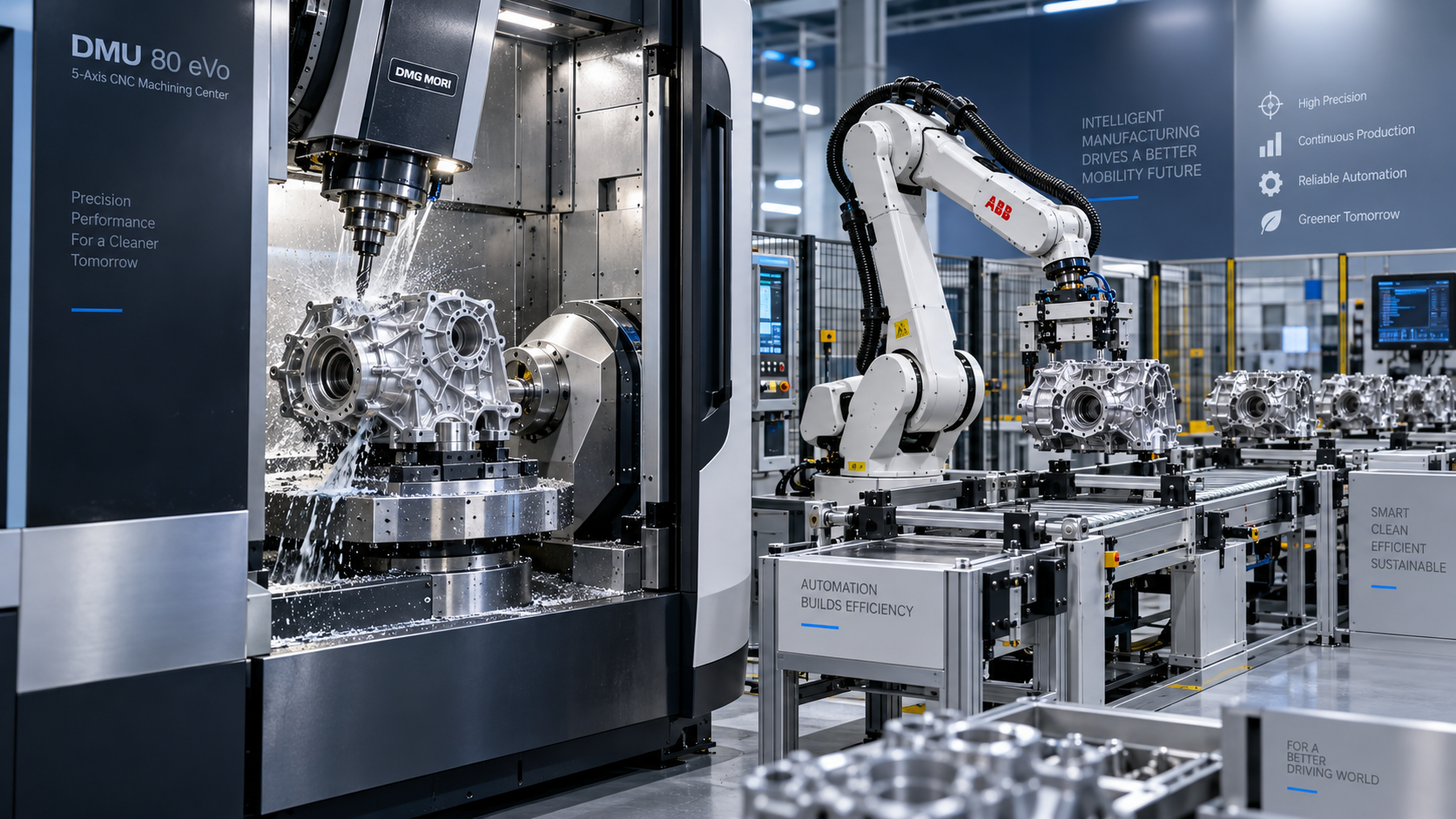
 Selecting Machine Tools for Automotive Parts: Accuracy, Throughput, and AutomationMachine Tool Industry Editorial Team
 Industrial Machining: Selecting Processes for Tight-Tolerance Metal PartsCNC Machining Technology Center
 Manufacturing Technology Trends That Improve Throughput and Quality ControlManufacturing Market Research Center

Aris Katos
Future of Carbide Coatings
15+ years in precision manufacturing systems. Specialized in high-speed milling and aerospace grade alloy processing.
▶
Digital Manufacturing for Smart Factories: Connecting Legacy Machines to MESMachine Tool Industry Editorial Team▶
Selecting Machine Tools for Automotive Parts: Accuracy, Throughput, and AutomationMachine Tool Industry Editorial Team▶
Smart Manufacturing for Small Businesses: Where Automation Delivers the Fastest ROIMachine Tool Industry Editorial Team▶
How Smart Manufacturing Technology Improves OEE Across Industry 4.0 Production LinesMachine Tool Industry Editorial Team▶
How to Evaluate an Automation Line for Electronics Production Before InvestmentMachine Tool Industry Editorial Team
Mastering 5-Axis Workholding Strategies
Join our technical panel on Nov 15th to learn about reducing vibrations in thin-wall components.

Providing you with integrated sanding solutions
Before-sales and after-sales services
Comprehensive technical support