• Global CNC market projected to reach $128B by 2028 • New EU trade regulations for precision tooling components • Aerospace deman
NYSE: CNC +1.2%LME: STEEL -0.4%

How to Choose a Modular Tooling System for Flexible Manufacturing Cells
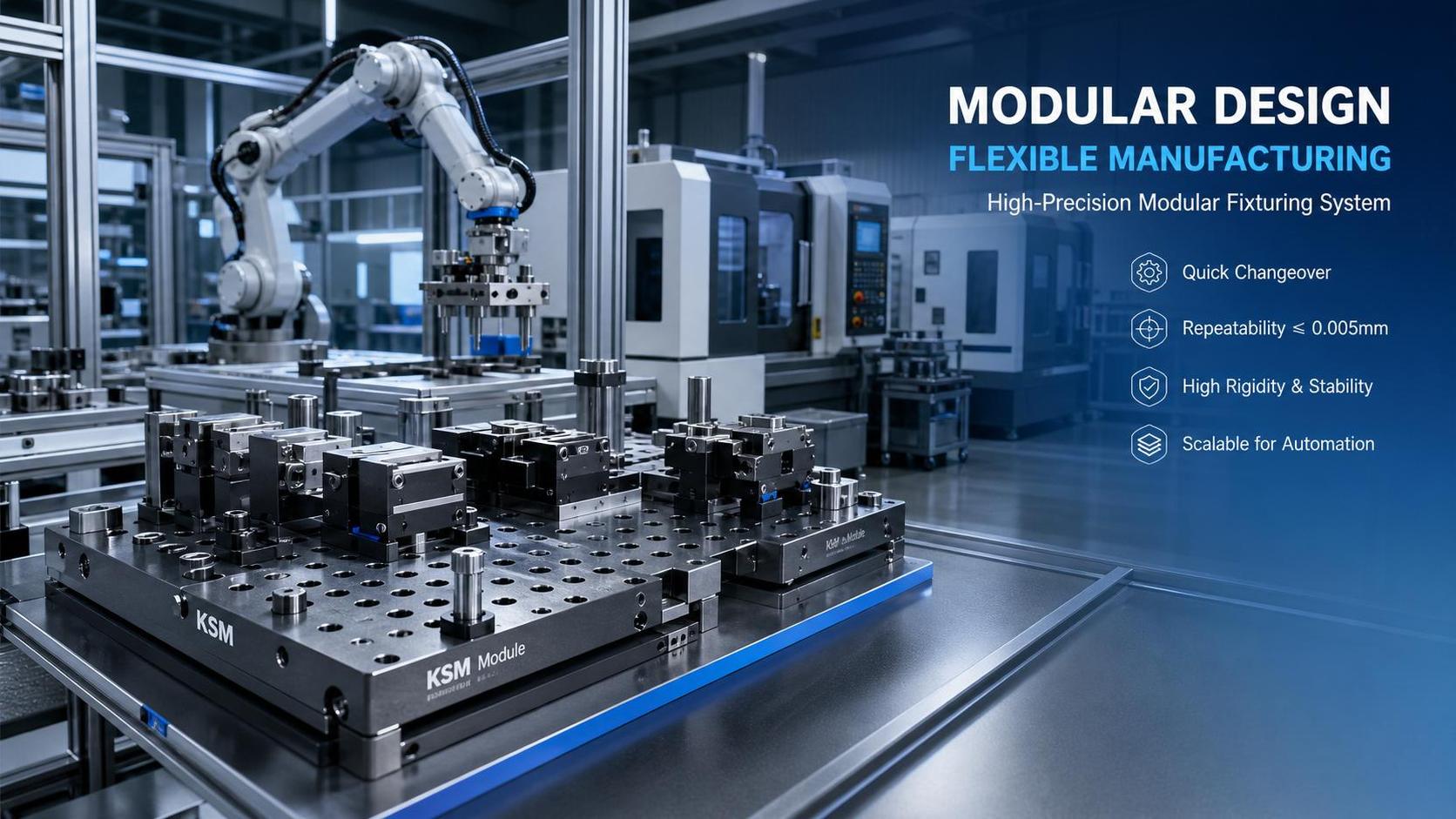
How should you think about a Modular Tooling System for flexible manufacturing?
A Modular Tooling System for flexible manufacturing is not just a set of fixtures, holders, and interfaces.
It is the structure that lets a cell switch between part families without losing alignment, cycle stability, or traceable quality.
That matters more now because CNC machining, robotic handling, and automated lines are being asked to do more with shorter planning windows.
In automotive, aerospace, energy equipment, and electronics, the pressure is similar.
Parts vary, tolerances stay tight, and downtime becomes expensive very quickly.
A good Modular Tooling System for flexible manufacturing supports repeatable location, faster setup, easier maintenance, and cleaner expansion later.
A poor choice usually looks acceptable in the quotation stage.
The problems appear during changeovers, operator training, spare parts control, and first-article approval.
So the real decision is not whether modular tooling sounds modern.
It is whether the system fits the production mix, machine capability, and growth path of the cell you are building.
When does modular tooling actually make sense?
This question often gets skipped, yet it should come before brand comparisons.
Modular tooling is most valuable when product variation is high and repeat accuracy still matters.
That usually includes mixed-model machining cells, pilot production, export-oriented contract machining, and phased automation upgrades.
In practical terms, the fit is strong when a line must process several part sizes using the same machine platform.
It also works well when fixtures need frequent adjustment but cannot tolerate long requalification cycles.
A dedicated fixture may still be the better answer for one stable, high-volume part with no expected design changes.
The more common situation today is somewhere in between.
Factories need some dedicated elements, plus a Modular Tooling System for flexible manufacturing around the shared base architecture.
That hybrid approach often reduces cost without giving up responsiveness.
- Choose modular first when part families share datums but differ in geometry.
- Choose modular first when changeovers happen weekly or daily.
- Be cautious when volume is fixed and tooling never changes.
- Use a hybrid model when precision and variety must coexist.
Which selection criteria matter more than the catalog description?
Suppliers usually present stiffness, compatibility, and speed of assembly.
Those points are relevant, but they are not enough for a reliable decision.
A better evaluation starts with the process window of the cell.
Look at part tolerance, cutting force, spindle utilization, automation level, and the skill needed to reset the system correctly.
The table below helps turn that discussion into a usable screening tool.
Needless to say, the cheapest quote often becomes expensive if repeatability data is vague.
A Modular Tooling System for flexible manufacturing should be judged by process control, not by component count alone.
What is the difference between a flexible system and a merely adjustable one?
This is one of the most useful questions during supplier review.
An adjustable setup can be modified.
A truly flexible setup can be modified quickly, repeatedly, and with predictable accuracy.
That difference is critical inside flexible manufacturing cells.
If every product change requires manual shimming, re-indicating, or extensive probing, the system is adjustable but not truly flexible.
A strong Modular Tooling System for flexible manufacturing normally includes standard locating logic, documented module compatibility, and repeatable preset methods.
It also supports predictable digital workflows.
That may include stored fixture offsets, tooling libraries, barcode identification, or clamp-status confirmation for automated cells.
In industries moving toward smart factories, this distinction becomes even sharper.
Hardware flexibility without data consistency usually creates hidden setup losses.
The better question is not, “Can it be changed?”
It is, “Can it be changed fast, validated fast, and repeated next month by another team?”
Where do selection mistakes usually happen?
Most errors are made before installation.
The system is chosen around an ideal part drawing instead of actual production variation.
Another frequent issue is ignoring operator access and maintenance clearance.
A compact fixture may look efficient in CAD, yet become awkward once robots, probes, coolant, and chip flow are considered.
There is also a planning mistake that appears in international supply chains.
A plant standardizes on a modular platform, then discovers long lead times for critical replacement elements.
This matters in global machine tool markets, where suppliers from China, Germany, Japan, and South Korea may each offer different strengths.
Some are stronger in precision and standardization.
Others are stronger in delivery flexibility or localized support.
The safest approach is to screen common risks early.
- Do not assess the Modular Tooling System for flexible manufacturing using only sample parts.
- Confirm how datum integrity is maintained after repeated module changes.
- Check whether wear components are standard or proprietary.
- Review cleaning, chip evacuation, and clamp access before final approval.
- Ask for lead times on the five most likely spare items, not only the base kit.
How should cost, timeline, and implementation be evaluated together?
Price alone rarely explains the business value of modular tooling.
The more useful view is total implementation effect over the next one to three years.
That includes engineering hours, fixture validation time, machine idle hours, retraining effort, and the cost of adding future part variants.
A higher initial investment can be justified when the same Modular Tooling System for flexible manufacturing supports multiple launches or line rebalancing plans.
Implementation timing should also be reviewed carefully.
Some systems install quickly but take longer to stabilize in production.
Others need more upfront planning, yet deliver smoother qualification and less disruption later.
In actual applications, the most dependable rollout usually follows a short checklist.
- Group parts by datum logic, cutting load, and expected revision frequency.
- Define the required repeatability target before reviewing supplier proposals.
- Run one realistic changeover simulation, not only a static fixture review.
- Measure spare strategy, local service response, and documentation quality.
- Approve the system only after process, maintenance, and automation checks align.
That kind of review gives a clearer answer than a simple price comparison.
What is a sensible next step before making the final decision?
Start by narrowing the decision to a few production-critical questions.
How many part families must the cell handle?
How much changeover time is currently acceptable?
Which tolerance zones are most sensitive to reclamping error?
Can the chosen Modular Tooling System for flexible manufacturing support future digital integration, not just current machining needs?
From there, compare two or three shortlisted systems using the same part mix and the same qualification criteria.
Keep the evaluation practical.
Focus on repeatability, changeover effort, maintainability, and expansion cost.
The best choice is usually the system that makes daily execution simpler while preserving precision under real production pressure.
If the decision is still close, build a pilot standard.
Use one cell, one part family group, and one documented validation cycle.
That small step often reveals more than a long specification meeting, and it gives a stronger foundation for broader rollout.
Recommended for You
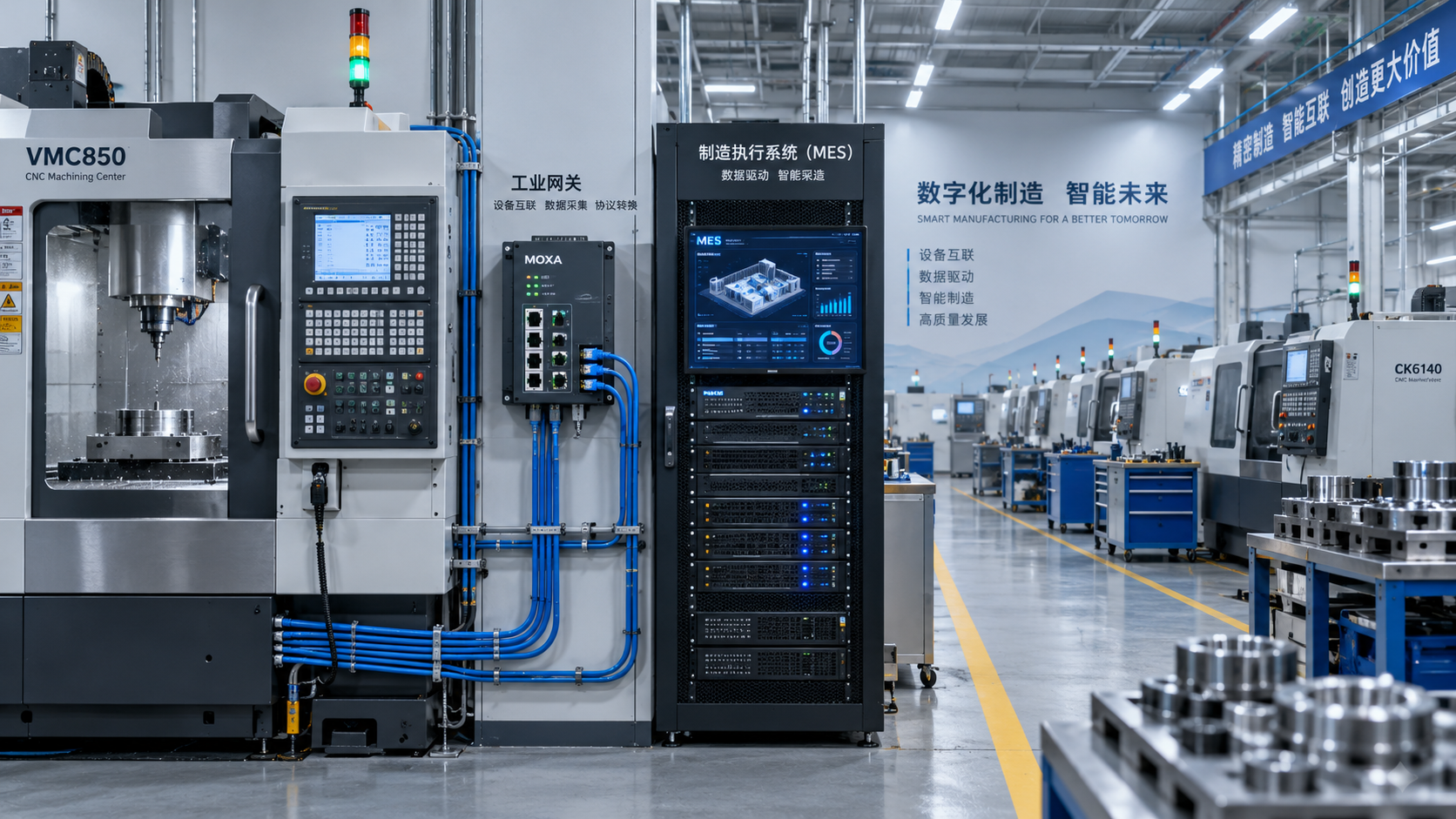
 Digital Manufacturing for Smart Factories: Connecting Legacy Machines to MESMachine Tool Industry Editorial Team
 How to Select a CNC Metal Lathe for Tight-Tolerance Shaft and Sleeve PartsCNC Machining Technology Center
 How to Select an Industrial Lathe for High-Volume Shaft ProductionMachine Tool Industry Editorial Team
 Selecting Machine Tools for Automotive Parts: Accuracy, Throughput, and AutomationMachine Tool Industry Editorial Team
 Industrial Machining: Selecting Processes for Tight-Tolerance Metal PartsCNC Machining Technology Center
 Manufacturing Technology Trends That Improve Throughput and Quality ControlManufacturing Market Research Center

Aris Katos
Future of Carbide Coatings
15+ years in precision manufacturing systems. Specialized in high-speed milling and aerospace grade alloy processing.
▶
KATS Expands CE Recognition for CNC Clamping SystemsMachine Tool Industry Editorial Team▶
How to Evaluate a Tooling System for Precision Machining: 7 Key Specs That MatterMachine Tool Industry Editorial Team▶
ITC Opens 337 Probe Into Chinese CNC Tool CoatingsMachine Tool Industry Editorial Team▶
Vietnam Ends 5% Tariff on Chinese CNC Tool ImportsMachine Tool Industry Editorial Team▶
Japan Ends Import License Rule for Chinese Cutting ToolsMachine Tool Industry Editorial Team
Mastering 5-Axis Workholding Strategies
Join our technical panel on Nov 15th to learn about reducing vibrations in thin-wall components.

Providing you with integrated sanding solutions
Before-sales and after-sales services
Comprehensive technical support