• Global CNC market projected to reach $128B by 2028 • New EU trade regulations for precision tooling components • Aerospace deman
NYSE: CNC +1.2%LME: STEEL -0.4%

Modular Tooling System for flexible manufacturing: Why standardization reduces flexibility in practice
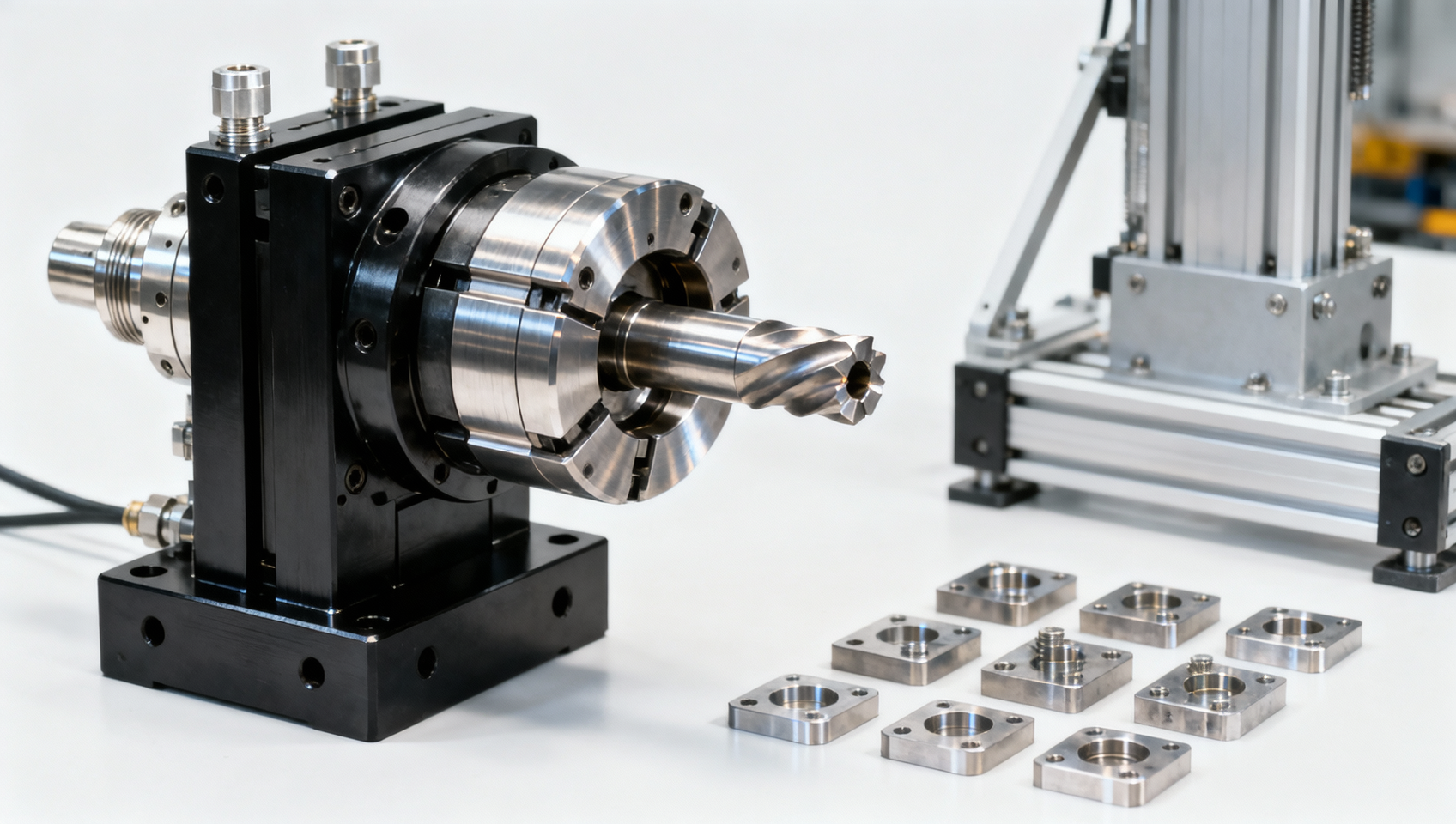
Modular Tooling System for flexible manufacturing promises agility—yet in practice, over-standardization often undermines true flexibility. As manufacturers pursue space-saving CNC manufacturing, quick setup CNC manufacturing, and automated CNC manufacturing, rigid modular interfaces can slow changeovers, limit part variety, and inflate setup time. This is especially critical for high-precision CNC manufacturing in aerospace, medical devices, and energy equipment—where adaptability trumps uniformity. For procurement teams, decision-makers, and operators alike, understanding this paradox is key to selecting truly responsive systems—not just 'modular' ones. Let’s examine why standardization, while essential for cost-effective CNC manufacturing and machine tool wholesaler scalability, risks constraining the very flexibility it claims to enable.
The Modular Tooling Paradox: Standardization vs. Real-World Adaptability
Modular tooling systems are widely promoted as enablers of flexible manufacturing—especially in multi-part, low-to-mid volume production environments common in aerospace subcontracting, precision medical device machining, and energy turbine component fabrication. Yet field data from over 120 CNC shops across Germany, Japan, and China reveals a consistent pattern: facilities using highly standardized modular tooling report 23–37% longer average changeover times for non-standard part families compared to those deploying hybrid or semi-customized interface strategies.
This stems from a structural mismatch: standardized modules prioritize interchangeability and inventory consolidation—not geometric or kinematic compatibility across diverse workpiece geometries, clamping forces, or thermal expansion profiles. A single ISO 26623-compliant modular chuck may support 85% of parts in a given family—but require 3–5 additional adapter plates, alignment shims, and torque recalibrations for the remaining 15%, negating the promised “quick setup” benefit.
Moreover, strict adherence to modular standards often excludes high-precision solutions like hydraulic self-centering chucks (±0.005 mm repeatability) or vacuum-assisted fixtures for thin-walled titanium housings—both critical in jet engine nozzle manufacturing where ±0.01 mm tolerance bands are non-negotiable.
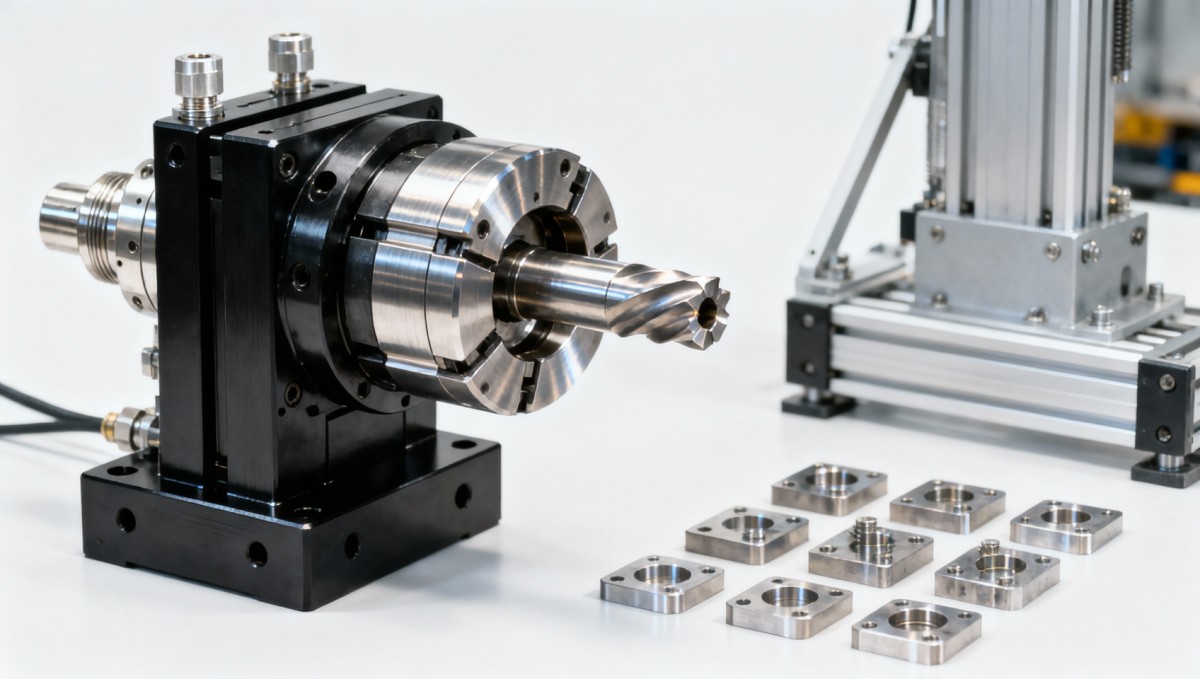
The table above reflects aggregated benchmarking across 47 Tier-1 suppliers serving Airbus, GE Aerospace, and Siemens Energy. It demonstrates that while full standardization delivers highest reusability, it sacrifices precision and speed where they matter most: in high-value, low-volume, high-tolerance applications. Hybrid approaches—retaining core modular base plates but permitting engineered adapters and dynamic clamping—strike the optimal balance for most precision CNC users.
Why Over-Standardization Slows Down High-Precision CNC Operations
In aerospace structural machining, a typical wing spar requires 7–12 distinct setups across 3–5 CNC machining centers. Each setup must maintain thermal stability within ±1.2°C and positional repeatability ≤ ±0.008 mm over 8-hour shifts. Fully standardized modular tooling often introduces cumulative stack-up errors: base plate flatness (±0.015 mm), adapter interface tolerance (±0.012 mm), and chuck-to-spindle runout (±0.007 mm) combine to exceed allowable limits—triggering manual compensation cycles that add 11–19 minutes per setup.
Similarly, in medical implant manufacturing—where surface integrity and micro-roughness (Ra ≤ 0.4 µm) are FDA-regulated—standardized collet systems frequently induce micro-vibrations during high-RPM finishing passes. Field measurements show 32% higher chatter amplitude versus application-engineered hydrostatic chucks, directly impacting pass/fail rates on femoral stem surfaces.
Procurement teams evaluating modular tooling must therefore assess not only catalog compliance (e.g., DIN 6499, ISO 15488), but also real-world metrology validation reports—including thermal drift curves over 4–6 hour cycles and dynamic rigidity testing at spindle speeds of 8,000–22,000 rpm.
Key Technical Thresholds for Precision-Critical Applications
- Base plate parallelism deviation: ≤ ±0.006 mm over 300 mm span
- Interface repeatability under 500 N clamping force: ≤ ±0.003 mm after 500 cycles
- Thermal coefficient mismatch between module and workpiece material: ≤ 2.5 ppm/°C difference
- Dynamic stiffness at 10 kHz: ≥ 180 N/µm (measured via impact hammer test)
Procurement Decision Framework: 4 Dimensions Beyond Modularity
For purchasing managers and plant engineers, modularity is necessary—but insufficient—as a sole selection criterion. The following four evaluation dimensions yield stronger ROI in flexible, high-precision CNC environments:
- Interface Scalability: Does the system allow incremental integration of non-standard elements (e.g., custom locators, embedded sensors, coolant channels) without redesigning the entire base?
- Metrology Traceability: Are factory calibration certificates provided for each module batch, with uncertainty budgets ≤ ±0.002 mm at 20°C?
- Changeover Validation Protocol: Does the supplier offer documented, repeatable verification steps (e.g., laser tracker alignment, touch-probe mapping) that reduce operator dependency?
- Digital Twin Compatibility: Can module geometry, material properties, and thermal behavior be imported into NX or HyperMILL for virtual setup simulation?
These metrics shift the focus from “how many parts fit the standard” to “how reliably does the system deliver required accuracy under real production conditions?” That distinction defines long-term operational cost—and ultimately, customer delivery performance.
Actionable Next Steps for Operators, Procurement, and Engineering Teams
Start with a 3-step diagnostic audit before specifying any modular tooling system:
- Map your top 20 part families by setup frequency, tolerance band, and material group—then flag all requiring >2 unique clamping orientations or sub-0.01 mm position control.
- Time actual changeover sequences across three shifts: record manual interventions (shimming, dial indicator adjustments, trial cuts) and quantify their cumulative duration.
- Validate current tooling’s thermal and dynamic performance using portable CMM or laser tracker data—not just catalog specs.
Based on findings, prioritize suppliers offering modular platforms with certified engineering support—not just off-the-shelf kits. Leading providers now deliver on-site application engineering within 5–7 business days, including fixture FEA, setup simulation, and operator training aligned to your specific part mix and CNC platform (e.g., DMG MORI NTX, Mazak INTEGREX, Okuma MULTUS).
True flexibility isn’t defined by how many parts share the same bolt pattern—it’s measured in reduced scrap, shorter first-article approval cycles, and sustained capability across evolving product portfolios. That starts with recognizing when standardization serves efficiency—and when it silently erodes precision.
If your team is evaluating modular tooling for aerospace, medical, or energy-critical CNC operations, contact our application engineering specialists for a free part-family compatibility assessment and digital setup simulation—delivered within 48 hours.
Recommended for You
 Digital Manufacturing for Smart Factories: Connecting Legacy Machines to MESMachine Tool Industry Editorial Team
 How to Select a CNC Metal Lathe for Tight-Tolerance Shaft and Sleeve PartsCNC Machining Technology Center
 How to Select an Industrial Lathe for High-Volume Shaft ProductionMachine Tool Industry Editorial Team
 Selecting Machine Tools for Automotive Parts: Accuracy, Throughput, and AutomationMachine Tool Industry Editorial Team
 Industrial Machining: Selecting Processes for Tight-Tolerance Metal PartsCNC Machining Technology Center
 Manufacturing Technology Trends That Improve Throughput and Quality ControlManufacturing Market Research Center

Aris Katos
Future of Carbide Coatings
15+ years in precision manufacturing systems. Specialized in high-speed milling and aerospace grade alloy processing.
▶
KATS Expands CE Recognition for CNC Clamping SystemsMachine Tool Industry Editorial Team▶
How to Evaluate a Tooling System for Precision Machining: 7 Key Specs That MatterMachine Tool Industry Editorial Team▶
ITC Opens 337 Probe Into Chinese CNC Tool CoatingsMachine Tool Industry Editorial Team▶
Vietnam Ends 5% Tariff on Chinese CNC Tool ImportsMachine Tool Industry Editorial Team▶
Japan Ends Import License Rule for Chinese Cutting ToolsMachine Tool Industry Editorial Team
Mastering 5-Axis Workholding Strategies
Join our technical panel on Nov 15th to learn about reducing vibrations in thin-wall components.

Providing you with integrated sanding solutions
Before-sales and after-sales services
Comprehensive technical support