• Global CNC market projected to reach $128B by 2028 • New EU trade regulations for precision tooling components • Aerospace deman
NYSE: CNC +1.2%LME: STEEL -0.4%

CCMT2026 Closes as Equipment Orders Top CNY 10 Billion

At CCMT2026, held from April 21 to 25, 2026, the closing outcome is notable not only for deal volume but also for what it signals about procurement rules, supplier qualification expectations, and delivery discipline in the machine tool market. With more than 2,000 exhibitors from 27 countries and signed projects exceeding CNY 10 billion across high-end equipment procurement, industry-chain cooperation, and university-industry collaboration, the event is worth watching as an execution signal for buyers, equipment makers, supply-chain partners, and compliance-related service providers.
What the event confirmed
The 14th China CNC Machine Tool Fair (CCMT2026) took place from April 21 to 25, 2026.
The event drew more than 2,000 exhibitors from 27 countries.
On site, signed projects exceeded CNY 10 billion and covered high-end equipment procurement, university-industry collaboration, and industrial chain cooperation.
Among the disclosed deals, Guilin Hongcheng Precision Machinery and Sichuan Zhenzhong Electromechanical signed a CNY 28 million contract on the first day for CK52 series vertical lathes.
The event summary indicates that domestic high-end CNC equipment has gained batch recognition from leading domestic users.
Why this matters for procurement and market access
Equipment buyers are likely to face tighter qualification review
Analysis shows that when large procurement contracts are signed in a concentrated exhibition setting, buyers usually place greater emphasis on whether suppliers can provide complete technical documents, model consistency records, and deliverable configuration commitments. For procurement teams, the practical impact is likely to appear in supplier screening, bid specification alignment, and acceptance planning rather than in publicity alone.
Machine tool manufacturers need stronger proof of compliance and delivery readiness
From an industry perspective, the reported batch recognition of domestic high-end CNC equipment suggests that market competition may increasingly move toward verifiable performance, documentation quality, and after-sales traceability. For manufacturers, what deserves closer attention is whether product files, testing records, and contract-linked technical commitments can withstand stricter customer review during ordering and delivery.
Supply-chain and service partners may see higher documentation demands
Observably, once procurement projects move from exhibition signing to execution, supporting participants such as component suppliers, integration partners, logistics coordinators, and after-sales teams may be asked to respond to tighter schedule control, quality traceability, and handover documentation requirements. The impact is less about a newly announced rule in the summary itself and more about the compliance pressure that often follows larger and more formalized equipment ordering activity.
What companies should watch next
Track how purchase commitments are translated into contract execution
Analysis shows that the immediate issue is not simply the signing volume but whether signed orders lead to clearer requirements on technical specifications, inspection materials, delivery milestones, and acceptance terms. Companies involved in related transactions should pay close attention to tender documents, annexed technical files, and version control of product specifications.
Prepare for closer scrutiny of technical and quality records
For equipment makers and supporting suppliers, it is more appropriate to prepare for closer review of testing reports, technical datasheets, quality records, and model-specific documentation. The event summary does not provide detailed enforcement standards, so this should be understood as a practical compliance watchpoint rather than a confirmed new rule.
Review supplier qualification and service-response arrangements
What deserves closer attention is whether procurement-side recognition of domestic high-end CNC products leads to more formal qualification checks on production capability, service support, and replacement-part assurance. Companies should therefore review how supplier credentials, service commitments, and quality traceability materials are organized before delivery stages intensify.
Stay alert to export and cross-border execution details
Because the exhibition involved exhibitors from 27 countries, cross-border participants should watch for any downstream changes in trade documentation, technical confirmation language, and post-sale support expectations tied to actual contract execution. The available facts do not confirm any new trade rule, so this remains an area for continued observation rather than a settled conclusion.
How this signal should be interpreted
Observably, this development is better understood as an execution signal than as a standalone policy announcement. The scale of on-site signing and the disclosed machine order point to a market environment in which procurement decisions may increasingly depend on document completeness, product consistency, supplier capability, and service accountability.
Analysis also suggests caution. The event summary confirms transaction activity and buyer recognition, but it does not by itself establish a new regulation, a new certification requirement, or a final enforcement standard. For that reason, the industry still needs to watch how procurement language, qualification thresholds, and delivery expectations evolve in subsequent contracts and market feedback.
What the closing outcome currently indicates
At this stage, the closing of CCMT2026 is most reasonably read as evidence that high-end equipment procurement activity is active and that domestic high-end CNC products are receiving stronger acceptance from major domestic users. For the industry, the more practical takeaway is not a broad claim about market change, but a reminder that procurement compliance, technical documentation, supplier qualification, and delivery execution may become more central in upcoming transactions.
In that sense, this is less a fully settled rule change than a market-backed signal that execution standards may be getting more attention. Whether that develops into more visible procurement rules, certification expectations, or tender-document adjustments still requires further observation.
Basis of this article and what still needs verification
This article is based on the user-provided news title, event date, and event summary. The specific official source link was not provided in the input, so further verification is still needed against materials such as official event announcements, regulator releases, trade or customs authority information, industry association updates, standards documents, and reporting from authoritative media.
Follow-up attention should remain on any later clarification regarding procurement wording, certification expectations, tender-document changes, market feedback, and how participating companies actually implement signed projects after the exhibition.
PREVIOUS ARTICLE
Recommended for You
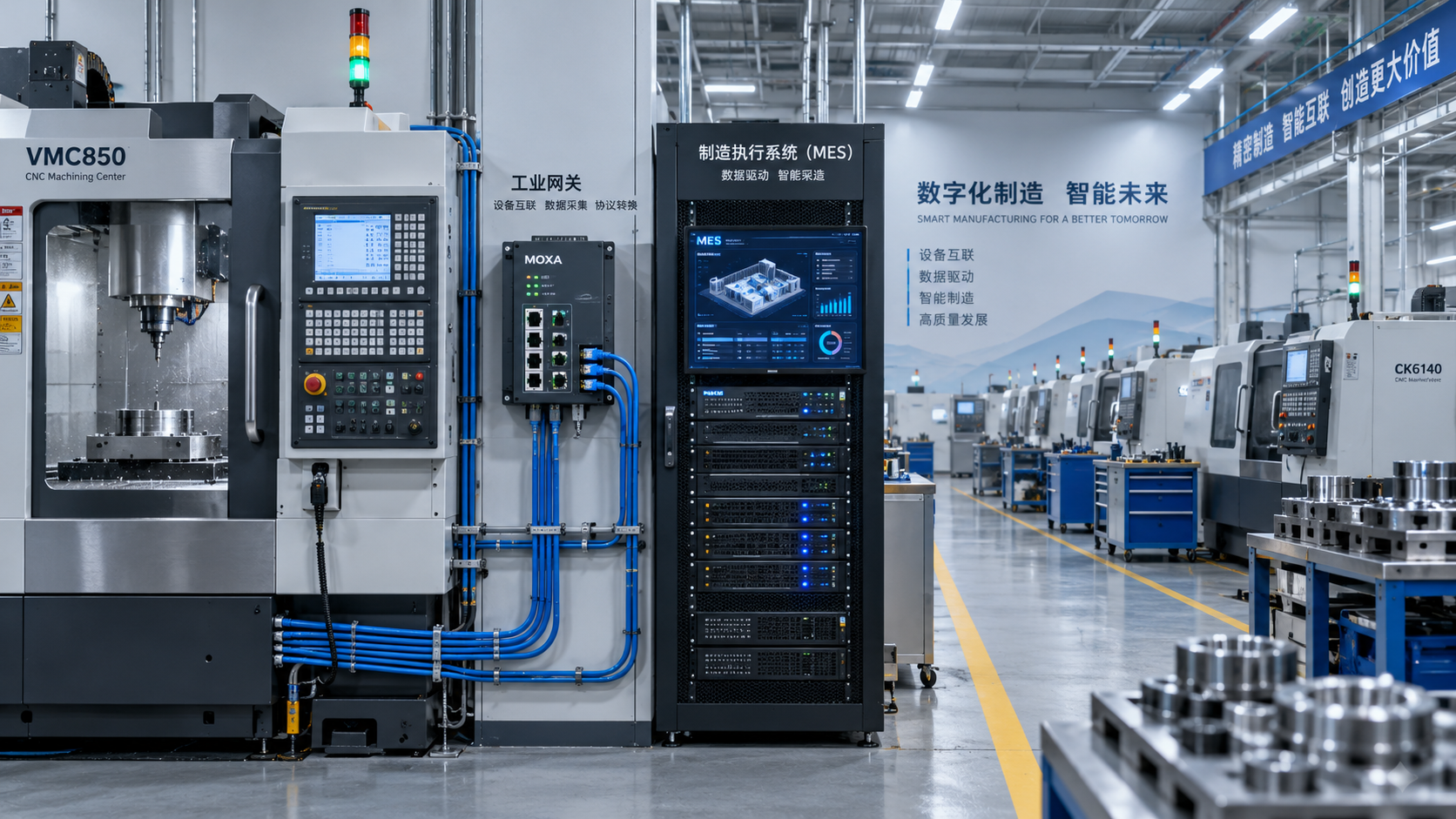
 Digital Manufacturing for Smart Factories: Connecting Legacy Machines to MESMachine Tool Industry Editorial Team
 How to Select a CNC Metal Lathe for Tight-Tolerance Shaft and Sleeve PartsCNC Machining Technology Center
 How to Select an Industrial Lathe for High-Volume Shaft ProductionMachine Tool Industry Editorial Team
 Selecting Machine Tools for Automotive Parts: Accuracy, Throughput, and AutomationMachine Tool Industry Editorial Team
 Industrial Machining: Selecting Processes for Tight-Tolerance Metal PartsCNC Machining Technology Center
 Manufacturing Technology Trends That Improve Throughput and Quality ControlManufacturing Market Research Center




Aris Katos
Future of Carbide Coatings
15+ years in precision manufacturing systems. Specialized in high-speed milling and aerospace grade alloy processing.
▶
Machine Tool Market Outlook: Demand Drivers, Capacity Shifts, and Investment RisksManufacturing Market Research Center▶
Global Machine Tool Backlog Falls 12% as Automation Shifts DemandManufacturing Market Research Center▶
What Drives Machine Tool Price: 7 Cost Factors Buyers Should Compare Before OrderingManufacturing Market Research Center▶
Manufacturing Industry Cost Drivers in 2025: Labor, Energy, Freight, and Sourcing RisksManufacturing Market Research Center▶
CCMT2026 Ends With 40.2% Rise in Five-Axis Export PricesManufacturing Market Research Center
Mastering 5-Axis Workholding Strategies
Join our technical panel on Nov 15th to learn about reducing vibrations in thin-wall components.

Providing you with integrated sanding solutions
Before-sales and after-sales services
Comprehensive technical support