• Global CNC market projected to reach $128B by 2028 • New EU trade regulations for precision tooling components • Aerospace deman
NYSE: CNC +1.2%LME: STEEL -0.4%

US Tariff Adjustment on Chinese Small Appliances Takes Effect

Effective February 20, 2026, the United States adjusted tariff measures on select Chinese small appliances—most notably electric fans—reducing the combined import duty rate from 24.7% to 14.7%. This shift follows the removal of a 20% retaliatory tariff and the introduction of a 10% global temporary tariff. The change has immediate implications for exporters, manufacturers, and supply chain stakeholders serving the U.S. market, particularly in the small household appliance sector.
Event Overview
On February 20, 2026, the U.S. government implemented a revised tariff structure for certain Chinese-made small appliances. Specifically, the 20% additional tariff previously imposed on electric fans was eliminated, and a 10% global temporary tariff was applied in its place. As confirmed in official trade data, this resulted in a net reduction of the comprehensive import duty rate on electric fans exported from China to the U.S., from 24.7% to 14.7%. Subsequent customs statistics show that Chinese exports of electric fans to the U.S. rose 99.6% year-on-year in April 2026, with improved delivery schedule reliability reported across major export channels.
Industries Affected
Direct Exporters and Trading Companies
These entities face direct exposure to duty cost changes and customs compliance requirements. The 10-percentage-point reduction lowers landed costs and improves price competitiveness in the U.S. retail and wholesale markets. Impact is most visible in order intake velocity, margin stability, and quotation turnaround time—especially for mid-to-large volume contracts.
Contract Manufacturers and OEM/ODM Factories
Manufacturers producing electric fans for U.S.-bound export experience reduced pressure on unit-level cost absorption. With Southeast Asian production costs estimated at 10–15% higher, the tariff adjustment reinforces China’s relative advantage in scale-driven production. This contributes to observable acceleration in order reflow from alternative sourcing bases back to Chinese facilities.
Supply Chain and Logistics Service Providers
Freight forwarders, customs brokers, and warehousing operators serving small-appliance exporters report increased shipment volumes and tighter scheduling windows post-adjustment. The improvement in delivery stability noted in April 2026 reflects stronger factory output predictability and fewer customs-related delays—both tied to more consistent tariff application.
Key Considerations and Recommended Actions
Monitor Official Updates on the Global Temporary Tariff
The 10% global temporary tariff is not permanent. Stakeholders should track U.S. Trade Representative (USTR) announcements and Federal Register notices for duration extensions, exclusions, or scope expansions—including whether other small appliance categories (e.g., air purifiers, blenders) may be added.
Assess Exposure by Product Category and HS Code
This adjustment applies specifically to electric fans under defined Harmonized System (HS) codes—not all small appliances. Companies should verify classification accuracy and confirm eligibility before adjusting pricing, contracts, or sourcing plans.
Distinguish Between Policy Signal and Operational Reality
While the tariff reduction is effective, actual customs clearance outcomes depend on documentation rigor, origin verification, and classification consistency. Exporters should audit current filings and coordinate closely with U.S. importers to avoid retroactive assessments or classification disputes.
Reevaluate Sourcing Mix and Lead-Time Planning
Given the documented reflow of large-volume orders to China and the comparative cost disadvantage in Southeast Asia, procurement teams may revise near-term capacity allocation and logistics planning—but only after validating lead times, quality consistency, and port congestion levels at key Chinese export hubs.
Editorial Observation / Industry Perspective
Observably, this tariff recalibration functions less as a broad policy reversal and more as a calibrated adjustment targeting specific product lines amid ongoing trade framework reviews. Analysis shows the 14.7% rate remains materially above pre-Section 301 levels, indicating sustained structural scrutiny. From an industry standpoint, the April 2026 export surge reflects both tariff relief and pent-up demand—not necessarily a long-term trend shift. Current developments are best understood as a tactical inflection point rather than a strategic reset; continued monitoring of U.S. tariff review cycles and regional cost benchmarks remains essential.
For the small appliance sector, this adjustment reaffirms the sensitivity of export economics to marginal duty changes—and underscores how even narrow tariff revisions can trigger measurable shifts in order routing, production location decisions, and inventory planning cycles.
Conclusion
This tariff adjustment represents a concrete, time-bound recalibration—not a systemic easing—of U.S. import duties on a narrowly defined subset of Chinese small appliances. Its primary significance lies in restoring short-term cost predictability and reinforcing China’s competitiveness in high-volume, cost-sensitive categories like electric fans. Stakeholders are advised to treat the change as operationally actionable but temporally bounded, aligning responses with verified HS code coverage, documented lead-time improvements, and scheduled policy review timelines.
Source Attribution
Main source: Official U.S. customs tariff notices effective February 20, 2026; publicly released U.S. Census Bureau export data for April 2026. Note: The duration and potential expansion of the 10% global temporary tariff remain subject to official USTR updates and require ongoing observation.
Recommended for You
![]() PSA Launches Fast-Track Customs for CNC CargoGlobal Machine Tool Trade Research Center
PSA Launches Fast-Track Customs for CNC CargoGlobal Machine Tool Trade Research Center![]() ITC Opens 337 Probe Into Chinese CNC Tool CoatingsMachine Tool Industry Editorial Team
ITC Opens 337 Probe Into Chinese CNC Tool CoatingsMachine Tool Industry Editorial Team![]() Japan Adds 5-Axis CNC Gear Grinders to Export ControlsMachine Tool Industry Editorial Team
Japan Adds 5-Axis CNC Gear Grinders to Export ControlsMachine Tool Industry Editorial Team![]() Mexico IMMEX Upgrade Ties CNC Duty Relief to Local AssemblyGlobal Machine Tool Trade Research Center
Mexico IMMEX Upgrade Ties CNC Duty Relief to Local AssemblyGlobal Machine Tool Trade Research Center![]() EU CE Rule Takes Effect for CNC Safety CertificationManufacturing Policy Research Center
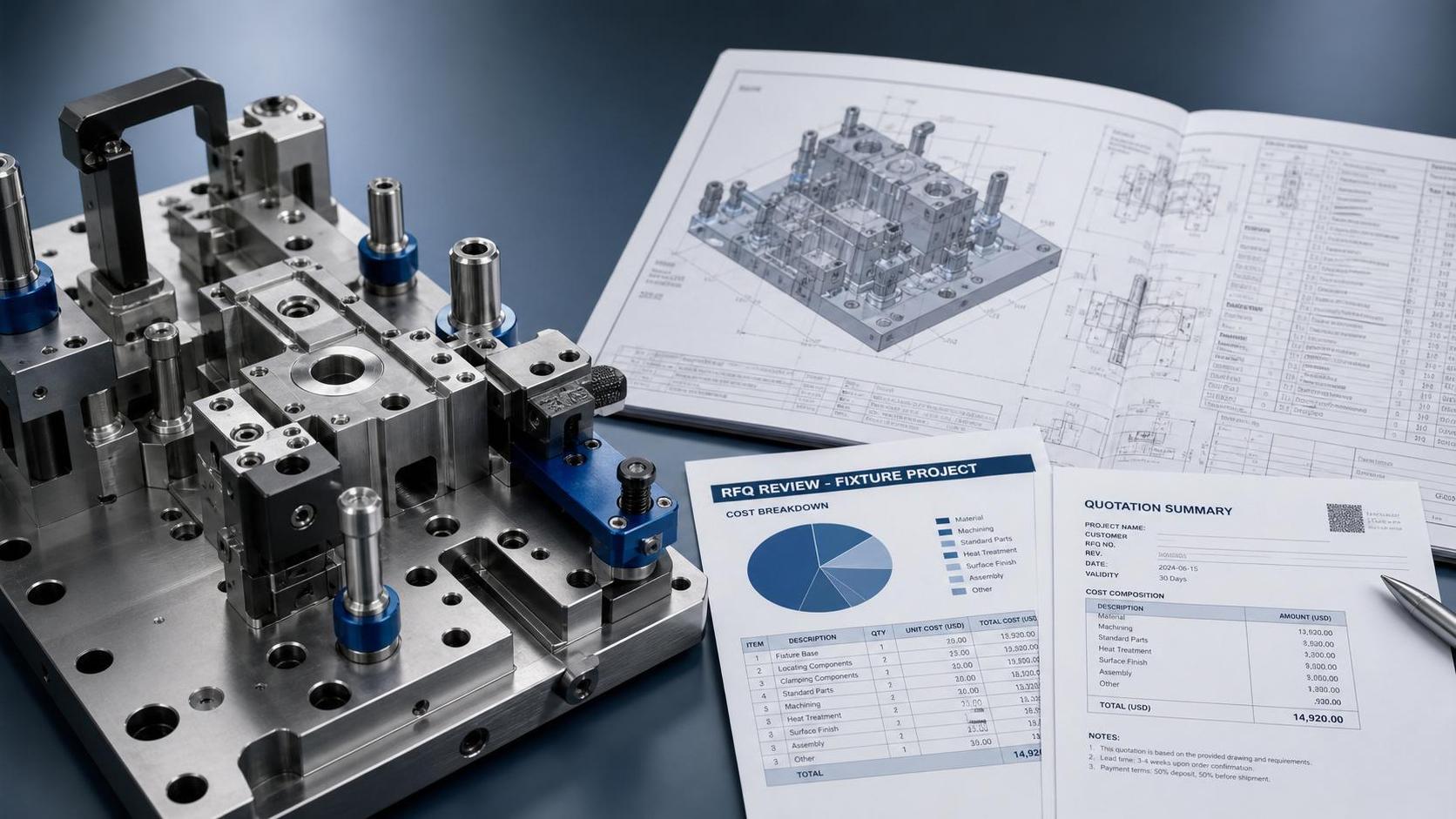
EU CE Rule Takes Effect for CNC Safety CertificationManufacturing Policy Research Center Fixture Design Cost Breakdown: What Buyers Should Review Before RFQ and ApprovalCNC Machining Technology Center

Aris Katos
Future of Carbide Coatings
15+ years in precision manufacturing systems. Specialized in high-speed milling and aerospace grade alloy processing.
▶
PSA Launches Fast-Track Customs for CNC CargoGlobal Machine Tool Trade Research Center▶
ITC Opens 337 Probe Into Chinese CNC Tool CoatingsMachine Tool Industry Editorial Team▶
Japan Adds 5-Axis CNC Gear Grinders to Export ControlsMachine Tool Industry Editorial Team▶
Mexico IMMEX Upgrade Ties CNC Duty Relief to Local AssemblyGlobal Machine Tool Trade Research Center▶
EU CE Rule Takes Effect for CNC Safety CertificationManufacturing Policy Research Center
Mastering 5-Axis Workholding Strategies
Join our technical panel on Nov 15th to learn about reducing vibrations in thin-wall components.

Providing you with integrated sanding solutions
Before-sales and after-sales services
Comprehensive technical support