• Global CNC market projected to reach $128B by 2028 • New EU trade regulations for precision tooling components • Aerospace deman
NYSE: CNC +1.2%LME: STEEL -0.4%

Why CNC cutting quality drops even with the same material
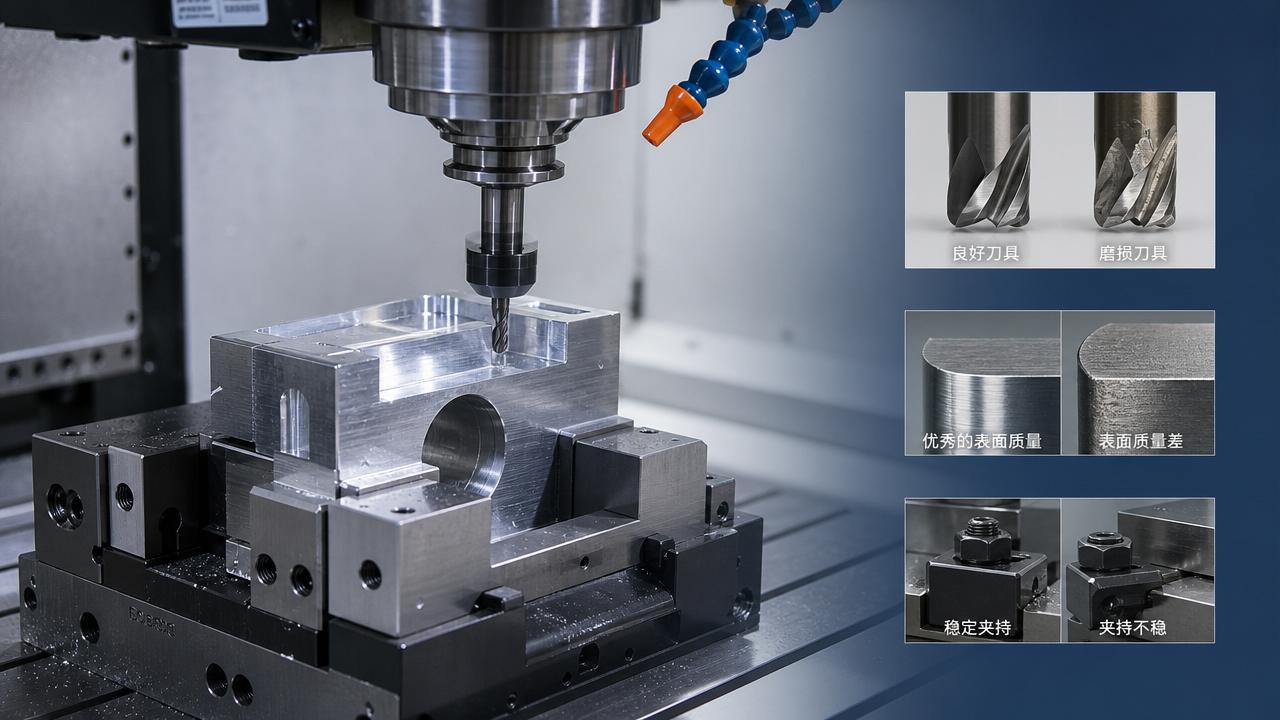
Why does CNC cutting quality decline even when the same material is used? For technical evaluators, the answer often lies beyond raw stock consistency. Tool wear, machine rigidity, spindle behavior, clamping stability, program settings, and thermal variation can all shift part accuracy and surface finish. This article examines the hidden variables behind inconsistent CNC cutting performance and how to identify them systematically.
Why scenario-based evaluation matters in CNC cutting
In real manufacturing, identical material does not guarantee identical CNC cutting results. Technical evaluators often discover this when a trial run looks stable, but batch production begins to show burrs, size drift, chatter marks, heat tint, or unstable cycle times. The reason is simple: CNC cutting quality is shaped by the full process environment, not only by the workpiece material certificate.
This matters even more because quality expectations vary by application scenario. An aerospace bracket, an automotive shaft, an energy equipment flange, and an electronics housing may all use similar alloys, yet the evaluation criteria are not the same. One scenario prioritizes dimensional repeatability over long runs, another values edge integrity and throughput, while another focuses on traceability and process stability across shifts. Therefore, when CNC cutting quality drops, the right question is not only “what changed?” but also “which scenario requirement is being violated first?”
For technical assessment teams, a scenario-based approach helps separate material-related issues from machine, tool, process, and production-environment variables. It also improves communication between quality, production, process engineering, procurement, and suppliers. Instead of reacting to symptoms, evaluators can map the failure to a likely control point.
Typical business scenarios where CNC cutting quality declines
The same material can behave differently in CNC cutting depending on load pattern, part geometry, machine condition, and production rhythm. Below are the most common scenarios where technical evaluators should investigate beyond material identity.
Prototype to batch transition
In prototype machining, fresh tools, slower feeds, and close operator supervision often mask deeper process weaknesses. Once production scales up, tool life becomes critical, fixture loading becomes repetitive, and spindle temperature rises over time. A process that looked acceptable in ten parts may begin to fail after two hundred parts. In this scenario, CNC cutting quality typically drops because the process window was never validated for endurance.
Multi-shift production environments
A machine running around the clock faces changing ambient temperature, coolant concentration drift, variable operator setup practices, and different response times to alarms. When a plant observes stable first-shift quality but inconsistent night-shift output, the issue is often not material at all. It is process discipline, thermal balance, or maintenance timing affecting CNC cutting consistency.
High-precision parts versus general industrial components
Precision structural parts, sealing surfaces, and mating features are much more sensitive to spindle runout, micro-vibration, and thermal displacement than general brackets or supports. The same deviation that is harmless in a non-critical part can become a rejection in a precision assembly. Evaluators must judge CNC cutting quality against actual tolerance stack-up and surface function, not against a generic visual standard.
Complex geometry and thin-wall machining
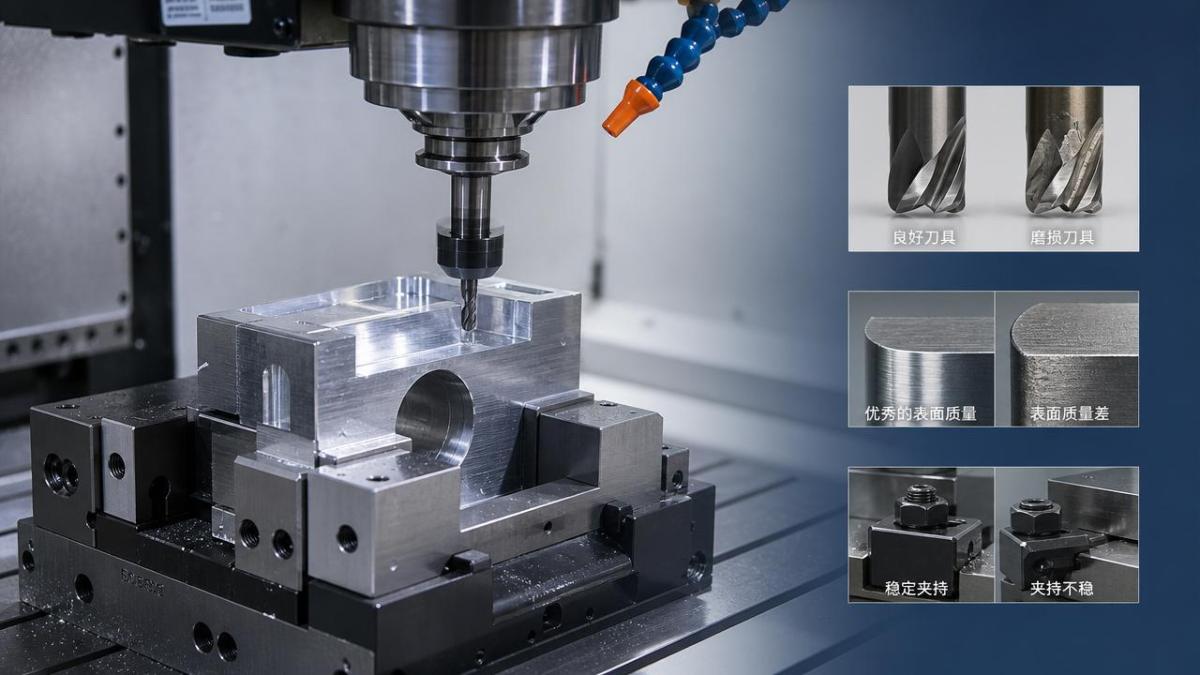
Thin walls, deep cavities, interrupted cuts, and long tool overhangs create unstable cutting forces. Even when the same material grade is used, part deflection and tool deflection can produce inconsistent finishes or out-of-tolerance dimensions. In these cases, CNC cutting quality is limited more by setup strategy and rigidity than by material uniformity.
Scenario comparison: what technical evaluators should check first
The table below shows how CNC cutting quality should be judged differently depending on the production context. This helps evaluators avoid applying the wrong benchmark to the wrong scenario.
Hidden variables behind inconsistent CNC cutting performance
Once the application scenario is clear, evaluators can investigate the actual causes. The most common hidden variables are often measurable, but they are overlooked because they do not appear on the raw material label.
Tool wear is gradual, but its quality impact is not
CNC cutting quality often drops suddenly after a period of acceptable output because edge wear reaches a threshold. Surface finish may deteriorate quickly, cutting forces rise, and burr formation becomes obvious. In high-volume scenarios, evaluators should compare first-off parts, mid-life parts, and end-of-life parts from the same tool. If variation tracks tool age, the problem is not material inconsistency but insufficient tool life control.
Machine rigidity and spindle condition shape repeatability
A machine can still produce acceptable parts while hiding early-stage rigidity loss. Worn guideways, weak spindle bearings, backlash, or poor leveling may not trigger alarms, yet they amplify vibration under load. This is especially relevant in interrupted CNC cutting or heavy roughing. For technical evaluators, part quality should be compared across multiple machines using the same program and material. If one machine shows recurring instability, equipment condition becomes the priority suspect.
Clamping stability changes the cut before the tool touches the workpiece
Fixture wear, uneven clamping force, jaw contamination, and weak support points can all alter workpiece behavior. In thin or long parts, even slight repositioning can change vibration modes and produce size variation. Technical evaluators should not only ask whether the fixture is “correct,” but whether it is still repeatable after repeated loading. A stable CNC cutting process depends heavily on how consistently the part is presented to the tool.
Program settings may be valid, but no longer optimal
Feeds, speeds, step-over, radial engagement, entry strategy, and dwell behavior are often approved during process launch and then left untouched. However, different machines, different tool batches, and different production loads can narrow the safe process window. A program that worked with one spindle condition or coolant setup may create unstable CNC cutting later. Evaluators should review not only whether the program matches the drawing, but whether it matches the current production reality.
Thermal variation accumulates across time
Thermal growth affects machine structure, spindle length, fixtures, and even measuring routines. In long-run scenarios, dimensional drift may appear after machine warm-up or during seasonal temperature changes. The same material is being cut, but the machine system is not in the same thermal state. This is a classic source of unexplained CNC cutting variation in plants with mixed workloads and inconsistent warm-up discipline.
How requirements differ by industry application
Because this issue spans the broader precision manufacturing landscape, technical evaluation must be tied to end-use needs. A quality drop may be acceptable in one business case and critical in another.
Automotive production
Automotive applications usually prioritize repeatability, takt time, and predictable tool life. CNC cutting quality concerns often center on batch drift, burr control, and machine-to-machine consistency. Evaluators should focus on statistical process stability and fixture endurance, not only on isolated sample approval.
Aerospace and high-value precision parts
Here, surface integrity, geometric stability, and process traceability are more important than maximum throughput. A small shift in spindle dynamics or tool edge condition can affect fatigue performance or assembly fit. In this scenario, CNC cutting evaluation should include machine capability, vibration evidence, and disciplined documentation of process changes.
Energy equipment and large structural components
These parts often involve long cycle times, large clamping loads, and significant thermal influence. Quality loss may emerge slowly during roughing-to-finishing transitions. Evaluators should pay close attention to machine thermal behavior, setup repeatability, and the effect of cutting load on structural deflection.
Electronics and small precision housings
In small precision parts, cosmetic finish and edge quality can be just as important as dimension. CNC cutting quality issues may show up as visible marks, micro-burrs, or inconsistent corner definition. Tool sharpness, path smoothing, and contamination control often matter more here than in heavy industrial components.
Practical scenario-fit recommendations for technical evaluators
A strong evaluation process should connect symptom, scenario, and action. The following recommendations help identify whether the CNC cutting issue is material-related or process-related.
- If quality drops only after extended running time, check thermal drift, tool life limits, and coolant stability first.
- If one machine fails while others pass with the same program and material, investigate spindle condition, alignment, backlash, and rigidity.
- If defects cluster around thin features or deep cavities, review clamping method, tool overhang, and toolpath strategy before questioning the material lot.
- If shift-to-shift variation is obvious, standardize setup verification, warm-up routines, offset control, and operator inspection checkpoints.
- If first-article approval is strong but mass production degrades, require endurance trials that reflect actual part count, tool replacement intervals, and production pace.
Common misjudgments when analyzing CNC cutting quality
Many factories lose time because they start with the wrong assumption. One common mistake is treating “same material” as proof that the process should remain unchanged. Another is using short test cuts to judge long-run stability. A third is evaluating CNC cutting quality only by final dimensions while ignoring spindle sound, vibration pattern, burr trend, and offset drift. Technical evaluators should also avoid blaming a single factor too early. In practice, quality loss often comes from interaction between tool wear, machine dynamics, and fixture behavior.
It is also risky to copy a successful process from one part family to another without checking geometry sensitivity. Two parts made from the same material may react very differently because wall thickness, support conditions, and tool access create very different cutting mechanics.
FAQ for scenario-based CNC cutting evaluation
Can the same material still cause different CNC cutting results?
Yes, but often the larger reason is process condition rather than material identity alone. Heat state, workholding, tool condition, and machine behavior can create bigger differences than the alloy label suggests.
What should be checked first when CNC cutting quality suddenly drops?
Start with the fastest pattern checks: when the issue appears, on which machine, after how many parts, during which shift, and on which features. This quickly narrows the root cause path.
Is tool wear always visible before quality loss?
No. Some wear modes reduce CNC cutting quality before obvious damage is seen. Monitoring part trend data is often more useful than relying only on visual inspection of the tool.
Final takeaway for process review and supplier communication
When CNC cutting quality declines with the same material, technical evaluators should resist the urge to look at raw stock first and only. The better approach is to review the application scenario, define which requirement is failing, and then test the likely variables in sequence: tool life, spindle condition, rigidity, clamping repeatability, programming strategy, and thermal behavior. This method is especially valuable in modern CNC machining, precision manufacturing, and automated production environments where the cost of misdiagnosis is high.
If your team is comparing suppliers, validating a process, or troubleshooting inconsistent CNC cutting in production, build your evaluation around real operating scenarios rather than isolated sample results. That is the fastest way to determine whether a process is truly capable, scalable, and fit for your business requirements.
PREVIOUS ARTICLE
Recommended for You
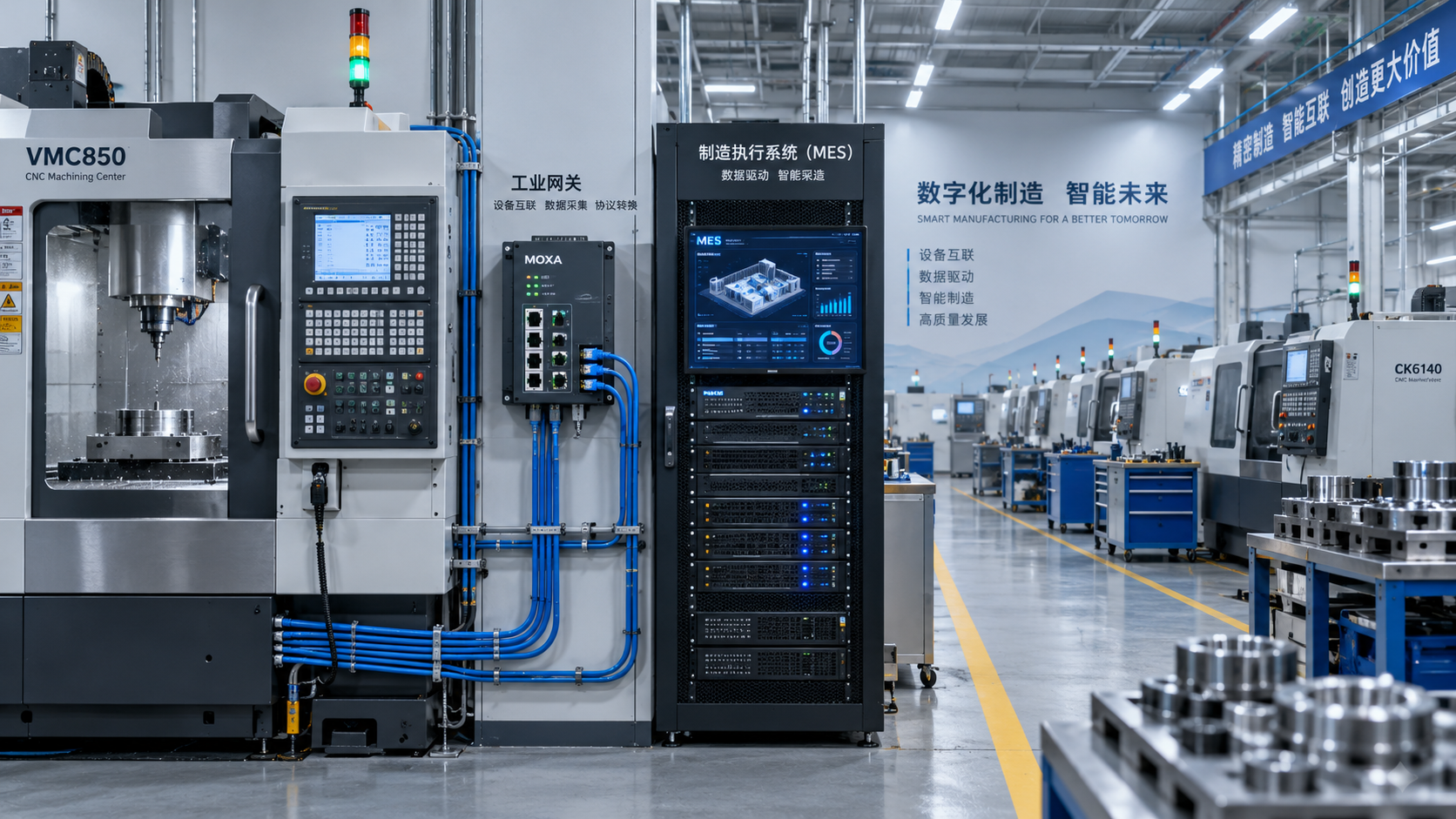
 Digital Manufacturing for Smart Factories: Connecting Legacy Machines to MESMachine Tool Industry Editorial Team
 How to Select a CNC Metal Lathe for Tight-Tolerance Shaft and Sleeve PartsCNC Machining Technology Center
 How to Select an Industrial Lathe for High-Volume Shaft ProductionMachine Tool Industry Editorial Team
 Selecting Machine Tools for Automotive Parts: Accuracy, Throughput, and AutomationMachine Tool Industry Editorial Team
 Industrial Machining: Selecting Processes for Tight-Tolerance Metal PartsCNC Machining Technology Center
 Manufacturing Technology Trends That Improve Throughput and Quality ControlManufacturing Market Research Center

Aris Katos
Future of Carbide Coatings
15+ years in precision manufacturing systems. Specialized in high-speed milling and aerospace grade alloy processing.
▶
Which Metals Are Hardest to Machine With Standard Tools?CNC Machining Technology Center▶
How to Choose Cutting Tools for High-Speed Machining of Steel, Aluminum, and TitaniumCNC Machining Technology Center▶
How to Choose a CNC Tooling System for Titanium Machining by Tool Life and StabilityCNC Machining Technology Center▶
Cutting Tools Selection Guide: How Tool Material, Coating, and Geometry Affect PerformanceCNC Machining Technology Center▶
Cutting Tools for High Temperature Alloys: How to Reduce Tool Wear and Edge ChippingCNC Machining Technology Center
Mastering 5-Axis Workholding Strategies
Join our technical panel on Nov 15th to learn about reducing vibrations in thin-wall components.

Providing you with integrated sanding solutions
Before-sales and after-sales services
Comprehensive technical support