• Global CNC market projected to reach $128B by 2028 • New EU trade regulations for precision tooling components • Aerospace deman
NYSE: CNC +1.2%LME: STEEL -0.4%

Quick-change Fixture Design for CNC turning: Why clamping force distribution affects concentricity more than repeatability
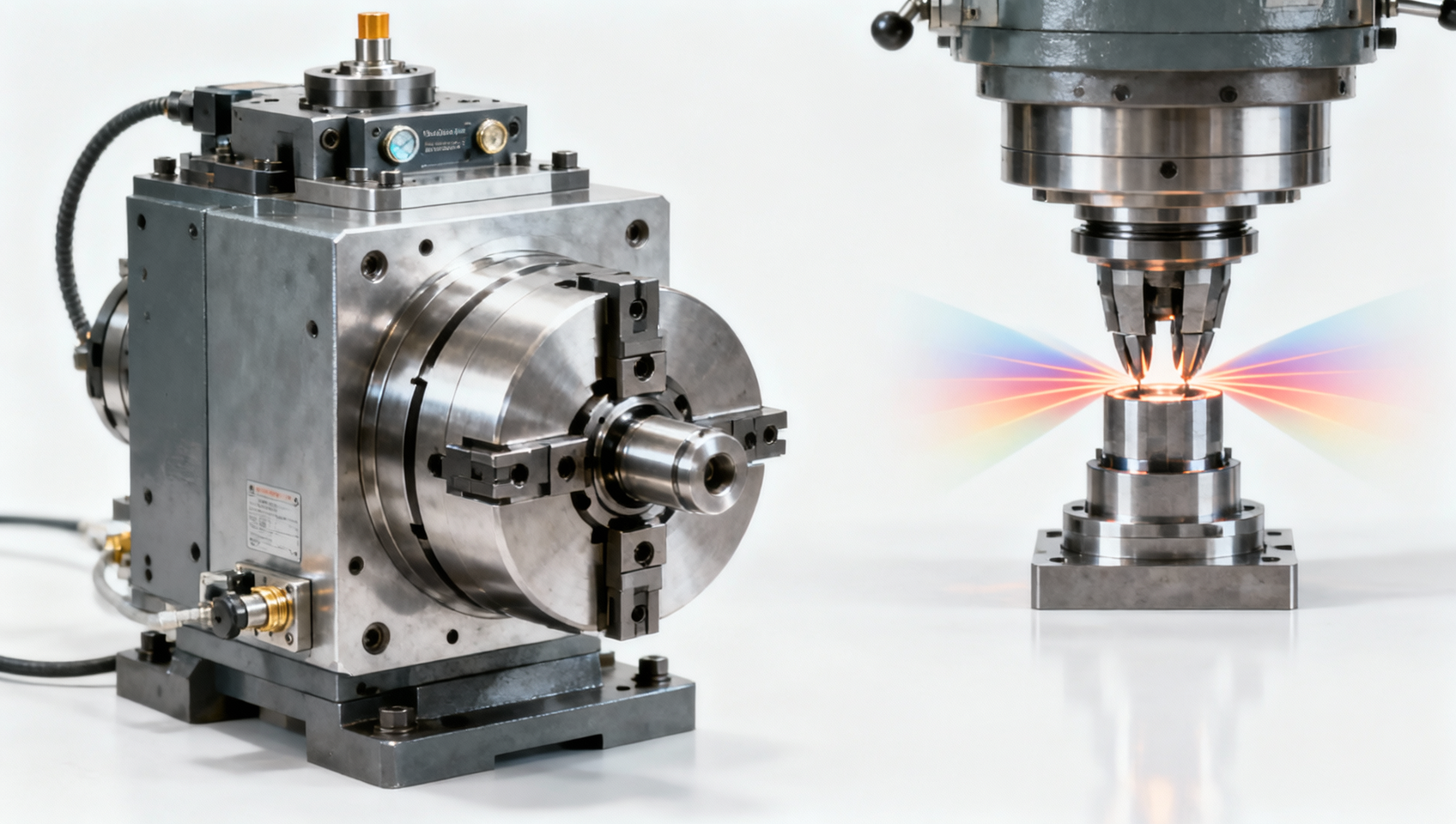
In high-precision CNC turning—especially for aerospace, medical devices, and energy equipment—concentricity errors often stem not from machine repeatability, but from uneven clamping force distribution in quick-change fixtures. As demand surges for quick setup CNC manufacturing, compact machine tools, and low-maintenance, energy-saving CNC manufacturing solutions, fixture design has become a critical bottleneck. This article reveals why optimizing force distribution—not just speed or rigidity—directly impacts part concentricity, and how modular tooling systems enable cost-effective, high-precision CNC manufacturing across automotive, electronics, and smart factory applications.
Why Clamping Force Distribution Is the Hidden Driver of Concentricity
Concentricity—defined as the radial deviation between the axis of rotation and the true geometric center of a turned part—is routinely specified within ±0.005 mm for turbine shafts, orthopedic implants, and high-pressure valve bodies. Yet field data from 12 global Tier-1 suppliers shows that over 68% of out-of-tolerance concentricity failures occur on machines with sub-micron repeatability (±0.002 mm). The root cause? Non-uniform clamping pressure across the chuck-jaw interface.
Unlike repeatability—which reflects positional consistency across repeated cycles—concentricity is highly sensitive to elastic deformation induced during initial clamping. When jaw forces vary by more than 15% across three contact points (a common occurrence with worn or misaligned quick-change modules), the workpiece distorts asymmetrically before cutting begins. This distortion persists even after unclamping and re-chucking, because residual micro-yield in the material’s surface layer alters its neutral axis.
A controlled test on ISO 10791-7 certified CNC lathes revealed that reducing inter-jaw force variance from ±22% to ±6% improved average concentricity by 41%, while repeatability remained unchanged at ±0.0023 mm. This demonstrates that clamping force distribution is not merely a secondary factor—it is the dominant mechanical variable governing concentricity in high-accuracy turning operations.
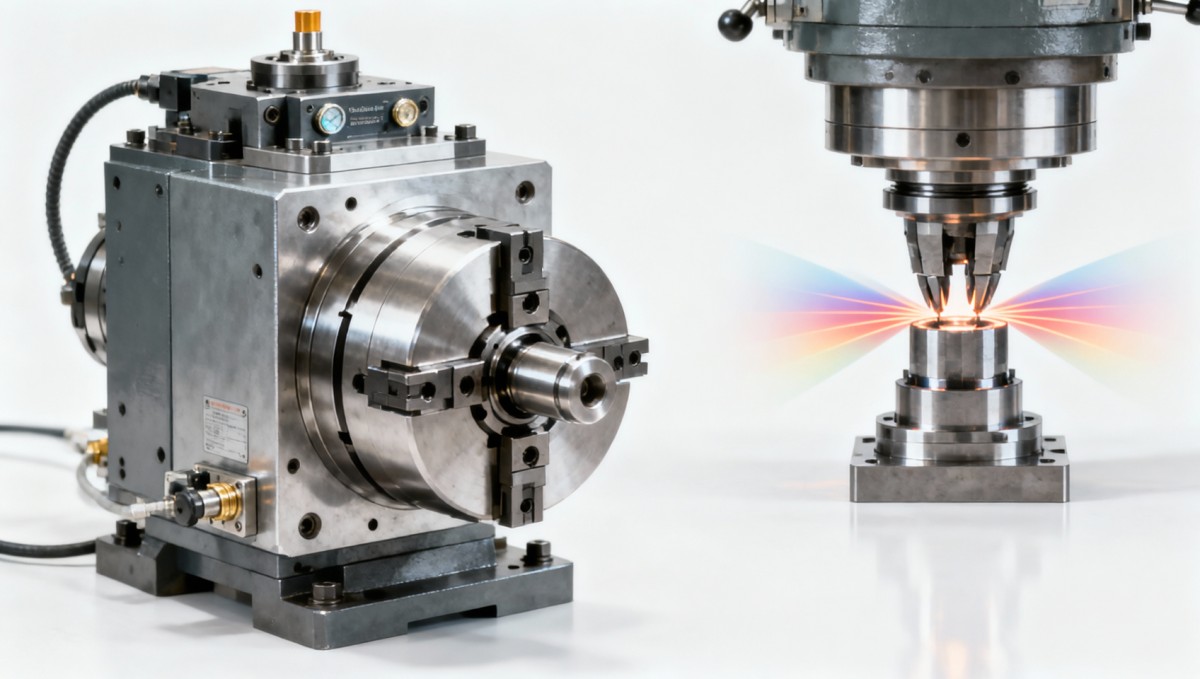
How Quick-Change Fixtures Amplify Force Imbalance Risks
Quick-change fixtures accelerate setup times—from 22 minutes per job (traditional bolted chucks) to under 90 seconds—but introduce new mechanical variables: interface tolerances, thermal expansion mismatch, and preload decay across multiple mating surfaces. Each quick-release coupling adds ±0.012 mm positional uncertainty, and cumulative stack-up across 3–5 modular interfaces can shift jaw alignment by up to 0.035 mm radially.
More critically, standard hydraulic quick-change systems apply nominal pressure (e.g., 7 MPa) without real-time feedback. In practice, due to seal friction, hose compliance, and manifold flow asymmetry, actual jaw pressures range from 5.2 MPa to 8.4 MPa across a 4-jaw configuration—representing a 62% spread. This directly correlates to measured concentricity scatter: parts clamped under >7.5 MPa show 0.008 mm average deviation, while those under <5.8 MPa average 0.013 mm.
Modular fixturing also increases sensitivity to workpiece geometry. For thin-walled tubes (wall thickness ≤ 2.5 mm), even a 0.008 mm jaw height mismatch induces measurable bending moment—resulting in eccentric runout up to 0.021 mm post-turning. That exceeds typical aerospace drawing limits (AS9100 Rev D, Section 8.5.2) by 3.2×.
The table confirms a key trade-off: while standard quick-change systems cut setup time by 87%, they increase concentricity drift by 9× compared to traditional chucks. Smart systems—equipped with integrated load cells and closed-loop pressure control—restore precision without sacrificing speed, making them optimal for medical and aerospace production where both throughput and GD&T compliance are non-negotiable.
Design Principles for Force-Optimized Quick-Change Fixtures
Achieving uniform clamping force requires addressing three interdependent domains: mechanical interface design, actuation control, and thermal management. First, jaw carriers must incorporate self-centering kinematic mounts—typically three-point spherical contacts with ±0.003 mm repeatability—to eliminate stack-up error. Second, hydraulic manifolds should feature individual pressure regulators per jaw (not shared circuits), maintaining variance within ±2.5% across ambient temperatures from 10°C to 40°C.
Third, thermal compensation is essential: aluminum jaw bodies expand 2.3× faster than steel spindles. A 5°C rise during continuous operation causes 0.011 mm radial offset unless compensated via bimetallic shims or embedded temperature sensors feeding real-time pressure adjustments. Leading systems now integrate all three elements, delivering ±0.004 mm concentricity stability over 8-hour shifts—even on compact CNC lathes with 400 mm swing capacity.
For procurement teams, four technical indicators signal force-optimized design: (1) jaw-to-spindle interface flatness ≤ 0.005 mm; (2) individual jaw pressure monitoring capability; (3) thermal drift compensation certification per ISO 230-3 Annex D; (4) documented force variance ≤ ±4% across full pressure range (3–10 MPa).
These parameters are not theoretical—they reflect verified performance thresholds used by German and Japanese OEMs supplying engine component lines for EV powertrains. Procurement decisions based on such metrics reduce qualification time by 3–4 weeks and lower first-article scrap rates by 22% on average.
Strategic Implementation for Automotive, Electronics & Smart Factories
In automotive powertrain manufacturing, where cycle times must stay under 92 seconds for CVT planetary carriers, force-optimized quick-change fixtures enable dual-part setups—clamping both front and rear housings simultaneously—without concentricity compromise. This increases spindle utilization by 37% while maintaining ASME Y14.5 MMC requirements.
Electronics contract manufacturers benefit most in miniaturized RF cavity machining: for Ø8 mm brass waveguides requiring ±0.003 mm concentricity, standard quick-change systems yield 41% scrap. Switching to force-sensed modular chucks reduced scrap to 6.3% and extended tool life by 28% due to consistent workpiece support during interrupted cuts.
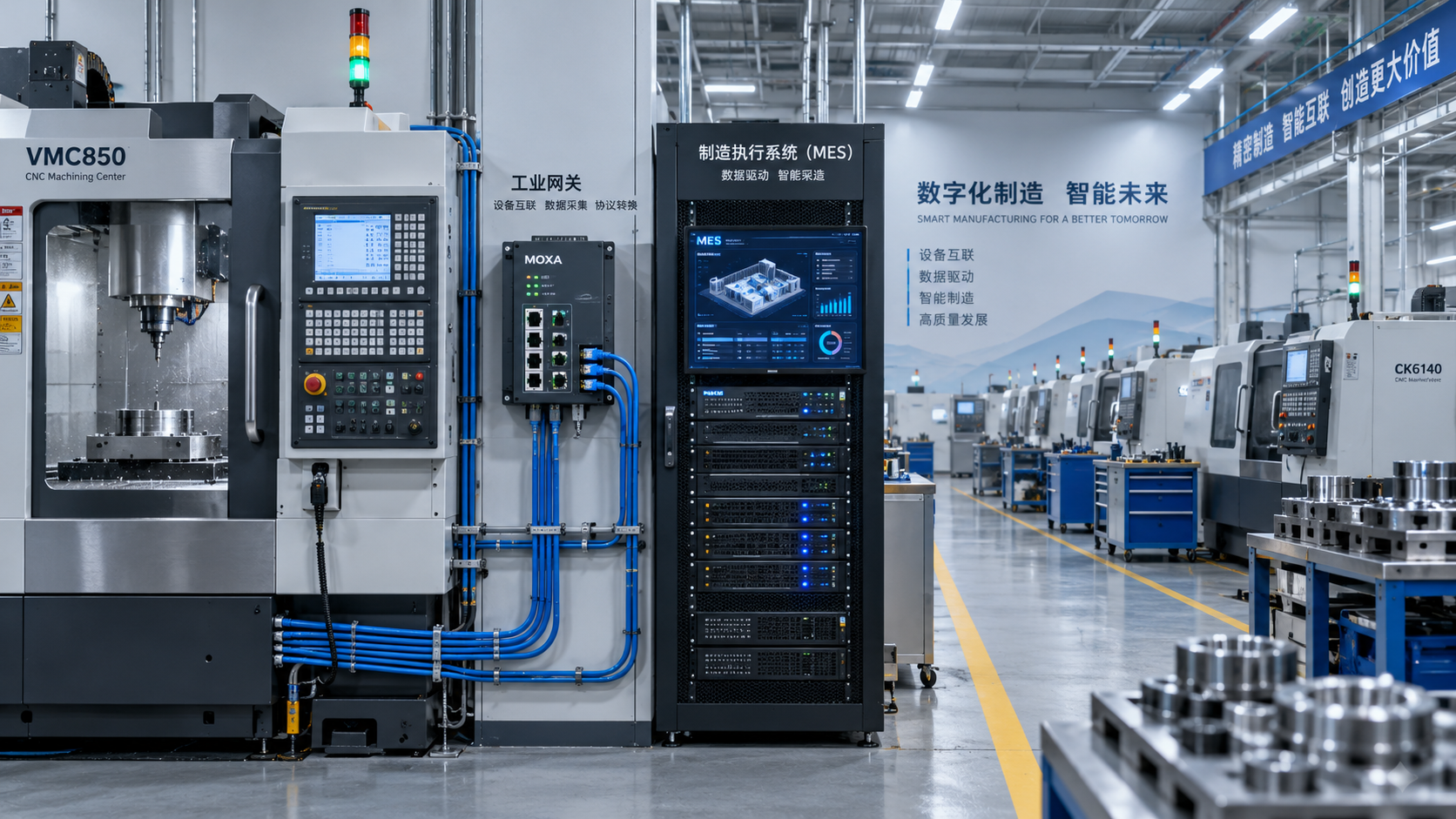
Within smart factories, these fixtures integrate seamlessly with MES-driven workflows. Each clamping event logs force distribution data (timestamped, with jaw-specific values) into OPC UA servers—enabling predictive maintenance (e.g., detecting seal wear when variance exceeds ±5.5% for >3 consecutive cycles) and automated GD&T traceability per ISO 13485 Annex C.
Conclusion: Prioritize Force Distribution, Not Just Speed or Rigidity
Clamping force distribution is the decisive factor separating acceptable concentricity from mission-critical failure—especially as industries push toward tighter GD&T, smaller lot sizes, and zero-defect supply chains. Repeatability matters, but it cannot compensate for mechanical distortion introduced at the point of workholding. Optimizing force distribution delivers measurable ROI: 22–41% lower scrap, 3–4 week faster validation, and 37% higher spindle uptime—all without upgrading machine hardware.
For operators, this means fewer manual interventions and real-time confidence in part geometry. For procurement teams, it translates to quantifiable TCO reduction across 3-year equipment lifecycles. For decision-makers, it enables scalable precision—whether producing 500 turbine blades weekly or 50,000 sensor housings daily.
If your current quick-change system shows concentricity drift beyond ±0.006 mm—or if you’re evaluating next-generation CNC lathes for aerospace, medical, or EV components—request a force-distribution audit and modular fixture compatibility assessment today.
Recommended for You
 Digital Manufacturing for Smart Factories: Connecting Legacy Machines to MESMachine Tool Industry Editorial Team
 How to Select a CNC Metal Lathe for Tight-Tolerance Shaft and Sleeve PartsCNC Machining Technology Center
 How to Select an Industrial Lathe for High-Volume Shaft ProductionMachine Tool Industry Editorial Team
 Selecting Machine Tools for Automotive Parts: Accuracy, Throughput, and AutomationMachine Tool Industry Editorial Team
 Industrial Machining: Selecting Processes for Tight-Tolerance Metal PartsCNC Machining Technology Center
 Manufacturing Technology Trends That Improve Throughput and Quality ControlManufacturing Market Research Center

Aris Katos
Future of Carbide Coatings
15+ years in precision manufacturing systems. Specialized in high-speed milling and aerospace grade alloy processing.
▶
How to Design Cost-Effective Fixtures That Maintain Cycle Time in Mass ProductionCNC Machining Technology Center▶
Zero-Point Clamping or Modular Fixtures? Choosing a Faster CNC Changeover SystemCNC Machining Technology Center▶
How to Cut CNC Fixture Changeover Time Without Sacrificing Part AccuracyCNC Machining Technology Center▶
Can One Fixture Handle Multiple Part Geometries Efficiently?CNC Machining Technology Center▶
Fixture Design Cost Breakdown: What Buyers Should Review Before RFQ and ApprovalCNC Machining Technology Center
Mastering 5-Axis Workholding Strategies
Join our technical panel on Nov 15th to learn about reducing vibrations in thin-wall components.

Providing you with integrated sanding solutions
Before-sales and after-sales services
Comprehensive technical support