• Global CNC market projected to reach $128B by 2028 • New EU trade regulations for precision tooling components • Aerospace deman
NYSE: CNC +1.2%LME: STEEL -0.4%

Middle East Halts Import of CNC Drives Without IEC 61800-5-2 Certification

On May 11, 2026, Saudi Arabia’s SASO, the UAE’s ESMA, and Qatar’s General Organization of Standardization jointly announced the immediate suspension of import applications for CNC machine tools and automated conveyor line drive units lacking IEC 61800-5-2 certification. This development directly affects manufacturers, exporters, and distributors of industrial automation equipment targeting Gulf Cooperation Council (GCC) markets — particularly those supplying variable-speed drive systems for precision machining and material handling.
Event Overview
On May 11, 2026, the Saudi Standards, Metrology and Quality Organization (SASO), the Emirates Authority for Standardization and Metrology (ESMA), and the Qatar General Organization of Standardization issued a joint notice confirming that import applications for CNC machine tools and drive units used in automated conveyor lines will no longer be accepted unless they hold valid IEC 61800-5-2 certification. The standard specifies functional safety requirements for adjustable speed electrical power drive systems. The notice confirms this requirement is now a de facto mandatory market access condition for GCC countries.
Industries Affected by Segment
Direct Exporters and Trading Companies
Exporters shipping CNC-controlled drives or integrated CNC machines to GCC countries face immediate shipment delays or outright rejection at customs. Applications submitted without IEC 61800-5-2 certification are no longer processed — meaning pending orders may stall unless documentation is updated or re-submitted with compliant evidence.
Original Equipment Manufacturers (OEMs) of CNC Machines
OEMs integrating third-party variable-speed drives into their CNC systems must now verify whether those components meet IEC 61800-5-2. If not, redesign, requalification, or supplier substitution may be required before GCC shipments can resume — impacting production timelines and compliance validation cycles.
Drive Component Suppliers
Manufacturers of AC drives, servo amplifiers, and motion controllers intended for integration into CNC or conveyor systems must assess whether their current product certifications cover IEC 61800-5-2. Non-compliant models may lose eligibility for inclusion in GCC-bound OEM builds or system integrator projects.
System Integrators and Automation Solution Providers
Integrators delivering turnkey automation lines to GCC-based end users must now ensure full traceability of functional safety compliance across all drive-level components. Absence of certified drives may invalidate overall system safety assessments and delay project handover or commissioning.
What Relevant Enterprises or Practitioners Should Monitor and Do Now
Track official updates from SASO, ESMA, and Qatar’s Standardization Authority
The joint notice is effective immediately, but implementation guidance — such as acceptable certification bodies, transition periods for existing stock, or scope clarifications (e.g., whether retrofit units or spare parts are included) — has not yet been published. Monitoring official portals for technical circulars or FAQs is essential.
Identify high-risk product categories and destination-specific shipments
Focus first on CNC machine tools and automated conveyor line drives destined for Saudi Arabia, UAE, and Qatar. Prioritize units shipped under GCC Conformity Marking (G-mark) pathways, as these are most likely subject to direct verification against the new requirement.
Distinguish between regulatory signal and operational impact
This is not a phased-in regulation but an active import suspension. Unlike advisory notices, it halts processing — meaning non-certified goods currently in customs clearance queues may be held pending documentation correction or rejection. Businesses should treat this as an operational stoppage, not a preparatory warning.
Review supply chain documentation and initiate certification gap analysis
Verify whether current drive suppliers hold valid IEC 61800-5-2 certificates covering the exact model, firmware version, and application context (e.g., safety-related stop functions). Initiate internal gap assessments for affected SKUs and engage notified bodies early if recertification is needed.
Editorial Perspective / Industry Observation
Observably, this joint action signals a coordinated tightening of functional safety enforcement across key GCC markets — moving beyond general product conformity toward application-specific safety assurance. Analysis shows this is less a new technical requirement (IEC 61800-5-2 has existed for years) and more a shift in enforcement priority: authorities are now treating its absence as a disqualifying condition rather than a remediable deficiency. From an industry perspective, it reflects growing alignment among GCC regulators on machinery safety expectations, especially for digitally controlled industrial systems. Current developments suggest this is already producing tangible operational consequences — not merely a policy signal awaiting future implementation.
This notice underscores how functional safety standards are evolving from optional best practice to enforceable market gateways in regulated industrial regions. It also highlights increasing interdependence between component-level certification and system-level market access — a dynamic that raises due diligence obligations upstream in the supply chain.
Conclusion
This measure marks a definitive step toward mandatory functional safety compliance for variable-speed drives in GCC industrial equipment markets. It is not a proposal, pilot, or consultation — it is an active import control mechanism with immediate effect. Enterprises should interpret this as a binding operational constraint requiring documentation verification, supplier engagement, and, where necessary, technical revalidation. Continued monitoring of official clarifications remains critical, as scope details and enforcement nuances may evolve in coming weeks.
Source Attribution
Main sources: Joint notice issued May 11, 2026 by SASO (Saudi Arabia), ESMA (UAE), and Qatar General Organization of Standardization.
Areas under observation: Official implementation guidelines, scope definitions for spare parts/retrofits, and recognition status of specific certification bodies — none confirmed as of publication date.
Recommended for You
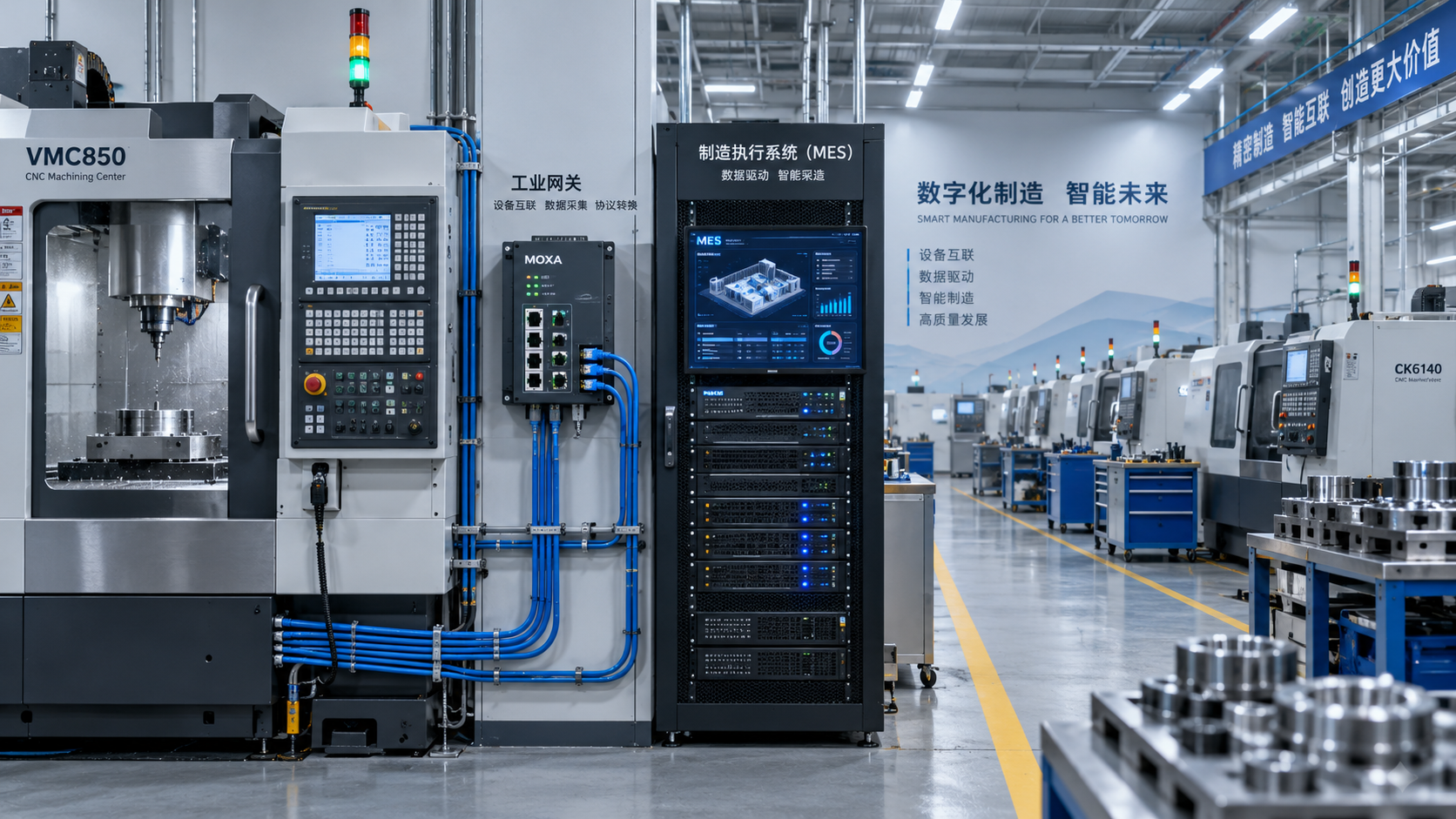
 Digital Manufacturing for Smart Factories: Connecting Legacy Machines to MESMachine Tool Industry Editorial Team
 How to Select a CNC Metal Lathe for Tight-Tolerance Shaft and Sleeve PartsCNC Machining Technology Center
 How to Select an Industrial Lathe for High-Volume Shaft ProductionMachine Tool Industry Editorial Team
 Selecting Machine Tools for Automotive Parts: Accuracy, Throughput, and AutomationMachine Tool Industry Editorial Team
 Industrial Machining: Selecting Processes for Tight-Tolerance Metal PartsCNC Machining Technology Center
 Manufacturing Technology Trends That Improve Throughput and Quality ControlManufacturing Market Research Center




Aris Katos
Future of Carbide Coatings
15+ years in precision manufacturing systems. Specialized in high-speed milling and aerospace grade alloy processing.
▶
Machine Tool Standards by Country: What Importers Must Verify Before PurchaseManufacturing Policy Research Center▶
EU Sets CE-EMC+AI Certification Rule for CNC ExportsManufacturing Policy Research Center▶
EU Rule Update Raises CNC Safety Certification BarManufacturing Policy Research Center▶
U.S. Tightens Reviews for China CNC ExportsManufacturing Policy Research Center▶
EU Tightens CNC Export Compliance from October 2026Manufacturing Policy Research Center
Mastering 5-Axis Workholding Strategies
Join our technical panel on Nov 15th to learn about reducing vibrations in thin-wall components.

Providing you with integrated sanding solutions
Before-sales and after-sales services
Comprehensive technical support