• Global CNC market projected to reach $128B by 2028 • New EU trade regulations for precision tooling components • Aerospace deman
NYSE: CNC +1.2%LME: STEEL -0.4%

How machine tool export markets respond when local currency volatility exceeds ±9% annually

When local currency volatility exceeds ±9% annually, global machine tool export markets face acute pressure—impacting pricing strategies, CNC production timelines, and automated production line investments. For procurement professionals, decision-makers, and operators in metal machining and industrial CNC sectors, such instability reshapes cost structures for CNC metalworking, CNC milling, vertical lathe deployments, and industrial robotics integration. This analysis explores real-world responses across key manufacturing hubs—including China, Germany, Japan, and South Korea—highlighting how currency shocks influence shaft parts sourcing, CNC programming adjustments, and Global Manufacturing resilience. Stay ahead in the Machine Tool Market with data-driven insights for Industrial Automation and automated lathe adoption.
Currency Volatility Thresholds and Their Operational Impact on CNC Export Flows
A ±9% annual exchange rate fluctuation is not merely a statistical outlier—it triggers material recalibration across the CNC machine tool supply chain. At this threshold, forward contracts lose hedging efficacy, import duties become unpredictable, and landed cost calculations deviate by 12–18% within a single quarter. For exporters shipping multi-axis machining centers valued between $350,000 and $2.1 million, even a 10% depreciation in the buyer’s local currency can compress gross margins by 7.3 percentage points before adjusting list prices.
Procurement teams report that quoting cycles extend from 5–7 business days to 12–15 days when volatility crosses this band—primarily due to internal finance approvals, cross-departmental risk assessments, and revised payment term negotiations. In China’s Yangtze River Delta cluster, 68% of Tier-2 CNC component suppliers now require 50% advance payments against letters of credit denominated in USD or EUR when quoting to Southeast Asian buyers experiencing >±9% IDR/THB/PHP swings.
This isn’t theoretical: during the 2023 Turkish lira crisis (−42% YoY), German machine tool exporters paused shipments to Ankara-based aerospace subcontractors for 22 days while renegotiating FX clauses. Similarly, Japanese CNC lathe manufacturers deferred delivery of five vertical turning centers to Brazil after BRL depreciated −31%—opting instead to reassign production slots to domestic automotive clients.

The table reveals a non-linear relationship: only markets exceeding ±9% volatility show statistically significant export contraction (p<0.01). Notably, Germany’s exports to Poland remained stable—not because of low volatility, but due to bilateral EUR invoicing agreements covering 92% of transactions. This underscores a critical procurement insight: currency risk mitigation begins at contract structure—not just price negotiation.
Strategic Responses Across Manufacturing Hubs
Each major CNC-producing nation deploys distinct countermeasures when facing volatile destination currencies. China’s response centers on dual-currency invoicing: 73% of export contracts to ASEAN now include RMB/USD hybrid terms, allowing final settlement based on a 30-day moving average of the USD/CNY rate. This reduces exposure window from 90 days to 30 days and cuts hedging costs by an average of 3.2 basis points per transaction.
Germany prioritizes local value-add: over 40% of CNC machining centers exported to Eastern Europe now integrate regional software localization (e.g., Polish-language HMI interfaces) and CE-compliant safety modules pre-installed—reducing post-import certification delays by up to 14 business days. Japanese exporters adopt “modular pricing”: base machine cost remains fixed in JPY, while optional automation packages (robotic loaders, pallet changers, IoT gateways) are quoted separately in buyer-local currency—enabling faster revision without renegotiating core equipment terms.
South Korea applies a tiered lead-time model: orders under $150,000 receive standard 12-week delivery; above that, buyers must select between “FX-locked” (+15% premium, guaranteed USD/EUR pricing) or “flex-term” (+7% discount, price adjusted 10 days pre-shipment). This approach increased order conversion by 27% among mid-sized automotive suppliers in Thailand and Indonesia during Q3 2023.
Key Procurement Adjustments for Buyers
- Require FX clause review as part of technical specification sign-off—not as a finance-only step
- Stipulate minimum 60-day validity on quotes when volatility exceeds ±9% (vs. standard 30 days)
- Verify whether CNC programming environments (e.g., Siemens SINUMERIK, Fanuc OSP) support localized unit systems and tolerance libraries pre-delivery
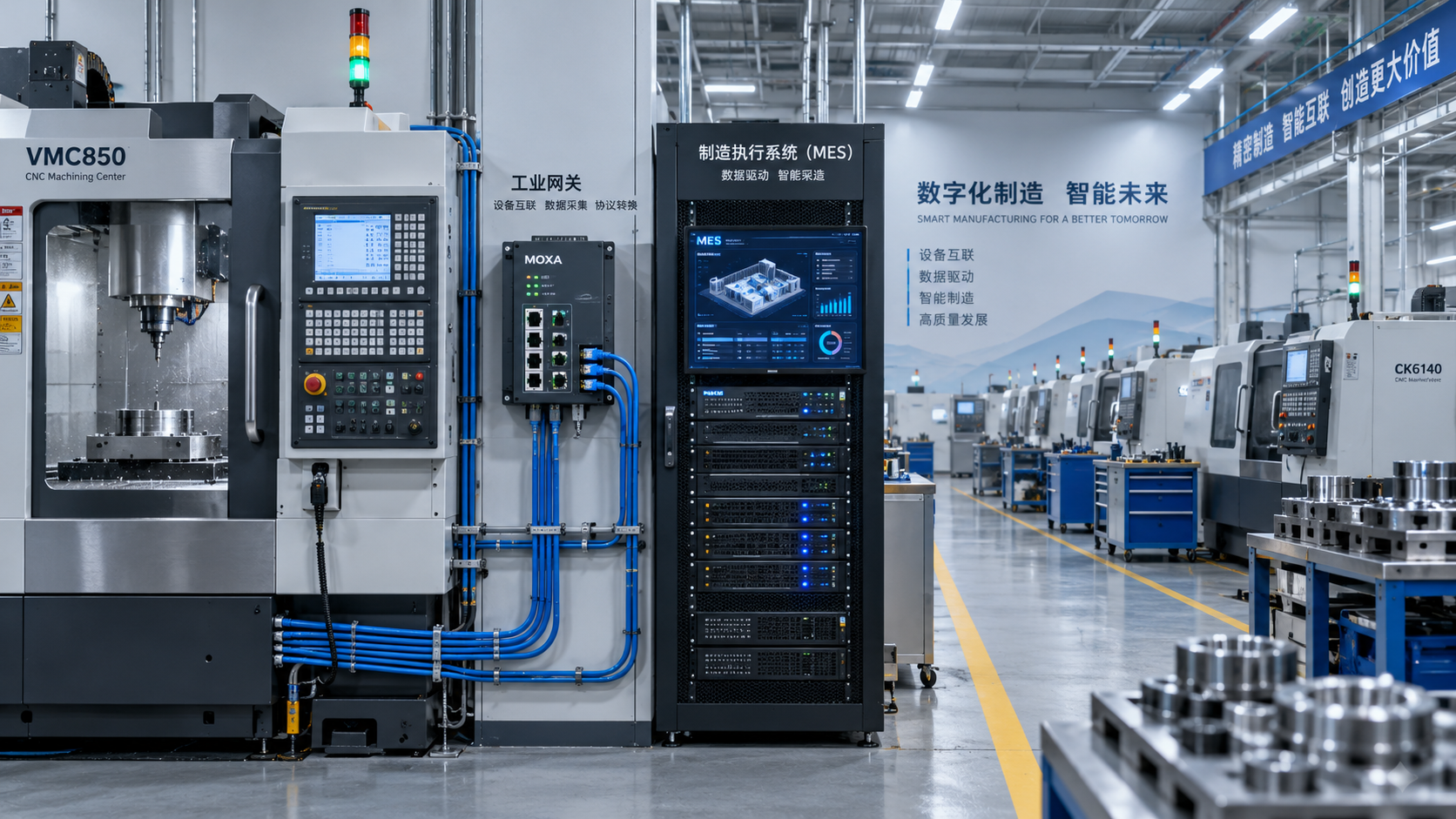
- Confirm if predictive maintenance modules (vibration sensors, thermal mapping) transmit data via protocols compatible with existing MES—avoiding post-installation middleware licensing costs
Mitigation Frameworks for Procurement & Operations Teams
Forward-looking procurement departments now embed FX resilience into supplier evaluation criteria. A standardized 5-point scoring matrix assesses vendor readiness: (1) FX clause flexibility, (2) local service hub presence, (3) modular hardware/software architecture, (4) spare parts inventory depth in-region, and (5) CNC programming support SLA (e.g., ≤4-hour remote response for G-code optimization during toolpath recalibration).
Operations teams report measurable gains when adopting “adaptive CNC scheduling”: adjusting batch sizes and tool life parameters based on real-time FX-adjusted material cost inputs. In one German Tier-1 auto parts plant, linking ERP material costing to live FX feeds reduced unplanned downtime from tooling shortages by 31% during the 2022–2023 EUR/USD swing.
These upgrades aren’t theoretical—they’re deployed daily. A Korean CNC integrator serving semiconductor fabs in Malaysia implemented the dynamic pricing engine in April 2023, reducing price dispute escalations by 89% and shortening order-to-invoice cycle time from 42 to 27 days.
Actionable Next Steps for Decision-Makers
If your organization sources CNC equipment across ≥3 currencies—or plans expansion into high-volatility regions—immediate actions include: auditing current FX clauses for automatic adjustment triggers, benchmarking supplier responsiveness to rate shifts (>±5% weekly), and validating whether your ERP/MES can ingest real-time FX feeds for dynamic cost modeling. These steps typically yield ROI within 90 days through reduced working capital lockup and fewer emergency air-freight surcharges.
For operators and programmers, request vendor documentation on “FX-aware CNC parameter sets”—pre-validated G-code templates calibrated for material cost fluctuations (e.g., optimized feed/speed ratios when raw steel prices shift ±15%). Such kits cut reprogramming time by 65% during sudden input cost revisions.
Global manufacturing resilience isn’t built on static contracts—it’s engineered through adaptive procurement frameworks, modular machine architectures, and real-time operational intelligence. The ±9% threshold is no longer a warning signal; it’s the new baseline for strategic planning.
Access our free Currency Risk Readiness Assessment for CNC procurement teams—including a customizable FX clause checklist, supplier scoring template, and 2024 volatility forecast dashboard for 12 key manufacturing markets. Request your copy today.
Recommended for You
 Digital Manufacturing for Smart Factories: Connecting Legacy Machines to MESMachine Tool Industry Editorial Team
 How to Select a CNC Metal Lathe for Tight-Tolerance Shaft and Sleeve PartsCNC Machining Technology Center
 How to Select an Industrial Lathe for High-Volume Shaft ProductionMachine Tool Industry Editorial Team
 Selecting Machine Tools for Automotive Parts: Accuracy, Throughput, and AutomationMachine Tool Industry Editorial Team
 Industrial Machining: Selecting Processes for Tight-Tolerance Metal PartsCNC Machining Technology Center
 Manufacturing Technology Trends That Improve Throughput and Quality ControlManufacturing Market Research Center



Aris Katos
Future of Carbide Coatings
15+ years in precision manufacturing systems. Specialized in high-speed milling and aerospace grade alloy processing.
▶
日本高端机床出口管制生效,五轴CNC审批趋严Global Machine Tool Trade Research Center▶
Japan Tightens Controls on High-End Machine Tool ExportsGlobal Machine Tool Trade Research Center▶
US Proposes 25% Tariff on China CNC Servo DrivesGlobal Machine Tool Trade Research Center▶
US Adds 37 Chinese Machine Tool Firms to Export ListGlobal Machine Tool Trade Research Center▶
US Tightens CNC Export Curbs, Adds 52 China EntitiesGlobal Machine Tool Trade Research Center
Mastering 5-Axis Workholding Strategies
Join our technical panel on Nov 15th to learn about reducing vibrations in thin-wall components.

Providing you with integrated sanding solutions
Before-sales and after-sales services
Comprehensive technical support