• Global CNC market projected to reach $128B by 2028 • New EU trade regulations for precision tooling components • Aerospace deman
NYSE: CNC +1.2%LME: STEEL -0.4%

Red Sea Crisis Deepens: Suez Canal CNC Ship Delays Hit 11.4 Days

Amid escalating Red Sea tensions between May 15–20, 2026, container vessels carrying CNC machine tools and large functional components via the Suez Canal experienced an average delay of 11.4 days — a 280% year-on-year increase — significantly extending delivery timelines by 6–8 weeks. This development directly impacts global industrial equipment trade, particularly for manufacturers, importers, and supply chain service providers engaged in precision machining, automation infrastructure, and cross-border industrial assembly.
Event Overview
According to the joint Maersk–COSCO Weekly Shipping Report for May 2026, vessels transporting CNC machine tools and major functional components through the Suez Canal recorded an average vessel detention time of 11.4 days during May 15–20, 2026. This delay has extended typical delivery cycles by 6–8 weeks. In response, importers in the UAE and Saudi Arabia have activated emergency procurement protocols: sourcing modular CNC machine bases and pre-calibrated functional modules from Chinese suppliers, air-freighting them to Jebel Ali Free Zone (Dubai), and completing final assembly and commissioning at local partner facilities. Orders under this air freight + local assembly model rose 210% month-on-month.
Industries Affected by Segment
Direct Trading Enterprises (CNC Exporters & Importers)
These firms face immediate pressure on order fulfillment timelines and contractual penalty exposure. The 11.4-day average vessel delay directly undermines just-in-time delivery commitments, especially for capital equipment contracts with fixed installation windows or project milestones.
Component Manufacturing & Integration Providers
Local assembly partners in Dubai and other Gulf free zones are experiencing surging demand for integration services — including mechanical alignment, electrical interconnection, software calibration, and FAT (Factory Acceptance Testing). Their capacity utilization and lead time visibility are now critical constraints.
Supply Chain Service Providers (Freight Forwarders, Customs Brokers, Logistics Hubs)
Service providers operating in Jebel Ali Free Zone and similar regulatory environments must scale air cargo handling, bonded warehousing, and rapid customs clearance capabilities for high-value, low-volume CNC modules. Air freight cost volatility and aircraft belly-space availability for oversized pallets are emerging operational bottlenecks.
Industrial Equipment Distributors & Channel Partners
Distributors serving end users in oil & gas, aerospace, and automotive sectors are adjusting customer communication protocols — shifting from ‘delivery date’ to ‘assembly completion window’ — and re-evaluating inventory buffers for modular subassemblies rather than fully built machines.
Key Considerations and Practical Responses
Monitor official maritime advisories and canal transit policy updates
Track real-time updates from the Suez Canal Authority, IMO, and regional maritime security coalitions. Any change in naval escort protocols or insurance premium adjustments will directly affect routing decisions and cost allocation for future bookings.
Assess exposure across specific product categories and destination markets
Focus on CNC systems with large dimensional footprints (e.g., gantry mills, multi-axis machining centers) and those requiring integrated commissioning — as these are least amenable to air freight and most vulnerable to Suez-related delays. Prioritize scenario planning for UAE, KSA, and Qatar-based customers where local assembly infrastructure is already active.
Distinguish between tactical workarounds and strategic shifts
The current air freight + local assembly model remains operationally viable only for high-margin, low-volume orders due to air freight cost premiums (typically 4–6× ocean rates per kg). Treat it as a short-term contingency — not a scalable replacement for sea-based logistics — unless modular design standards and regional certification pathways mature.
Pre-validate documentation, customs classification, and assembly facility readiness
Confirm that modular CNC components qualify for duty-free entry under Jebel Ali Free Zone regulations, and that local partner facilities hold valid ISO 9001 and relevant machinery safety certifications (e.g., CE or GCC Conformity Marking support). Pre-clear technical documentation packages to avoid FAT scheduling delays.
Editorial Observation / Industry Perspective
Observably, this is not merely a transient shipping disruption but an early indicator of structural recalibration in global industrial equipment logistics. The 210% month-on-month growth in air+assembly orders suggests that regional importers are treating the Red Sea crisis as a catalyst for long-term supply chain diversification — not just a temporary rerouting exercise. Analysis shows that the shift reflects growing confidence in modular CNC design maturity and localized commissioning capability in the Gulf. However, it remains unclear whether this model can sustain beyond niche, high-value applications without broader standardization of interface protocols, calibration traceability, and cross-border regulatory harmonization. From an industry perspective, this development is best understood as an evolving operational signal — one that warrants close tracking of both volume trends and quality assurance outcomes over the coming quarters.
This incident underscores how geopolitical friction in maritime chokepoints is accelerating the decoupling of physical logistics from final value delivery. For industrial equipment stakeholders, the core implication is no longer just ‘how to ship’, but ‘where and how final integration occurs’ — and who controls the associated verification and compliance responsibilities.
Current evidence supports interpreting this development as an adaptive response to acute constraint — not yet a wholesale reconfiguration of global CNC supply chains. Its significance lies less in scale than in precedent: it demonstrates that regional industrial ecosystems can rapidly absorb and re-sequence parts of traditionally linear, ocean-dependent value chains when faced with sustained disruption.
Information Source: Maersk–COSCO Joint Weekly Shipping Report, May 2026. Note: Ongoing monitoring is advised for subsequent weekly reports and any official statements from UAE/Saudi industrial authorities regarding incentives or regulatory adaptations supporting local assembly models.
PREVIOUS ARTICLE
Recommended for You
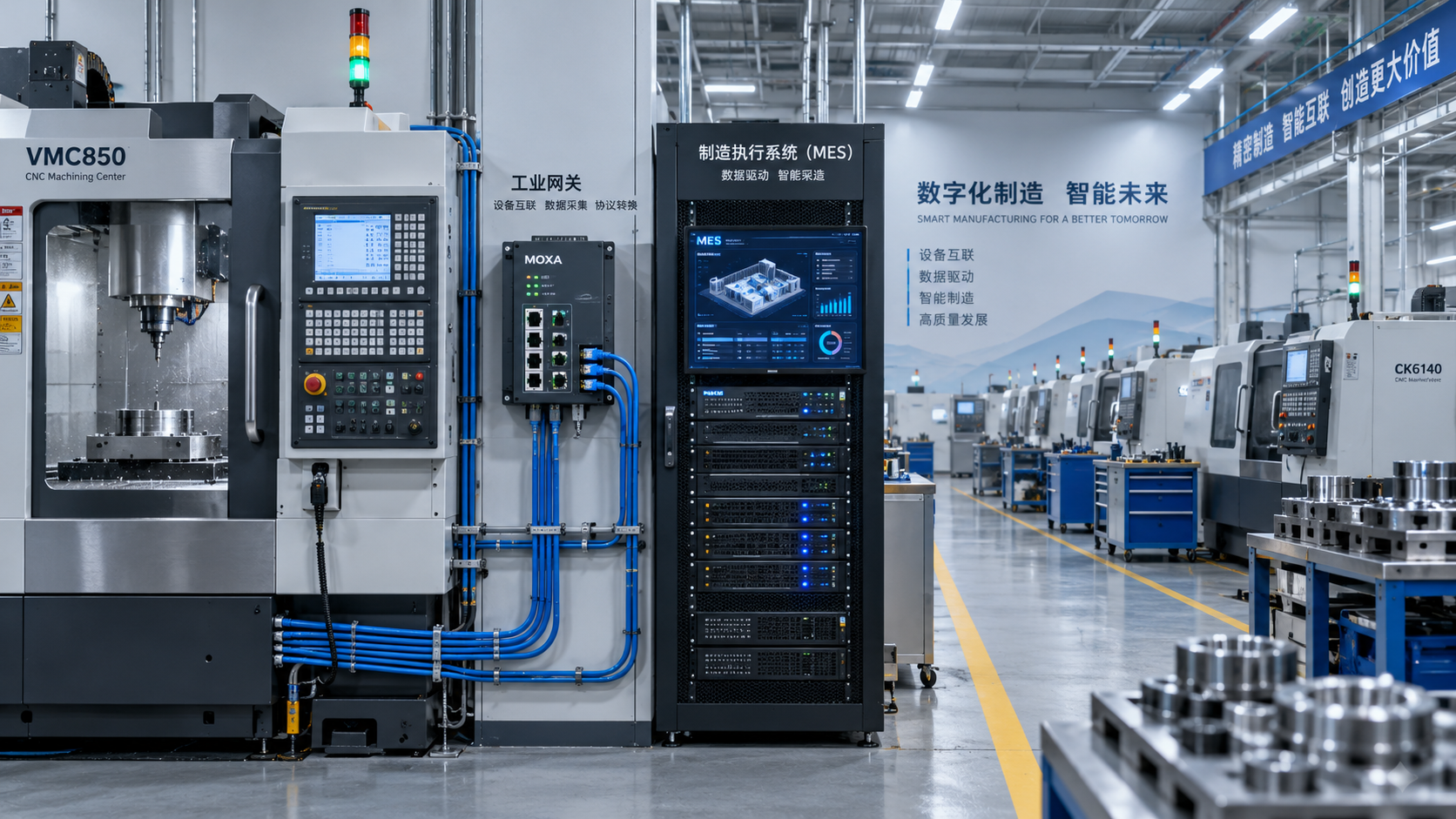
 Digital Manufacturing for Smart Factories: Connecting Legacy Machines to MESMachine Tool Industry Editorial Team
 How to Select a CNC Metal Lathe for Tight-Tolerance Shaft and Sleeve PartsCNC Machining Technology Center
 How to Select an Industrial Lathe for High-Volume Shaft ProductionMachine Tool Industry Editorial Team
 Selecting Machine Tools for Automotive Parts: Accuracy, Throughput, and AutomationMachine Tool Industry Editorial Team
 Industrial Machining: Selecting Processes for Tight-Tolerance Metal PartsCNC Machining Technology Center
 Manufacturing Technology Trends That Improve Throughput and Quality ControlManufacturing Market Research Center





Aris Katos
Future of Carbide Coatings
15+ years in precision manufacturing systems. Specialized in high-speed milling and aerospace grade alloy processing.
▶
Shenzhen Port Launches Green Shipping Corridor, Raising Carbon Compliance for CNC ExportsGlobal Machine Tool Trade Research Center▶
China, UAE Launch Direct Sea Route for CNC Equipment ExportsGlobal Machine Tool Trade Research Center▶
China Rolls Out Nationwide Cross-Border Cash Pooling for Multinationals on Sept. 14Global Machine Tool Trade Research Center▶
Turkey Customs Launches AI HS Tool for CNC ImportsGlobal Machine Tool Trade Research Center▶
Maersk Launches CNC Priority Lane to EuropeGlobal Machine Tool Trade Research Center
Mastering 5-Axis Workholding Strategies
Join our technical panel on Nov 15th to learn about reducing vibrations in thin-wall components.

Providing you with integrated sanding solutions
Before-sales and after-sales services
Comprehensive technical support