• Global CNC market projected to reach $128B by 2028 • New EU trade regulations for precision tooling components • Aerospace deman
NYSE: CNC +1.2%LME: STEEL -0.4%

Iran Central Bank Ordered to Boost Rial-Yuan Settlement

On April 25, 2026, Iranian President Masoud Pezeshkian directed the Central Bank of Iran to activate alternative financial mechanisms—particularly bilateral local-currency settlement agreements with regional partners, including China—to manage liquidity intelligently and circumvent sanctions. This move directly affects exporters and importers in machinery, CNC systems, and industrial robotics, where RMB–rial direct settlement is set to expand. Industry stakeholders in cross-border trade finance, industrial equipment supply chains, and sanction-resilient payment infrastructure should monitor implementation closely.
Event Overview
On April 25, 2026, Iranian President Masoud Pezeshkian instructed the Central Bank of Iran to implement intelligent liquidity management and prioritize bilateral local-currency settlement arrangements with regional trading partners, explicitly naming China. The directive aims to secure foreign exchange for critical equipment imports. Confirmed details are limited to this official instruction and its stated objectives: enhancing settlement resilience and supporting key import flows.
Which Subsectors Are Affected
Direct Exporters to Iran (especially in machine tools, CNC systems, industrial robots)
These enterprises face reduced reliance on SWIFT-based USD or EUR payments and increased exposure to RMB–rial settlement. Impact manifests in payment timing, currency conversion costs, and counterparty risk assessment—particularly regarding Iranian importer solvency under constrained banking access.
Importers and Distributors Sourcing from Iran (e.g., petrochemical intermediates, specialty minerals)
While less emphasized in the announcement, reciprocal settlement frameworks may gradually extend to Iranian exports. Affected firms should assess whether their Iranian suppliers begin requesting RMB-denominated invoicing or settlement via designated Iranian banks authorized under new protocols.
Supply Chain Finance Providers & Cross-Border Payment Service Firms
Providers facilitating Iran-related transactions—including those offering LC issuance, documentary collections, or multi-currency settlement rails—may see demand shift toward RMB-based instruments and non-SWIFT channels (e.g., CIPS-linked gateways, bilateral clearing bank arrangements). Operational readiness for RMB liquidity management and compliance screening will be increasingly relevant.
Industrial Equipment Procurement Departments (in Iranian state-owned or sanctioned-affected enterprises)
These units rely on stable foreign exchange access for capital goods. The directive signals a formalized pathway to secure RMB liquidity for priority imports. Their ability to execute contracts hinges on actual disbursement capacity of Iranian banks under the new framework—not just policy intent.
What Enterprises and Practitioners Should Monitor and Do Now
Track official implementation guidance from both central banks
Neither the Central Bank of Iran nor the People’s Bank of China has published technical specifications (e.g., eligible banks, transaction caps, reporting requirements) as of April 25, 2026. Stakeholders should subscribe to regulatory updates from both institutions—not just high-level statements.
Identify and map RMB-settlement-eligible product categories and counterparties
The directive specifies machine tools, CNC systems, and industrial robots as priority import categories. Exporters should verify whether their specific HS codes fall within officially designated scopes—and confirm whether their Iranian buyers hold authorization to transact under the new mechanism.
Distinguish between policy signal and operational readiness
Analysis来看, this directive is primarily a top-down coordination mandate—not evidence of immediate, scalable settlement infrastructure. Firms should avoid assuming automatic RMB invoicing acceptance; instead, treat it as a trigger to initiate bilateral discussions with Iranian partners on payment terms, documentation, and fallback options.
Review and stress-test existing contract clauses on currency, payment method, and force majeure
Contracts referencing USD, SWIFT, or standard UCP600 LC terms may require amendment if parties transition to RMB clearing via non-traditional channels. Legal and treasury teams should jointly assess enforceability, settlement delays, and FX risk allocation under revised terms.
Editorial Perspective / Industry Observation
From industry angle, this directive is best understood as a coordinated policy signal—not an implemented system. It reflects institutional alignment between Tehran and Beijing to deepen financial de-dollarization in bilateral trade, but does not yet indicate broad operational deployment. Current significance lies in its reinforcement of a structural trend: the incremental substitution of multilateral payment infrastructures with bilateral, currency-specific arrangements in sanctioned contexts. Ongoing observation is warranted because successful implementation would validate RMB’s functional role beyond reserve or investment use—and test real-world viability of parallel settlement rails under geopolitical constraint.
Conclusion
This directive marks a formal escalation in Iran’s effort to insulate critical import financing from external financial controls—centered on expanding RMB–rial settlement in targeted industrial sectors. It is not yet a functioning system, but rather a procedural milestone signaling intent and intergovernmental coordination. For industry, it is more accurately interpreted as an early-stage inflection point requiring watchful preparation—not immediate operational change.
Information Sources
Main source: Official statement by the Office of the President of Iran, issued April 25, 2026. No supplementary data or technical annexes have been released. Implementation status, participating banks, and transaction thresholds remain unconfirmed and subject to ongoing monitoring.
Recommended for You
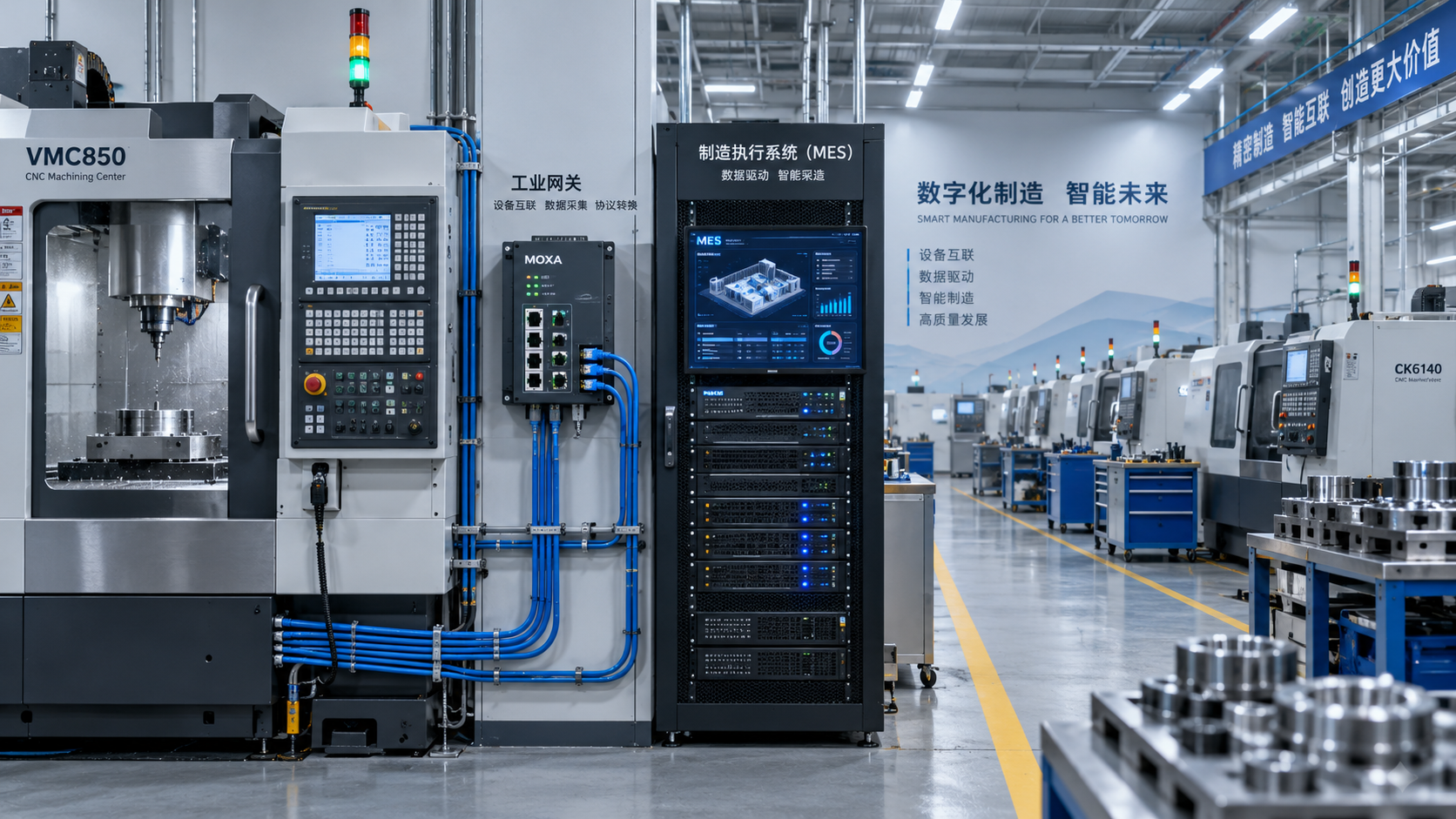
 Digital Manufacturing for Smart Factories: Connecting Legacy Machines to MESMachine Tool Industry Editorial Team
 How to Select a CNC Metal Lathe for Tight-Tolerance Shaft and Sleeve PartsCNC Machining Technology Center
 How to Select an Industrial Lathe for High-Volume Shaft ProductionMachine Tool Industry Editorial Team
 Selecting Machine Tools for Automotive Parts: Accuracy, Throughput, and AutomationMachine Tool Industry Editorial Team
 Industrial Machining: Selecting Processes for Tight-Tolerance Metal PartsCNC Machining Technology Center
 Manufacturing Technology Trends That Improve Throughput and Quality ControlManufacturing Market Research Center






Aris Katos
Future of Carbide Coatings
15+ years in precision manufacturing systems. Specialized in high-speed milling and aerospace grade alloy processing.
▶
How to Evaluate a Machine Tool Factory Before Sourcing CNC EquipmentGlobal Machine Tool Trade Research Center▶
How to Evaluate a CNC Machine Tool Manufacturer for Precision and Service SupportGlobal Machine Tool Trade Research Center▶
What Affects Cost-Effective CNC Manufacturing? Key Drivers Behind Part Price and Lead TimeGlobal Machine Tool Trade Research Center▶
How to Evaluate a CNC Tooling System Supplier in Germany for Quality, Lead Time, and CostGlobal Machine Tool Trade Research Center▶
How to Evaluate a CNC Tooling System Supplier in Germany for Quality, Lead Time, and SupportGlobal Machine Tool Trade Research Center
Mastering 5-Axis Workholding Strategies
Join our technical panel on Nov 15th to learn about reducing vibrations in thin-wall components.

Providing you with integrated sanding solutions
Before-sales and after-sales services
Comprehensive technical support