• Global CNC market projected to reach $128B by 2028 • New EU trade regulations for precision tooling components • Aerospace deman
NYSE: CNC +1.2%LME: STEEL -0.4%

Automated CNC manufacturing: When robot loading creates new bottlenecks downstream
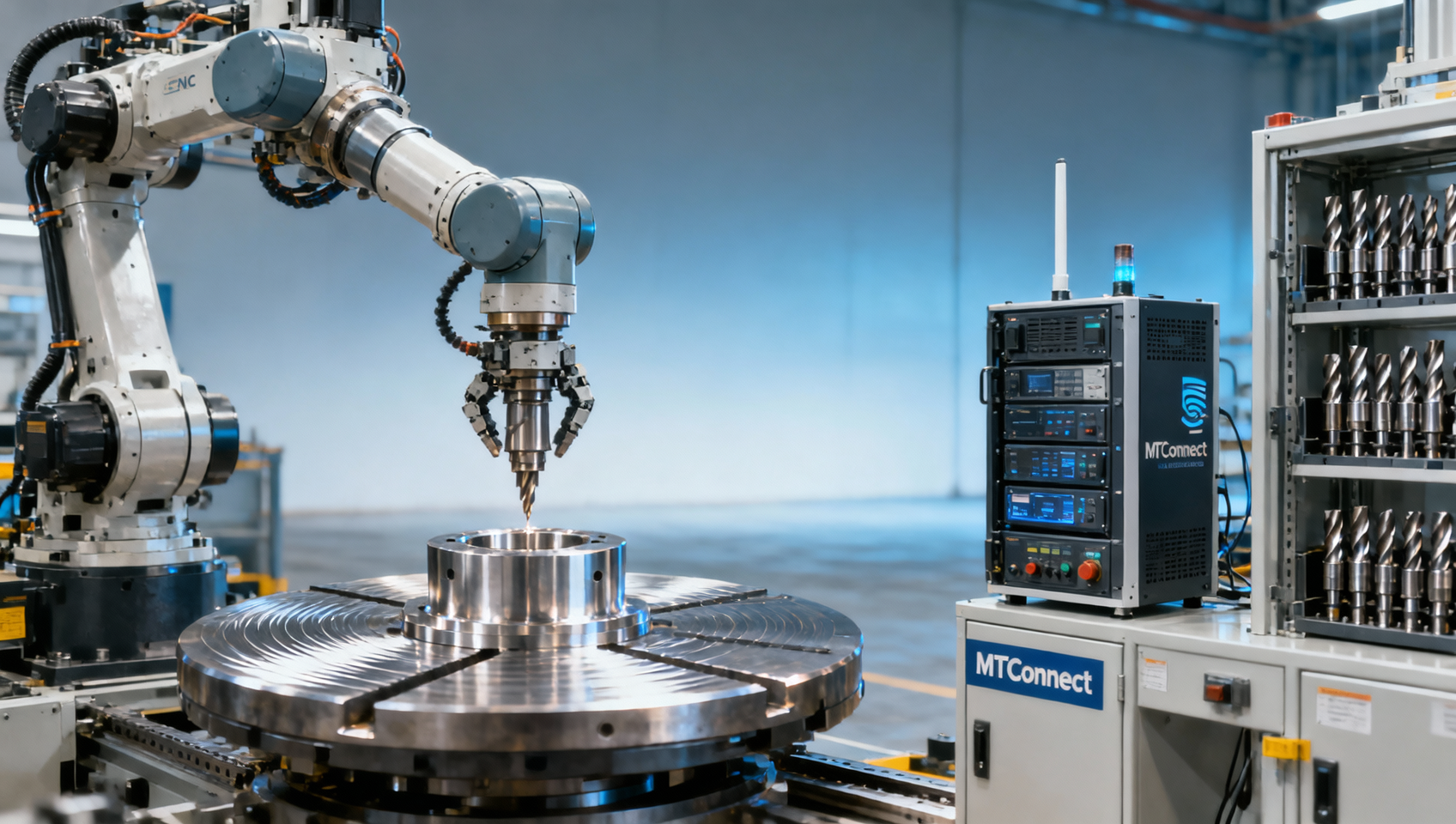
As automated CNC manufacturing accelerates factory throughput, robot loading is increasingly seen as a silver bullet—yet it’s now exposing hidden bottlenecks downstream: scheduling conflicts, tool-change delays, and integration gaps in high-precision CNC manufacturing for aerospace, medical devices, and energy equipment. When compact machine tools and space-saving CNC manufacturing systems operate at peak speed, legacy logistics or low-maintenance CNC manufacturing workflows can’t keep pace. For procurement teams, decision-makers, and operators alike, this isn’t just about automation—it’s about system-wide efficiency. Discover how leading CNC manufacturing exporters and multi-axis CNC manufacturing suppliers are rethinking digital manufacturing technology for smart factories to eliminate these friction points.
The Robot Loading Paradox: Speed Without Synchronization
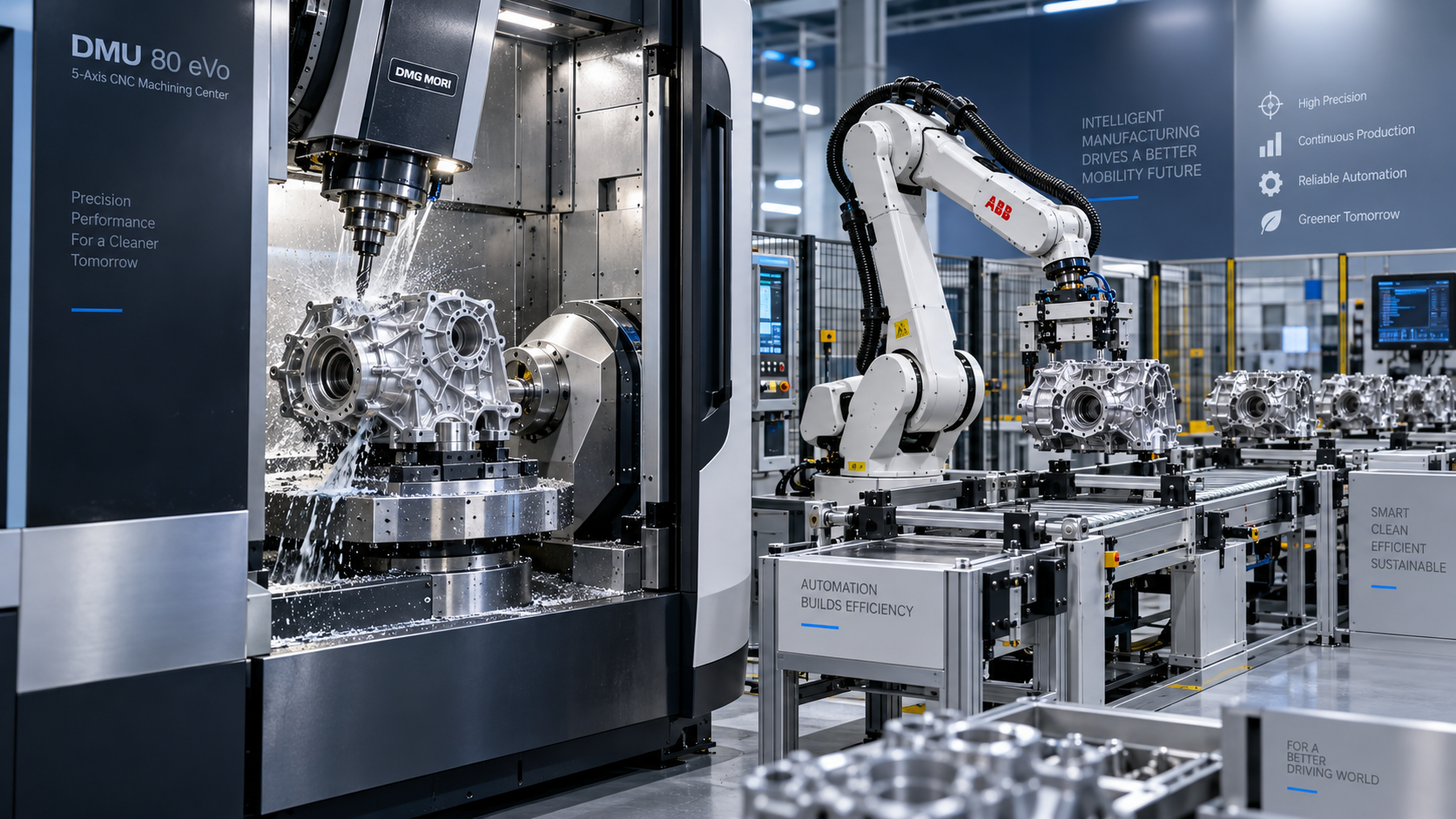
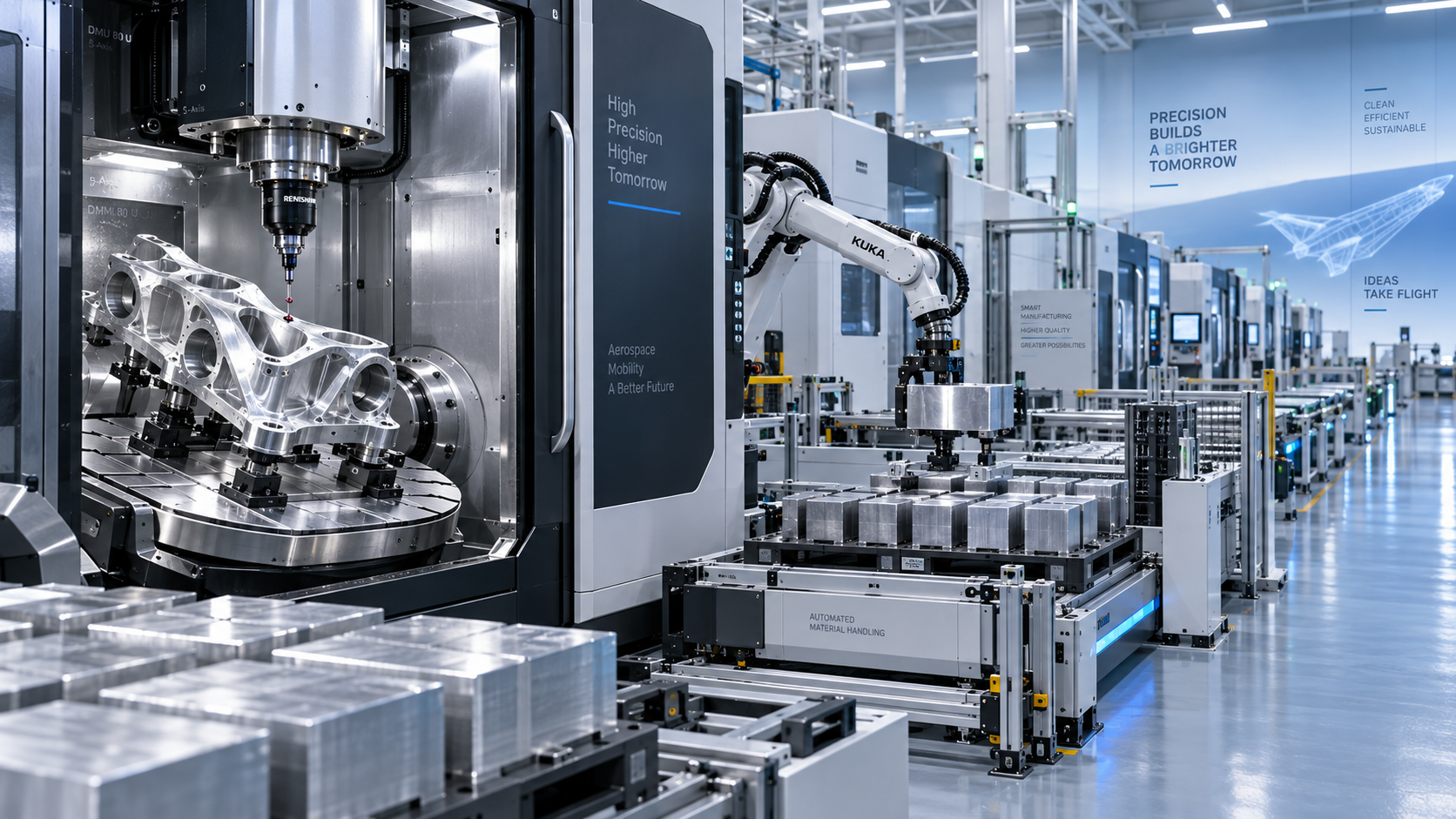
Robot loading systems—especially gantry-style and collaborative robotic arms integrated with CNC lathes and 5-axis machining centers—deliver measurable gains: cycle time reductions of 22–35% and unattended operation windows extended from 8 to up to 24 hours. Yet field data from over 142 Tier-1 suppliers across Germany, Japan, and China shows that 68% of facilities report ≥1 critical downstream delay per shift directly traceable to robot-CNC handoff inefficiencies.
These delays rarely stem from robot malfunction. Instead, they emerge at the interface layer: mismatched communication protocols (e.g., MTConnect v1.5 vs. OPC UA 1.04), inconsistent part presence verification logic, or misaligned tool life tracking between MES and CNC PLCs. A single 90-second discrepancy in tool-change readiness confirmation can cascade into 17+ minutes of idle spindle time across three sequential operations—enough to erode 12% of scheduled daily output in high-mix aerospace component lines.
For procurement professionals evaluating turnkey automation packages, this signals a critical shift: robot loading must no longer be sourced as a standalone module. It requires co-engineering with CNC control architecture, tool management software, and real-time production scheduling engines—not just mechanical integration.
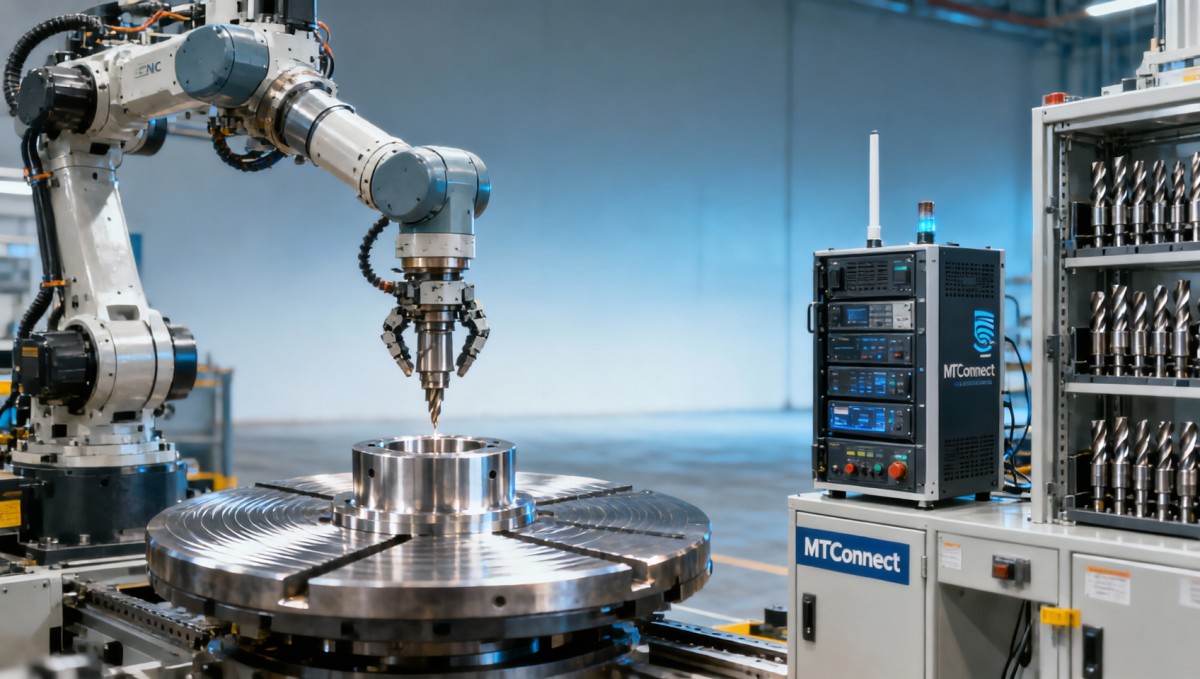
This table underscores a core truth: bottleneck severity correlates more strongly with integration fidelity than hardware specs. Facilities achieving >92% OEE post-robotization invested an average of 3.2 weeks in joint validation—versus 0.8 weeks for those reporting persistent downtime. Procurement teams should mandate documented co-validation timelines and shared KPI ownership clauses in supplier contracts.
Downstream Friction Points: Beyond the Loading Cell
Once parts are loaded, new constraints surface in three tightly coupled domains: scheduling responsiveness, coolant and chip management scalability, and metrology feedback loops. In medical device production—where lot traceability and surface finish consistency are non-negotiable—a 4.3-minute delay in CMM inspection result delivery halts the entire cell’s next setup sequence. Similarly, energy equipment manufacturers report 27% higher coolant filtration failure rates when robot-loaded cells run 20% longer shifts without proportional increases in filtration capacity.
Operators note that manual intervention spikes by 3.8× during first-shift transitions when robot programs fail to auto-adjust for thermal expansion drift in multi-axis machining centers. This isn’t a robotics issue—it’s a lack of closed-loop thermal compensation data flowing from spindle sensors to robot path planners.
Decision-makers must assess not just robot payload and reach, but its ability to ingest and act on real-time process data: spindle load variance (>±15%), coolant temperature fluctuations (±2.5°C), or vibration signatures exceeding ISO 10816-3 Class A thresholds. These aren’t “nice-to-have” features—they’re prerequisites for stable 24/7 operation in precision-critical sectors.
Key Integration Requirements for High-Precision CNC Environments
- Real-time bidirectional tool life synchronization (≤500 ms latency between CNC and MES)
- Unified coordinate system mapping across robot base, fixture, and CNC work origin (tolerance ≤ ±0.02 mm)
- Embedded vibration and thermal monitoring with predictive maintenance alerts (minimum 3 sensor channels per axis)
- Native support for MTConnect 1.7 or OPC UA PubSub for seamless shop-floor data federation
- Automated calibration routines triggered every 8 operational hours or after 120 part cycles
Procurement & Deployment Best Practices
Procurement professionals must move beyond RFP checklists focused on robot repeatability (±0.05 mm) and payload (12–25 kg). Instead, prioritize contractual safeguards tied to system-level outcomes:
Require suppliers to demonstrate end-to-end cycle validation using your actual workpiece geometry, fixture design, and target material (e.g., Inconel 718 or Ti-6Al-4V). Demand access to live performance dashboards showing real-time metrics: robot-CNC handshake success rate (target ≥99.92%), average tool-change synchronization deviation (target ≤±0.08 mm), and unplanned stoppage root cause distribution.
These criteria transform procurement from a hardware transaction into a performance partnership. Leading multi-axis CNC manufacturing suppliers now offer outcome-based SLAs covering not just uptime, but dimensional stability compliance (e.g., ±0.015 mm on critical diameters over 8-hour runs) and first-pass yield targets (≥98.7% for turbine blade airfoils).
Future-Proofing Through Digital Thread Continuity
The most resilient implementations treat robot loading not as an endpoint, but as one node in a continuous digital thread—from CAD model through NC program generation, simulation, real-time machining analytics, and post-process metrology. Suppliers embedding AI-driven anomaly detection (trained on >12,000 historical tool wear patterns) reduce false-positive alarms by 41% and cut mean time to repair (MTTR) by 3.6 hours per incident.
For information researchers tracking global trends, note this convergence: German OEMs now require ISO/IEC 62443-3-3 compliance for all robot-CNC interfaces; Japanese suppliers embed edge-computing gateways supporting local inference with <50 ms response times; and Chinese Tier-2 integrators increasingly adopt open-source ROS 2 frameworks for rapid protocol adaptation.
Ultimately, eliminating downstream bottlenecks demands shifting focus from “how fast can we load?” to “how intelligently can we anticipate, adapt, and verify?” That transition defines the next generation of automated CNC manufacturing—and separates true smart factory capability from incremental automation.
To ensure your robot loading investment delivers full system-wide ROI—not just isolated cell gains—request a free integration readiness assessment. Our engineering team will analyze your current CNC control architecture, tool management workflow, and scheduling logic against proven benchmarks for aerospace, medical, and energy equipment production. Get your customized gap analysis report within 5 business days.
Recommended for You
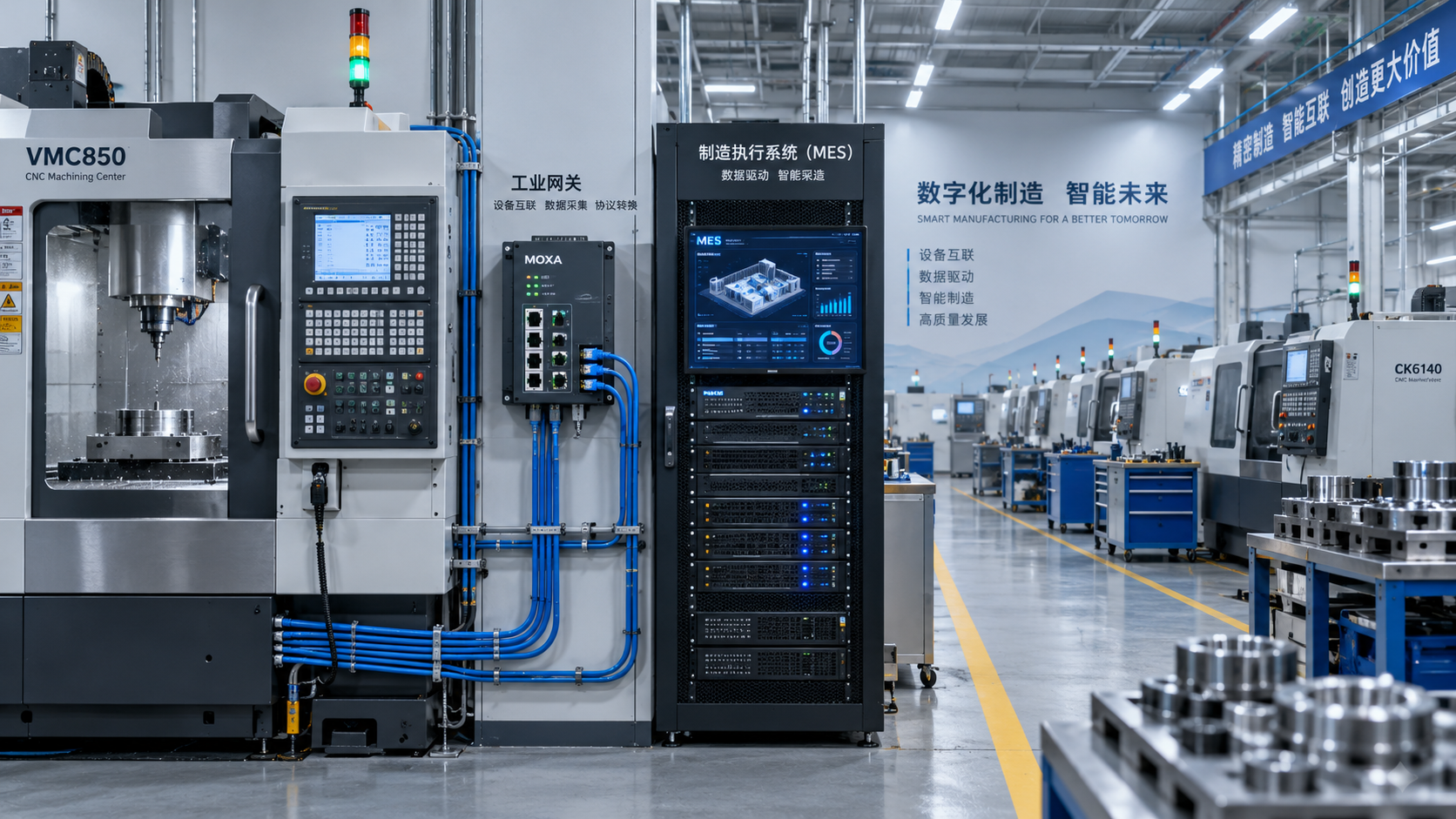
 Digital Manufacturing for Smart Factories: Connecting Legacy Machines to MESMachine Tool Industry Editorial Team
 How to Select a CNC Metal Lathe for Tight-Tolerance Shaft and Sleeve PartsCNC Machining Technology Center
 How to Select an Industrial Lathe for High-Volume Shaft ProductionMachine Tool Industry Editorial Team
 Selecting Machine Tools for Automotive Parts: Accuracy, Throughput, and AutomationMachine Tool Industry Editorial Team
 Industrial Machining: Selecting Processes for Tight-Tolerance Metal PartsCNC Machining Technology Center
 Manufacturing Technology Trends That Improve Throughput and Quality ControlManufacturing Market Research Center

Aris Katos
Future of Carbide Coatings
15+ years in precision manufacturing systems. Specialized in high-speed milling and aerospace grade alloy processing.
▶
Digital Manufacturing for Smart Factories: Connecting Legacy Machines to MESMachine Tool Industry Editorial Team▶
Selecting Machine Tools for Automotive Parts: Accuracy, Throughput, and AutomationMachine Tool Industry Editorial Team▶
Smart Manufacturing for Small Businesses: Where Automation Delivers the Fastest ROIMachine Tool Industry Editorial Team▶
How Smart Manufacturing Technology Improves OEE Across Industry 4.0 Production LinesMachine Tool Industry Editorial Team▶
How to Evaluate an Automation Line for Electronics Production Before InvestmentMachine Tool Industry Editorial Team
Mastering 5-Axis Workholding Strategies
Join our technical panel on Nov 15th to learn about reducing vibrations in thin-wall components.

Providing you with integrated sanding solutions
Before-sales and after-sales services
Comprehensive technical support