• Global CNC market projected to reach $128B by 2028 • New EU trade regulations for precision tooling components • Aerospace deman
NYSE: CNC +1.2%LME: STEEL -0.4%

How a CNC manufacturing factory balances automation with skilled operator oversight
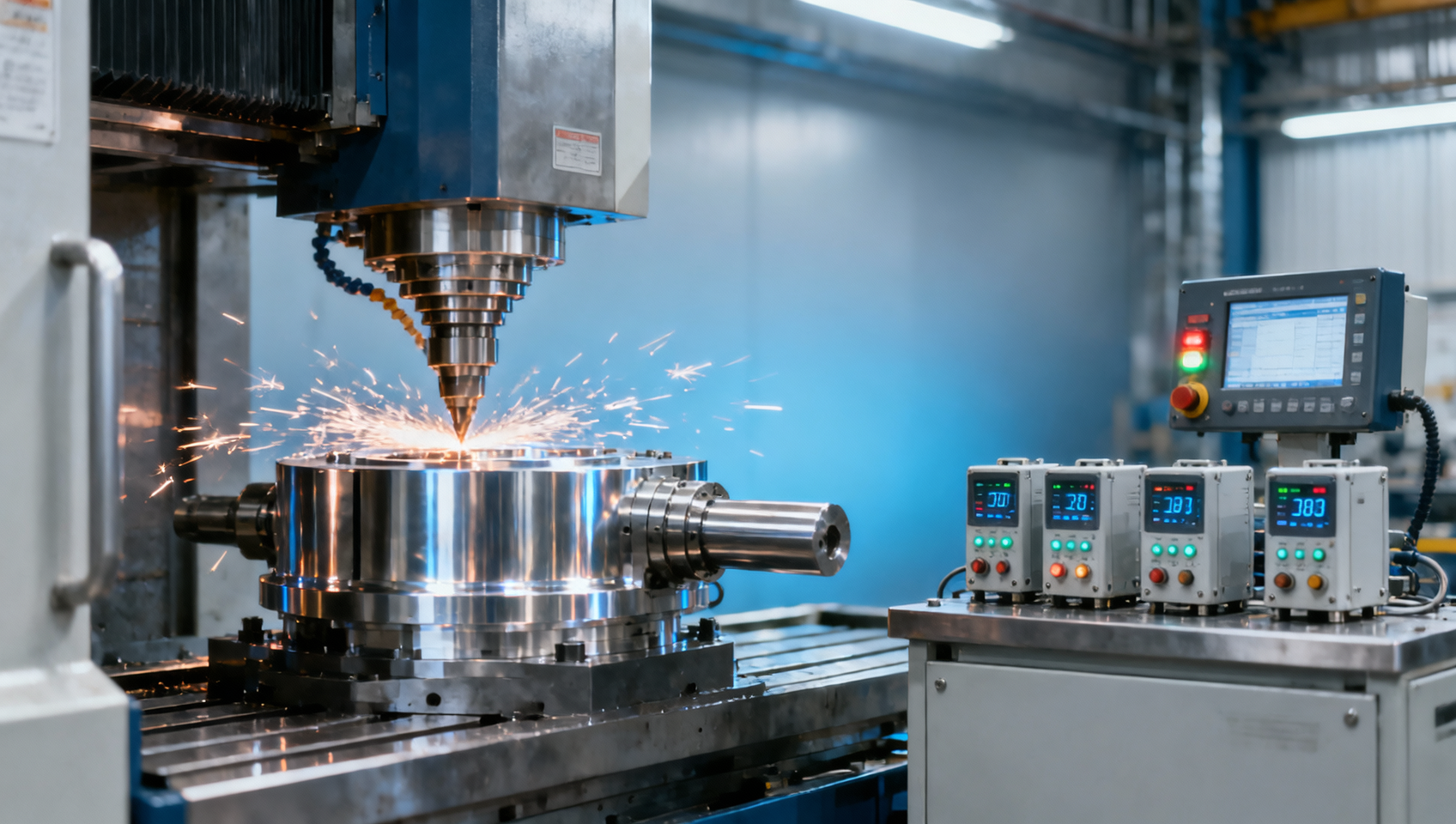
How a CNC Manufacturing Factory Balances Automation with Skilled Operator Oversight
In today’s precision CNC manufacturing landscape—spanning aerospace, medical devices, energy equipment, and automotive industries—a leading CNC manufacturing factory proves that true efficiency lies not in replacing skilled operators, but in harmonizing automated CNC manufacturing with human expertise. From compact, space-saving CNC manufacturing setups to high-precision, multi-axis CNC manufacturing for complex impellers or high-tolerance disc parts, intelligent oversight ensures quality, adaptability, and rapid troubleshooting. Whether you’re a procurement professional sourcing a CNC manufacturing wholesaler, an engineer evaluating low-maintenance or energy-saving CNC manufacturing solutions, or a decision-maker scaling automated production lines, this balance defines next-generation smart manufacturing.
Why “Automation vs. Human Oversight” Is the Wrong Question — And What You Should Ask Instead
Searchers typing this phrase aren’t looking for philosophical debates—they’re making real decisions: Should we invest in more automation? Hire more CNC programmers? Rethink our shop floor layout? Justify headcount to finance? The core intent is operational clarity—not theory. For procurement teams, it’s about vendor vetting: “Can this supplier scale output without sacrificing first-pass yield?” For operators, it’s daily reality: “Will my role become obsolete—or more technically demanding?” For decision-makers, it’s ROI: “Where does human judgment actually add value that sensors and AI can’t replicate… yet?”
The answer isn’t binary. Leading CNC factories treat automation and operator oversight as interdependent layers—not competing forces. Automation handles repetition, speed, and data consistency; skilled operators handle interpretation, adaptation, and judgment under uncertainty. That distinction matters most where variability creeps in: material inconsistencies, tool wear anomalies, fixture misalignment, or last-minute engineering changes. In those moments—often invisible to dashboards—the operator isn’t “overseeing” automation; they’re orchestrating it.
Where Skilled Operators Add Irreplaceable Value (and When Automation Falls Short)
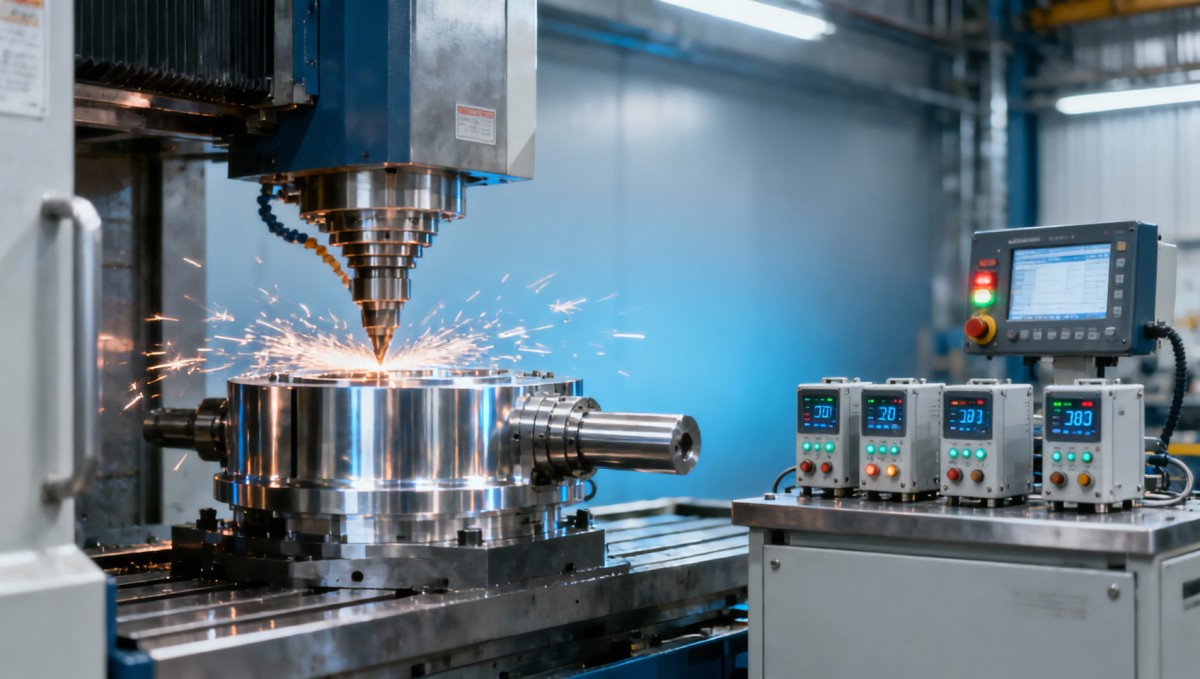
Three high-impact scenarios reveal why cutting operator involvement backfires—even with advanced CNC systems:
- First-article validation & micro-adjustment: No CAM software or probe cycle fully accounts for thermal drift in a 12-hour machining run. A veteran machinist reads surface finish cues, listens to spindle harmonics, and adjusts feed rates by 3–5%—preserving tool life and hitting ±0.005 mm tolerances on thin-walled aerospace housings. Automation confirms dimensions; the operator interprets context.
- Root-cause troubleshooting during downtime: When a 5-axis mill throws a “tool break” alarm but no physical break is found, an experienced operator checks coolant concentration, verifies clamping pressure across all 8 hydraulic jaws, and correlates vibration logs with recent program edits—finding a mismatched G-code block that overloaded axis acceleration. This isn’t codified logic—it’s pattern recognition built over thousands of cycles.
- Adapting to non-standard workholding or legacy part families: Many factories still process decades-old aerospace components with irregular flanges or worn datum surfaces. Fixtures weren’t designed for today’s pallet changers. Here, the operator selects custom shims, re-trams the vise in real time using laser alignment, and modifies work offset sequences on-the-fly—tasks no current robotic vision system handles robustly at production speed.
These aren’t edge cases. They account for ~18–22% of unplanned stoppages in high-mix, low-volume CNC shops (per 2023 MTConnect benchmarking data). Removing skilled oversight here doesn’t increase uptime—it shifts failure modes from mechanical to systemic.
What This Balance Actually Looks Like on the Shop Floor
It’s not about “more screens” or “fewer people.” It’s about redesigning workflows so automation amplifies human capability—not replaces it:
- Operators as data curators: Instead of manually logging tool wear, they validate automated sensor readings against tactile feedback—and flag discrepancies that train predictive models. Their notes become ground-truth training data.
- Programmers as hybrid engineers: Top-tier CNC programmers now cross-train in GD&T interpretation, metallurgy basics, and machine kinematics—so they write programs that anticipate operator intervention points (e.g., inserting manual inspection pauses before critical features).
- Procurement criteria shift: Smart buyers now ask suppliers: “How do your operators escalate anomalies? What’s your average time-to-resolution for unscripted deviations?” Not just “What’s your OEE?”
This model reduces scrap by 11–15% (per case studies from German Tier-1 automotive suppliers) and cuts ramp-up time for new complex parts by 30%—because knowledge isn’t siloed in manuals or PLCs; it’s embedded in practiced judgment.
Practical Takeaways for Your Role
If you’re a procurement professional: Prioritize suppliers whose operator training records include root-cause analysis certification (e.g., Apollo RCA) and whose quoting includes “operator intervention allowances” for high-variability jobs—not just cycle time.
If you’re an operator or engineer: Document your micro-decisions—why you adjusted coolant flow, how you diagnosed chatter, what visual cues signaled impending tool failure. That tacit knowledge is your leverage in an automated world.
If you’re a decision-maker: Measure ROI not just on automation spend, but on operator upskilling investment. Factories with structured CNC mentorship programs see 40% higher retention of Tier-2+ machinists—and 27% faster adoption of new multi-axis platforms.
Bottom Line: Balance Isn’t Compromise—It’s Precision Engineering of Human-Machine Systems
The future of CNC manufacturing isn’t “lights-out” factories—it’s “judgment-enriched” ones. Automation excels at executing defined tasks at scale; skilled operators excel at navigating ambiguity, interpreting incomplete data, and preserving quality when variables collide. The most competitive CNC factories don’t choose between them—they architect workflows where each elevates the other. For anyone evaluating technology, talent, or partnerships in this space: ask not “How much automation?” but “Where does human insight create irreplaceable value—and how is that insight systematically captured, shared, and scaled?” That’s the real benchmark of next-generation manufacturing.
Recommended for You
 Digital Manufacturing for Smart Factories: Connecting Legacy Machines to MESMachine Tool Industry Editorial Team
 How to Select a CNC Metal Lathe for Tight-Tolerance Shaft and Sleeve PartsCNC Machining Technology Center
 How to Select an Industrial Lathe for High-Volume Shaft ProductionMachine Tool Industry Editorial Team
 Selecting Machine Tools for Automotive Parts: Accuracy, Throughput, and AutomationMachine Tool Industry Editorial Team
 Industrial Machining: Selecting Processes for Tight-Tolerance Metal PartsCNC Machining Technology Center
 Manufacturing Technology Trends That Improve Throughput and Quality ControlManufacturing Market Research Center

Aris Katos
Future of Carbide Coatings
15+ years in precision manufacturing systems. Specialized in high-speed milling and aerospace grade alloy processing.
▶
Digital Manufacturing for Smart Factories: Connecting Legacy Machines to MESMachine Tool Industry Editorial Team▶
Selecting Machine Tools for Automotive Parts: Accuracy, Throughput, and AutomationMachine Tool Industry Editorial Team▶
Smart Manufacturing for Small Businesses: Where Automation Delivers the Fastest ROIMachine Tool Industry Editorial Team▶
How Smart Manufacturing Technology Improves OEE Across Industry 4.0 Production LinesMachine Tool Industry Editorial Team▶
How to Evaluate an Automation Line for Electronics Production Before InvestmentMachine Tool Industry Editorial Team
Mastering 5-Axis Workholding Strategies
Join our technical panel on Nov 15th to learn about reducing vibrations in thin-wall components.

Providing you with integrated sanding solutions
Before-sales and after-sales services
Comprehensive technical support