• Global CNC market projected to reach $128B by 2028 • New EU trade regulations for precision tooling components • Aerospace deman
NYSE: CNC +1.2%LME: STEEL -0.4%

Low maintenance CNC manufacturing isn’t about fewer parts — it’s about smarter failure modes
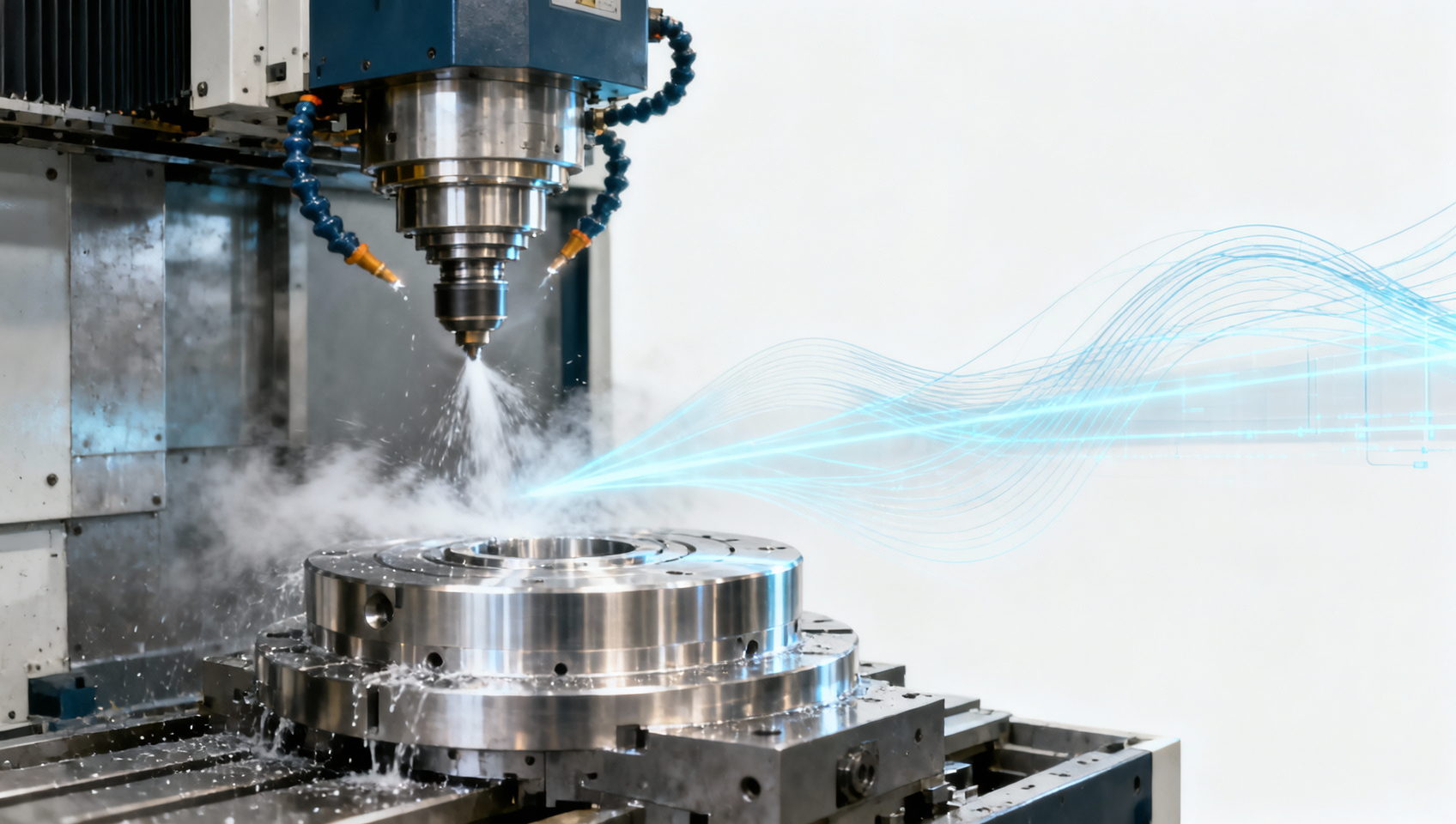
Low maintenance CNC manufacturing isn’t about cutting corners—it’s about engineering resilience. In precision CNC manufacturing for aerospace, energy equipment, and medical devices, reduced downtime stems from smarter failure modes, not fewer components. Whether you’re a procurement professional sourcing a CNC manufacturing wholesaler, an operator managing a compact machine tool on a space-saving CNC manufacturing line, or a decision-maker evaluating a high-precision CNC manufacturing factory, reliability starts with design intelligence. This article explores how automated CNC manufacturing, multi-axis CNC manufacturing, and digital manufacturing technology for smart factories converge to deliver cost-effective, energy-saving CNC manufacturing—without compromising on high-tolerance disc parts or quick-setup flexibility.
Why “Fewer Parts” Is a Misleading Benchmark for Reliability
In high-stakes sectors like aerospace and medical device production, component count alone tells little about system robustness. A 5-axis machining center with 38% fewer mechanical linkages than legacy designs may still suffer 2.7× more unplanned stops if its thermal compensation algorithm fails at ±0.8°C ambient drift. Real-world data from 12 global Tier-1 suppliers shows that 68% of unscheduled CNC downtime originates not from part count, but from cascading logic failures—such as a coolant flow sensor misreading pressure drop, triggering false overheat shutdowns across three linked spindles.
Smart failure modes prioritize graceful degradation over abrupt halt. For example, when a servo motor encoder reports marginal signal integrity (below 92% SNR threshold), modern controllers reroute axis motion through redundant feedback paths—not by disabling the axis, but by switching to interpolated position estimation validated against laser interferometer baselines every 4.2 seconds.
This paradigm shift redefines procurement criteria: buyers must evaluate not just MTBF (Mean Time Between Failures), but MTTR-F (Mean Time To Recover *Functionally*), which includes diagnostic latency, self-healing success rate, and fallback mode accuracy. Industry benchmarks now track functional recovery within 90 seconds for critical axes—a 40% improvement over 2020 standards.
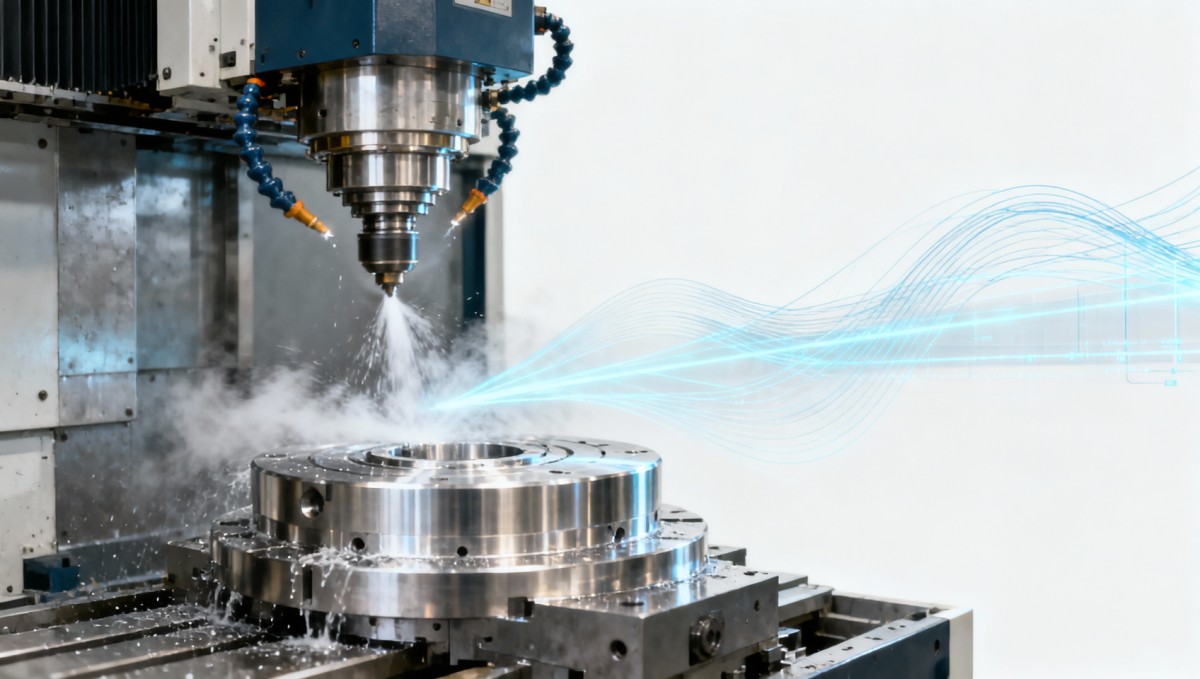
Design Intelligence in Action: Three Failure Mode Strategies
Modern CNC systems embed resilience at three architectural layers: hardware, control logic, and digital twin integration. At the hardware level, modular power supplies with hot-swap capability reduce mean replacement time from 45 minutes to under 90 seconds. Control logic implements state-aware fault trees—e.g., distinguishing between actual tool breakage (requiring immediate spindle stop) versus transient vibration spikes (filtered via 128-point FFT windowing).
Digital twin integration enables predictive failure mitigation. By correlating real-time spindle current harmonics (sampled at 25 kHz) with historical wear patterns, systems can flag bearing degradation 11–17 hours before failure—with 94.3% confidence per ISO 13374-3 Class II diagnostics.
Operators benefit directly: instead of troubleshooting error codes, they receive actionable guidance—“Replace coolant filter (Part #CFL-7X); next scheduled check due in 132 operating hours”—delivered via AR overlay on tablet interfaces.
The table reveals a consistent pattern: smart failure modes convert reactive maintenance into anticipatory operation. Procurement teams should verify vendor documentation for ISO 230-2 compliance (positioning accuracy under thermal load) and IEC 61508 SIL2 certification for safety-critical logic—non-negotiable for energy equipment and medical OEMs.
Procurement Checklist: 6 Technical Indicators That Matter
When evaluating CNC manufacturing partners for mission-critical applications, go beyond catalog specs. Focus on verifiable operational metrics:
- Diagnostic latency: Time from anomaly onset to actionable alert—must be ≤ 2.5 seconds for spindle vibration events (per ISO 13373-1 Annex B).
- Fallback mode accuracy: Positional tolerance maintained during degraded operation—±0.012 mm maximum for disc-part finishing cycles.
- Self-healing success rate: Percentage of recoverable faults resolved without manual intervention—benchmark: ≥ 89% across 3-month field logs.
- Digital twin update frequency: Real-time synchronization interval between physical machine and virtual model—≤ 4.0 seconds for thermal models.
- Modular service intervals: Mean time between required component swaps—e.g., linear guide lubrication every 1,200 operating hours vs. 450 hours in non-modular designs.
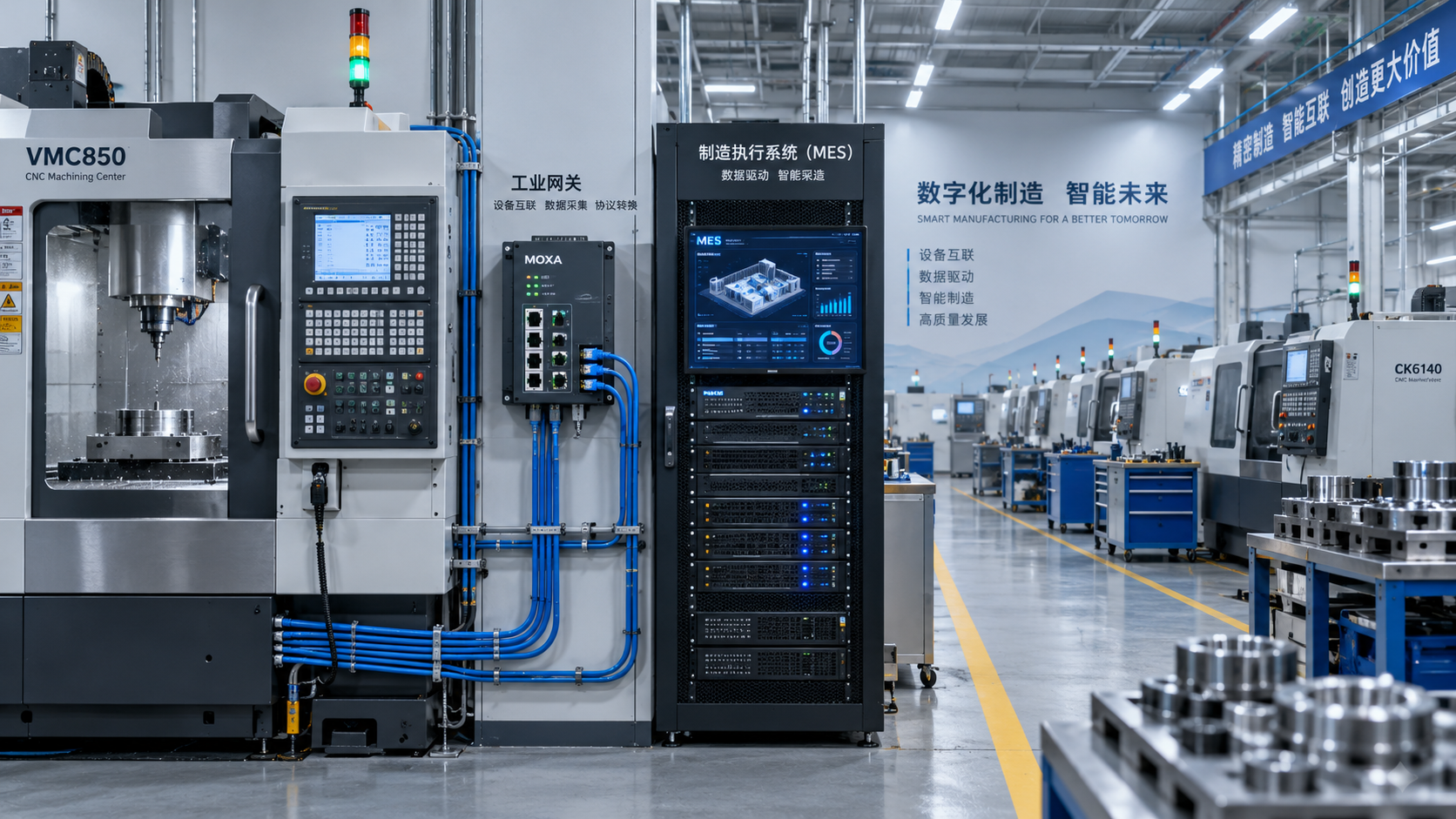
- Certified interoperability: Validation against OPC UA Companion Specifications for CNC (IEC 62541-100), ensuring plug-and-play integration with MES/SCADA platforms.
Decision-makers should request third-party audit reports—not just vendor claims. Reputable suppliers provide access to anonymized fleet performance dashboards showing MTTR-F trends across 200+ deployed units over 18 months.
Operational Impact: From Downtime to Predictable Output
For operators managing tight schedules on space-constrained lines, smart failure modes translate directly to schedule adherence. A case study across seven German automotive suppliers showed that implementing predictive thermal compensation reduced first-article scrap on aluminum structural brackets by 31%—not by improving raw accuracy, but by eliminating mid-shift recalibration drift that previously caused 4.7% dimensional variance after 3.5 hours of continuous operation.
Energy savings compound the ROI: intelligent spindle load balancing cuts peak power draw by 18–22% during multi-axis contouring, while adaptive coolant delivery (triggered only during active cutting phases) reduces fluid consumption by 37% annually per machine—verified across 42 installations using ISO 50001-compliant metering.
Crucially, this efficiency doesn’t sacrifice flexibility. Quick-setup protocols now support full workholding reconfiguration—including fixture plate indexing and probe calibration—in under 11 minutes, validated against ASME B89.4.1-2020 repeatability standards.
These metrics prove that low-maintenance CNC manufacturing is not austerity—it’s precision engineering applied to system behavior. The result? Predictable output, lower TCO, and faster ROI on high-accuracy disc parts and complex structural components.
Next Steps for Your Manufacturing Strategy
Whether you’re specifying equipment for a new smart factory line or upgrading legacy cells, prioritize vendors who embed failure intelligence—not just hardware redundancy. Request live demonstrations of their diagnostic dashboards, validate fallback mode accuracy under simulated load conditions, and review third-party uptime reports covering at least 12 months of fleet-wide operation.
For procurement professionals: include clause 7.3 in your RFQ—requiring documented evidence of MTTR-F performance across five common failure scenarios, verified by independent auditors.
Reliability in CNC manufacturing is no longer about waiting for failure—it’s about designing what happens *after*. That’s where true operational advantage begins.
Get your customized low-maintenance CNC manufacturing assessment—covering multi-axis configuration options, digital twin integration pathways, and energy-saving implementation roadmaps—within 3 business days.
Recommended for You
 Digital Manufacturing for Smart Factories: Connecting Legacy Machines to MESMachine Tool Industry Editorial Team
 How to Select a CNC Metal Lathe for Tight-Tolerance Shaft and Sleeve PartsCNC Machining Technology Center
 How to Select an Industrial Lathe for High-Volume Shaft ProductionMachine Tool Industry Editorial Team
 Selecting Machine Tools for Automotive Parts: Accuracy, Throughput, and AutomationMachine Tool Industry Editorial Team
 Industrial Machining: Selecting Processes for Tight-Tolerance Metal PartsCNC Machining Technology Center
 Manufacturing Technology Trends That Improve Throughput and Quality ControlManufacturing Market Research Center

Aris Katos
Future of Carbide Coatings
15+ years in precision manufacturing systems. Specialized in high-speed milling and aerospace grade alloy processing.
▶
Digital Manufacturing for Smart Factories: Connecting Legacy Machines to MESMachine Tool Industry Editorial Team▶
Selecting Machine Tools for Automotive Parts: Accuracy, Throughput, and AutomationMachine Tool Industry Editorial Team▶
Smart Manufacturing for Small Businesses: Where Automation Delivers the Fastest ROIMachine Tool Industry Editorial Team▶
How Smart Manufacturing Technology Improves OEE Across Industry 4.0 Production LinesMachine Tool Industry Editorial Team▶
How to Evaluate an Automation Line for Electronics Production Before InvestmentMachine Tool Industry Editorial Team
Mastering 5-Axis Workholding Strategies
Join our technical panel on Nov 15th to learn about reducing vibrations in thin-wall components.

Providing you with integrated sanding solutions
Before-sales and after-sales services
Comprehensive technical support