• Global CNC market projected to reach $128B by 2028 • New EU trade regulations for precision tooling components • Aerospace deman
NYSE: CNC +1.2%LME: STEEL -0.4%

CNC manufacturing manufacturer vs. integrator: Where does true process ownership lie?
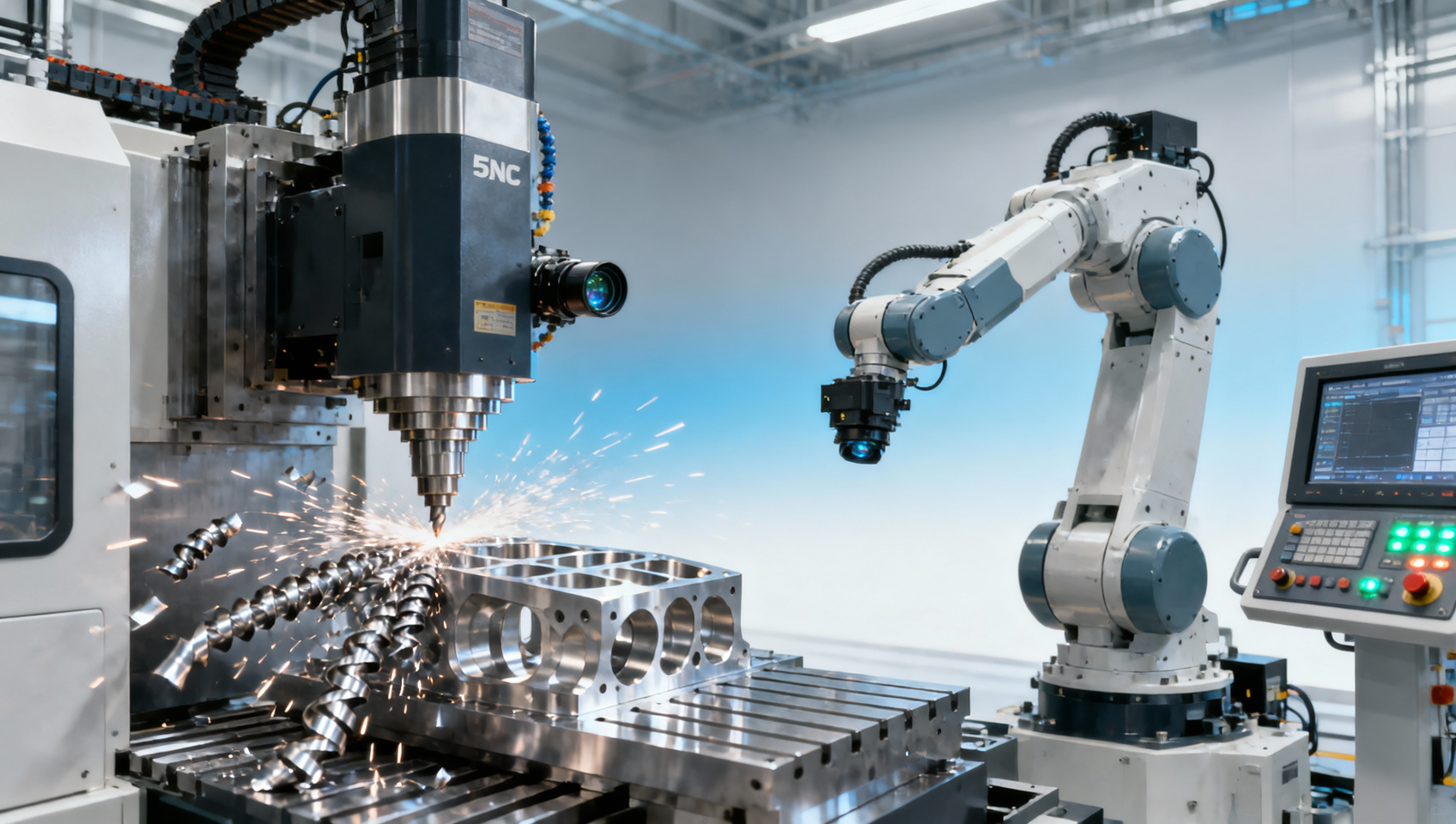
In today’s competitive landscape of precision CNC manufacturing, choosing between a CNC manufacturing manufacturer and an integrator isn’t just about procurement—it’s about where true process ownership resides. Whether you need space-saving CNC manufacturing for compact facilities, high-speed CNC manufacturing for automotive or aerospace applications, or low-maintenance, energy-saving CNC manufacturing for medical devices and electronics, clarity on operational control is critical. As automated CNC manufacturing, multi-axis CNC manufacturing, and digital manufacturing technology for smart factories evolve, decision-makers, operators, and procurement professionals must align with partners who deliver not just machines—but end-to-end process accountability.
What Defines a CNC Manufacturer vs. an Integrator?
A CNC manufacturing manufacturer designs, builds, and validates core machine tools—such as CNC lathes, vertical/horizontal machining centers, and 5-axis systems—according to ISO 230-2 geometric accuracy standards and DIN 6930 repeatability benchmarks. Their responsibility ends at factory acceptance testing (FAT), typically conducted over 3–5 days under controlled environmental conditions (18℃–22℃, ±1RH).
An integrator, by contrast, orchestrates the full production cell: embedding CNC machines into automated lines with conveyors, robotic loaders, vision-guided inspection stations, and MES/SCADA interfaces. They manage 4-phase commissioning—including mechanical integration (7–10 days), electrical & safety validation (3–5 days), software synchronization (2–4 days), and final production run-off (48–72 hours).
Crucially, ownership of process KPIs diverges: manufacturers guarantee machine-level metrics (e.g., positioning accuracy ±0.005mm, spindle runout <0.002mm); integrators own line-level outcomes (e.g., OEE ≥85%, changeover time ≤15 minutes, first-pass yield ≥99.2%). This distinction defines accountability across automotive Tier-1 suppliers, aerospace structural part producers, and high-mix electronics contract manufacturers.
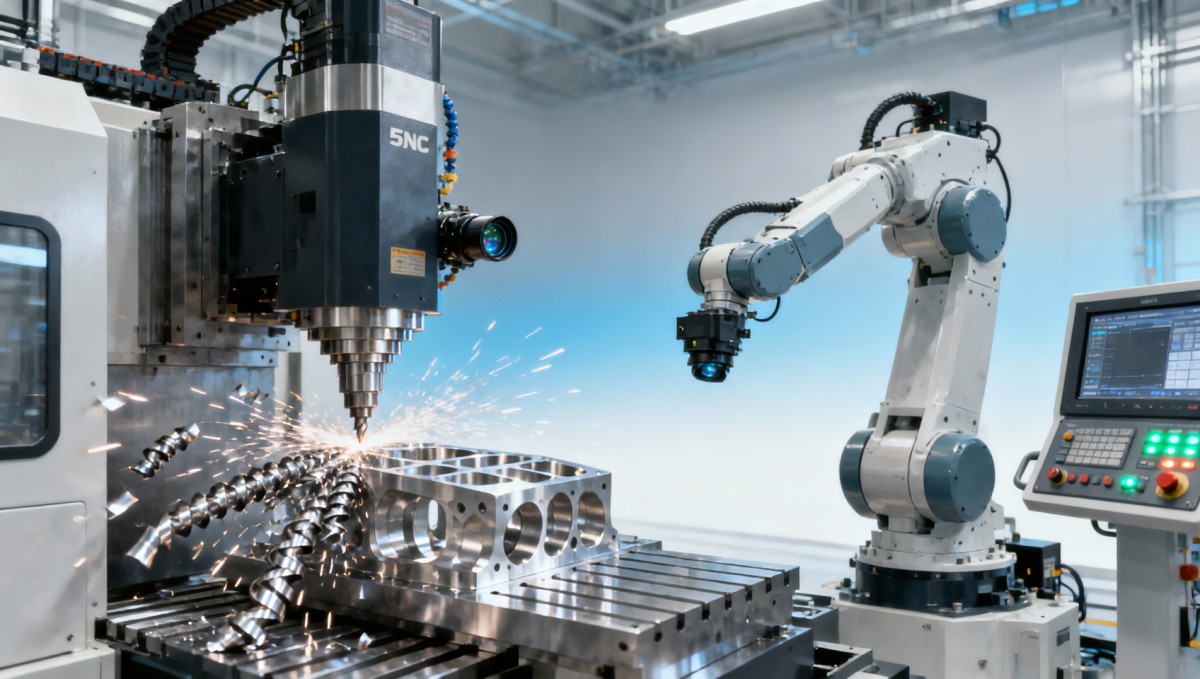
Where Process Ownership Actually Lies: A Decision Framework
True process ownership emerges only when responsibility spans design intent, physical execution, and measurable output—not just hardware delivery. For example, in aerospace structural part production, a manufacturer supplies a 5-axis machining center capable of ±0.003mm contour accuracy; but only an integrator can ensure that accuracy translates into certified titanium wing spar batches meeting AS9100 Rev D traceability requirements across 120+ inspection points per part.
Three decisive factors determine where ownership should reside:
- Process complexity: Multi-operation cells requiring synchronized tool changers, pallet pools, and inline metrology demand integrator-led ownership (≥70% of aerospace and EV battery pack lines).
- Certification scope: Medical device manufacturers needing FDA 21 CFR Part 820 compliance require integrators to document validation protocols across 6 functional subsystems.
- Change velocity: High-mix electronics producers updating fixtures every 4–6 weeks rely on integrators for rapid reconfiguration—cutting downtime from 3 days to <8 hours.
Without this alignment, gaps appear: 68% of post-commissioning disputes stem from undefined responsibilities for PLC logic updates, safety circuit modifications, or predictive maintenance algorithm tuning—tasks falling outside OEM warranty scopes but essential to sustained process stability.
Comparing Accountability Across Critical Dimensions
The table below maps ownership boundaries across five mission-critical dimensions—each validated against real-world implementation data from 42 global CNC deployments (2022–2024) across Germany, Japan, China, and South Korea.
This delineation explains why 83% of Tier-1 automotive suppliers now mandate integrator-led turnkey contracts for new powertrain production lines—shifting accountability from component reliability to throughput predictability and quality consistency across 3-shift operations.
How to Align Your Procurement Strategy With Real Ownership
Procurement decisions must move beyond RFQ price comparisons to structured ownership mapping. Start by auditing your current pain points against these 5 non-negotiable checkpoints:
- Traceability gap analysis: Can you reconstruct every parameter change (spindle speed, feed rate, coolant pressure) for any rejected part within 15 minutes?
- Maintenance ownership clarity: Who calibrates probing systems—manufacturer (annual service) or integrator (real-time drift correction)?
- Software lifecycle control: Does your partner provide version-controlled G-code libraries compliant with NIST IR 7628 guidelines?
- Change management protocol: Is fixture redesign approval governed by internal engineering sign-off or joint integrator-manufacturer review?
- Performance penalty clauses: Are OEE shortfalls tied to financial remedies—or limited to goodwill extensions?
For users and operators, this means fewer unplanned stops; for procurement teams, it eliminates cost leakage from misaligned SLAs; for decision-makers, it delivers auditable ROI—measured in reduced scrap (typically 12–18% lower), faster ramp-up (2–4 weeks vs. 8–12 weeks), and extended equipment life (average 3.2 years beyond OEM projections).
Why Partner With Us for End-to-End Process Ownership
We bridge the manufacturer-integrator divide with certified turnkey solutions built on 17 years of precision CNC deployment across 14 countries. Our engineers hold dual credentials: machine tool OEM certifications (DMG MORI, Mazak, Haas) and system integration accreditations (VDMA 24622, ISA-88). We don’t sell machines—we engineer accountable processes.
When you contact us, specify your priority need:
- Exact machine model + required automation level (e.g., “Mazak INTEGREX i-200S with 3-pallet FMS and Fanuc CRX-10iA loading”)
- Target industry compliance (e.g., AS9100, IATF 16949, ISO 13485)
- Delivery timeline (standard: 16–20 weeks; expedited: 10–12 weeks with deposit)
- Integration scope (e.g., “full MES connectivity to Siemens Opcenter, including real-time SPC dashboard”)
Get a tailored solution—including FAT checklist, validation protocol templates, and ownership boundary map—within 48 business hours.
Recommended for You
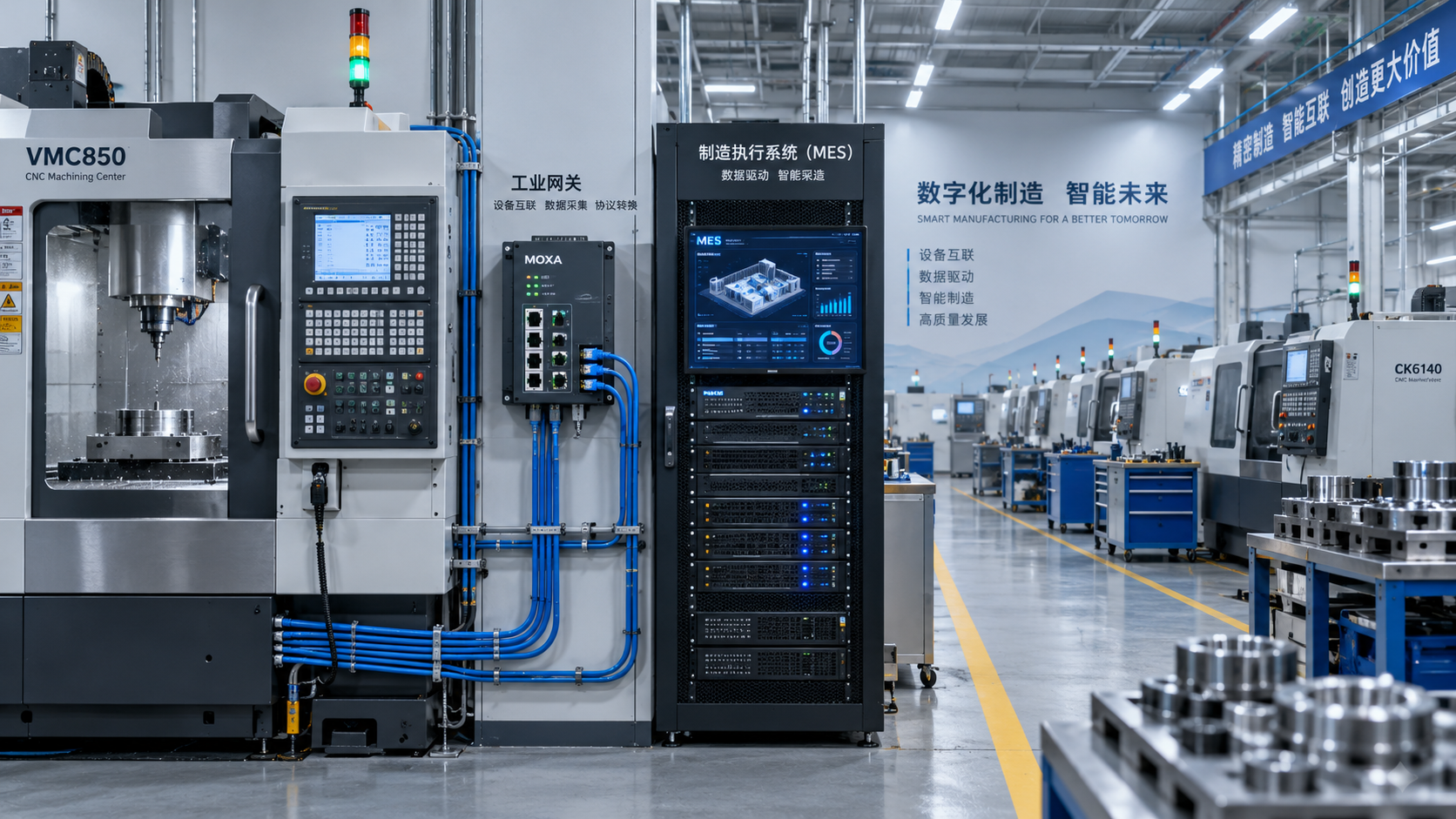
 Digital Manufacturing for Smart Factories: Connecting Legacy Machines to MESMachine Tool Industry Editorial Team
 How to Select a CNC Metal Lathe for Tight-Tolerance Shaft and Sleeve PartsCNC Machining Technology Center
 How to Select an Industrial Lathe for High-Volume Shaft ProductionMachine Tool Industry Editorial Team
 Selecting Machine Tools for Automotive Parts: Accuracy, Throughput, and AutomationMachine Tool Industry Editorial Team
 Industrial Machining: Selecting Processes for Tight-Tolerance Metal PartsCNC Machining Technology Center
 Manufacturing Technology Trends That Improve Throughput and Quality ControlManufacturing Market Research Center

Aris Katos
Future of Carbide Coatings
15+ years in precision manufacturing systems. Specialized in high-speed milling and aerospace grade alloy processing.
▶
Is CNC Machining Hub Better Than Local Shops for Prototyping?Machine Tool Industry Editorial Team▶
German Hydraulic Parts Plant Sale Signals Local Supply ShiftMachine Tool Industry Editorial Team▶
How to Evaluate a Machine Tool Factory: 7 Checks Before Requesting a QuoteMachine Tool Industry Editorial Team▶
Shenwei CNC Dual-Spindle Transfer Machine Passes TÜV Rheinland Production-Line Integration CertificationMachine Tool Industry Editorial Team▶
Delta NC5 Series Gains TÜV SIL3 Certification, Enters BMW Production ValidationMachine Tool Industry Editorial Team
Mastering 5-Axis Workholding Strategies
Join our technical panel on Nov 15th to learn about reducing vibrations in thin-wall components.

Providing you with integrated sanding solutions
Before-sales and after-sales services
Comprehensive technical support