• Global CNC market projected to reach $128B by 2028 • New EU trade regulations for precision tooling components • Aerospace deman
NYSE: CNC +1.2%LME: STEEL -0.4%

CNC industrial machines with lower downtime are not always newer

When evaluating CNC industrial machines, newer does not automatically mean more reliable or productive. For technical assessment teams, lower downtime often depends on machine design maturity, maintenance strategy, control system stability, and parts availability rather than model year alone. Understanding these factors helps decision-makers compare equipment more accurately and avoid costly assumptions in precision manufacturing investments.
In automotive, aerospace, electronics, and energy equipment manufacturing, even a 2-hour unplanned stop can disrupt upstream scheduling, fixture utilization, inspection flow, and delivery commitments. That is why technical assessment teams should look beyond launch dates, interface design, or promotional automation features when comparing CNC industrial machines. The practical question is not which machine is newer, but which machine can hold tolerance, recover quickly, and remain serviceable over 3 to 7 years of production use.
A mature CNC platform may outperform a recently released model if its spindle architecture is proven, its control logic is stable, and its wear parts are readily available within 24 to 72 hours. In contrast, a newer machine can introduce hidden downtime through immature firmware, longer commissioning curves, or limited field service experience. For technical evaluators, downtime risk must be assessed as a system issue involving mechanics, controls, maintenance resources, and supply chain support.
Why lower downtime is not determined by machine age alone
The assumption that a newer machine will always deliver higher uptime is common, but it is often incomplete. In real production environments, downtime is rarely caused by age in isolation. It usually comes from 4 interacting areas: mechanical durability, control reliability, maintenance discipline, and service responsiveness. A 5-year-old machining center with standardized parts and predictable maintenance intervals may be easier to manage than a newly introduced platform with limited installed base support.
Design maturity often outweighs release date
Design maturity means the machine architecture has already been tested through repeated industrial use, not just factory acceptance. This includes spindle thermal stability, axis feedback behavior, lubrication consistency, chip evacuation under continuous loads, and enclosure protection in multi-shift operation. For many CNC industrial machines, the difference between first-generation and later-revision designs can be more significant than the difference between one model year and the next.
Technical teams should ask how long the platform has been in field operation, how many production hours similar installations have accumulated, and whether known weak points have been revised. A machine introduced 18 months ago may still be undergoing software patches or hardware updates. A proven platform that has been refined over 4 to 6 years can deliver more predictable uptime, especially in high-mix or medium-volume production lines.
Controls, software, and integration can create hidden downtime
In modern CNC industrial machines, downtime increasingly comes from control-related issues rather than purely mechanical failures. Servo tuning, PLC logic conflicts, HMI instability, communication interruptions with robots or tool presetters, and post-processor mismatches can all stop production. These faults may not appear during a short demonstration, but they often surface within the first 30 to 90 days of live use.
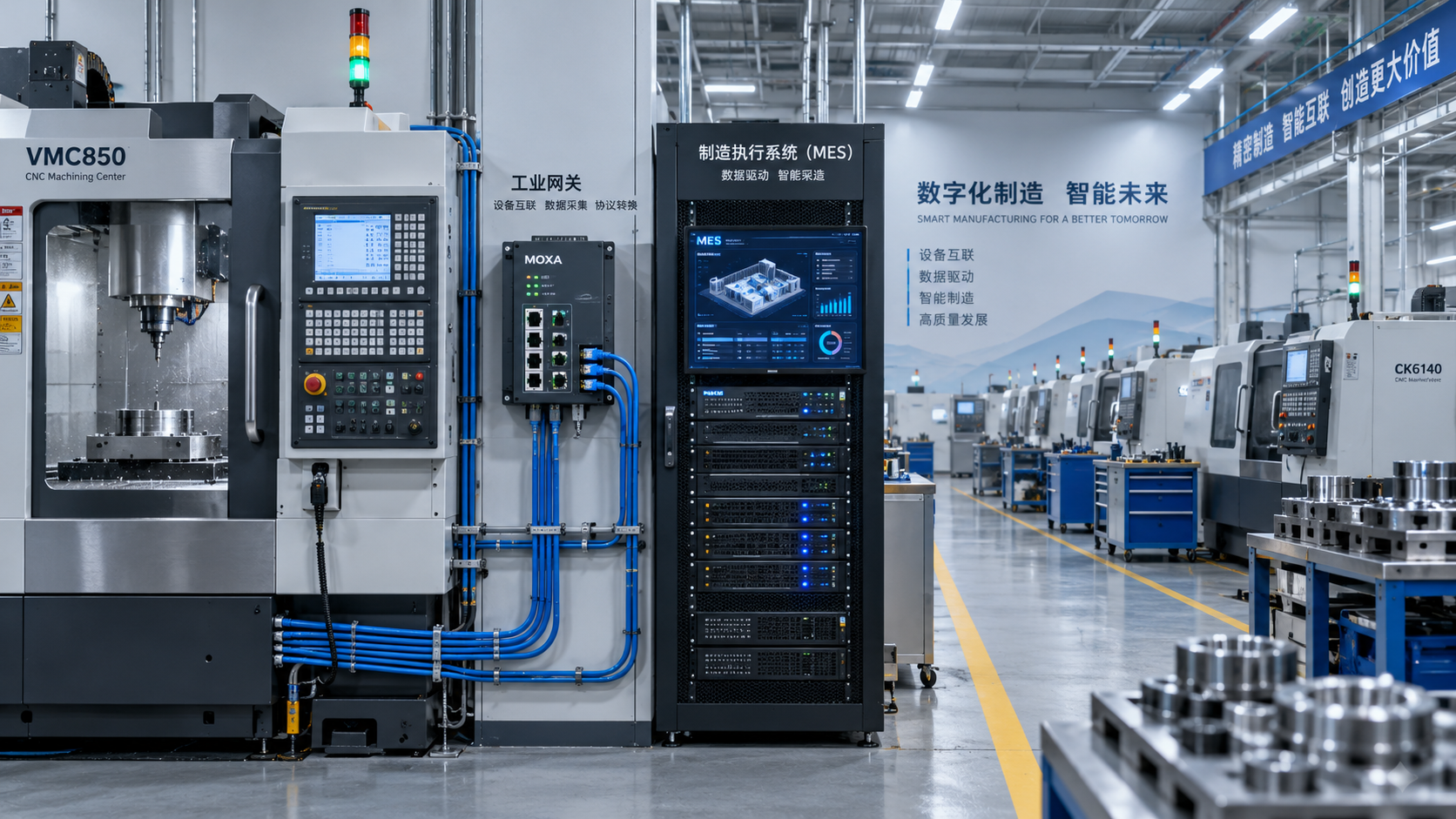
This is especially relevant in smart factory environments where CNC lathes, machining centers, pallet systems, and automated loading units are linked. A newer machine with more connected functions may increase throughput potential, but it can also increase failure points. Assessment teams should therefore measure software support depth, remote diagnostics capability, alarm traceability, and update management before treating digital features as a pure advantage.
Parts availability and maintenance access directly affect recovery time
Downtime should be measured not only by failure frequency, but also by recovery speed. Two machines can experience the same spindle sensor fault, yet one returns to service in 6 hours while the other waits 5 to 10 days for a replacement part. For technical buyers, mean time to repair is often more important than brochure claims about maximum speed, rapid traverse, or spindle power.
Maintenance access also matters. If routine service requires excessive panel removal, awkward reach points, or complex alignment after replacement, every intervention becomes longer and riskier. Machines designed with clear maintenance zones, modular electrical cabinets, and standardized consumables usually support more stable output over time.
The comparison below helps technical assessment personnel separate appearance-based assumptions from uptime-related evaluation factors when reviewing CNC industrial machines for precision manufacturing projects.
The key point is that downtime performance depends on lifecycle support, not novelty. A technical team that evaluates installed base, serviceability, and control reliability will often make a better decision than one focused mainly on launch year or visual modernization.
How technical assessment teams should evaluate CNC industrial machines
For capital equipment decisions, a structured review process helps reduce bias and creates a clearer comparison between suppliers. Technical assessment teams should score CNC industrial machines across mechanical, electrical, software, maintenance, and supply support criteria. In many factories, a 5-part evaluation framework produces more reliable results than a single productivity comparison based on cycle time alone.
1. Verify production fit, not just catalog capability
A machine can be technically advanced and still be a poor fit for the intended part family. Review part dimensions, workholding complexity, tool count requirements, material type, chip load patterns, and target tolerances such as ±0.01 mm or ±0.005 mm where relevant. A platform optimized for short, rigid aluminum parts may not behave the same way with long shafts, interrupted cuts, or heat-resistant alloys.
Typical fit-check items
- Spindle power and torque range for roughing versus finishing cycles
- Axis travel relative to fixture stack-up and probe clearance
- Tool magazine size, such as 24, 40, or 60 tools, for changeover frequency
- Thermal behavior during 8-hour, 16-hour, or 24-hour operation windows
- Coolant, chip conveyor, and filtration adequacy for the target material family
2. Assess maintenance burden across a full operating year
A machine with higher theoretical output may still produce lower annual availability if it requires frequent intervention. Technical evaluators should estimate preventive maintenance frequency, lubrication checks, filter replacements, spindle warm-up demands, and calibration intervals. In practice, a predictable 30-minute weekly routine is often easier to manage than a design that introduces irregular 3-hour stoppages.
Maintenance burden should be reviewed with operators, maintenance engineers, and process engineers together. Their concerns differ. Operators focus on alarms and usability, maintenance personnel look at access and replacement time, while process engineers track repeatability drift and recovery after intervention. Combining these views usually reveals risks that supplier presentations do not show.
3. Review support readiness before purchase approval
Support readiness includes local technician coverage, spare parts inventory, response time commitments, remote diagnosis tools, and training depth. For imported CNC industrial machines, support gaps are one of the most common causes of long downtime. A highly capable machine can become a bottleneck if key electrical modules, encoders, or spindle components require cross-border shipment every time a fault occurs.
The following matrix can help teams compare suppliers on practical uptime factors rather than on specification sheets alone.
This type of matrix shifts the procurement discussion from theoretical machine capability to operational continuity. For technical assessment teams, that is where uptime decisions are really made.
Common misconceptions about newer CNC platforms
In the global machine tool market, rapid innovation is real, but it also creates evaluation shortcuts. Buyers may associate digital displays, additional axes, or automation-ready interfaces with lower downtime. Some of these features improve process flexibility, yet they do not guarantee stability. A careful review of CNC industrial machines should separate productivity potential from maintenance reality.
Misconception 1: More automation always reduces downtime
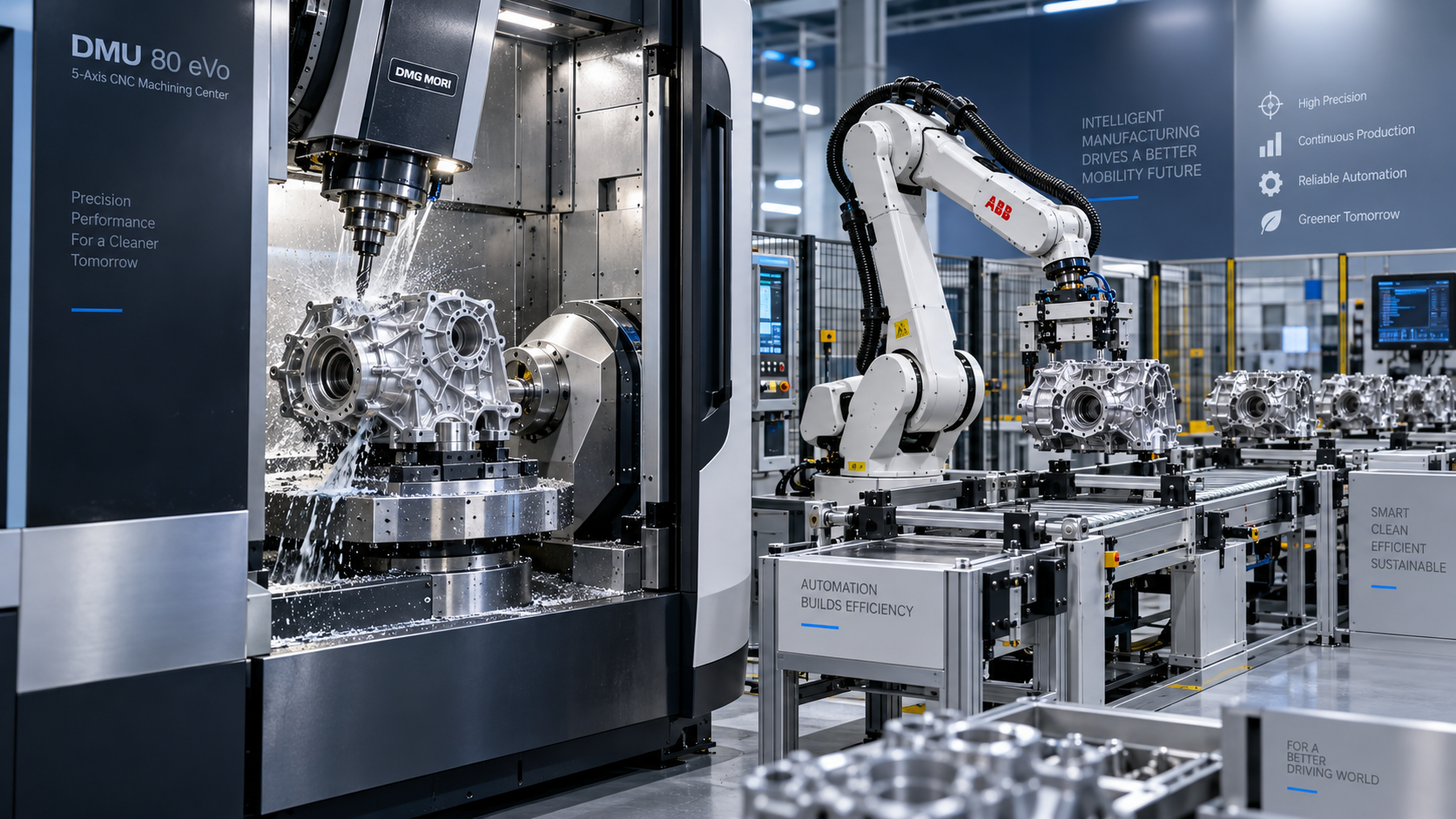
Automation can reduce labor dependence and improve cycle consistency, but it also adds devices that must be synchronized. Pallet changers, robotic loading, automatic tool monitoring, and in-process gauging systems create additional interfaces. If one sensor or communication node fails, the entire cell may stop even if the machine tool itself remains mechanically sound.
For this reason, technical teams should test cell-level restart procedures. A good benchmark is whether a trained team can restore a controlled stop in 10 to 20 minutes and resolve a routine peripheral fault within 30 to 60 minutes. If restart logic is unclear, automation may raise downtime exposure instead of reducing it.
Misconception 2: Higher specification means higher usable uptime
Machines with faster rapids, larger tool magazines, or higher spindle speeds may look superior in comparison tables. However, if the application does not need 15,000 rpm, 60-tool storage, or advanced interpolation functions, those features may simply add complexity. In many precision manufacturing environments, stable process capability at required tolerance matters more than top-end specification that remains unused 80% of the time.
Misconception 3: A recent release reflects the latest and safest investment
Recent release does not always mean lower ownership risk. New generations can bring redesigned castings, updated controls, or changed component sourcing. These shifts may improve efficiency, but they can also reset service learning curves. Technical assessment personnel should confirm whether the service network has already been trained on the new platform, whether replacement boards and drives are stocked, and whether software revisions are still frequent.
- Request revision history and platform launch timing.
- Ask which subsystems are newly designed versus carried over.
- Confirm critical spare parts lead time in writing.
- Review alarm diagnosis method and remote service workflow.
- Check whether local users have already run the machine in comparable applications.
A practical downtime-focused selection strategy
For most precision manufacturing investments, the best choice is not the oldest or the newest platform, but the one with the strongest balance of process fit, maintainability, control stability, and support depth. This requires a structured approach that technical teams can repeat across different CNC industrial machines and supplier proposals.
Build an evaluation model around 6 core dimensions
- Mechanical maturity: spindle, axis, thermal behavior, lubrication, chip management
- Control stability: alarm handling, interface reliability, software revision status
- Process capability: tolerance retention, repeatability, changeover behavior
- Maintenance effort: access, PM intervals, modular replacement logic
- Supply support: local parts, technical response, documentation quality
- Integration readiness: probes, robots, MES, loaders, tool data compatibility
A weighted scorecard often works well. For example, a team might assign 25% to process capability, 20% to maintenance and serviceability, 20% to controls, 15% to support network, 10% to integration, and 10% to purchase price or installation cost. The exact mix depends on the production model, but a balanced framework prevents overemphasis on model year.
Run a pre-purchase validation sequence
Before approval, technical assessment teams should complete a 3-stage validation sequence. First, conduct an application review using actual part drawings, expected materials, tool lists, and target takt time. Second, observe a cutting demonstration or process simulation under comparable load conditions. Third, review after-sales support, startup plan, and spare parts strategy for the first 12 months.
Useful validation questions
- What are the preventive maintenance tasks by week, month, and quarter?
- Which three faults are most common on this platform, and how are they resolved?
- What is the lead time for spindle-related, servo-related, and HMI-related replacement parts?
- How long is the commissioning period: 3 days, 1 week, or longer with automation integration?
- Can the supplier provide recommended consumables and first-year spare kits?
For technical assessment teams, the most reliable CNC industrial machines are not defined by novelty, but by operational predictability. Lower downtime usually comes from mature design, stable controls, accessible maintenance, trained support, and practical spare parts planning. In high-precision and automated manufacturing, these factors often deliver more value than a newer release with unproven field behavior. If you are comparing machine tool options for precision production, contact us to discuss your application requirements, evaluate risk points, and get a more tailored equipment selection approach.
PREVIOUS ARTICLE
Recommended for You
 Digital Manufacturing for Smart Factories: Connecting Legacy Machines to MESMachine Tool Industry Editorial Team
 How to Select a CNC Metal Lathe for Tight-Tolerance Shaft and Sleeve PartsCNC Machining Technology Center
 How to Select an Industrial Lathe for High-Volume Shaft ProductionMachine Tool Industry Editorial Team
 Selecting Machine Tools for Automotive Parts: Accuracy, Throughput, and AutomationMachine Tool Industry Editorial Team
 Industrial Machining: Selecting Processes for Tight-Tolerance Metal PartsCNC Machining Technology Center
 Manufacturing Technology Trends That Improve Throughput and Quality ControlManufacturing Market Research Center

Aris Katos
Future of Carbide Coatings
15+ years in precision manufacturing systems. Specialized in high-speed milling and aerospace grade alloy processing.
▶
How to Select a Machine Tool for Aerospace Parts with Tight Tolerances?Machine Tool Industry Editorial Team▶
How to Compare Machine Tools for Small-Batch vs Mass Production JobsMachine Tool Industry Editorial Team▶
Multi-Axis Machine Tool Selection Guide: Travel, Spindle, Accuracy, and Control SystemMachine Tool Industry Editorial Team▶
How to Evaluate Precision Equipment for Tight-Tolerance Parts and Stable OutputMachine Tool Industry Editorial Team▶
KATS Tightens CNC Grinder Import Test RulesMachine Tool Industry Editorial Team
Mastering 5-Axis Workholding Strategies
Join our technical panel on Nov 15th to learn about reducing vibrations in thin-wall components.

Providing you with integrated sanding solutions
Before-sales and after-sales services
Comprehensive technical support