• Global CNC market projected to reach $128B by 2028 • New EU trade regulations for precision tooling components • Aerospace deman
NYSE: CNC +1.2%LME: STEEL -0.4%

Precision equipment failures that begin with minor vibration
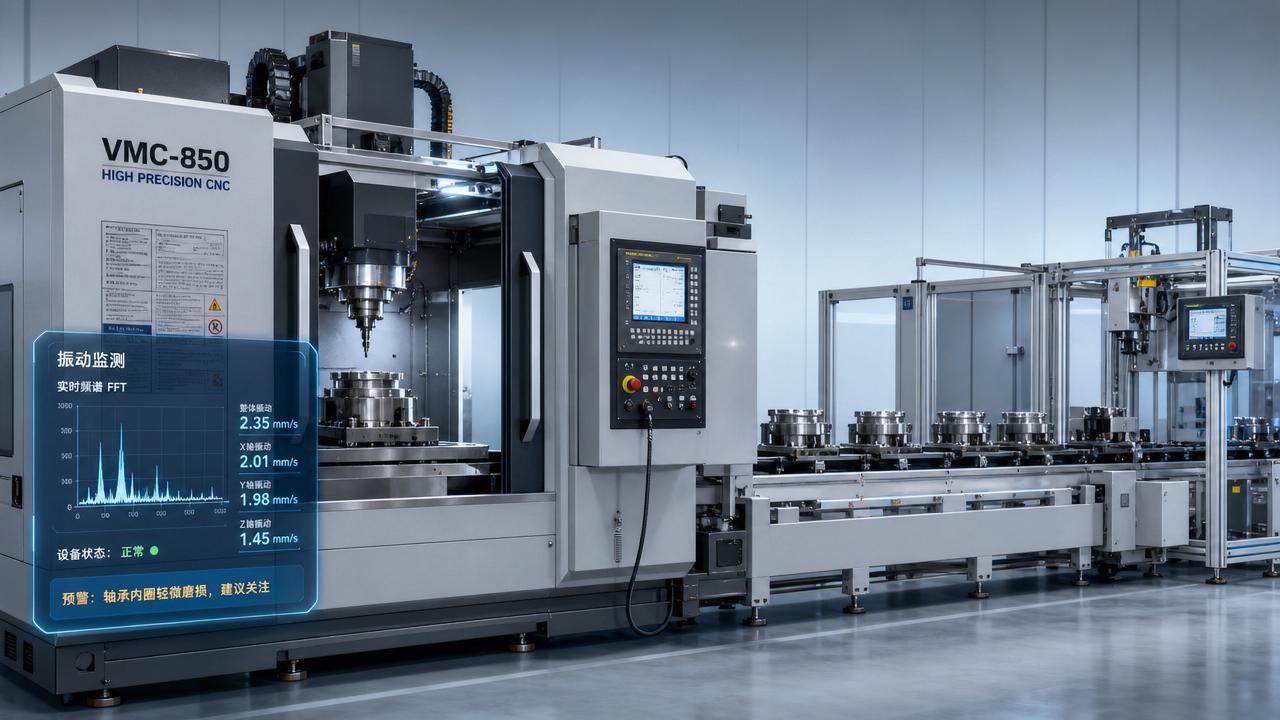
Minor vibration is often the first warning sign that precision equipment is drifting out of optimal condition. For after-sales maintenance teams, identifying these early changes in CNC machine tools, machining centers, and automated lines can prevent costly failures, unplanned downtime, and accuracy loss. This article explores how small vibration issues develop, what they reveal about machine health, and how timely intervention supports stable, high-precision production.
Why does minor vibration matter so much in precision equipment?
In precision equipment, vibration is rarely an isolated event. It is usually a symptom of changing mechanical balance, reduced rigidity, loosened assembly points, bearing wear, spindle deviation, drive instability, or process mismatch. On a general-purpose machine, slight vibration may only affect surface finish. On CNC machine tools and automated production systems, however, even a small increase can gradually compromise dimensional accuracy, repeatability, tool life, and long-cycle reliability.
For after-sales maintenance personnel, the real issue is not the visible shake itself, but the chain reaction behind it. Minor vibration can lead to chatter marks, thermal stress, fixture instability, encoder inconsistency, and accelerated fatigue in rotating parts. Because precision equipment often serves aerospace, automotive, electronics, and energy applications, the acceptable tolerance window is already narrow. Once vibration begins to grow unnoticed, defects may emerge before alarms are triggered.
This is why vibration should be treated as an early diagnostic clue. It can reveal whether the equipment is still operating in its designed condition or drifting toward failure. In many field cases, the first measurable sign appears long before a spindle stops, a bearing seizes, or a guideway loses positioning stability.
What does minor vibration usually indicate in CNC machine tools and automated lines?
The meaning of vibration depends on where it appears, when it appears, and how it changes under load. In precision equipment, the same amplitude can point to different root causes depending on whether it occurs during idle running, spindle acceleration, heavy cutting, tool change, axis reversal, or robot transfer. Maintenance teams should avoid assuming that every vibration issue comes from the spindle alone.
Common underlying causes include bearing preload loss, spindle imbalance, worn couplings, loosened motor mounts, degraded lubrication, misaligned ballscrews, foundation settlement, fixture deformation, and resonance between machine structure and cutting parameters. In automated lines, conveyor drives, gearbox wear, robotic joints, transfer pallets, and synchronization errors can also create vibration that eventually affects adjacent precision equipment.
A useful maintenance mindset is to classify the source into three categories: rotating system issues, structural support issues, and process-induced issues. Rotating system issues often include spindle, motor, pulley, bearing, or fan imbalance. Structural support issues usually involve looseness, frame fatigue, base instability, or rail wear. Process-induced issues come from tooling, material inconsistency, cutting strategy, or unsuitable speed-feed combinations that excite the machine’s natural frequencies.
How can after-sales maintenance teams tell whether vibration is a minor adjustment issue or the start of a serious failure?
The difference usually becomes clear when vibration is evaluated together with trend data, machine behavior, and product quality. A minor adjustment issue tends to be localized, predictable, and correctable through tightening, balancing, lubrication, parameter refinement, or fixture correction. A developing failure often shows progressive growth, wider operational impact, and secondary symptoms such as rising temperature, abnormal noise, repeatability drift, or more frequent alarm history.
After-sales maintenance teams should ask practical field questions. Does the vibration appear only at one spindle speed? Does it increase during warm-up or after prolonged production? Has the machine recently changed tools, workpiece materials, shift patterns, or cycle loads? Did installation conditions change after relocation or nearby construction? Are operators compensating for quality loss by adjusting feeds or offsets? These answers often reveal whether the problem is process-related or mechanical.
Another strong indicator is repeatability. If precision equipment shows the same vibration pattern at the same axis position or speed band every time, resonance, alignment, or rotating balance should be investigated. If the vibration appears randomly and worsens over weeks, lubrication breakdown, bearing degradation, cable drag interference, or intermittent fastening loss may be more likely.
Quick judgment table for field diagnosis
Which parts of precision equipment are most likely to fail after early vibration is ignored?
The first vulnerable components are usually bearings, spindle assemblies, tool holders, couplings, and guideway contact surfaces. These parts operate under repeated load cycles and are highly sensitive to imbalance and looseness. If vibration persists, fatigue grows faster, lubrication films break down more easily, and wear shifts from normal to accelerated.
In CNC machining centers, spindle bearings often suffer first because they are exposed to high rotational speed, heat, and cutting force variation. Once bearing integrity begins to decline, the machine may still run, but the precision equipment will gradually lose roundness control, bore consistency, and fine finish capability. The damage can then spread to tool taper surfaces, drawbar mechanisms, and tool interface accuracy.
Axis systems are another major risk area. Continuous vibration can increase wear on ballscrews, support bearings, linear guides, and servo couplings. In automated production lines, robot wrists, reducer assemblies, pallet locators, and transfer mechanisms can also be affected. What starts as a vibration problem may become a positioning problem, then a quality problem, and finally a production scheduling problem.
For after-sales teams, this progression matters because the repair cost rises sharply once collateral damage begins. Replacing a worn clamp, adjusting a mount, or balancing a spindle is very different from replacing an entire spindle cartridge, regrinding interfaces, or correcting downstream quality claims from rejected parts.
What are the most common mistakes when diagnosing vibration in precision equipment?
One of the most common mistakes is treating vibration as purely a mechanical issue without reviewing process conditions. Precision equipment may vibrate because a new cutting tool geometry, changed material batch, improper clamping force, or altered program path excites structural resonance. Replacing components without checking the application context can waste time and money.
A second mistake is relying on sound alone. Experienced technicians can often hear abnormal behavior, but minor vibration in high-precision systems should be verified with data whenever possible. Trend comparison, frequency signatures, thermal readings, spindle load history, and part quality records provide a more reliable picture than subjective perception.
A third mistake is isolating the machine from the environment. Precision equipment does not operate in a vacuum. Floor vibration from nearby presses, robot movement, forklift traffic, poor utilities, or unstable compressed air can influence machine behavior. In flexible lines and smart manufacturing cells, interaction between machines is increasingly important, especially where high-speed automation and close equipment spacing exist.
Another error is delaying action because the machine still meets basic output targets. Many failures begin during a period when production continues, but hidden wear increases every shift. By the time scrap rates rise or alarms become frequent, maintenance options are narrower and downtime windows are harder to schedule.
How should after-sales maintenance teams respond when minor vibration is first detected?
A disciplined response starts with documentation. Record when the vibration was noticed, under what operating condition, on which product, with which tool setup, and whether any recent maintenance, relocation, or parameter change occurred. This baseline helps distinguish one-time disturbance from developing failure.
Next, separate the problem into machine condition and process condition. Check leveling, mounting bolts, lubrication status, spindle runout, tool holder cleanliness, fixture rigidity, backlash, and axis smoothness. Then review cutting parameters, tool wear pattern, workpiece balance, and cycle variation. In many cases, precision equipment problems become easier to solve when the mechanical and process layers are examined in parallel rather than sequentially.
It is also valuable to compare current readings with historical normal values. If the machine builder, service provider, or plant has established vibration baselines, those references can greatly improve decision speed. For global CNC and precision manufacturing operations, standardized maintenance records are especially useful because similar precision equipment may be installed across multiple sites, making trend-based service far more consistent.
If the issue cannot be stabilized quickly, the best practice is not simply to keep adjusting offsets. Instead, define whether the machine can continue limited production under monitoring, whether process parameters must be reduced, or whether a scheduled stop is necessary to prevent major failure. Clear escalation criteria protect both uptime and customer trust.
Practical response checklist
When minor vibration appears in precision equipment, maintenance teams should first confirm the operating condition, compare with historical behavior, inspect tool and fixture interfaces, verify spindle and axis health, review environmental influences, and determine whether part quality is already changing. This sequence avoids random troubleshooting and supports faster root-cause isolation.
How can companies reduce future vibration-related failures in precision equipment?
The best long-term strategy combines preventive maintenance, condition monitoring, and process discipline. Precision equipment performs best when installation quality, leveling, lubrication, balancing, tool management, and operator consistency are controlled as one system. Waiting for visible failure is too expensive for high-value machining assets.
Companies should build vibration awareness into regular service routines, especially for spindles, rotary units, servo axes, robotic joints, and transfer systems. Even simple trend logging can help detect changes before they become costly. In high-mix production, where tools, materials, and machine loading vary frequently, maintaining a library of normal operating signatures is even more valuable.
Training also matters. After-sales maintenance personnel need more than component knowledge. They need the ability to connect machine symptoms with production context, tolerance demands, and customer risk. In the CNC machine tool industry, the machines are increasingly digital, but diagnosis still depends on structured judgment. The strongest teams combine sensor data, field inspection, and process understanding to protect precision equipment over its full service life.
What should be clarified before deciding on repair, parts replacement, or external technical support?
Before moving forward, companies should clarify several practical questions: Is the vibration trend stable or worsening? Which assemblies are confirmed suspects and which are assumptions? Has product accuracy already shifted beyond tolerance risk? Can the equipment run safely until a planned service window? Are replacement parts, balancing services, spindle repair, or alignment tools available within the required downtime target?
It is also important to confirm whether the issue is local to one machine or systemic across similar precision equipment in the plant. If several machines show similar symptoms, the root cause may involve environment, maintenance practice, tooling policy, or operating parameters rather than an isolated component defect. That distinction affects budget, response speed, and supplier coordination.
If further confirmation is needed on a specific solution, parameter range, service cycle, spare parts plan, monitoring method, or cooperation model, the most useful first discussion points are the machine type, vibration condition, operating stage, affected accuracy indicators, recent maintenance history, and allowable downtime window. These details help determine the right repair path faster and reduce the risk of repeated vibration-related failures in precision equipment.
PREVIOUS ARTICLE
Recommended for You
 Digital Manufacturing for Smart Factories: Connecting Legacy Machines to MESMachine Tool Industry Editorial Team
 How to Select a CNC Metal Lathe for Tight-Tolerance Shaft and Sleeve PartsCNC Machining Technology Center
 How to Select an Industrial Lathe for High-Volume Shaft ProductionMachine Tool Industry Editorial Team
 Selecting Machine Tools for Automotive Parts: Accuracy, Throughput, and AutomationMachine Tool Industry Editorial Team
 Industrial Machining: Selecting Processes for Tight-Tolerance Metal PartsCNC Machining Technology Center
 Manufacturing Technology Trends That Improve Throughput and Quality ControlManufacturing Market Research Center


Aris Katos
Future of Carbide Coatings
15+ years in precision manufacturing systems. Specialized in high-speed milling and aerospace grade alloy processing.
▶
How to Select a Machine Tool for Aerospace Parts with Tight Tolerances?Machine Tool Industry Editorial Team▶
How to Compare Machine Tools for Small-Batch vs Mass Production JobsMachine Tool Industry Editorial Team▶
Multi-Axis Machine Tool Selection Guide: Travel, Spindle, Accuracy, and Control SystemMachine Tool Industry Editorial Team▶
How to Evaluate Precision Equipment for Tight-Tolerance Parts and Stable OutputMachine Tool Industry Editorial Team▶
KATS Tightens CNC Grinder Import Test RulesMachine Tool Industry Editorial Team
Mastering 5-Axis Workholding Strategies
Join our technical panel on Nov 15th to learn about reducing vibrations in thin-wall components.

Providing you with integrated sanding solutions
Before-sales and after-sales services
Comprehensive technical support