• Global CNC market projected to reach $128B by 2028 • New EU trade regulations for precision tooling components • Aerospace deman
NYSE: CNC +1.2%LME: STEEL -0.4%

AIMM Standard Advances for CNC Smart Factories

The national standard Artificial Intelligence Enterprise Intelligence Maturity Model (AIMM) advanced toward formalization on April 24, 2026, with a coordination meeting held in Beijing attended by over 60 organizations. This development directly impacts CNC machine tool manufacturers, industrial automation suppliers, and global procurement entities—particularly those evaluating or deploying intelligent manufacturing systems. It introduces the first standardized, tiered benchmark (L1–L5) specifically for CNC smart factory capability, making it a material reference for technical due diligence in cross-border equipment procurement.
Event Overview
On April 24, 2026, the advancement meeting for the Artificial Intelligence Enterprise Intelligence Maturity Model (AIMM) national standard was held in Beijing. Sixty-plus participating units—including research institutes, standards bodies, CNC equipment vendors, and system integrators—engaged in technical discussion. The draft standard defines five maturity levels (L1 to L5) for CNC smart factories. At L3 (‘Closed-Loop Optimization’), requirements include process parameter self-learning, tool life prediction, and dynamic energy consumption scheduling. The standard is intended to serve as an objective, third-party verifiable basis for assessing AI-driven capabilities in CNC production environments.
Impact on Specific Industry Segments
CNC Equipment Manufacturers & System Integrators
These entities face direct implications: AIMM certification will likely become a de facto requirement for bid eligibility in high-value domestic public tenders and international OEM partnerships. Impact manifests in product architecture—e.g., embedded edge analytics, interoperable data interfaces, and traceable model training logs—must now align with L3+ verification criteria, not just functional claims.
Global Procurement Entities (OEMs, Tier-1 Suppliers)
Overseas buyers sourcing CNC production lines can now use AIMM level as a standardized proxy for intelligent capability credibility. This reduces reliance on vendor-supplied white papers or proprietary demos, mitigating risk of ‘pseudo-intelligence’—i.e., systems labeled ‘AI-enabled’ but lacking adaptive, closed-loop decision logic. Verification shifts from qualitative marketing narratives to auditable, level-specific technical evidence.
Industrial Automation Software Providers
Vendors offering MES, digital twin, or predictive maintenance modules must ensure their solutions demonstrably contribute to measurable L3+ outcomes—such as real-time spindle load optimization triggering automatic feed-rate adjustment. Integration depth, not just API availability, becomes central to compliance readiness.
What Relevant Enterprises or Practitioners Should Focus On — And How to Respond Now
Monitor official publication timelines and pilot implementation scope
The standard remains in the advancement phase; its final text, testing protocols, and accredited assessment bodies have not yet been published. Stakeholders should track announcements from SAC/TC 28 (Standardization Administration of China, Technical Committee 28) and the China Academy of Information and Communications Technology (CAICT).
Map current CNC production systems against L3 technical requirements—not just feature lists
L3 readiness hinges on verifiable closed-loop behavior: e.g., whether tool wear prediction triggers autonomous compensation in the NC program—not merely whether a dashboard displays remaining tool life. Companies should conduct internal gap assessments focused on data lineage, control loop latency, and actionability of insights.
Distinguish between AIMM alignment and commercial ‘smart factory’ labeling
Many vendors already market ‘intelligent’ CNC solutions. AIMM does not validate all such claims—only those meeting defined, testable L1–L5 thresholds. Buyers should treat existing vendor certifications as preliminary indicators, not substitutes for AIMM-conformant verification when procurement involves mission-critical or high-volume production lines.
Prepare documentation infrastructure for future conformity assessment
L3+ evaluation will require auditable evidence: time-stamped sensor data flows, version-controlled ML model training records, change logs for adaptive control parameters, and validation reports for each closed-loop function. Organizations should begin organizing these artifacts now—even before formal assessment rules are issued.
Editor Perspective / Industry Observation
From industry perspective, the AIMM advancement is best understood not as an immediate compliance mandate, but as a structural signal: it formalizes intelligence as a measurable, layered engineering capability—not a monolithic buzzword. Analysis来看, this reflects growing buyer fatigue with unverifiable AI assertions in capital equipment procurement. Observation来看, the L3 focus on closed-loop optimization (rather than pure data visualization or offline analytics) suggests the standard prioritizes operational impact over technological novelty. Current more appropriate interpretation is that AIMM establishes a shared language—and a future gate—for serious engagement in intelligent CNC deployment, especially where reliability, repeatability, and auditability matter most.
Conclusion
The AIMM standard advancement marks a step toward objective, tiered evaluation of intelligent capabilities in CNC manufacturing environments. It does not yet prescribe mandatory certification, nor does it replace existing quality or safety standards. Rather, it introduces a new dimension of technical due diligence—one grounded in observable, closed-loop behavior. For now, it is best understood as an emerging framework for capability benchmarking, not a regulatory enforcement tool.
Information Source
Main source: Official announcement of the AIMM national standard advancement meeting, held on April 24, 2026, in Beijing. Note: Final standard text, assessment methodology, and accreditation procedures remain pending and are subject to further official release.
PREVIOUS ARTICLE
Recommended for You
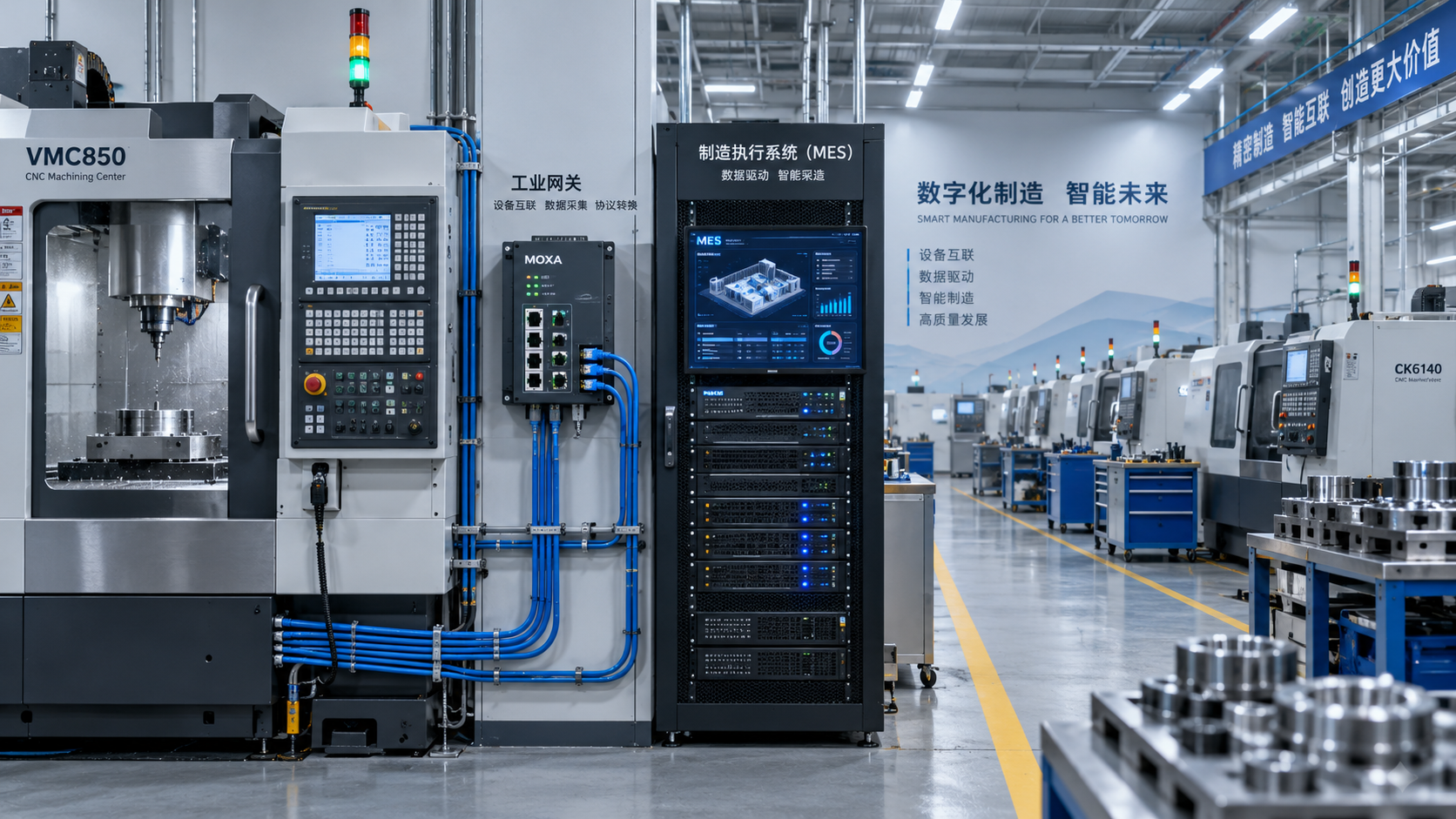
 Digital Manufacturing for Smart Factories: Connecting Legacy Machines to MESMachine Tool Industry Editorial Team
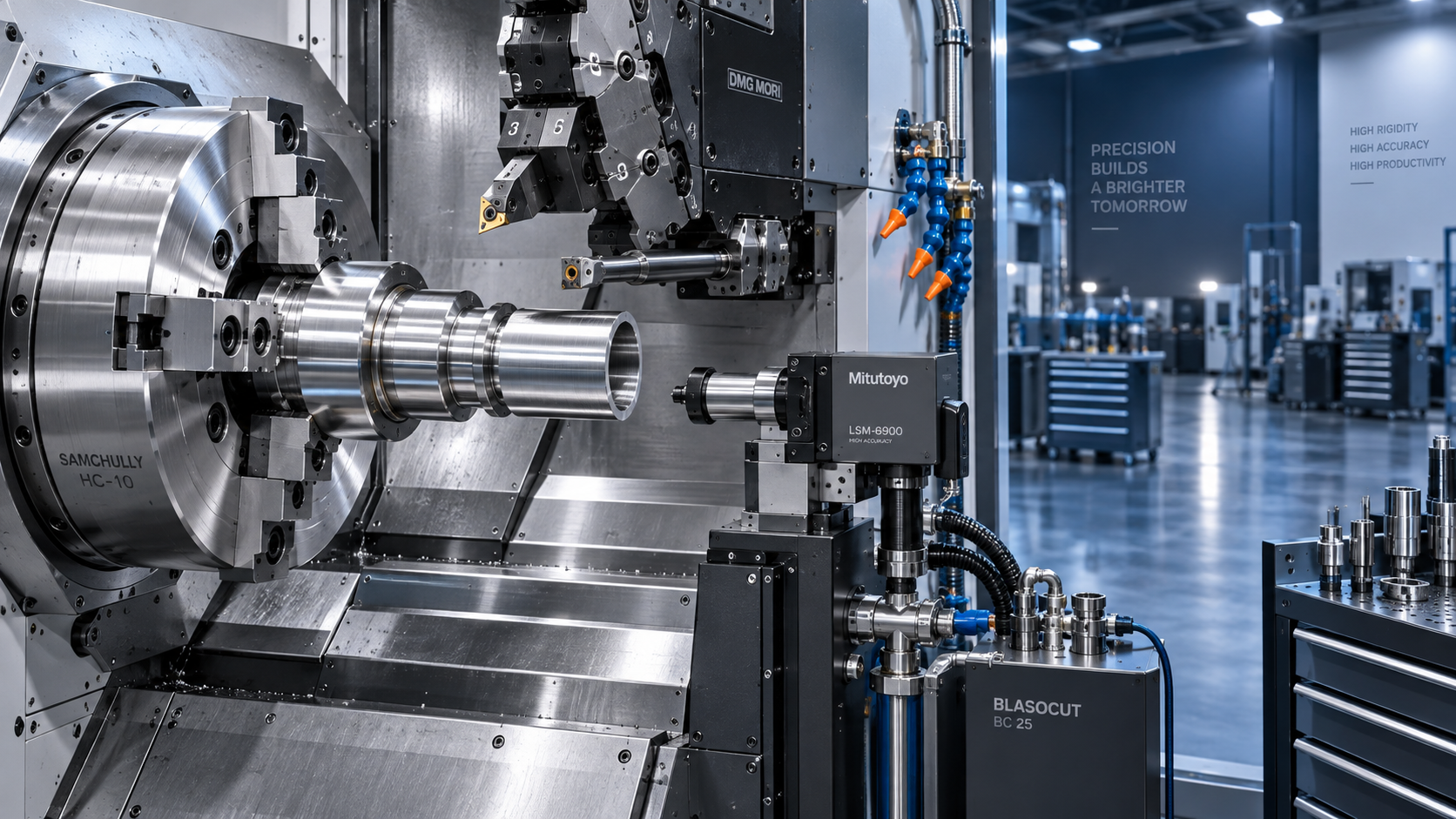
 How to Select a CNC Metal Lathe for Tight-Tolerance Shaft and Sleeve PartsCNC Machining Technology Center
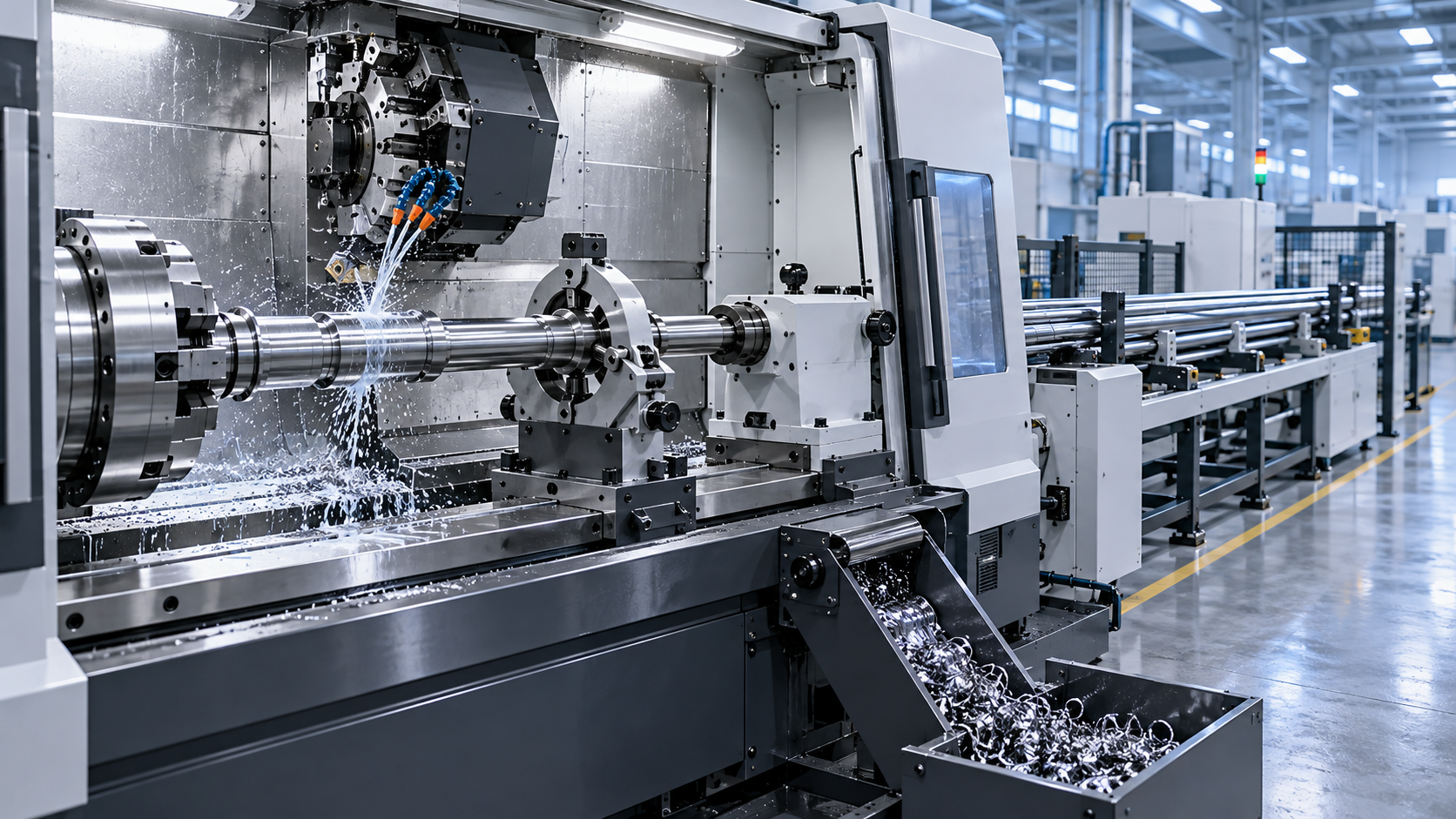
 How to Select an Industrial Lathe for High-Volume Shaft ProductionMachine Tool Industry Editorial Team
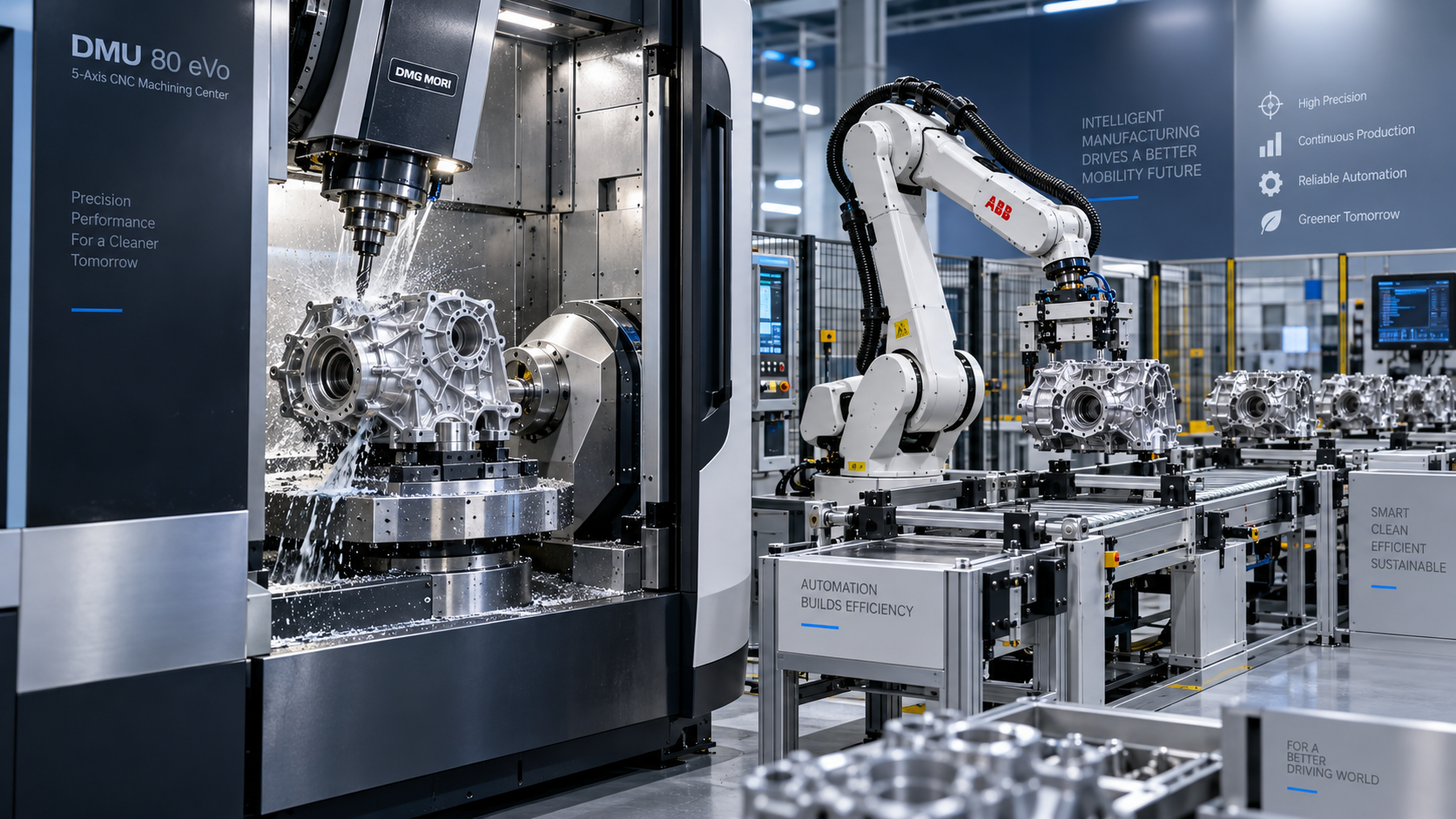
 Selecting Machine Tools for Automotive Parts: Accuracy, Throughput, and AutomationMachine Tool Industry Editorial Team
 Industrial Machining: Selecting Processes for Tight-Tolerance Metal PartsCNC Machining Technology Center
 Manufacturing Technology Trends That Improve Throughput and Quality ControlManufacturing Market Research Center

Aris Katos
Future of Carbide Coatings
15+ years in precision manufacturing systems. Specialized in high-speed milling and aerospace grade alloy processing.
▶
Machine Tool Market Outlook: Demand Drivers, Capacity Shifts, and Investment RisksManufacturing Market Research Center▶
Global Machine Tool Backlog Falls 12% as Automation Shifts DemandManufacturing Market Research Center▶
What Drives Machine Tool Price: 7 Cost Factors Buyers Should Compare Before OrderingManufacturing Market Research Center▶
Manufacturing Industry Cost Drivers in 2025: Labor, Energy, Freight, and Sourcing RisksManufacturing Market Research Center▶
CCMT2026 Ends With 40.2% Rise in Five-Axis Export PricesManufacturing Market Research Center
Mastering 5-Axis Workholding Strategies
Join our technical panel on Nov 15th to learn about reducing vibrations in thin-wall components.

Providing you with integrated sanding solutions
Before-sales and after-sales services
Comprehensive technical support