• Global CNC market projected to reach $128B by 2028 • New EU trade regulations for precision tooling components • Aerospace deman
NYSE: CNC +1.2%LME: STEEL -0.4%

Global Manufacturing Shifts: Which Supply Chain Hubs Are Gaining Capacity?

Global Manufacturing is entering a more distributed phase. Production is not leaving one country for another in a simple wave. It is being rebalanced across regions.
That shift matters because capacity decisions now affect cost, lead time, resilience, compliance, and access to advanced production technologies. In precision industries, the location of machine tools and automation assets often shapes competitiveness for years.
For sectors linked to CNC machining, electronics, automotive systems, aerospace parts, and energy equipment, the question is no longer whether change is happening. The practical question is where usable capacity is actually growing.
Why supply chain hubs are being reassessed
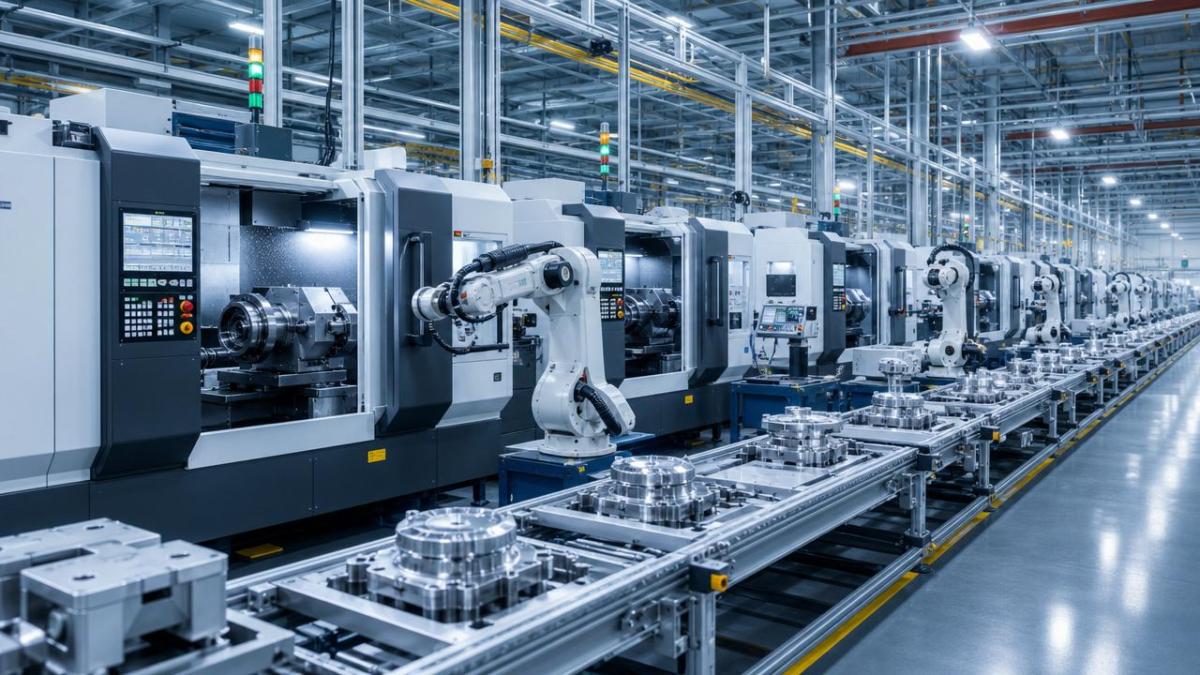
Several pressures are reshaping Global Manufacturing at the same time. Trade uncertainty remains important, but it is only one part of the picture.
Labor availability, industrial policy, logistics reliability, energy costs, and digital infrastructure are now part of every serious capacity review.
More importantly, manufacturers are no longer evaluating facilities only by output volume. They are judging how quickly a plant can change product mix, meet tolerance requirements, and connect with automated production systems.
This is where the CNC machine tool industry becomes central. Advanced lathes, machining centers, multi-axis systems, tooling, fixtures, and robotic cells determine whether a region can support high-value industrial work, not just low-cost assembly.
Capacity growth now favors capability, not just scale
In earlier cycles, manufacturing expansion often meant adding square footage and labor. Today, new capacity is more selective.
The strongest hubs are adding three layers at once: physical production space, precision equipment, and digital operating systems. That combination supports shorter changeovers, better quality control, and tighter traceability.
In practical terms, a plant with modern CNC platforms, automated material handling, and integrated inspection can outperform a larger site with weaker technical depth.
That is why Global Manufacturing shifts are increasingly tied to smart factory readiness. Capacity is meaningful only when it can absorb complex programs without unstable quality or long ramp-up periods.
Which regions are gaining traction
No single map explains Global Manufacturing today. Different hubs are gaining capacity for different reasons, and their strengths are not interchangeable.
China remains critical in industrial depth
China continues to hold a strong position because of supplier density, machine tool ecosystems, infrastructure, and process experience across electronics, automotive, metalworking, and industrial equipment.
Even where some sourcing is diversified, China still anchors many production networks through component availability, tooling support, and scalable precision manufacturing capacity.
Southeast Asia is expanding as a diversification platform
Vietnam, Thailand, Malaysia, and Indonesia are gaining attention as companies look for alternative production footprints. Their appeal often comes from trade access, improving industrial parks, and growing electronics and component manufacturing bases.
The difference between these markets lies in technical maturity. Some are strong in assembly and mid-range production, while others are investing more aggressively in precision machining and automation.
India is building long-horizon industrial capacity
India is gaining relevance through domestic market scale, policy support, and rising investment in industrial corridors, electronics, automotive systems, and engineering services.
Its growth story is not only about low cost. It is increasingly about local demand, design capability, and long-term manufacturing localization.
Mexico benefits from regional proximity
Mexico continues to gain capacity because proximity to North America reduces lead times and improves supply chain responsiveness. Automotive, electrical equipment, aerospace, and metal processing remain key drivers.
For programs requiring frequent replenishment or regional compliance, nearshoring has made Mexico an operational choice rather than a temporary hedge.
Central and Eastern Europe support advanced regional manufacturing
Poland, Czechia, Hungary, and neighboring markets have been strengthening their role in European production networks. They offer industrial skills, supplier access, and integration with regional transport systems.
These locations are especially relevant where precision metalworking, industrial machinery, and automotive components require reliable engineering standards.
What makes a hub truly valuable
A growing hub is not automatically a strong one. Real capacity must support business continuity and technical execution.
This is especially relevant in Global Manufacturing sectors where part complexity is high. A region may offer low labor cost, yet still fail to support precision machining, stable tool life, or rapid engineering changes.
How machine tools shape regional competitiveness
Machine tool capability is often treated as a technical detail. In reality, it is a strategic indicator.
Regions with strong CNC ecosystems can move into more demanding work, including aerospace structures, EV components, precision housings, energy systems, and complex mechanical assemblies.
That matters because higher-value programs usually stay where process control is strongest. Capacity gains become more durable when they are supported by calibration services, tooling specialists, automation integrators, and quality systems.
Germany, Japan, South Korea, and China still stand out here. Their industrial clusters combine equipment expertise with process know-how, which makes them influential far beyond domestic production volumes.
Common scenarios behind relocation and expansion
The same Global Manufacturing strategy does not fit every product line. Capacity moves usually follow one of several business patterns.
- Dual-sourcing for critical components that cannot tolerate single-region disruption.
- Nearshoring for programs with tight delivery windows or regional content requirements.
- Localization for large end markets where import dependence creates cost or policy risk.
- Technical upgrading in regions adding automation, multi-axis machining, and digital production control.
- Supplier clustering around anchor sectors such as EVs, electronics, aerospace, and industrial equipment.
Usually, the most successful expansion plans do not replace one hub with another overnight. They separate products by complexity, service requirements, and supply risk.
A practical framework for evaluating next moves
A useful response to Global Manufacturing shifts starts with better segmentation, not faster relocation.
Map products by manufacturing sensitivity
Separate high-precision, high-mix, and compliance-heavy products from simpler categories. Their location requirements are often very different.
Assess process capability, not brochure claims
Review actual machine fleets, spindle hours, inspection systems, scrap patterns, and engineering responsiveness. Capacity headlines can hide weak execution.
Watch the supporting ecosystem
Tooling suppliers, repair support, software integration, and workforce pipelines often determine whether a new site becomes reliable or remains fragile.
Balance resilience with concentration benefits
Too much fragmentation can raise cost and reduce control. The objective is not maximum dispersion, but a production network that matches risk exposure and technical needs.
What to watch next
The next phase of Global Manufacturing will likely reward hubs that combine policy support with real industrial execution. Incentives may attract projects, but long-term capacity depends on engineering depth and operational discipline.
For that reason, it is worth tracking three signals closely: expansion in CNC and automation assets, growth in local supplier ecosystems, and evidence of faster industrial digitalization.
A clear next step is to compare current supply exposure against these regional signals, then rank possible hubs by precision capability, flexibility, and resilience. That creates a stronger basis for future sourcing, investment, and production decisions.
Recommended for You
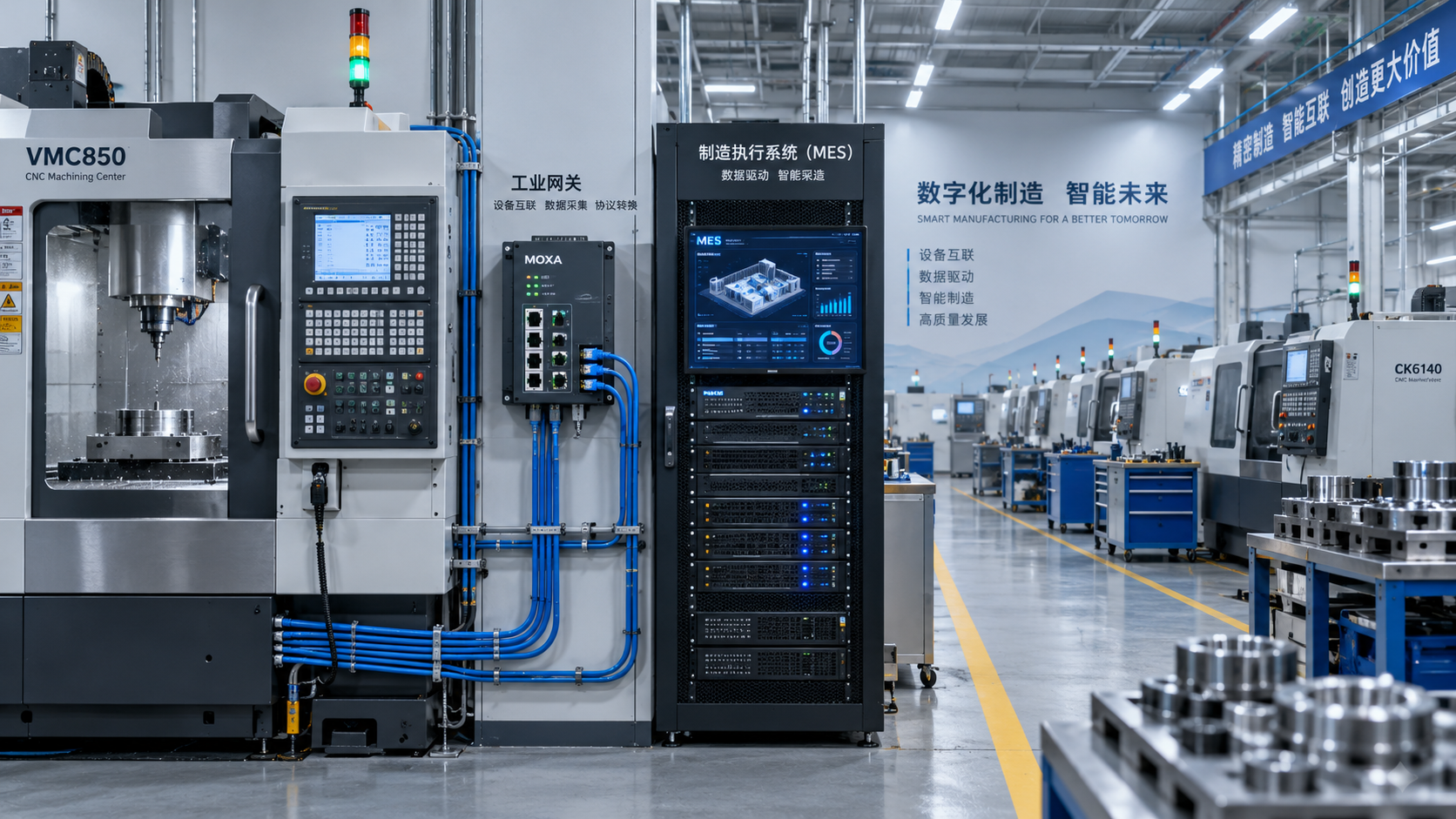
 Digital Manufacturing for Smart Factories: Connecting Legacy Machines to MESMachine Tool Industry Editorial Team
 How to Select a CNC Metal Lathe for Tight-Tolerance Shaft and Sleeve PartsCNC Machining Technology Center
 How to Select an Industrial Lathe for High-Volume Shaft ProductionMachine Tool Industry Editorial Team
 Selecting Machine Tools for Automotive Parts: Accuracy, Throughput, and AutomationMachine Tool Industry Editorial Team
 Industrial Machining: Selecting Processes for Tight-Tolerance Metal PartsCNC Machining Technology Center
 Manufacturing Technology Trends That Improve Throughput and Quality ControlManufacturing Market Research Center

Aris Katos
Future of Carbide Coatings
15+ years in precision manufacturing systems. Specialized in high-speed milling and aerospace grade alloy processing.
▶
Manufacturing Technology Trends That Improve Throughput and Quality ControlManufacturing Market Research Center▶
Global Manufacturing Trends: How Supply Chains and Regional Shifts Affect SourcingManufacturing Market Research Center▶
Small-Batch Production and Smart Manufacturing for Small Businesses: Where to Start FirstManufacturing Market Research Center▶
What Smart Manufacturing Technology for Industry 4.0 Means for Mid-Sized FactoriesManufacturing Market Research Center▶
How Smart Manufacturing Benefits Reduce Downtime and Scrap in Metal Parts ProductionManufacturing Market Research Center
Mastering 5-Axis Workholding Strategies
Join our technical panel on Nov 15th to learn about reducing vibrations in thin-wall components.

Providing you with integrated sanding solutions
Before-sales and after-sales services
Comprehensive technical support