• Global CNC market projected to reach $128B by 2028 • New EU trade regulations for precision tooling components • Aerospace deman
NYSE: CNC +1.2%LME: STEEL -0.4%

How Global Manufacturing is shifting beyond low-cost hubs
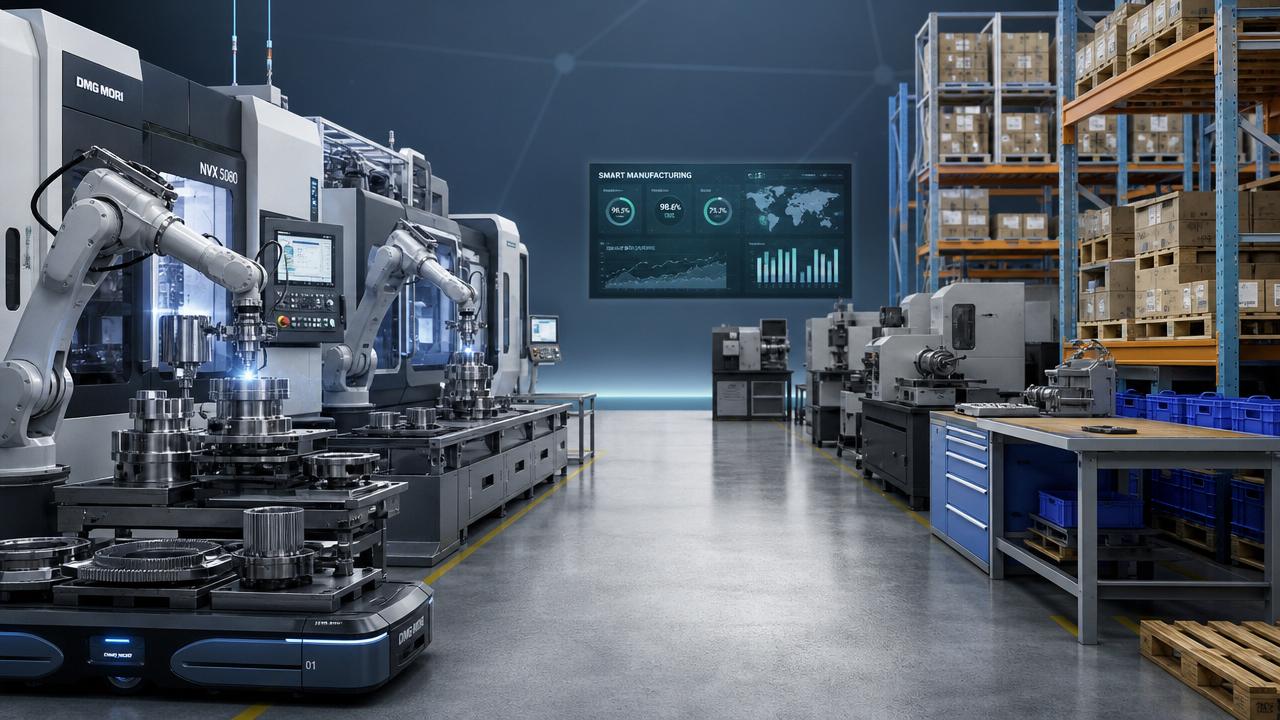
Global Manufacturing is moving beyond traditional low-cost hubs as companies prioritize resilience, precision, automation, and supply chain agility. For industries driven by CNC machine tools and smart production, this shift is reshaping sourcing strategies, investment patterns, and competitive advantages across regions. Understanding these changes is essential for researchers tracking the future of advanced manufacturing.
For information-focused readers, the key question is no longer whether production will remain global, but how Global Manufacturing is being rebalanced across regions, technologies, and supplier networks. In CNC machining, machine tools, industrial robotics, and precision components, the shift affects lead times, sourcing risks, capital allocation, and long-term industrial competitiveness.
Companies in automotive, aerospace, electronics, and energy equipment are now evaluating suppliers with a broader lens. Unit price still matters, but it is increasingly weighed against delivery stability, tolerance control, automation capability, after-sales support, and digital traceability. In many cases, a 5% to 12% cost premium is being accepted when it reduces disruption risk or improves production consistency.
Why Global Manufacturing Is Moving Beyond Low-Cost Hubs
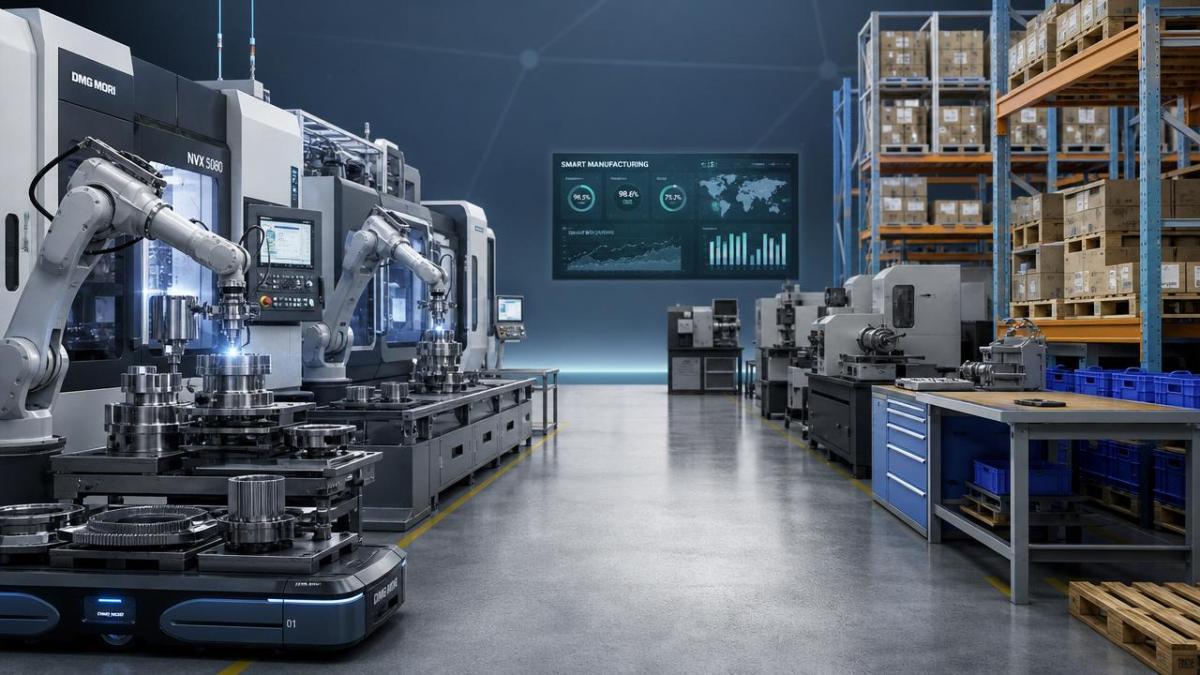
For nearly 30 years, low-cost manufacturing hubs were central to global sourcing strategies. Labor arbitrage, export infrastructure, and scale advantages made a small number of regions dominant in metalworking, assembly, and component supply. Today, Global Manufacturing is evolving because the decision criteria have become more complex than hourly wage comparisons.
Several pressures are driving this shift at the same time. Supply chain disruptions exposed the risk of overconcentration. Freight volatility changed landed-cost calculations. Higher quality requirements in electric vehicles, semiconductors, and aerospace parts pushed buyers toward suppliers with stronger process control. At the same time, automation reduced the share of labor in total production cost in many precision manufacturing segments.
From labor cost to total manufacturing value
In CNC-based production, direct labor may account for only 10% to 20% of total cost in highly automated cells. Machine uptime, cutting efficiency, scrap rate, setup time, and quality stability often have a larger impact on profitability than wage differences alone. A machining center operating at 85% utilization can outperform a lower-cost site running below 65% utilization due to weak planning or maintenance discipline.
This is especially true for multi-axis machining, precision turning, and batch production of complex parts. If a supplier can hold tolerances within ±0.005 mm to ±0.02 mm with stable repeatability, the downstream savings in inspection, assembly, and warranty risk can outweigh a modest increase in procurement cost.
Risk concentration became too expensive
A single-region sourcing model can still work for non-critical items, but it is less attractive for strategic components. For machine tool builders and precision manufacturers, delays of 2 to 6 weeks in castings, spindle units, ball screws, control systems, or electrical components can disrupt production schedules across multiple customers. The result is a growing preference for dual sourcing, regional backup capacity, and shorter supply loops.
- Longer planning cycles, often extending from 4 weeks to 12 weeks for critical components
- Higher buffer inventory for imported machine parts and control modules
- Greater emphasis on local technical service within 24 to 72 hours
- More frequent supplier audits focused on capacity, documentation, and traceability
What buyers now compare across regions
The table below outlines how sourcing criteria in Global Manufacturing have expanded beyond labor cost, especially in sectors that depend on CNC machine tools, automation, and precision engineering.
The practical takeaway is that Global Manufacturing is not abandoning cost discipline. Instead, buyers are redefining value through a wider set of variables. In precision manufacturing, a cheaper source that adds 3% scrap, 10 days of delay, or inconsistent documentation may no longer be competitive.
How the Shift Is Reshaping CNC Machine Tool Supply Chains
The machine tool industry sits at the center of this transformation because it supplies the equipment used to make high-value parts. As Global Manufacturing becomes more distributed, demand patterns are changing not only for finished machinery, but also for spindles, guides, servo systems, cast structures, fixtures, tooling, and automation modules.
Regional manufacturing clusters remain important, but their roles are becoming more specialized. China continues to provide scale and broad industrial depth. Germany and Japan remain strong in high-precision systems and engineering quality. South Korea is competitive in automation-linked industrial production. Other regions are attracting investment through nearshoring, final assembly, or specialized component capacity.
A more layered production footprint
Instead of concentrating all operations in one location, many manufacturers now split production into 3 layers: core component manufacturing, regional machine assembly, and local service or retrofit support. This model can shorten response times while preserving economies of scale in parts manufacturing.
- Core parts such as castings, precision shafts, and spindle housings are produced in established industrial bases.
- Assembly and testing are moved closer to end markets to reduce shipping complexity and improve customization.
- Service teams and spare parts hubs are positioned locally to support installations within 48 to 72 hours.
Why this matters for precision equipment
Machine tools are not simple commodities. Installation conditions, operator training, fixture setup, software integration, and preventive maintenance all affect performance. A machining center may meet nominal specifications, but actual productivity depends on alignment, programming quality, thermal stability, and tooling strategy. Local technical access therefore becomes a purchasing factor, not just a service afterthought.
Decision factors for sourcing machine tools and precision partners
For researchers and sourcing teams, the following comparison helps explain how supplier selection is evolving in Global Manufacturing. The focus is shifting toward measurable delivery, process, and service capability.
These benchmarks are not universal standards, but they reflect common commercial expectations. The broader point is that Global Manufacturing now favors suppliers that can demonstrate capacity transparency, process consistency, and support infrastructure rather than low price alone.
Regional Winners Will Be Defined by Capability, Not Cost Alone
As production moves beyond traditional low-cost hubs, the winners are not necessarily the cheapest countries or the largest exporters. More often, they are the regions that combine industrial depth, engineering talent, stable infrastructure, and digital manufacturing capability. In CNC and precision production, these factors often decide whether a supplier can scale without sacrificing tolerance, throughput, or quality assurance.
What makes a region competitive now
A competitive manufacturing location usually needs at least 4 capabilities working together: a reliable component ecosystem, skilled technical labor, logistics access, and automation maturity. If one of these pillars is weak, overall performance can decline even when labor cost is attractive. For example, a low-cost factory with inconsistent tooling supply or poor electrical stability may struggle to support precision machining at scale.
- Industrial clusters that support castings, bearings, controls, and tooling within 200 to 500 km
- Technical workforce able to handle CNC programming, metrology, and preventive maintenance
- Export and import infrastructure that supports spare parts and component flow without chronic delay
- Digital capability for machine connectivity, production planning, and quality documentation
Nearshoring does not mean full relocation
One common misunderstanding is that Global Manufacturing is simply moving back to domestic production. In reality, most companies are not replacing one single-country model with another. They are building hybrid networks. This often means keeping core machining or component production in established hubs, while relocating final assembly, warehousing, or customer-specific configuration closer to target markets.
For machine tool builders, this approach can reduce shipping complexity for large equipment, improve commissioning speed, and allow region-specific electrical or compliance adaptation. It also makes it easier to stock common wear parts, such as tool holders, lubrication components, seals, or drive elements, where customers actually use the equipment.
Industries likely to accelerate the shift
Not all manufacturing sectors are changing at the same pace. The move beyond low-cost hubs is typically fastest in segments where part complexity, quality risk, or time sensitivity is high.
- Automotive and EV production, where flexible machining and rapid model changes matter
- Aerospace, where documentation, traceability, and precision control are critical
- Electronics and semiconductor-related equipment, where contamination and repeatability standards are strict
- Energy equipment, where large components require stable machining capacity and service support
How Researchers and Buyers Should Evaluate the New Manufacturing Landscape
For information researchers, the most useful framework is to examine how sourcing, technology, and service fit together. Global Manufacturing is becoming more regionalized in execution but remains deeply international in components, engineering, and trade. That means the right evaluation method should compare networks, not just factories.
A practical 5-point assessment model
When reviewing machine tool suppliers, precision manufacturers, or automation partners, researchers can use a 5-point checklist to separate low-price positioning from true industrial capability.
- Check process depth: Does the supplier manage machining, assembly, inspection, and integration in a coordinated way?
- Check quality control: Are tolerances, calibration routines, and inspection records clearly defined?
- Check lead time resilience: Is there a visible plan for imported components, spare parts, and capacity bottlenecks?
- Check automation compatibility: Can equipment connect with robots, sensors, or production management systems?
- Check service structure: Is technical support available remotely within 24 hours and on-site within a realistic service window?
Common errors in market research
A frequent mistake is comparing suppliers only by headline machine specifications. Two CNC systems with similar spindle speed, travel range, or tool capacity can perform very differently in actual production. Stability under continuous load, fixture design support, control interface familiarity, and spare parts availability often determine the real operating result over 12 to 36 months.
Another error is assuming all cost inflation weakens established hubs equally. In practice, high-productivity suppliers can offset higher wages through automation, shorter setup times, and lower defect rates. A plant using robotic loading, in-process measurement, and standardized tooling may remain competitive even if local labor costs rise by 8% to 15%.
Questions worth asking in supplier research
- What is the normal delivery window for standard versus customized equipment?
- Which critical parts are locally stocked, and which rely on cross-border procurement?
- What tolerance range is routinely achieved in comparable applications?
- How often is preventive maintenance recommended: every 500, 1,000, or 2,000 operating hours?
- Can the supplier support retrofit, software updates, and operator training after installation?
Global Manufacturing is not becoming less global. It is becoming more selective, more technology-driven, and more risk-aware. For sectors tied to CNC machine tools, precision machining, and automated production lines, the competitive edge increasingly comes from balancing cost with resilience, quality, and service reach.
For researchers, this means looking beyond simple country comparisons and studying production ecosystems, supplier capability layers, and support models. For manufacturers and sourcing teams, it means building supply chains that can deliver stable output under tighter tolerance, shorter response windows, and more variable demand.
If you want deeper insight into Global Manufacturing trends in CNC machining, precision machine tools, automation systems, and cross-border industrial sourcing, explore more solutions, request tailored market information, or contact us to discuss specific manufacturing and supply chain needs.
PREVIOUS ARTICLE
Recommended for You
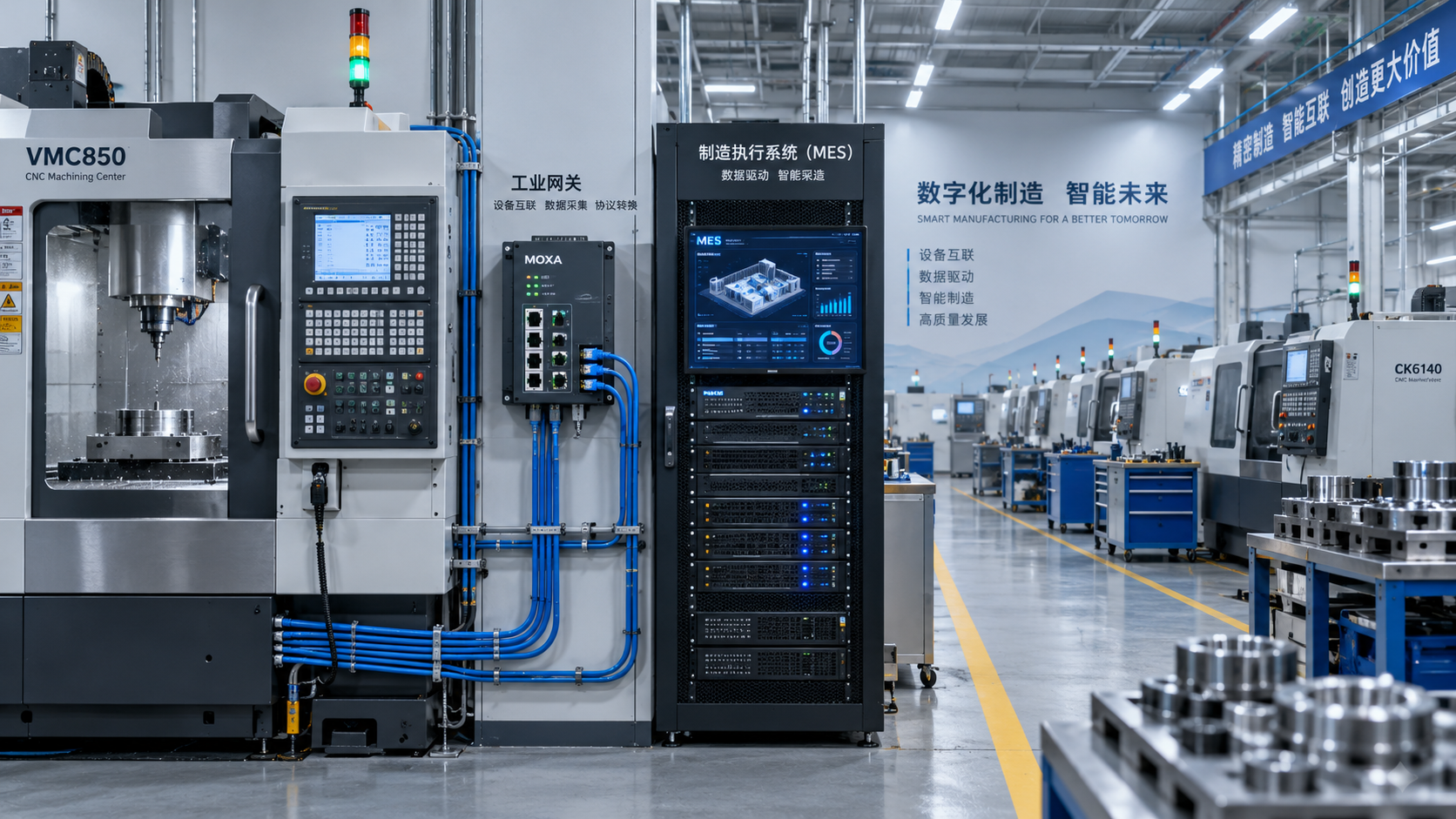
 Digital Manufacturing for Smart Factories: Connecting Legacy Machines to MESMachine Tool Industry Editorial Team
 How to Select a CNC Metal Lathe for Tight-Tolerance Shaft and Sleeve PartsCNC Machining Technology Center
 How to Select an Industrial Lathe for High-Volume Shaft ProductionMachine Tool Industry Editorial Team
 Selecting Machine Tools for Automotive Parts: Accuracy, Throughput, and AutomationMachine Tool Industry Editorial Team
 Industrial Machining: Selecting Processes for Tight-Tolerance Metal PartsCNC Machining Technology Center
 Manufacturing Technology Trends That Improve Throughput and Quality ControlManufacturing Market Research Center

Aris Katos
Future of Carbide Coatings
15+ years in precision manufacturing systems. Specialized in high-speed milling and aerospace grade alloy processing.
▶
Manufacturing Technology Trends That Improve Throughput and Quality ControlManufacturing Market Research Center▶
Global Manufacturing Trends: How Supply Chains and Regional Shifts Affect SourcingManufacturing Market Research Center▶
Small-Batch Production and Smart Manufacturing for Small Businesses: Where to Start FirstManufacturing Market Research Center▶
What Smart Manufacturing Technology for Industry 4.0 Means for Mid-Sized FactoriesManufacturing Market Research Center▶
How Smart Manufacturing Benefits Reduce Downtime and Scrap in Metal Parts ProductionManufacturing Market Research Center
Mastering 5-Axis Workholding Strategies
Join our technical panel on Nov 15th to learn about reducing vibrations in thin-wall components.

Providing you with integrated sanding solutions
Before-sales and after-sales services
Comprehensive technical support