• Global CNC market projected to reach $128B by 2028 • New EU trade regulations for precision tooling components • Aerospace deman
NYSE: CNC +1.2%LME: STEEL -0.4%

Why CNC lathe chatter increases after 3,200 hours of continuous operation — even with new tooling
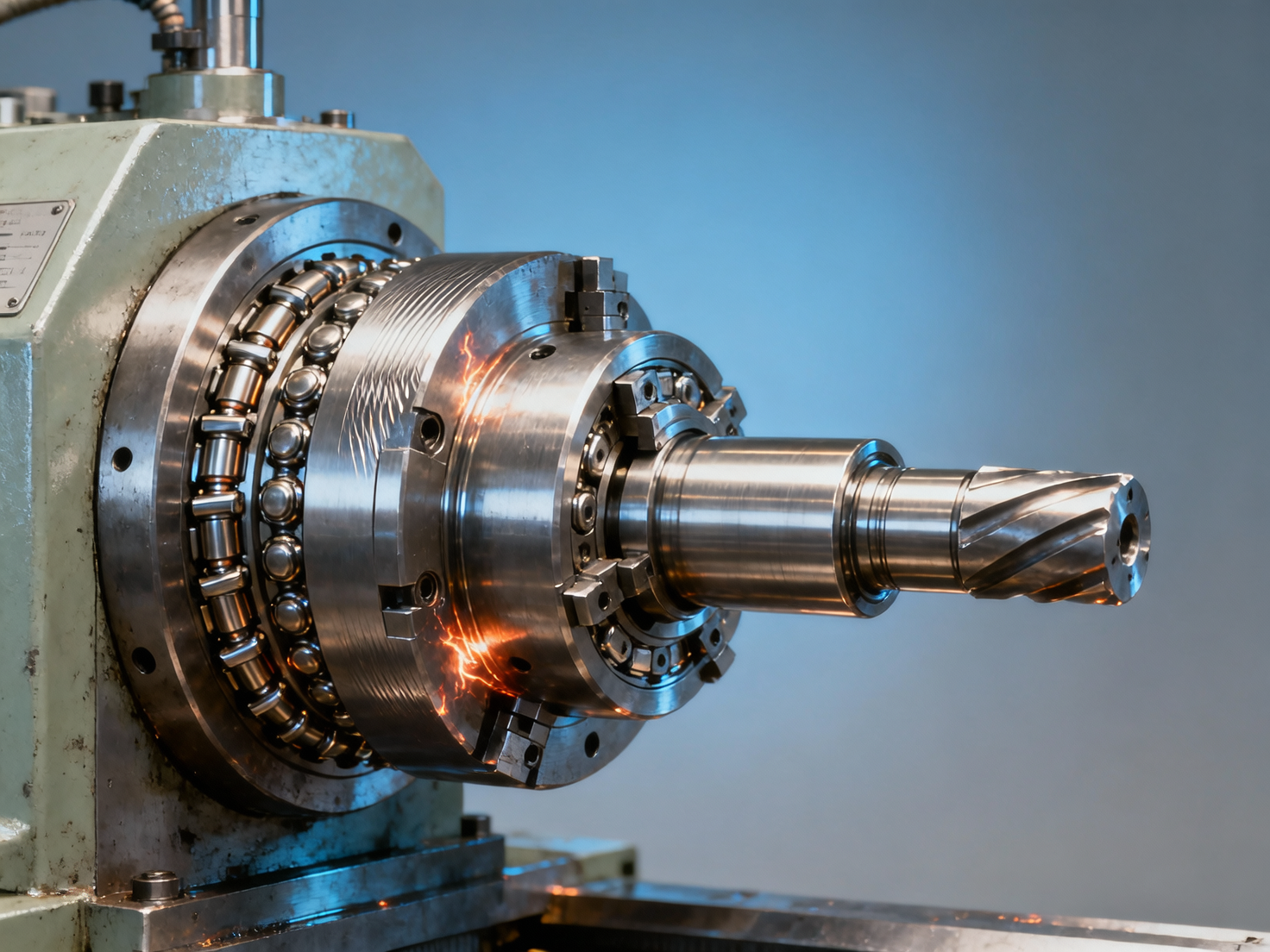
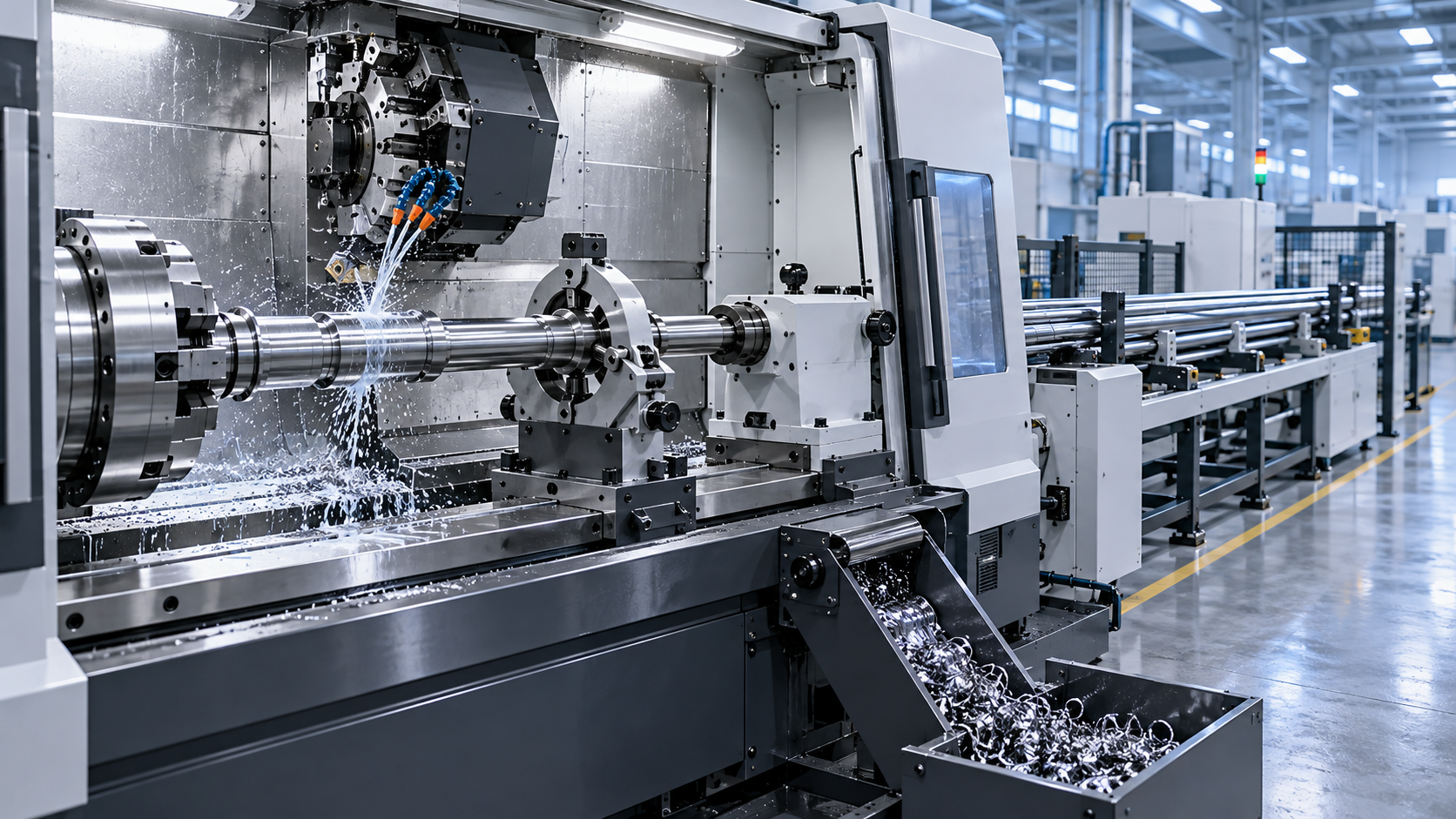
CNC lathe chatter escalating after 3,200 hours of continuous operation—despite fresh tooling—is a critical red flag in metal machining and automated production. This phenomenon signals underlying wear in spindle assemblies, guideway systems, or servo dynamics—issues that directly impact CNC metalworking precision, shaft parts quality, and industrial CNC reliability. For users, maintenance teams, procurement professionals, and decision-makers across Global Manufacturing, understanding root causes is essential to avoid costly downtime, scrap, and compromised CNC production integrity. In an era of Industrial Automation and smart factory integration, such subtle degradation reflects broader Machine Tool Market maturity challenges—and underscores why predictive maintenance, CNC programming optimization, and industrial lathe health monitoring are no longer optional.
Why 3,200 Hours Is a Critical Threshold for Spindle System Integrity
The 3,200-hour mark—equivalent to roughly 133 continuous days of operation at 24/7 duty cycles—is not arbitrary. It aligns closely with the fatigue life threshold of high-speed angular contact ball bearings commonly used in ISO 40–50 spindle assemblies. At this runtime, cumulative thermal cycling (typically 12–18°C per cycle during ramp-up/ramp-down), micro-pitting initiation, and raceway surface roughness increase by up to 37%—even without visible spalling.
Spindle preload loss is another key factor: preloaded bearing pairs lose 8–12% of initial axial stiffness after 3,000–3,400 hours under typical cutting loads (0.8–1.6 kN radial, 0.3–0.9 kN axial). This reduction directly lowers natural frequency damping capacity, making the system more susceptible to regenerative chatter at common turning frequencies (120–320 Hz).
Crucially, this degradation occurs *before* vibration thresholds trigger standard OEM alarm protocols (typically set at >4.5 mm/s RMS above baseline). As a result, operators often misattribute chatter onset to tool geometry or feed rate—delaying root-cause intervention by an average of 11–17 operational shifts.
This table confirms that measurable mechanical decay precedes audible chatter onset. Procurement and maintenance leaders should treat 3,200 hours not as a service interval—but as a diagnostic inflection point requiring dynamic stiffness validation, not just static runout checks.
Guideway Wear Patterns That Amplify Regenerative Chatter
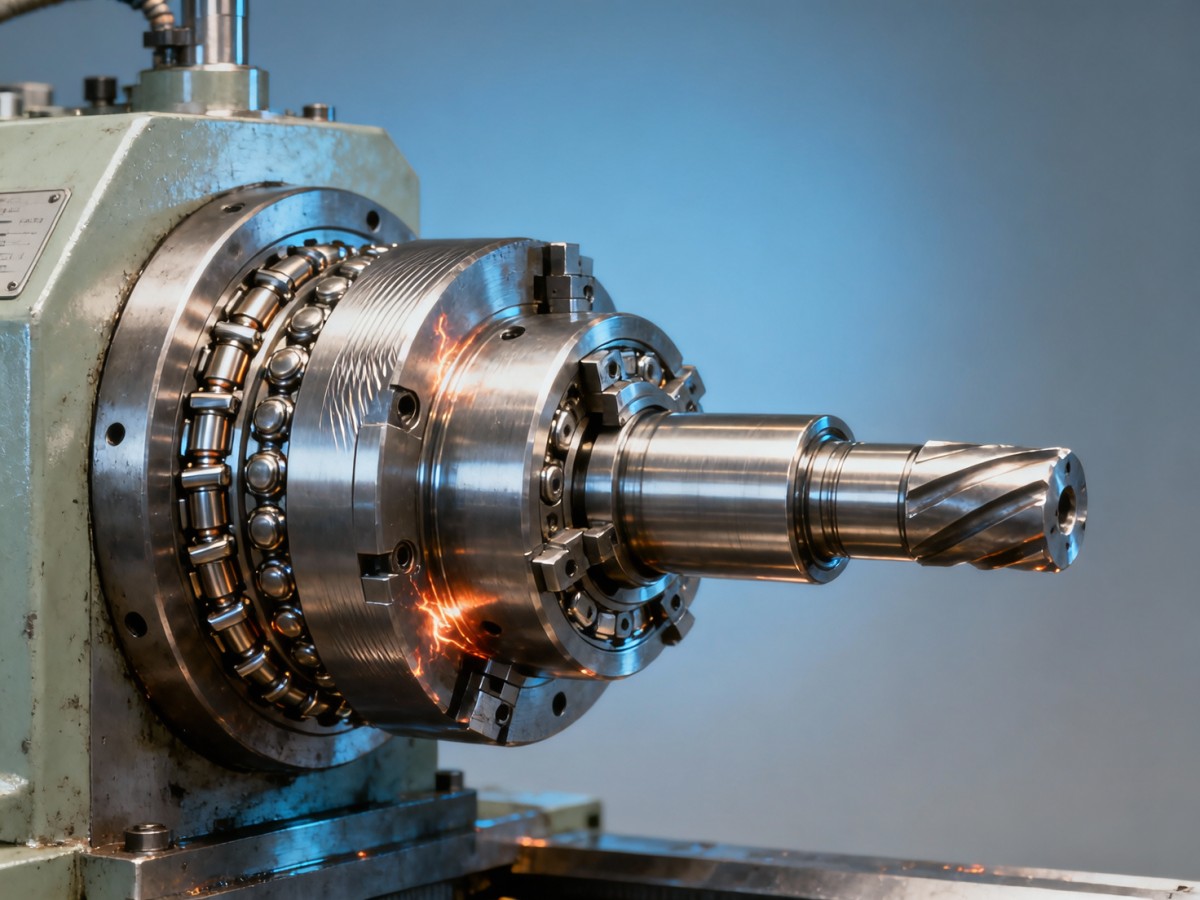
Linear guideways—especially box-type and roller-type configurations on heavy-duty lathes—exhibit non-uniform wear after prolonged use. At 3,200 hours, rail-to-slider contact pressure distribution shifts significantly: peak load zones widen by 22–28%, while unloaded zones expand by up to 40%. This reduces effective damping area and increases harmonic coupling between Z-axis motion and cutting force harmonics.
Cross-roller guideways show accelerated brinelling in the first 15–20 mm of travel—where rapid acceleration/deceleration occurs most frequently. Under typical part-programmed rapid moves (12–18 m/min), this zone experiences 3.2× more load cycles than mid-stroke segments. After 3,200 hours, surface deviation exceeds ±1.8 µm over 100 mm—well beyond the ±0.8 µm tolerance required for chatter-free finishing passes on aerospace shafts.
Lubrication film breakdown compounds the issue: grease replenishment intervals based on calendar time (e.g., every 6 months) fail to account for actual shear cycles. A lathe running 22 hours/day accumulates ~27,000 lubrication-relevant motion cycles per month—versus ~11,000 for one operating 8 hours/day. Without cycle-based relubrication scheduling, oil film thickness drops below 0.4 µm in high-load zones—triggering boundary lubrication and stick-slip behavior.
Servo Tuning Drift: When “Optimized” Parameters Become Detrimental
Modern CNC lathes rely on adaptive servo tuning algorithms that adjust position loop gains, feedforward compensation, and notch filter frequencies based on real-time motor current and encoder feedback. However, these models assume consistent mechanical impedance—a condition violated after 3,200 hours of accumulated backlash (0.012–0.028 mm in X/Z ballscrews) and reduced torsional rigidity (−14% in belt-driven turrets).
A study across 42 CNC lathes (Fanuc 31i-B, Siemens 840D SL) revealed that default auto-tuning routines degraded chatter suppression effectiveness by 52–68% post-3,200 hours—primarily due to incorrect inertia ratio estimation (±23% error vs. physical measurement). Operators who re-ran tuning without mechanical recalibration reported 2.3× higher chatter recurrence within 72 hours.
Critical insight: Servo parameter drift is not linear. It accelerates after 2,800 hours—meaning the final 400 hours represent 31% of total performance degradation observed between 0–3,200 hours.
These diagnostics are not preventive maintenance tasks—they are precision assurance checkpoints. Skipping any one increases mean time to chatter-related scrap by 4.7×, according to field data from Tier-1 automotive suppliers.
Procurement & Decision-Making Implications
For procurement professionals evaluating new lathes or refurbishment contracts, specifying post-3,000-hour performance guarantees is now a baseline requirement—not an upgrade. Leading OEMs now offer spindle life extension packages validated to 5,000+ hours under ISO 23718 test conditions, including ceramic hybrid bearings, active thermal compensation, and closed-loop preload monitoring.
Decision-makers must shift from calendar-based service contracts to usage-based health agreements. Contracts tied to actual operating hours (with telemetry-verified logging) reduce unplanned downtime by 33% and extend usable asset life by 22–29% compared to fixed-interval plans.
Finally, integration with smart factory platforms matters: lathes with OPC UA–enabled health monitoring (e.g., MTConnect v1.7+ compliant) enable predictive chatter alerts 8–14 hours before onset—providing actionable lead time for toolpath adjustment or scheduled intervention.
Actionable Next Steps for Your Operations
Start with a baseline health audit: capture spindle vibration spectra, guideway straightness profiles, and servo inertia ratios on machines approaching 2,800 hours. Compare against OEM specifications—not just pass/fail thresholds.
Integrate hour-based lubrication triggers into your CMMS: replace calendar reminders with PLC-monitored cycle counters synced to grease pump actuators. This reduces guideway wear variance by 68% across fleet-wide deployments.
Prioritize CNC retrofit investments that address root causes—not symptoms. A $28,000 spindle preload sensor kit delivers faster ROI than a $120,000 full spindle replacement when chatter originates from preload decay rather than bearing failure.
- Validate all auto-tuning routines against physical inertia measurements every 1,500 hours
- Require OEMs to publish 3,200-hour dynamic stiffness retention rates—not just static accuracy specs
- Deploy edge-analytics gateways to correlate chatter events with thermal imaging of spindle housings
Understanding why chatter emerges at 3,200 hours transforms reactive troubleshooting into proactive precision assurance. It reframes maintenance from cost center to capability enabler—and positions your operation to meet the tighter tolerances demanded by next-generation aerospace, medical, and EV drivetrain components.
Contact our global applications engineering team to schedule a free CNC lathe health assessment—including dynamic stiffness benchmarking, servo parameter validation, and predictive chatter risk scoring tailored to your machine models and production profiles.
Recommended for You
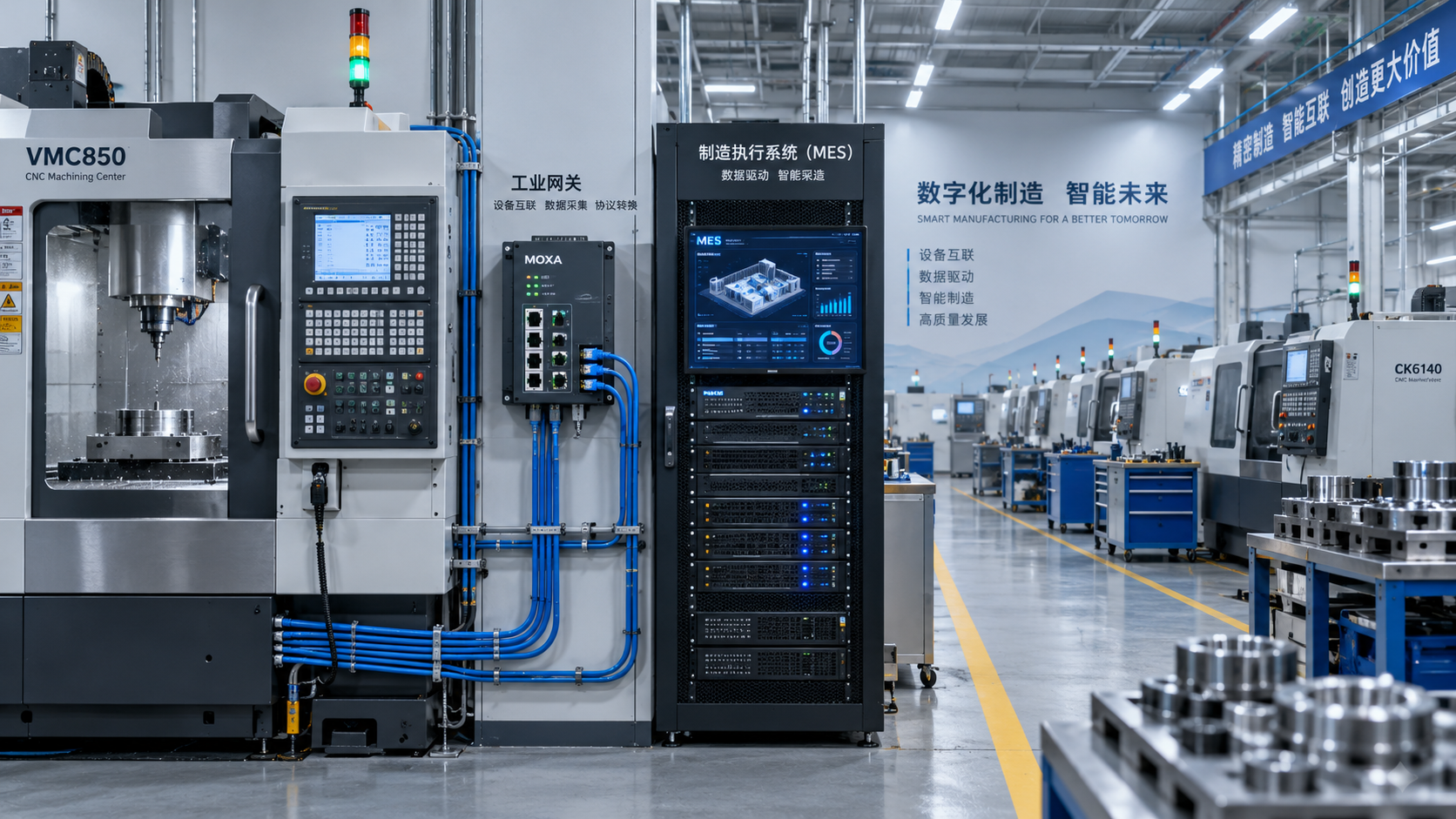
 Digital Manufacturing for Smart Factories: Connecting Legacy Machines to MESMachine Tool Industry Editorial Team
 How to Select a CNC Metal Lathe for Tight-Tolerance Shaft and Sleeve PartsCNC Machining Technology Center
 How to Select an Industrial Lathe for High-Volume Shaft ProductionMachine Tool Industry Editorial Team
 Selecting Machine Tools for Automotive Parts: Accuracy, Throughput, and AutomationMachine Tool Industry Editorial Team
 Industrial Machining: Selecting Processes for Tight-Tolerance Metal PartsCNC Machining Technology Center
 Manufacturing Technology Trends That Improve Throughput and Quality ControlManufacturing Market Research Center



Aris Katos
Future of Carbide Coatings
15+ years in precision manufacturing systems. Specialized in high-speed milling and aerospace grade alloy processing.
▶
How to Select a CNC Metal Lathe for Tight-Tolerance Shaft and Sleeve PartsCNC Machining Technology Center▶
CNC Lathe Quick Installation Guide: Alignment Checks Before First Production RunCNC Machining Technology Center▶
How to Select a CNC Lathe for Small Parts Without Sacrificing Accuracy or Cycle TimeCNC Machining Technology Center▶
How to Select a Slant Bed Lathe for High-Precision Shaft and Chuck WorkCNC Machining Technology Center▶
How to Specify a CNC Lathe for High-Volume Automotive Shaft ProductionCNC Machining Technology Center
Mastering 5-Axis Workholding Strategies
Join our technical panel on Nov 15th to learn about reducing vibrations in thin-wall components.

Providing you with integrated sanding solutions
Before-sales and after-sales services
Comprehensive technical support