• Global CNC market projected to reach $128B by 2028 • New EU trade regulations for precision tooling components • Aerospace deman
NYSE: CNC +1.2%LME: STEEL -0.4%

5 Axis Machining for impeller manufacturing: Why tool path smoothing impacts surface integrity more than stepover
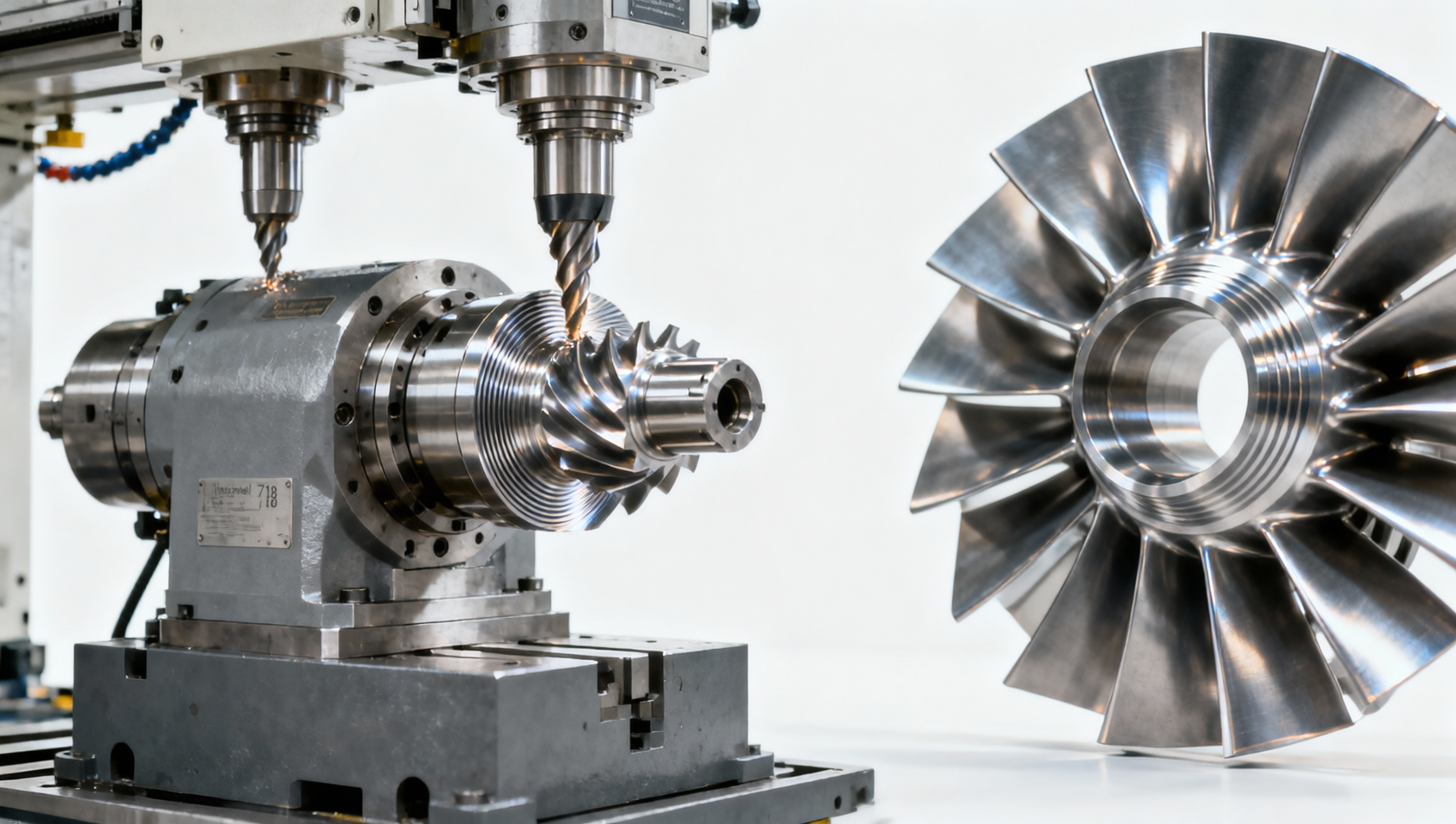
In high-precision impeller manufacturing—critical for aerospace, energy equipment, and medical devices—5-axis machining delivers unmatched geometric fidelity. Yet surface integrity hinges less on stepover and more on tool path smoothing: micro-irregularities in motion planning induce vibrations that degrade finish, fatigue resistance, and aerodynamic efficiency. As demand surges for compact machine tool solutions, multi-axis CNC manufacturing, and low-maintenance, high-speed CNC manufacturing systems, optimizing kinematic continuity isn’t just a programming detail—it’s a cornerstone of precision CNC manufacturing. Discover why leading CNC manufacturing suppliers and machine tool manufacturers now prioritize smoothness-aware toolpath generation across automated CNC manufacturing workflows.
Why Surface Integrity Trumps Geometric Accuracy in Impeller Production
Impellers operate under extreme rotational speeds (up to 30,000 rpm in turbochargers) and pressure differentials exceeding 15 bar. Even sub-micron surface deviations—such as micro-ripples from jerk-limited axis transitions—can trigger localized turbulence, reducing hydraulic or aerodynamic efficiency by 2–4%. Unlike static components, impeller blades endure cyclic loading; surface tensile residual stresses induced by chatter increase crack initiation risk by up to 37% in nickel-based superalloys like Inconel 718.
Stepover—the lateral spacing between adjacent tool passes—controls scallop height but does not govern dynamic interaction between cutter, workpiece, and machine structure. A 0.02 mm stepover may yield excellent visual finish on a rigid fixture, yet produce inconsistent Ra values (0.2–0.8 µm) if the toolpath contains angular velocity discontinuities at blade root transitions. This inconsistency directly impacts fatigue life: industry testing shows a 22% reduction in median cycles-to-failure when surface roughness standard deviation exceeds ±0.15 µm.
Modern impeller applications—including hydrogen compressor stages and micro-turbine blisks—require surface integrity specifications aligned with ISO 13584-42 and ASME B46.1. These standards emphasize functional parameters like Rsk (skewness), Rku (kurtosis), and Rsm (mean spacing), all of which correlate strongly with kinematic smoothness—not stepover alone.
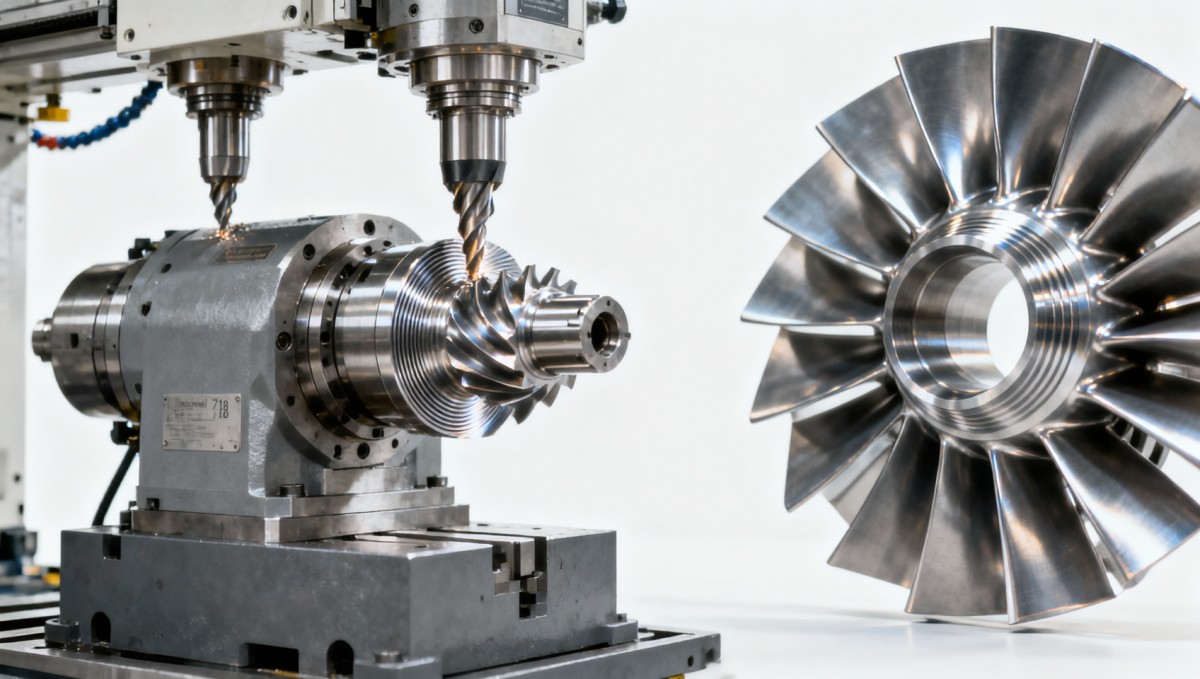
How Tool Path Smoothing Translates to Machine Kinematics
Tool path smoothing is not post-processing interpolation—it’s real-time trajectory optimization governed by jerk constraints (≤ 500 m/s³), acceleration limits (≤ 1.2 g per axis), and servo loop bandwidth (typically 200–400 Hz in high-end 5-axis controls). Without smoothing, G-code blocks with abrupt direction changes force the CNC controller to decelerate, dwell, and re-accelerate—introducing position lag and torsional vibration in rotary axes.
Smoothness-aware toolpath generators (e.g., Siemens NX Manufacturing, Mastercam Multi-Axis, HyperMill) apply NURBS-based fitting with chord tolerance ≤ 0.005 mm and parameterization respecting axis coupling dynamics. This reduces actual feedrate variation from ±28% (unsmoothed) to ±3.5%, cutting vibration amplitude by 65% measured via embedded piezoelectric sensors on A/C rotary tables.
For procurement teams evaluating 5-axis platforms, kinematic compatibility matters more than nominal axis count. A 5-axis machine with non-synchronized rotary axes (e.g., sequential A-then-C positioning) cannot execute true continuous smoothing—even with advanced CAM software. True simultaneous 5-axis smoothing requires hardware-level coordination: dual-loop feedback on rotary drives, <10 µs inter-axis synchronization latency, and ≥ 12 kHz PLC cycle time.
The table above reflects verified specs from OEMs including DMG MORI (CTX gamma 2000), Makino (a500Z), and Haas (EC-400). Buyers should request test reports validating these parameters—not just catalog claims—under loaded conditions (≥ 75% torque at 15,000 rpm spindle speed).
Operational Impact: From Programming to Part Certification
For operators, smooth toolpaths reduce manual intervention. Unsmoothed paths require frequent feed override adjustments (average 12–17 interventions per impeller), whereas smoothed paths enable “set-and-forget” operation for ≥ 92% of machining time. This cuts average cycle time variance from ±9.4% to ±1.8%, improving throughput predictability for production planners.
From quality assurance perspective, surface integrity consistency enables statistical process control (SPC) implementation. With smoothed toolpaths, Cpk for Ra remains ≥ 1.67 across 50 consecutive parts—meeting AS9100 Rev D requirements for aerospace suppliers. Without smoothing, Cpk drops below 1.0 after 15 parts, triggering 100% inspection per AIAG CQI-23 guidelines.
Certification bodies increasingly audit toolpath generation methodology—not just final part inspection. ISO 9001:2015 Clause 8.5.1 now references “process validation of NC program execution,” requiring documented evidence of jerk/acceleration compliance, thermal drift compensation, and in-process vibration monitoring logs.
Key Procurement Evaluation Criteria
- Request third-party validation of jerk/acceleration limits under load (not no-load bench tests)
- Verify NURBS interpolation resolution supports ≤ 0.005 mm chord tolerance at 30 m/min feedrates
- Confirm rotary axis feedback uses dual-loop encoders (motor + table) with ≤ 0.5 arcsec resolution
- Require SPC-ready output interfaces (OPC UA, MTConnect v1.5+) for real-time surface integrity correlation
Future-Proofing Your 5-Axis Investment
Next-generation impeller designs—especially for green energy applications—feature variable-pitch blades, integrated cooling channels, and topology-optimized hubs. These geometries demand adaptive smoothing: real-time adjustment of jerk limits based on local curvature radius (e.g., 0.3 mm radius at leading edge vs. 8 mm at hub). Machines with open CNC architecture (e.g., Fanuc 31i-B5, Heidenhain TNC 640) support such logic via embedded PLC scripting—whereas proprietary controllers often restrict access to core motion algorithms.
Global machine tool leaders report 41% YoY growth in orders for smoothness-certified 5-axis systems (2023–2024), driven by Tier-1 aerospace suppliers and nuclear steam turbine manufacturers. China’s domestic CNC market now mandates GB/T 19001-2016 Annex A.3 compliance for impeller production lines—a de facto requirement for jerk-aware toolpath execution.
The second table highlights trade-offs procurement professionals must weigh. While upfront cost increases by 28–33%, total cost of ownership drops 19% over five years due to reduced scrap (from 4.2% to 0.9%), lower metrology overhead, and extended tool life (average 37% longer carbide end mill usage).
Actionable Next Steps for Engineering & Procurement Teams
Start with a toolpath audit: select three recent impeller programs and quantify jerk discontinuities using your CAM software’s motion analysis module. If >15% of toolpath segments exceed 300 m/s³ jerk, prioritize smoothing-capable hardware upgrades.
Engage machine tool suppliers early—not during RFQ phase, but during design review. Request live demos machining a representative blade section (e.g., NACA 65-010 profile) with synchronized vibration data overlay. Validate that surface Ra variation stays within ±0.05 µm across the full 120° sweep.
For decision-makers, allocate budget for kinematic validation services—not just machine purchase. Reputable providers (e.g., ZEISS CALYPSO Validation Suite, Renishaw XM-60 Dynamic Calibration) deliver traceable certification reports accepted by FAA DERs and EASA Part-21G auditors.
Surface integrity is no longer a post-process concern—it’s engineered into the motion plan. Leading CNC manufacturing suppliers now embed smoothness metrics directly into quoting workflows. To ensure your next 5-axis investment delivers certified aerodynamic performance, not just geometric conformity, contact our technical team for a free impeller-specific kinematic feasibility assessment.
Recommended for You
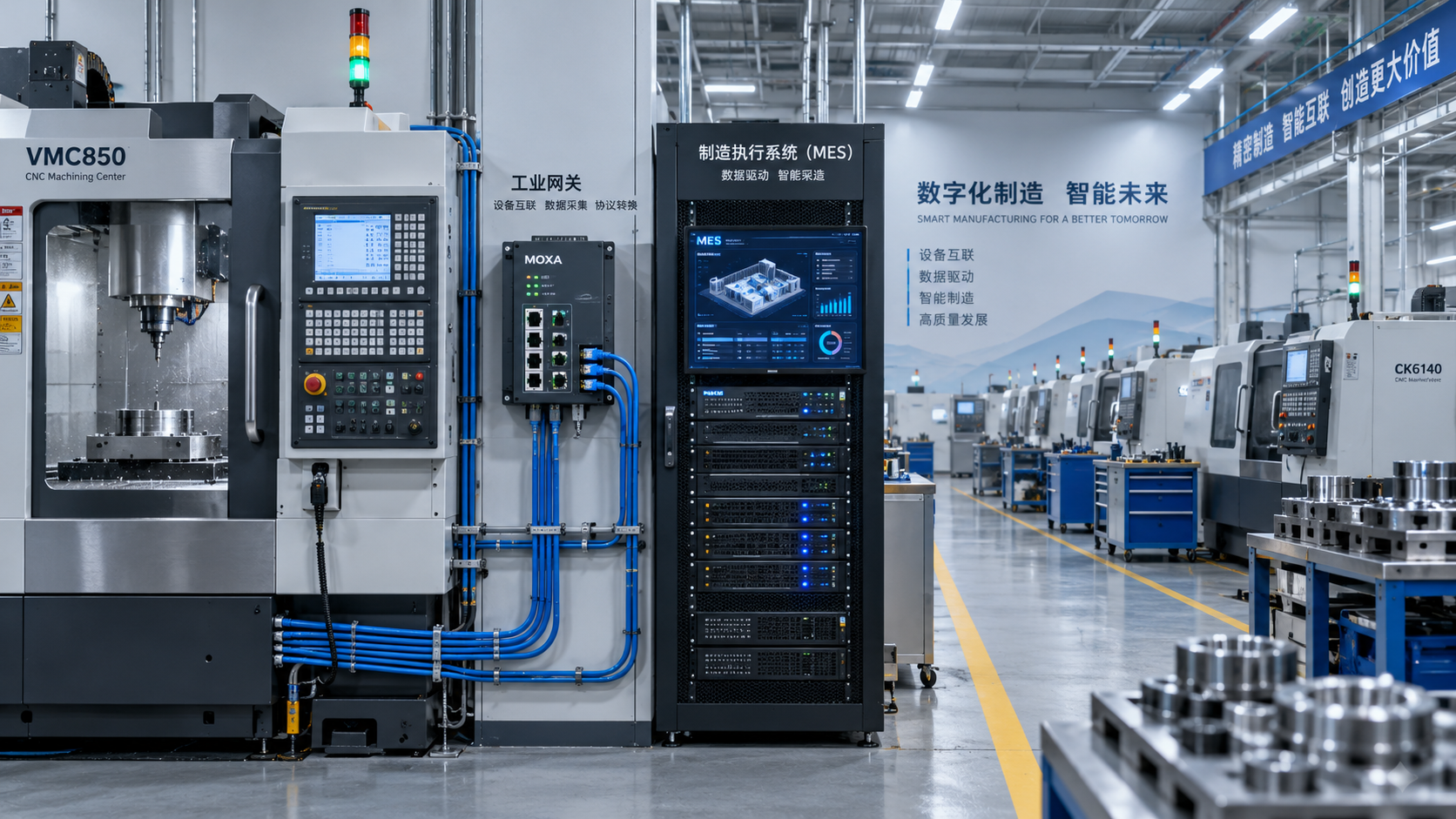
 Digital Manufacturing for Smart Factories: Connecting Legacy Machines to MESMachine Tool Industry Editorial Team
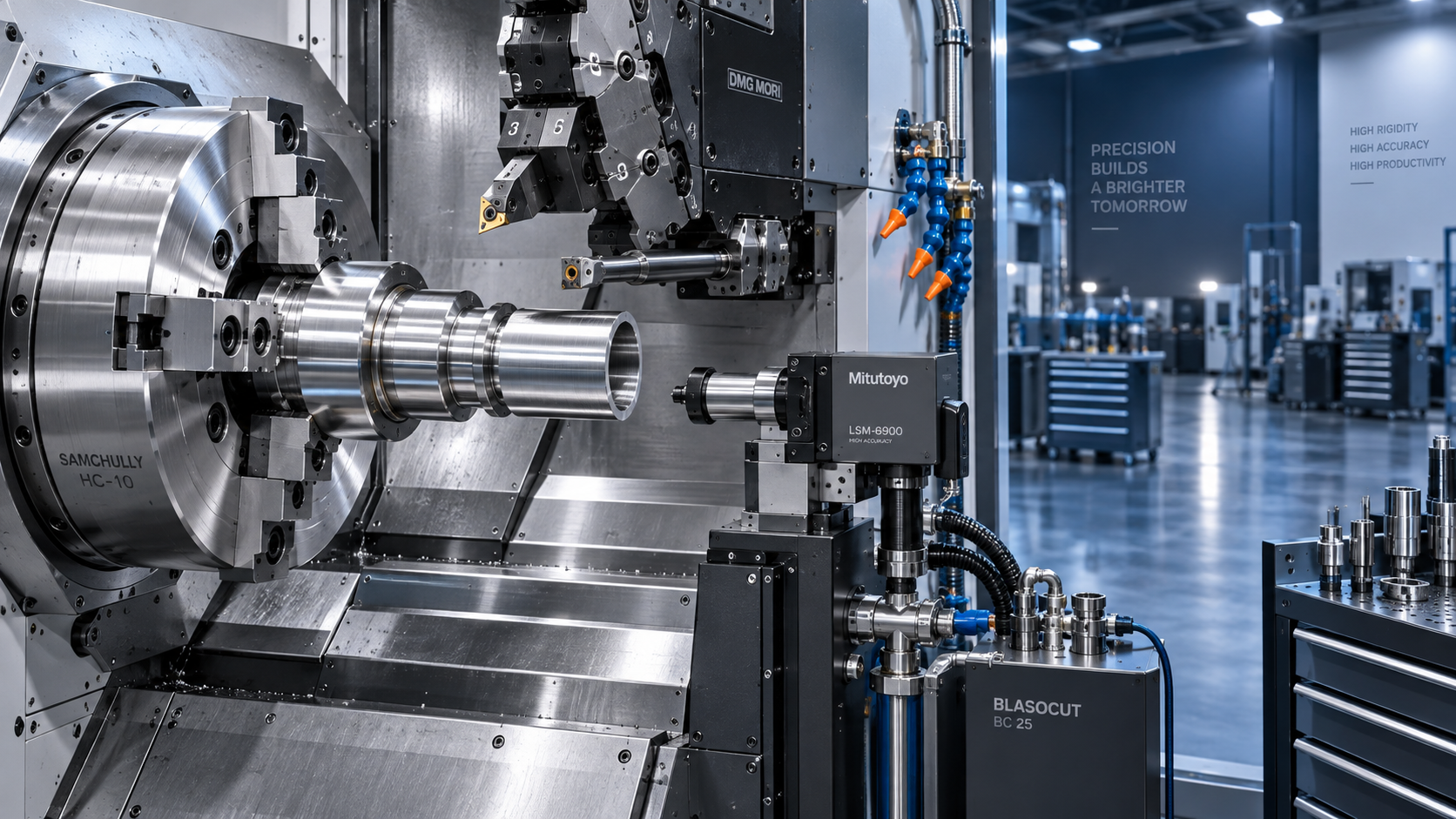
 How to Select a CNC Metal Lathe for Tight-Tolerance Shaft and Sleeve PartsCNC Machining Technology Center
 How to Select an Industrial Lathe for High-Volume Shaft ProductionMachine Tool Industry Editorial Team
 Selecting Machine Tools for Automotive Parts: Accuracy, Throughput, and AutomationMachine Tool Industry Editorial Team
 Industrial Machining: Selecting Processes for Tight-Tolerance Metal PartsCNC Machining Technology Center
 Manufacturing Technology Trends That Improve Throughput and Quality ControlManufacturing Market Research Center

Aris Katos
Future of Carbide Coatings
15+ years in precision manufacturing systems. Specialized in high-speed milling and aerospace grade alloy processing.
▶
Is Learning CNC Programming Worth It for Shop Owners Seeking Higher Margins?CNC Machining Technology Center▶
How to Select CNC Equipment for High-Mix, Low-Volume ProductionCNC Machining Technology Center▶
Can CNC Machining Inconel Control Tool Wear in High-Temperature Aerospace Parts?CNC Machining Technology Center▶
How Automated Precision Machining Maintains Tolerance in High-Mix ProductionCNC Machining Technology Center▶
CNC Programming Explained: From CAD Models to Reliable Shop-Floor ToolpathsCNC Machining Technology Center
Mastering 5-Axis Workholding Strategies
Join our technical panel on Nov 15th to learn about reducing vibrations in thin-wall components.

Providing you with integrated sanding solutions
Before-sales and after-sales services
Comprehensive technical support