• Global CNC market projected to reach $128B by 2028 • New EU trade regulations for precision tooling components • Aerospace deman
NYSE: CNC +1.2%LME: STEEL -0.4%

Why 5 Axis Machining Is Ideal for Impeller Manufacturing
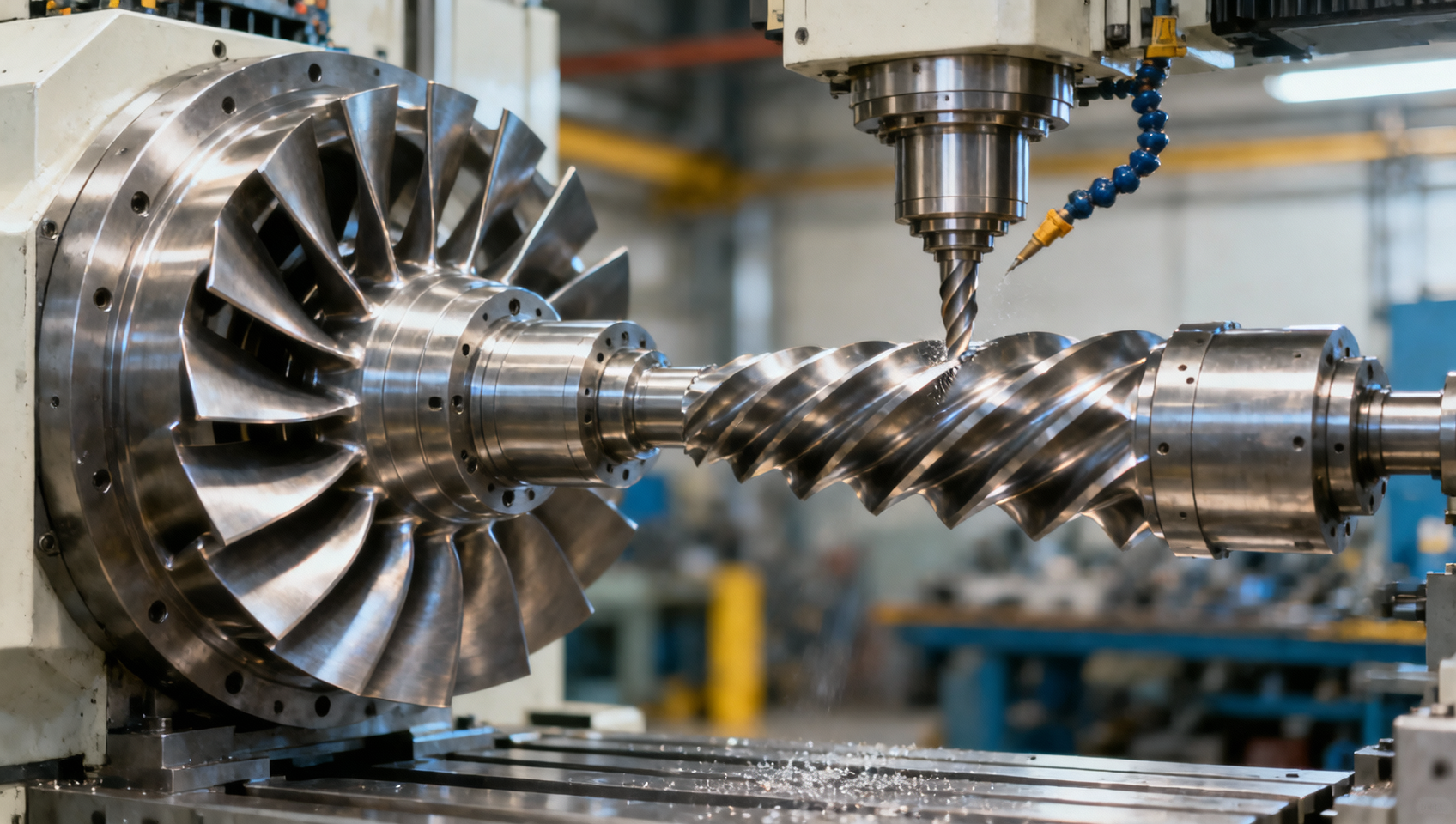
Why is 5 axis machining the preferred method for impeller manufacturing? In most cases, the answer is straightforward: impellers require complex curved blades, tight dimensional accuracy, smooth surface finishes, and stable repeatability. A 5 axis machining process makes it possible to achieve these requirements more efficiently than conventional 3 axis or even many 4 axis approaches. For aerospace, turbo machinery, pumps, compressors, and energy equipment, this often means fewer setups, lower cumulative error, shorter lead times, and better finished part quality.
For buyers, engineers, operators, and manufacturing decision-makers, the real question is not whether 5 axis machining sounds advanced, but whether it delivers measurable value in production. In impeller manufacturing, it usually does. This article explains why 5 axis CNC machining is especially well suited for impellers, what benefits matter most in real manufacturing environments, and how to evaluate whether it is the right solution for your parts and business goals.
Why impeller manufacturing is difficult with conventional machining
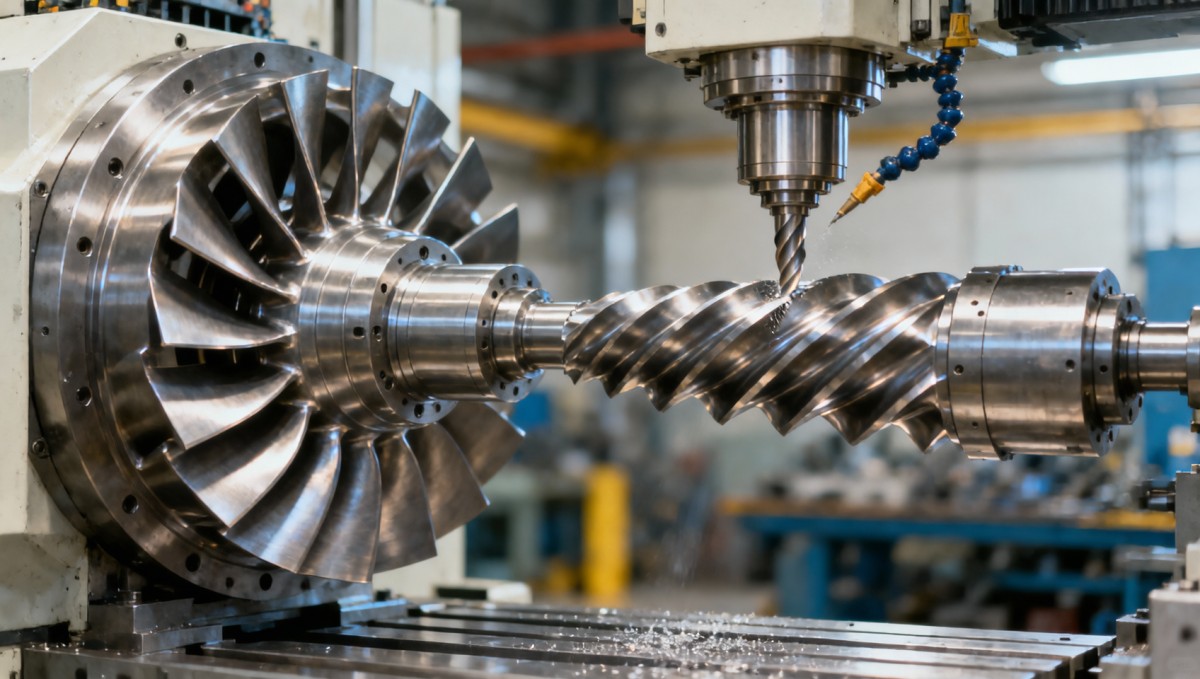
Impellers are among the most demanding components in precision CNC manufacturing. Their geometry combines twisted blades, deep channels, varying blade thickness, tight hub transitions, and strict balance requirements. These features create several machining challenges:
- Complex freeform surfaces that are hard to reach with fixed tool orientations
- Narrow blade passages that limit tool access
- High risk of interference between tool, holder, and workpiece
- Demand for fine surface finish to support fluid flow performance
- Strict tolerance requirements on blade profile, concentricity, and overall geometry
- Need to reduce deformation or vibration during cutting
With traditional 3 axis machining, manufacturers often need multiple setups, custom fixtures, and secondary finishing operations to reach all critical surfaces. Every additional setup increases repositioning error, labor time, inspection complexity, and the chance of scrap. For impellers, these disadvantages quickly become expensive.
What makes 5 axis machining ideal for impellers
5 axis machining allows the cutting tool to move across three linear axes while simultaneously rotating around two additional axes. This gives the machine tool the flexibility to approach the workpiece from the optimal angle during cutting.
For impeller manufacturing, that capability solves the biggest geometric problem: the blades and channels are not easy to access from a single direction. A 5 axis machining center can continuously reposition the tool so it stays tangent to curved surfaces, reaches deep areas, and avoids collisions. This produces several practical advantages:
- More complete machining in a single setup
- Better tool access to complex blade geometry
- Reduced need for special fixtures or manual repositioning
- Improved consistency across multiple parts
- Higher quality surface generation on sculpted surfaces
In simple terms, 5 axis machining matches the shape of the impeller far better than conventional machining methods. That is why it is not just a premium option, but often the most technically suitable one.
How a single setup improves precision and repeatability
One of the biggest reasons manufacturers choose 5 axis CNC machining for impellers is the ability to machine more features in one clamping. This matters because each time a part is removed and re-fixtured, new alignment error can be introduced.
For high-value impellers used in aerospace, energy, and industrial flow systems, even small setup deviations can affect:
- Blade-to-blade consistency
- Hub and shroud alignment
- Dynamic balance performance
- Final assembly fit
- Flow efficiency in service
By minimizing setup changes, 5 axis machining helps maintain positional accuracy throughout the entire machining process. This is especially important when producing thin blades, tight internal radii, or contoured surfaces where tolerance stack-up can become a serious problem.
For procurement teams and business decision-makers, this translates into a practical benefit: more reliable output and less hidden cost from rework, inspection delays, and rejected parts.
Why surface finish matters so much in impeller applications
Impellers are not just structural parts. They are flow-critical components. Blade surface quality directly affects fluid movement, turbulence, efficiency, wear behavior, and in some applications even noise.
5 axis machining improves surface finish because the tool can remain in a more favorable orientation relative to the blade surface. This allows better cutting engagement, more stable chip formation, and smoother toolpath transitions. Compared with less flexible machining methods, this often means:
- Lower scallop height on curved surfaces
- Reduced polishing and hand finishing work
- Better consistency across blade channels
- Lower risk of tool marks in critical flow areas
In industries such as aerospace and energy equipment, where aerodynamic or hydraulic efficiency matters, this is more than a cosmetic advantage. Better surface quality can contribute directly to end-product performance.
How 5 axis machining improves efficiency despite higher equipment cost
A common concern is cost. 5 axis machine tools are more expensive than standard CNC equipment, and programming is more advanced. So why is 5 axis machining still considered cost-effective for impeller manufacturing?
The answer is that total manufacturing cost is not determined by machine purchase price alone. For impellers, the total cost includes setup time, fixturing, programming effort, cutting efficiency, rework, finishing, inspection, and scrap risk. In many cases, 5 axis machining lowers the overall cost by reducing these downstream burdens.
Typical cost and efficiency advantages include:
- Fewer setups and shorter part handling time
- Reduced reliance on complex custom fixtures
- Less manual blending or polishing after machining
- Lower probability of dimensional error caused by repositioning
- Faster machining of complex geometry with optimized toolpaths
- Better suitability for high-mix, low-volume or precision-critical production
For enterprises evaluating return on investment, the key question should be: does 5 axis machining reduce the total cost per qualified impeller while improving delivery and quality? For many complex impeller programs, the answer is yes.
What operators and engineers should pay attention to in the machining process
While 5 axis machining offers major advantages, successful impeller production depends on process control. Operators, NC programmers, and manufacturing engineers should pay close attention to several factors:
- Toolpath strategy: Smooth, collision-free tool motion is essential for blade surfaces and narrow channels.
- Tool selection: Long-reach tools, ball nose end mills, and tapered tools may be required depending on blade geometry.
- Tool holder clearance: Holder interference is a common risk in deep or closed impeller designs.
- Material behavior: Titanium alloys, stainless steels, nickel-based alloys, and aluminum each require different cutting strategies.
- Machine rigidity: Stable spindle performance and axis synchronization directly affect surface quality and accuracy.
- CAM capability: Advanced 5 axis programming software is necessary for efficient and safe machining paths.
- Inspection planning: Complex surfaces need proper in-process verification and final measurement methods.
In other words, 5 axis capability alone is not enough. The manufacturer must also have strong process engineering, suitable tooling, and experienced programming support.
How buyers and decision-makers can evaluate a CNC machine tool manufacturer or supplier
If you are sourcing impeller machining services or evaluating CNC machine tool manufacturer capabilities, it is important to go beyond marketing claims. The right supplier should be able to demonstrate both equipment capacity and process competence.
Key evaluation points include:
- Actual experience machining impellers or similar multi-surface parts
- Available 5 axis machining centers and spindle performance
- CAM programming expertise for complex blade geometry
- Fixture design capability for stable single-setup machining
- Inspection systems for profile accuracy and surface verification
- Ability to work with required materials and tolerance standards
- Quality control process, documentation, and traceability
- Lead time reliability and production scalability
For procurement and management teams, a useful question is: can this supplier consistently deliver qualified impellers at the required quality level, not just machine a sample successfully once? Long-term repeatability is what creates real value.
When 5 axis machining may be the best choice—and when it may not
Although 5 axis machining is highly effective for impeller manufacturing, it is not automatically necessary for every part. It is usually the best choice when the impeller has:
- Complex twisted blade geometry
- High precision or high surface finish requirements
- Deep channels or difficult tool access areas
- Demand for reduced setups and tighter repeatability
- Performance-critical application in aerospace, energy, or industrial systems
It may be less necessary for simpler geometries, lower tolerance parts, or cases where casting and secondary machining provide a more economical route. The right decision depends on part complexity, production volume, quality expectations, and end-use requirements.
That said, as smart manufacturing and automated production continue to advance, 5 axis CNC manufacturing is becoming more accessible and more strategically important. For companies focused on precision, flexibility, and international competitiveness, it is increasingly a core capability rather than a niche one.
Conclusion: why 5 axis machining continues to lead in impeller manufacturing
5 axis machining is ideal for impeller manufacturing because it directly addresses the real production challenges of these parts: complex blade geometry, difficult tool access, tight tolerances, and demanding surface finish requirements. By enabling more machining in a single setup, improving precision, reducing rework, and supporting efficient production, it delivers both technical and commercial advantages.
For operators and engineers, it provides better control over difficult geometries. For procurement teams, it supports more reliable sourcing decisions. For business leaders, it offers a practical path to higher quality, lower total manufacturing cost, and stronger competitiveness in advanced manufacturing markets.
If your impeller applications demand accuracy, repeatability, and production efficiency, 5 axis CNC machining is not just an advanced option—it is often the most effective manufacturing solution.
Recommended for You
 Digital Manufacturing for Smart Factories: Connecting Legacy Machines to MESMachine Tool Industry Editorial Team
 How to Select a CNC Metal Lathe for Tight-Tolerance Shaft and Sleeve PartsCNC Machining Technology Center
 How to Select an Industrial Lathe for High-Volume Shaft ProductionMachine Tool Industry Editorial Team
 Selecting Machine Tools for Automotive Parts: Accuracy, Throughput, and AutomationMachine Tool Industry Editorial Team
 Industrial Machining: Selecting Processes for Tight-Tolerance Metal PartsCNC Machining Technology Center
 Manufacturing Technology Trends That Improve Throughput and Quality ControlManufacturing Market Research Center

Aris Katos
Future of Carbide Coatings
15+ years in precision manufacturing systems. Specialized in high-speed milling and aerospace grade alloy processing.
▶
Is Learning CNC Programming Worth It for Shop Owners Seeking Higher Margins?CNC Machining Technology Center▶
How to Select CNC Equipment for High-Mix, Low-Volume ProductionCNC Machining Technology Center▶
Can CNC Machining Inconel Control Tool Wear in High-Temperature Aerospace Parts?CNC Machining Technology Center▶
How Automated Precision Machining Maintains Tolerance in High-Mix ProductionCNC Machining Technology Center▶
CNC Programming Explained: From CAD Models to Reliable Shop-Floor ToolpathsCNC Machining Technology Center
Mastering 5-Axis Workholding Strategies
Join our technical panel on Nov 15th to learn about reducing vibrations in thin-wall components.

Providing you with integrated sanding solutions
Before-sales and after-sales services
Comprehensive technical support