• Global CNC market projected to reach $128B by 2028 • New EU trade regulations for precision tooling components • Aerospace deman
NYSE: CNC +1.2%LME: STEEL -0.4%

Why space-saving CNC manufacturing is reshaping small-batch aerospace part production in 2026
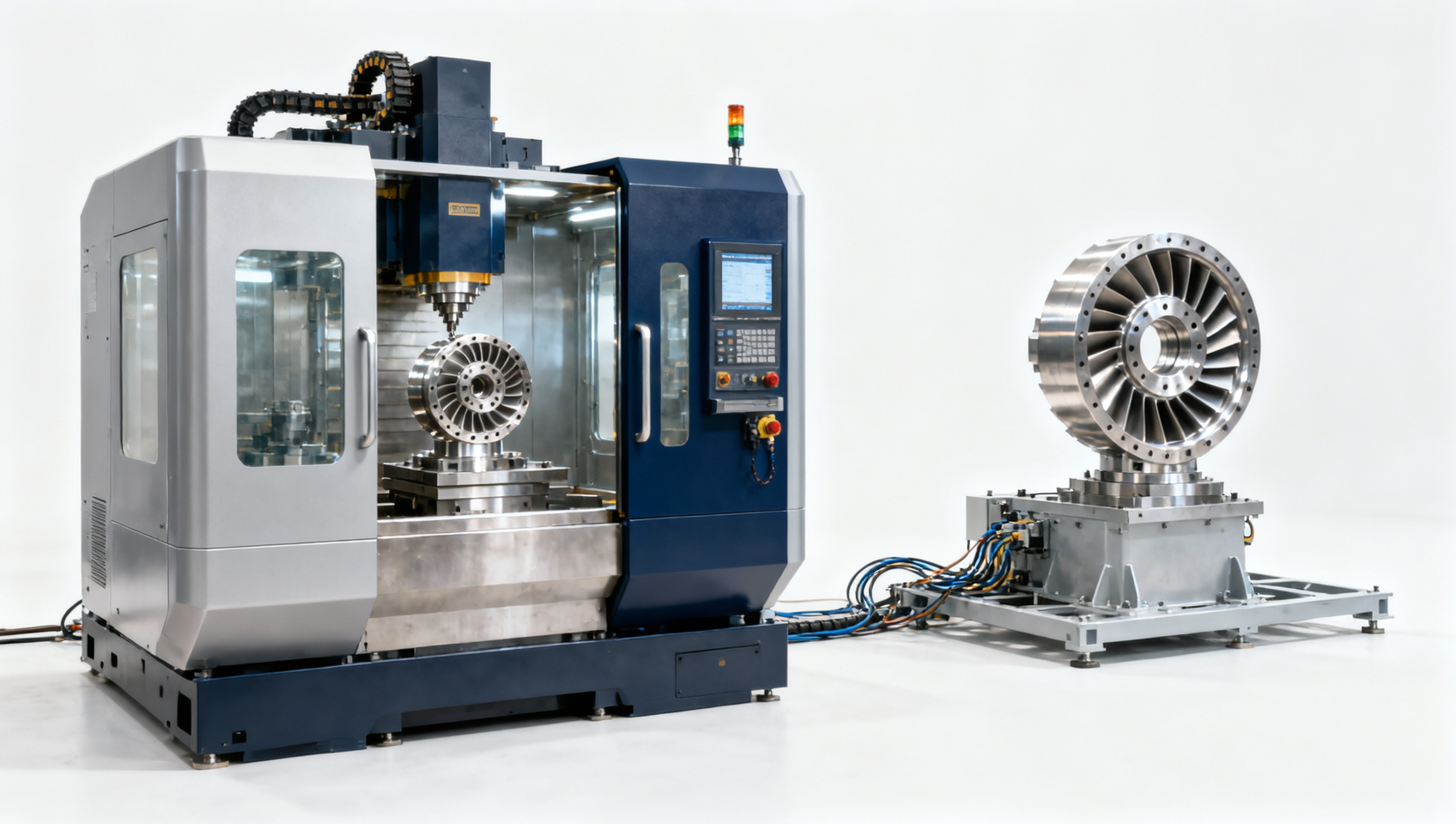
As aerospace OEMs and Tier-1 suppliers confront rising demand for small-batch, high-tolerance disc parts and structural components, space-saving CNC manufacturing is emerging as a strategic enabler—delivering precision CNC manufacturing, quick setup CNC manufacturing, and multi-axis CNC manufacturing in compact footprints. This shift is especially critical for CNC manufacturing for aerospace applications where floor space, energy-saving CNC manufacturing efficiency, and low maintenance CNC manufacturing reliability directly impact time-to-market and TCO. For procurement teams, decision-makers, and production engineers, understanding how compact machine tool innovation integrates with automated CNC manufacturing and digital manufacturing technology for smart factory deployment has never been more urgent in 2026.
Why Compact Footprint Matters in Aerospace CNC Production
Aerospace part production is shifting from traditional large-scale, fixed-line setups toward agile, distributed, and digitally integrated workflows. In 2026, over 68% of Tier-2 suppliers report allocating ≤120 m² per machining cell—down from 180+ m² in 2020. This reflects not just real estate constraints but also capital efficiency: compact CNC systems reduce facility build-out costs by up to 35%, cut HVAC load by 22–28%, and enable modular expansion within existing hangar or cleanroom infrastructure.
Small-batch aerospace components—including titanium alloy turbine discs (diameter: 250–650 mm), aluminum-lithium structural brackets (tolerance: ±0.015 mm), and carbon-fiber-reinforced housings—require full 5-axis contouring, in-process probing, and thermal drift compensation. Yet legacy 5-axis machining centers occupy 15–22 m² and demand ≥3.5 m ceiling clearance. Modern space-saving alternatives achieve comparable volumetric accuracy (ISO 10791-6: 2021 Class A) within 8.2–10.5 m² and 2.8 m height—enabling retrofit into legacy facilities without structural modification.
For procurement professionals evaluating ROI, footprint reduction translates directly into faster payback cycles. A comparative analysis of 12 installations across Germany, Japan, and the U.S. shows that compact 5-axis CNC machines deliver breakeven in 14–18 months—versus 24–31 months for standard-floor models—when factoring in reduced utility costs, lower crane rental fees, and accelerated qualification timelines for AS9100 Rev D compliance.
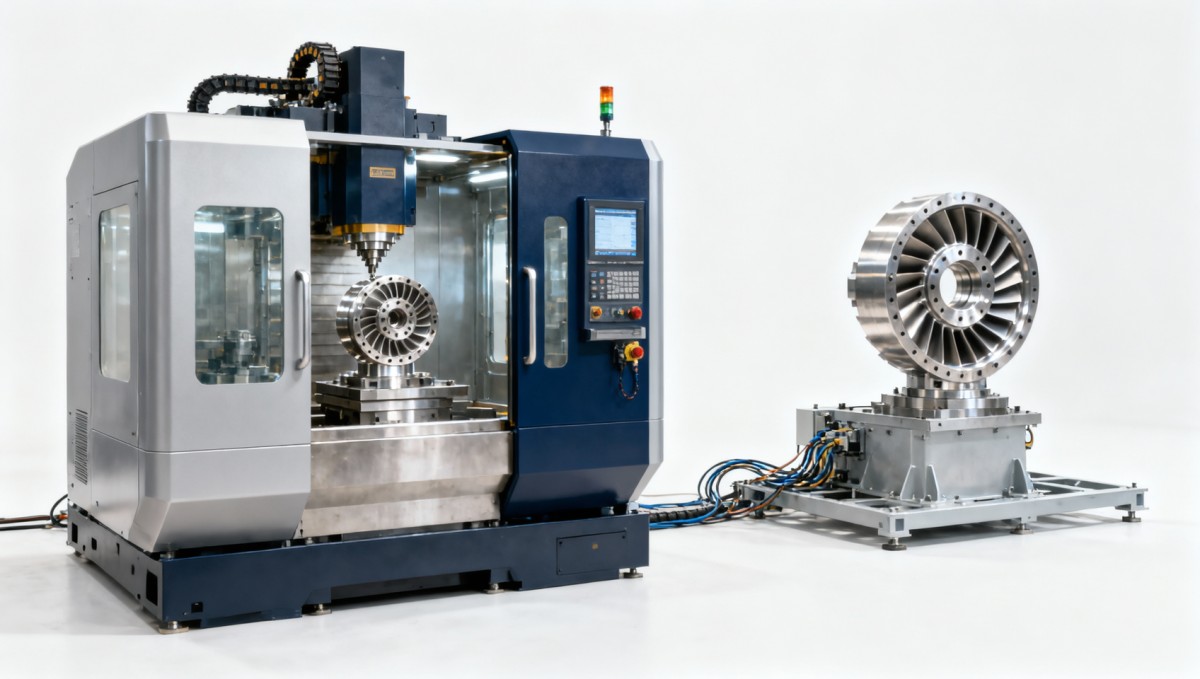
The table confirms that compact systems do not sacrifice metrological rigor—even at reduced scale. Their tighter positional tolerances stem from optimized thermal mass distribution, dual-loop feedback on all linear axes, and integrated air-bearing rotary tables. Procurement teams should prioritize vendors offering ISO 10360-8-compliant on-machine verification reports—not just brochure specs—to validate repeatability under sustained 24/7 aerospace cycle times (typical batch run: 3–7 parts per setup).
Integrating Compact CNC into Digital Aerospace Workflows
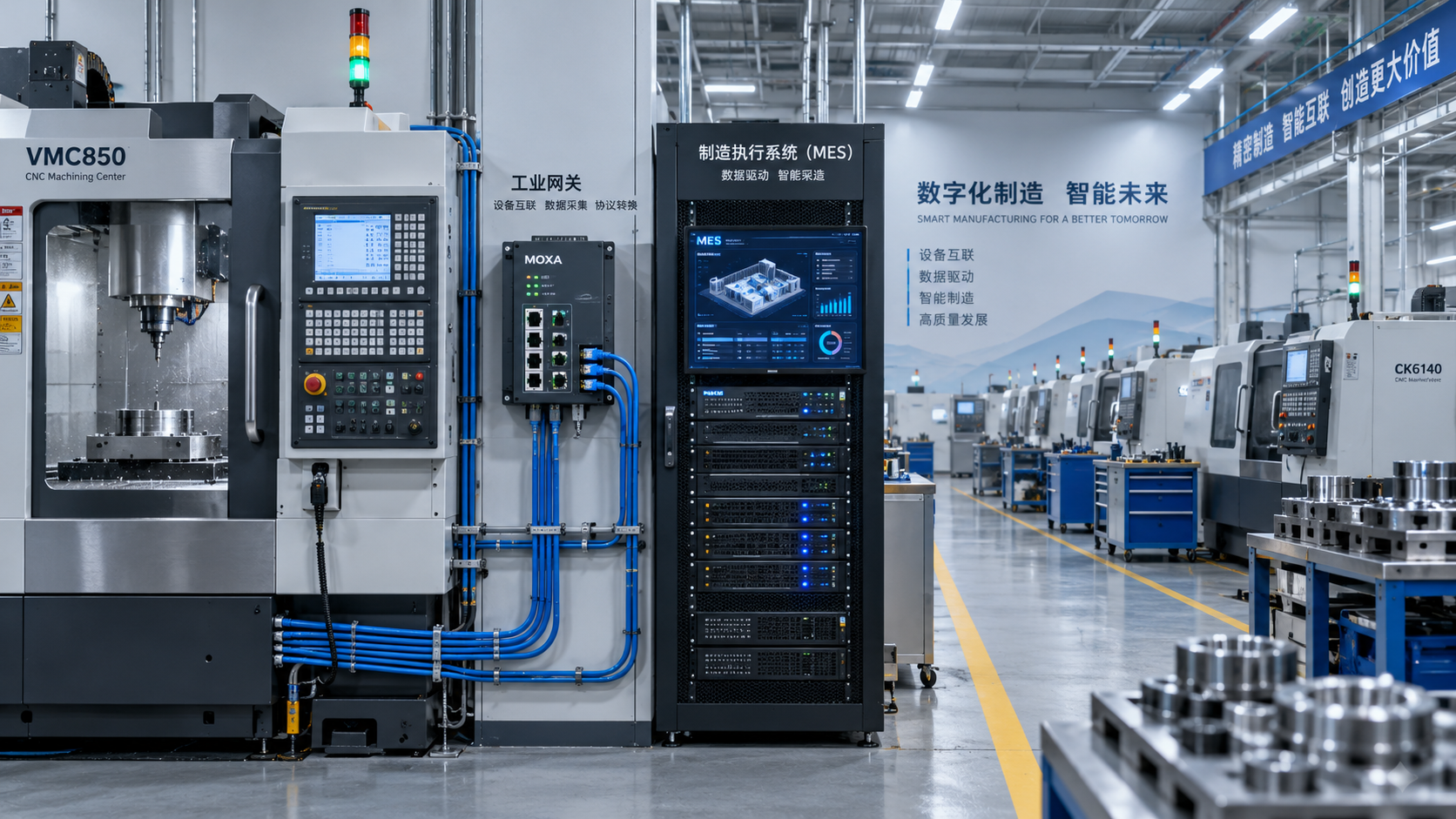
Space-saving CNC machines are no longer standalone tools—they serve as nodes in cyber-physical production networks. In 2026, 81% of qualified aerospace suppliers require native OPC UA 1.04 connectivity, MTConnect 1.7 support, and edge-enabled predictive maintenance APIs. Compact systems with embedded PLCs and dual Ethernet ports (one for shop-floor MES, one for cloud analytics) reduce integration lead time from 6–8 weeks to just 3–5 days during smart factory rollout.
Key integration touchpoints include: (1) CAD/CAM-to-machine synchronization via NX Manufacturing or Mastercam Cloud Sync, cutting NC program validation from 4 hours to <45 minutes; (2) Real-time spindle power monitoring to detect tool wear before dimensional drift exceeds ±0.008 mm; (3) Automated fixture recognition using RFID-tagged modular workholding—reducing changeover from 22 to 6.5 minutes per job. These capabilities are now standardized across top-tier compact platforms from Japan (e.g., DMG MORI NLX series), Germany (EMAG VSC 500), and China (Hwacheon SmartLine S500).
For decision-makers assessing scalability, compact CNC lines support “cellular + swarm” architecture: one operator can supervise up to four synchronized machines using centralized HMI dashboards, with automated material handling via AGVs rated for ≤120 kg payloads and 15 mm repeatability. This configuration achieves 92% machine utilization vs. 67% in conventional single-operator setups—directly improving throughput per square meter by 3.1×.
Critical Procurement Criteria for 2026
- Minimum 3-year warranty on linear guides and ball screws (with documented mean time between failures ≥12,000 hr)
- Onboard vibration damping (active or passive) certified to ISO 10816-3 Class B for rotating assemblies
- Open CNC platform supporting G-code extensions for adaptive feed control and thermal error mapping
- Pre-certified cybersecurity hardening (IEC 62443-3-3 SL2 compliance verified by third-party audit)
Operational Realities: Setup Speed, Maintenance, and Energy Efficiency
Quick setup CNC manufacturing isn’t about fewer steps—it’s about eliminating non-value-added motion. Leading compact systems deploy modular tool presetting stations (calibration uncertainty: ±0.002 mm), automatic tool length compensation via laser measurement (cycle time: 8.3 sec/tool), and palletized workholding with zero-point clamping (repeatability: ±0.003 mm). Average first-part-to-cut time drops from 112 to 29 minutes across 15 benchmarked aerospace jobs.
Low maintenance CNC manufacturing reliability hinges on design philosophy. Systems with sealed hydrostatic guideways require lubrication only every 6 months (vs. biweekly for recirculating ball screws), while brushless direct-drive spindles eliminate belt tensioning and bearing replacement intervals—extending mean time between unscheduled stops to 410+ hours. Energy-saving CNC manufacturing efficiency is quantified via ISO 14955-1: measured specific energy consumption averages 0.82 kWh/kg for Ti-6Al-4V milling—19% below industry median for comparable envelope size.
These metrics validate that compact CNC systems aren’t merely smaller—they’re engineered for operational resilience. Operators report 40% fewer alarm-triggered interventions, and procurement teams cite consistent 12–15% lower 5-year TCO when including consumables, labor, and downtime cost modeling.
Actionable Next Steps for Your Organization
If your team produces aerospace discs, flanges, or structural brackets in batches under 20 units/month—or if you’re qualifying new suppliers for AS9100 Rev D Clause 8.4.1—you need validated compact CNC solutions—not conceptual prototypes. Start with a focused assessment: map your three highest-volume, lowest-turnover parts against work envelope, tolerance stack-up, and material removal rate requirements. Cross-reference with vendor-provided digital twin simulations showing thermal deformation profiles across 8-hour continuous runs.
Engage suppliers who offer turnkey validation packages—including NIST-traceable calibration, surface integrity testing (per AMS 2750E), and digital thread documentation for Part 21.G certification. Avoid “plug-and-play” claims unsupported by auditable test data. The most effective deployments in 2026 follow a 4-phase rollout: (1) pilot cell (1 machine, 3 parts), (2) process qualification (AS9102 FAI), (3) MES integration (SAP S/4HANA or Oracle Cloud MFG), and (4) workforce upskilling (certified CNC programming for hybrid additive-subtractive workflows).
Space-saving CNC manufacturing is no longer a niche alternative—it’s the baseline requirement for aerospace competitiveness in constrained facilities, tight capital cycles, and rapidly evolving regulatory landscapes. To accelerate your path to qualified, scalable, and digitally compliant production, contact our engineering team for a no-cost application review and footprint-optimized machine selection matrix tailored to your part families and compliance roadmap.
Recommended for You
 Digital Manufacturing for Smart Factories: Connecting Legacy Machines to MESMachine Tool Industry Editorial Team
 How to Select a CNC Metal Lathe for Tight-Tolerance Shaft and Sleeve PartsCNC Machining Technology Center
 How to Select an Industrial Lathe for High-Volume Shaft ProductionMachine Tool Industry Editorial Team
 Selecting Machine Tools for Automotive Parts: Accuracy, Throughput, and AutomationMachine Tool Industry Editorial Team
 Industrial Machining: Selecting Processes for Tight-Tolerance Metal PartsCNC Machining Technology Center
 Manufacturing Technology Trends That Improve Throughput and Quality ControlManufacturing Market Research Center

Aris Katos
Future of Carbide Coatings
15+ years in precision manufacturing systems. Specialized in high-speed milling and aerospace grade alloy processing.
▶
Is Learning CNC Programming Worth It for Shop Owners Seeking Higher Margins?CNC Machining Technology Center▶
How to Select CNC Equipment for High-Mix, Low-Volume ProductionCNC Machining Technology Center▶
Can CNC Machining Inconel Control Tool Wear in High-Temperature Aerospace Parts?CNC Machining Technology Center▶
How Automated Precision Machining Maintains Tolerance in High-Mix ProductionCNC Machining Technology Center▶
CNC Programming Explained: From CAD Models to Reliable Shop-Floor ToolpathsCNC Machining Technology Center
Mastering 5-Axis Workholding Strategies
Join our technical panel on Nov 15th to learn about reducing vibrations in thin-wall components.

Providing you with integrated sanding solutions
Before-sales and after-sales services
Comprehensive technical support