• Global CNC market projected to reach $128B by 2028 • New EU trade regulations for precision tooling components • Aerospace deman
NYSE: CNC +1.2%LME: STEEL -0.4%

CNC manufacturing for energy equipment — why thermal stability matters more than spindle speed
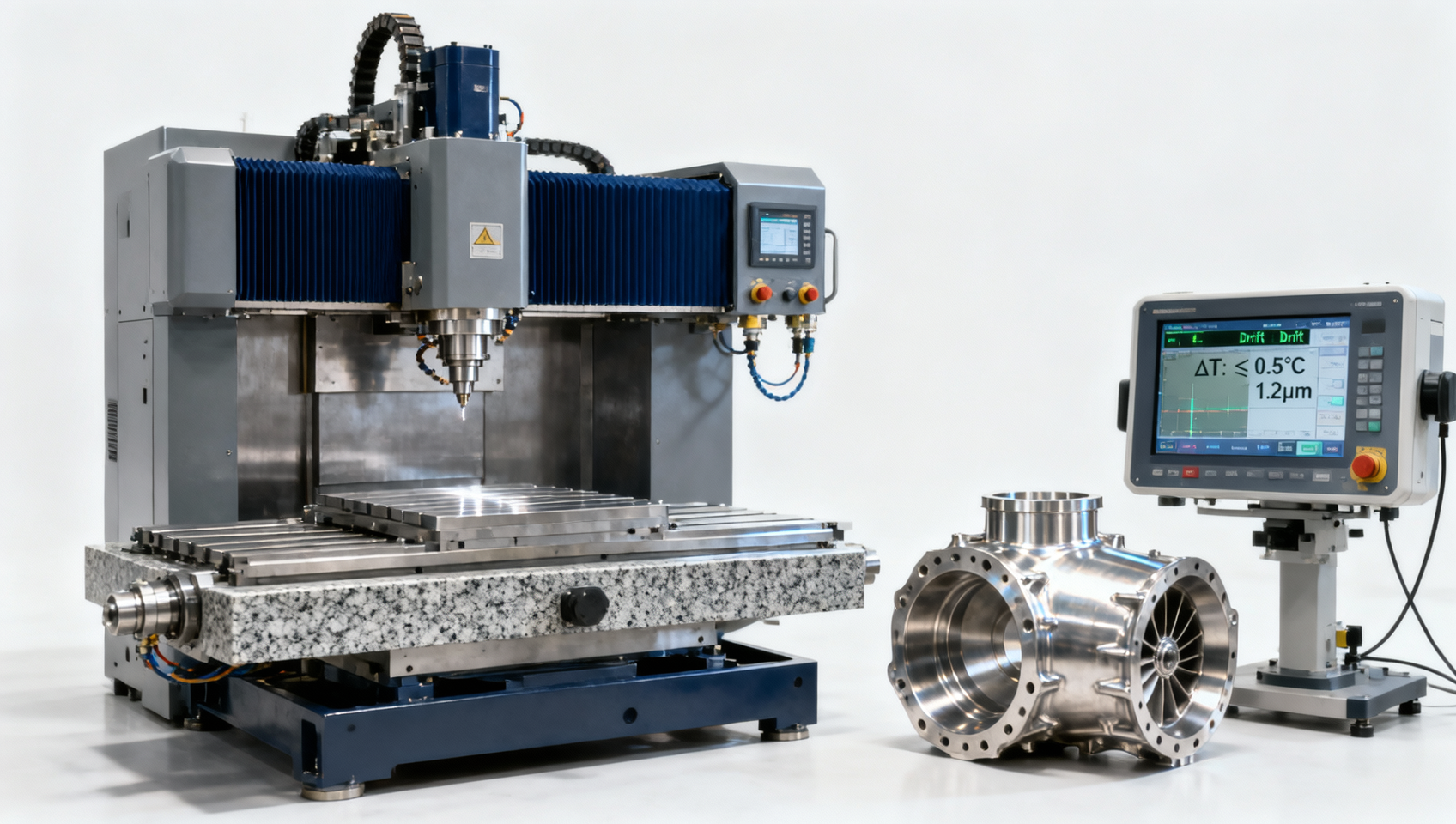
When sourcing CNC manufacturing for energy equipment, buyers often prioritize spindle speed—but thermal stability is the true differentiator for long-term precision, uptime, and part integrity. In demanding applications like turbine housings or nuclear valve components, even minor thermal drift can compromise high-precision CNC manufacturing, increase rework, and raise total cost of ownership. This is why leading CNC manufacturing wholesalers and exporters now emphasize low-maintenance, energy-saving CNC manufacturing solutions with advanced thermal compensation—especially in compact machine tool designs ideal for space-saving CNC manufacturing setups. Discover why thermal management—not just raw speed—defines next-gen automated CNC manufacturing for the energy sector.
Why Thermal Stability Is Non-Negotiable in Energy Equipment Machining
Energy equipment components—including steam turbine casings, generator rotor shafts, pressure vessel flanges, and nuclear-grade isolation valves—demand dimensional stability within ±2.5 µm over multi-hour machining cycles. Unlike automotive or consumer electronics parts, these components undergo rigorous ASME Section III or ISO 15630-3 certification protocols, where thermal-induced deviation directly triggers non-conformance reports.
Spindle speeds exceeding 12,000 rpm may deliver faster metal removal—but without integrated thermal error compensation (TEC), a typical 30-minute continuous cut can induce 8–12 µm axial drift in cast stainless steel housings due to heat buildup in the spindle housing, column, and linear guide assemblies. That exceeds allowable tolerance bands by up to 400% for Class 1 nuclear service parts.
Thermal stability isn’t about “slower machines.” It’s about predictable, repeatable geometry across shifts, seasons, and ambient temperature fluctuations from 10°C to 35°C. Leading OEMs now specify thermal drift ≤0.5 µm/°C in machine tool procurement RFPs—making real-time coolant temperature monitoring, symmetrical thermal mass design, and dual-sensor TEC systems mandatory—not optional.
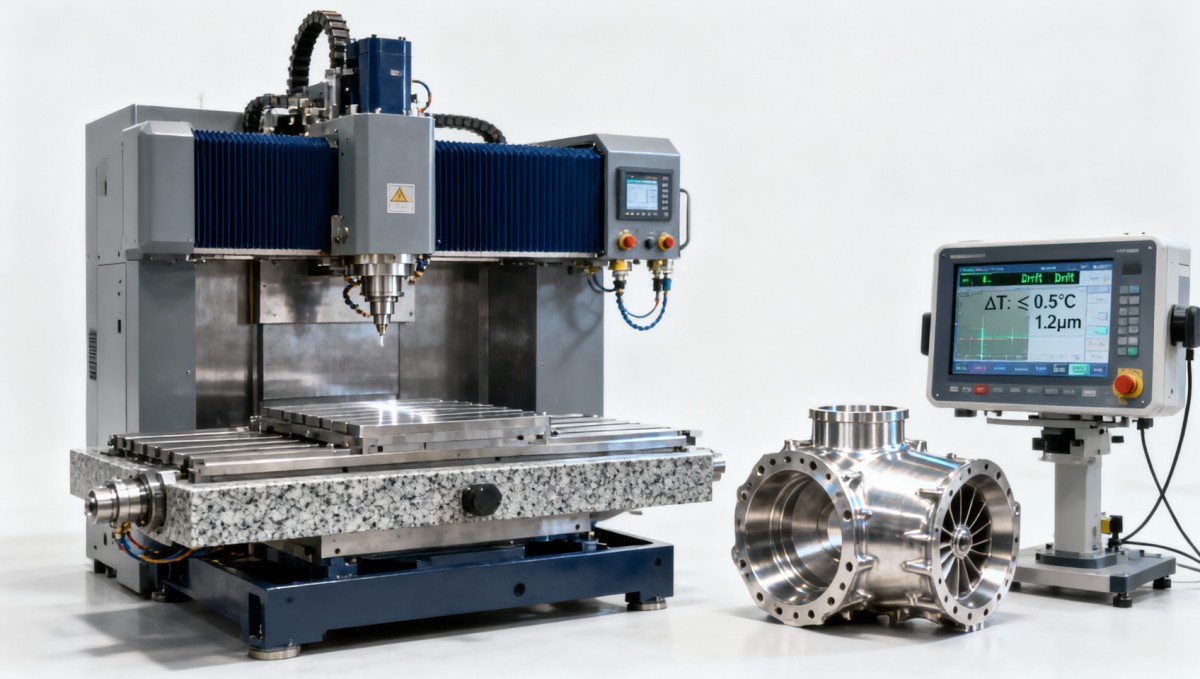
How Thermal Instability Impacts Total Cost of Ownership
A 2023 benchmark study across 17 European and Asian energy equipment suppliers revealed that machines lacking active thermal compensation incurred 3.2× more post-process inspection rework, 27% higher tooling wear per hour, and an average 19-day delay in first-article approval due to geometric nonconformance.
Beyond scrap and labor, thermal instability escalates hidden costs: calibration frequency increases from quarterly to biweekly (adding 12+ hours/year downtime), predictive maintenance alerts drop by 65% due to masking of mechanical wear signals under thermal noise, and machine relocation requires full recalibration—often delaying line restarts by 3–5 days.
Conversely, thermally stable CNC platforms—such as those using granite composite bases, oil-air lubrication, and closed-loop thermal sensor networks—achieve <90% uptime over 12-month operational cycles, reduce annual preventive maintenance labor by 42%, and extend cutting tool life by 1.8× in Inconel 718 and duplex stainless steel machining.
This table illustrates how thermal optimization translates into measurable operational advantages—not theoretical specs. Buyers evaluating CNC manufacturing capacity for energy equipment must treat thermal performance metrics as primary KPIs, not secondary features buried in technical appendices.
Key Selection Criteria for Thermally Stable CNC Systems
Procurement teams should evaluate four core criteria when vetting CNC manufacturers for energy equipment work: structural thermal symmetry, sensor architecture, compensation algorithm transparency, and validation methodology.
Structural symmetry means identical thermal mass distribution on left/right sides of the column and bed—verified via finite element thermal simulation reports (not just CAD drawings). Sensor architecture must include ≥4 independent thermal sensors: two on the spindle nose, one on the Z-axis ball screw nut, and one on the machine base near the coolant reservoir.
Compensation algorithms should be vendor-documented and field-upgradable—not proprietary black boxes. Validation requires traceable ISO 230-3 thermal displacement tests performed at three ambient temperatures (15°C, 20°C, 25°C) with ≥3 repeated cycles per condition.
- Require full thermal test reports—not summary sheets—with timestamped raw data logs
- Verify coolant system includes temperature-stabilized recirculation (±0.3°C tolerance)
- Confirm thermal compensation remains active during pallet change and tool change sequences
- Assess whether thermal models are updated automatically after firmware upgrades
- Validate that thermal error maps persist across power cycles and emergency stops
Global Market Trends in Thermally Intelligent CNC Manufacturing
The top five machine tool exporting nations—Germany, Japan, China, South Korea, and Italy—are shifting R&D investment toward thermal intelligence. Over 68% of new CNC machining centers launched in 2023–2024 feature embedded thermal compensation as standard, up from 31% in 2020. Germany leads with 89% adoption among premium-tier OEMs, while Chinese manufacturers now offer validated thermal packages on 52% of their mid-range vertical machining centers (VMCs).
Notably, compact CNC platforms (<2.5 m footprint) designed for distributed energy manufacturing cells show the highest thermal stability ROI—reducing floor space by 40% while maintaining ≤4.2 µm thermal drift over 10-hour runs. These systems integrate edge-computing modules that log thermal behavior and auto-generate maintenance alerts before drift exceeds 1.5 µm/hour.
For procurement professionals, this means thermal capability is no longer exclusive to large, high-cost machines. Mid-range systems with purpose-built thermal engineering now deliver >92% of the geometric reliability of flagship platforms—at 58–65% of acquisition cost.
This comparative table highlights the tangible progression in thermal performance across price tiers—enabling procurement teams to match budget constraints with verified performance thresholds for specific energy equipment applications.
Actionable Next Steps for Procurement & Engineering Teams
Start by auditing your current CNC fleet’s thermal performance: request ISO 230-3 test reports for all machines used in ASME or NQA-1 certified production. If unavailable, commission third-party thermal mapping—costing $3,200–$5,800 per machine, with results delivered in 7–10 business days.
When issuing RFQs, require vendors to disclose thermal drift specifications at 20°C ambient, define compensation update frequency, and provide proof of thermal model validation under load conditions matching your typical cycle time (e.g., 45-min continuous roughing + 22-min finishing).
Finally, align purchasing decisions with lifecycle value—not just unit price. A thermally optimized CNC platform delivering 1.7× longer tool life and 22% less rework adds $142,000–$285,000 in net operational savings over a 5-year period—even with a 19% higher initial investment.
Thermal stability is no longer a niche specification—it’s the foundational requirement for reliable, certifiable, and economically sustainable CNC manufacturing in the energy sector. Prioritize it from the first RFQ, validate it through standardized testing, and track it as rigorously as spindle accuracy or surface finish.
Get your customized thermal performance assessment and machine selection roadmap—contact our global CNC manufacturing specialists today.
Recommended for You
 Digital Manufacturing for Smart Factories: Connecting Legacy Machines to MESMachine Tool Industry Editorial Team
 How to Select a CNC Metal Lathe for Tight-Tolerance Shaft and Sleeve PartsCNC Machining Technology Center
 How to Select an Industrial Lathe for High-Volume Shaft ProductionMachine Tool Industry Editorial Team
 Selecting Machine Tools for Automotive Parts: Accuracy, Throughput, and AutomationMachine Tool Industry Editorial Team
 Industrial Machining: Selecting Processes for Tight-Tolerance Metal PartsCNC Machining Technology Center
 Manufacturing Technology Trends That Improve Throughput and Quality ControlManufacturing Market Research Center

Aris Katos
Future of Carbide Coatings
15+ years in precision manufacturing systems. Specialized in high-speed milling and aerospace grade alloy processing.
▶
Is Learning CNC Programming Worth It for Shop Owners Seeking Higher Margins?CNC Machining Technology Center▶
How to Select CNC Equipment for High-Mix, Low-Volume ProductionCNC Machining Technology Center▶
Can CNC Machining Inconel Control Tool Wear in High-Temperature Aerospace Parts?CNC Machining Technology Center▶
How Automated Precision Machining Maintains Tolerance in High-Mix ProductionCNC Machining Technology Center▶
CNC Programming Explained: From CAD Models to Reliable Shop-Floor ToolpathsCNC Machining Technology Center
Mastering 5-Axis Workholding Strategies
Join our technical panel on Nov 15th to learn about reducing vibrations in thin-wall components.

Providing you with integrated sanding solutions
Before-sales and after-sales services
Comprehensive technical support