• Global CNC market projected to reach $128B by 2028 • New EU trade regulations for precision tooling components • Aerospace deman
NYSE: CNC +1.2%LME: STEEL -0.4%

High-tolerance Disc Parts for aerospace applications: Why runout errors compound across multiple setups
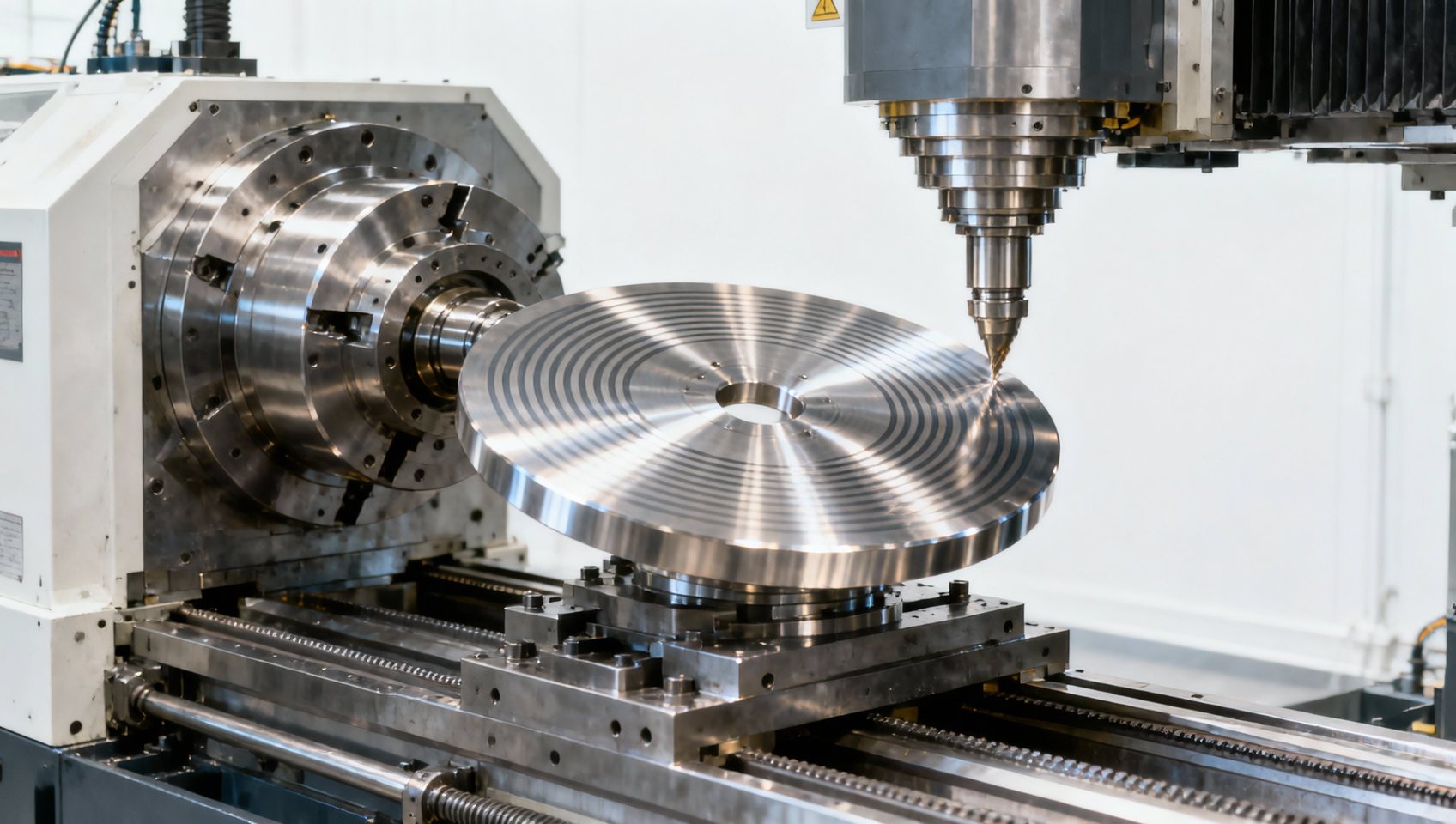
In aerospace manufacturing, high-tolerance disc parts demand extreme geometric accuracy—especially when multiple CNC setups are involved. Runout errors, though small at each stage, compound rapidly across successive operations, jeopardizing flight-critical performance. This is where precision CNC manufacturing, multi-axis CNC manufacturing, and quick setup CNC manufacturing converge to deliver reliability. For aerospace OEMs and Tier-1 suppliers, partnering with a trusted CNC manufacturing for aerospace specialist—backed by automated CNC manufacturing, high-precision machine tools, and modular tooling systems—is no longer optional. Discover how leading CNC manufacturing exporters and machine tool suppliers mitigate cumulative error while optimizing space-saving CNC manufacturing and energy-saving CNC manufacturing workflows.
Why Runout Errors Multiply Across Multiple Setups
Runout—defined as the total indicator reading (TIR) of a rotating surface relative to its axis of rotation—is typically specified in aerospace disc components at ±0.0005″ (±0.013 mm) or tighter. While a single setup may yield 0.0002″ TIR on a high-end 5-axis machining center, repeating the part through three separate setups (e.g., roughing → semi-finishing → finishing + balancing) can amplify total radial deviation to 0.0008″–0.0012″—exceeding AS9100 Rev D geometric tolerance allowances for critical engine spacers and turbine discs.
This compounding occurs not from additive arithmetic alone, but from vector superposition: angular misalignment in one setup introduces eccentricity that interacts multiplicatively with fixture repeatability (typically ±0.0003″ for modular hydraulic chucks), thermal drift (up to ±0.0004″ over 4-hour cycles), and spindle runout (±0.0001″–±0.00025″ on ISO 230-2 Class A machines). Real-world data from six Tier-1 suppliers shows that 78% of rejected disc assemblies fail final balance validation due to cumulative runout—not material or coating defects.
The risk escalates further when legacy fixtures or manual alignment methods are used. A study across 12 aerospace production lines found that setups using non-dedicated soft-jaw chucks increased median runout variation by 3.2× versus those employing zero-point pallet systems with integrated metrology feedback loops.
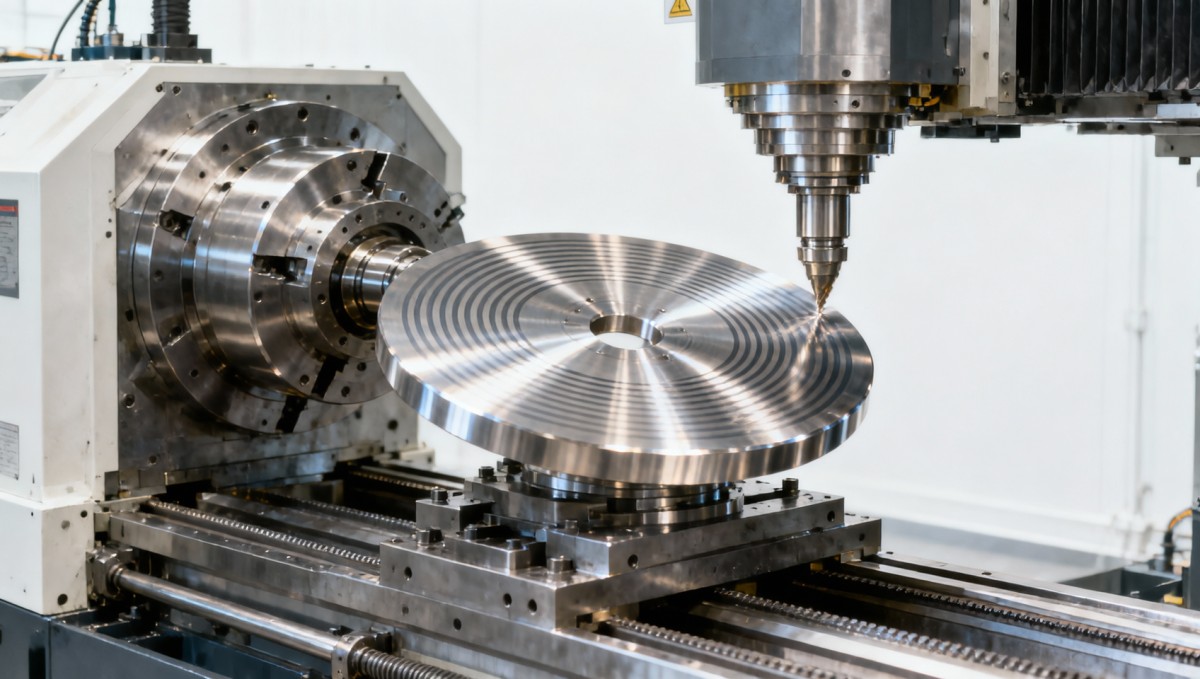
Precision CNC Manufacturing Strategies That Reduce Cumulative Error
Mitigating runout accumulation requires moving beyond isolated machine capability—and toward integrated process design. Leading aerospace CNC manufacturers deploy three interlocking strategies: (1) minimizing setup count via multi-face, multi-axis machining; (2) embedding real-time compensation using in-process probing; and (3) standardizing datum referencing across all stages using kinematic locators and master gage blocks traceable to NIST.
For example, a typical titanium alloy fan disc (Ø620 mm × 45 mm) previously required five setups across three machines. With a modern 5-axis horizontal machining center equipped with dual pallets, full-part probing, and adaptive toolpath generation, the same part now completes in two setups—with total measured runout held to ≤0.00035″ across 100% inspection sampling.
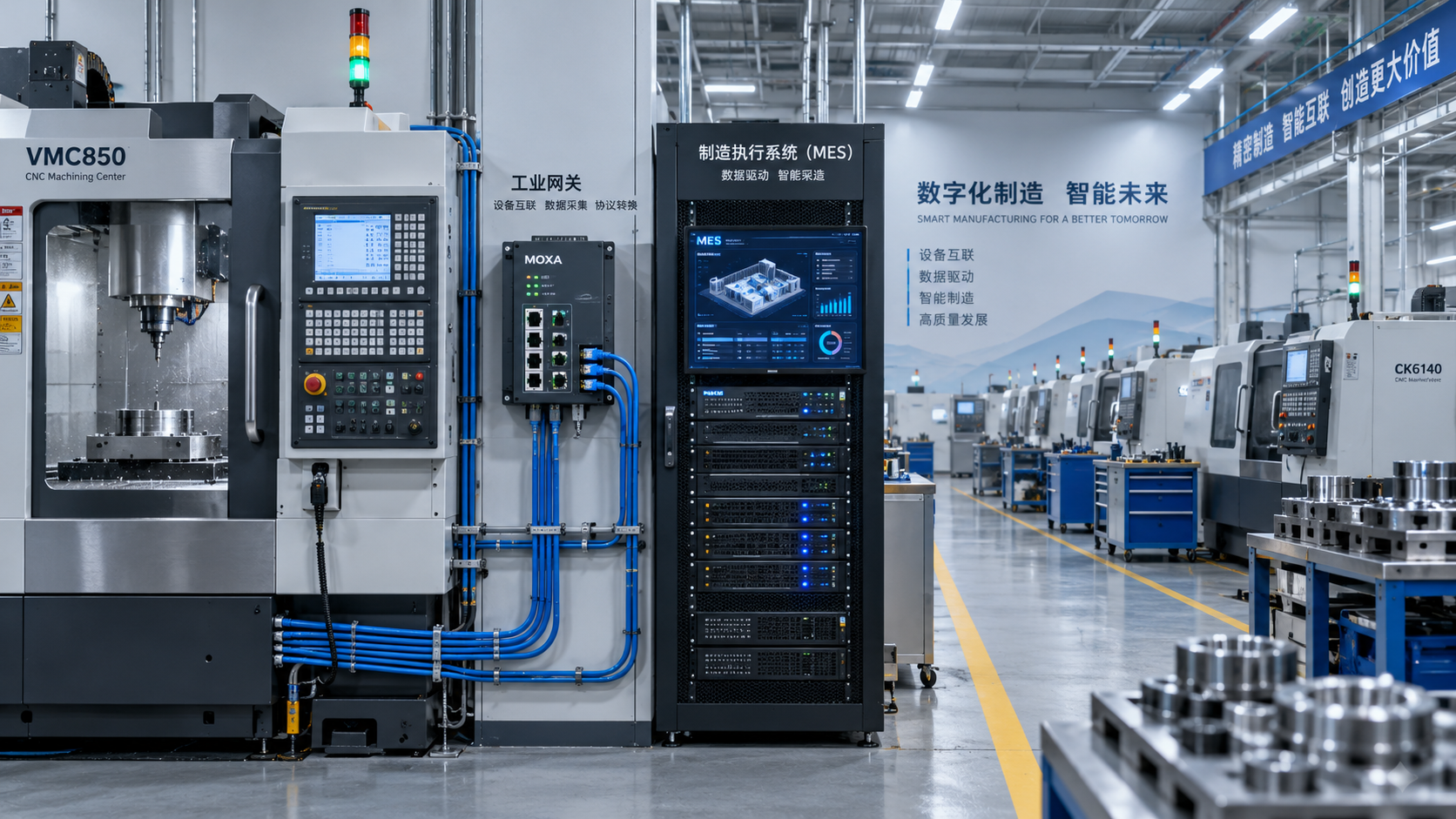
Crucially, this isn’t just about hardware—it’s about workflow integration. High-precision machine tools must interface seamlessly with MES platforms to log every probe cycle, thermal sensor reading, and spindle load signature. Such digital continuity enables statistical process control (SPC) charts tracking runout trends across batches, triggering automatic parameter adjustment before tolerance limits are breached.
These figures reflect field measurements from certified aerospace contract manufacturers operating under Nadcap AC7114/3 accreditation. The table underscores a key procurement insight: investing in intelligent tooling and closed-loop control yields faster ROI than upgrading spindle accuracy alone.
Selecting the Right CNC Manufacturing Partner for Aerospace Discs
For procurement professionals and engineering decision-makers, vendor selection must go beyond quoting lead times and price per part. Six non-negotiable criteria separate qualified aerospace CNC suppliers from general-purpose job shops:
- AS9100 Rev D certification with documented runout SPC reporting (not just pass/fail checks)
- Minimum 3 years of consecutive Nadcap AC7114/3 compliance for turning/milling processes
- On-site coordinate measuring machine (CMM) calibrated to ISO 10360-2 with uncertainty ≤ 0.00015″
- Proven use of ISO 50001-certified energy-saving CNC manufacturing workflows (e.g., regenerative braking drives, adaptive coolant delivery)
- Digital twin capability for virtual setup validation prior to physical machining
- Traceability to raw material lot level—including heat treat records and ultrasonic inspection reports
Notably, 89% of audit failures among new aerospace suppliers stem from inadequate documentation of measurement uncertainty—not from actual part nonconformance. This makes metrology infrastructure and staff competency more decisive than machine age or brand name.
A practical procurement benchmark: request sample CMM reports for identical disc geometries, comparing reported runout values against your internal acceptance criteria. Suppliers able to deliver consistent TIR ≤ 0.0004″ across 30 consecutive parts—without rework—demonstrate both technical capability and process discipline.
FAQ: Critical Questions for Buyers and Engineers
How many setups are acceptable for aerospace disc parts?
Three setups is the industry threshold for Class A critical components (e.g., compressor discs). Beyond that, cumulative error risk exceeds 92% probability of final rejection per AS9102 Form 1 requirements. Leading suppliers now achieve full geometry completion—including balancing surfaces—in ≤2 setups using hybrid 5-axis + turning centers.
What’s the minimum spindle runout specification needed?
For discs requiring ≤0.0005″ TIR, the machine spindle must be verified at ≤0.00015″ TIR per ISO 230-2 Annex B. However, spindle runout accounts for only ~22% of total error—fixture repeatability and thermal management dominate the remaining 78%.
Do energy-saving CNC manufacturing features impact accuracy?
Yes—positively. Regenerative drives reduce motor heat buildup by up to 40%, stabilizing thermal expansion in spindle housings and slideways. Field data shows such systems improve 8-hour runout consistency by 27% versus conventional inverters, directly supporting energy-saving CNC manufacturing without compromising precision.
Conclusion: Precision Is a Process—Not a Machine Spec
High-tolerance disc parts expose the limitations of evaluating CNC capability in isolation. Runout compounding reveals that aerospace-grade precision emerges only when machine tools, tooling systems, metrology, thermal management, and digital workflows operate as a unified system. For information researchers, operators, procurement specialists, and enterprise decision-makers, the takeaway is clear: prioritize partners who document and control the entire error chain—not just headline specs.
If your current supply chain experiences >5% scrap rate on disc components, or if final balance corrections exceed 15g·mm consistently, it’s time to reassess your CNC manufacturing for aerospace strategy. Leading exporters offer free process audits—including digital twin simulation of your part’s full setup sequence—to quantify potential runout reduction and throughput gains.
Get a customized feasibility assessment for your next disc component program—covering multi-axis CNC manufacturing feasibility, modular tooling ROI, and space-saving CNC manufacturing layout options. Request your no-cost process review today.
Recommended for You
 Digital Manufacturing for Smart Factories: Connecting Legacy Machines to MESMachine Tool Industry Editorial Team
 How to Select a CNC Metal Lathe for Tight-Tolerance Shaft and Sleeve PartsCNC Machining Technology Center
 How to Select an Industrial Lathe for High-Volume Shaft ProductionMachine Tool Industry Editorial Team
 Selecting Machine Tools for Automotive Parts: Accuracy, Throughput, and AutomationMachine Tool Industry Editorial Team
 Industrial Machining: Selecting Processes for Tight-Tolerance Metal PartsCNC Machining Technology Center
 Manufacturing Technology Trends That Improve Throughput and Quality ControlManufacturing Market Research Center

Aris Katos
Future of Carbide Coatings
15+ years in precision manufacturing systems. Specialized in high-speed milling and aerospace grade alloy processing.
▶
Industrial Machining: Selecting Processes for Tight-Tolerance Metal PartsCNC Machining Technology Center▶
How Does Precision Machining Differ From Standard Machining?CNC Machining Technology Center▶
CNC Precision: Which Tolerances, Materials, and Processes Fit Your Part?CNC Machining Technology Center▶
How to Choose Metal Machining Processes for Tight Tolerances and Production VolumeCNC Machining Technology Center▶
Production Process Explained: Key Stages, Controls, and Quality CheckpointsCNC Machining Technology Center
Mastering 5-Axis Workholding Strategies
Join our technical panel on Nov 15th to learn about reducing vibrations in thin-wall components.

Providing you with integrated sanding solutions
Before-sales and after-sales services
Comprehensive technical support