• Global CNC market projected to reach $128B by 2028 • New EU trade regulations for precision tooling components • Aerospace deman
NYSE: CNC +1.2%LME: STEEL -0.4%

Industrial turning accuracy issues that appear after long runs

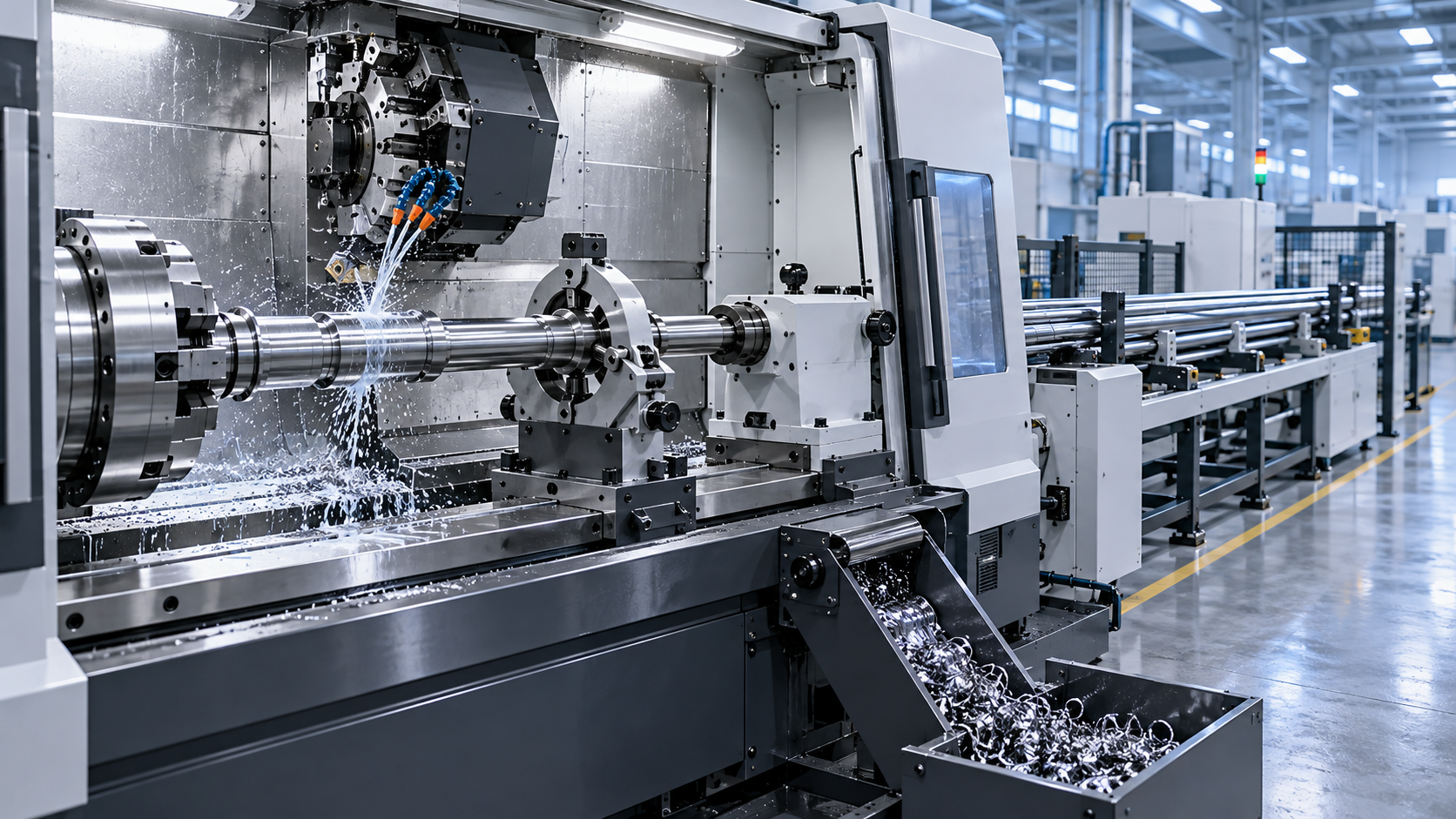
When industrial turning runs continuously over long production cycles, even stable processes can begin to show subtle accuracy drift, surface variation, and dimensional inconsistency. For quality control and safety management teams, identifying these changes early is essential to prevent scrap, machine overload, and downstream risk. This article explores the common turning accuracy issues that emerge after extended operation and how to manage them effectively.
Why a checklist approach works better for long-run industrial turning
In long-cycle industrial turning, problems rarely begin as obvious failures. More often, they appear as small shifts: a bore starts trending toward the upper limit, Ra values become less consistent, tool wear compensation is adjusted more often, or a machine that passed first-off inspection begins producing borderline parts after several hours. For quality control personnel, this means one isolated measurement is not enough. For safety managers, it also means accuracy loss may be an early warning of spindle load imbalance, thermal stress, coolant failure, or fixture instability.
A checklist method helps teams focus on the highest-value signals first. Instead of debating every possible cause, they can confirm the most likely sources of industrial turning variation in a practical sequence: thermal behavior, tool condition, workholding, machine health, measurement reliability, operator intervention, and production environment. This structured approach improves reaction speed, limits unnecessary downtime, and supports traceable corrective action.
First checks: the priority list when turning accuracy drops after long runs
Before changing offsets or blaming raw material, teams should review the core conditions that most often affect industrial turning accuracy over time. The following checklist is the most efficient starting point for investigation.
- Confirm whether dimensional drift is directional or random. A steady trend often points to thermal growth or gradual tool wear, while random scatter suggests clamping, insert chipping, vibration, or inconsistent material behavior.
- Review the time pattern. If parts go out after two, four, or eight hours, compare that timing with spindle warm-up, coolant tank temperature rise, shift change, insert life, and chip accumulation cycles.
- Check which dimensions are moving first. Diameter, taper, roundness, concentricity, and face flatness do not fail for the same reasons. The order of deviation is often the best clue.
- Verify whether offset corrections have increased. Frequent compensation can hide a worsening process and delay root-cause identification.
- Compare first-off approval data with mid-run and end-of-run readings. Long-run industrial turning should be evaluated by trend, not by isolated acceptance points.
Use these judgment standards to identify the real cause
1. Thermal growth is often the first hidden driver
Extended industrial turning generates heat in the spindle, turret, ballscrews, hydraulic system, coolant loop, and the workpiece itself. Even a machine that cuts accurately at startup may shift after sustained load. Typical signs include gradual diameter drift, slight taper change, stable but biased measurements, or dimension recovery after a pause. Quality teams should compare readings taken during cold start, stable production, and hot running conditions. Safety teams should also confirm that cooling units, lubrication flow, and fan operation remain stable throughout the run.
A common mistake is adjusting offsets repeatedly without asking why the compensation is needed. If thermal growth is the root cause, offset changes may temporarily recover size but will not stabilize the process window.
2. Progressive tool wear changes more than size
In industrial turning, insert wear is usually tracked for dimensional change, but the larger risk is that wear also alters cutting force, surface finish, chip shape, and heat generation. Flank wear may produce a predictable diameter trend, while notch wear or built-up edge can create intermittent variation that is harder to diagnose. Chipped edges may trigger sudden outliers after many acceptable parts, which is especially dangerous in unattended or low-supervision production.
Check insert life records against actual wear patterns, not only scheduled replacement intervals. If the machine is making harder materials, interrupted cuts, or long shafts, the practical wear limit may arrive earlier than the standard tool life plan suggests.
3. Workholding fatigue creates unstable and misleading results
Chuck force reduction, jaw contamination, collet wear, fixture heating, or tailstock inconsistency can all appear during long-run industrial turning. The result may be poor roundness, concentricity shift, chatter marks, or dimensions that pass in-process checks but change after unclamping. This is especially relevant when turning thin-wall parts, long shafts, or parts with low rigidity. QC teams should compare in-clamp measurements with post-release measurements whenever geometry complaints increase over time.
Safety managers should treat workholding degradation as more than a quality issue. It can increase the chance of part movement, insert breakage, and spindle overload, especially at higher speeds or during unattended night shifts.
4. Vibration and machine condition show up as accuracy drift before failure alarms
Not all industrial turning accuracy problems come from the cutting edge alone. Spindle bearing wear, turret indexing repeatability loss, backlash, guideway contamination, coolant nozzle displacement, or unstable foundation conditions can all worsen during long operation. Surface finish variation, repeating chatter bands, changing tool marks, and inconsistent taper are useful indicators. If a machine only produces these symptoms after hours of running, that suggests heat, lubrication, or load-induced mechanical change rather than simple setup error.
A practical inspection table for quality and safety teams
Use the table below as a quick-reference guide when industrial turning results begin to drift during continuous production.
Extra checks by part type and production scenario
Not every industrial turning job fails in the same way. QC and safety teams should adapt the checklist to the part category and operating pattern.
Long shafts and slender parts
Prioritize deflection, steady rest condition, tailstock alignment, and heat-induced bending. Small shifts in support can become major taper or straightness errors after long runs.
Thin-wall or deformation-sensitive parts
Check clamping pressure, jaw contact area, and post-release dimensional recovery. A part may measure correctly in process yet fail after cooling or unclamping.
High-volume unattended production
Focus on tool life reliability, chip evacuation, coolant stability, and alarm thresholds. In unattended industrial turning, a minor wear or chip issue can multiply into a full batch of nonconforming parts before anyone intervenes.
Commonly overlooked items that distort industrial turning accuracy decisions
- Measurement system drift. Gages, probes, and room temperature changes can make the process look unstable when the real issue is metrology control.
- Coolant concentration and cleanliness. Poor coolant condition affects temperature control, chip evacuation, and tool life at the same time.
- Chip packing around jaws, probes, and tool seats. This can create intermittent error that appears random unless inspection includes cleaning checkpoints.
- Material lot variation. Different hardness, microstructure, or residual stress can alter cutting force and thermal behavior during long runs.
- Shift-to-shift operating habits. Manual offset culture, inconsistent inspection intervals, or different tool-change timing can hide systematic causes.
Execution plan: what teams should do next
If industrial turning accuracy issues are appearing after long runs, the best response is not a one-time adjustment but a controlled verification cycle. Start by defining a trend study window, such as startup, 2-hour, 4-hour, and end-of-shift measurements. Record dimensions, geometry, surface condition, spindle load, coolant temperature, tool age, and all offset changes. Then compare failure timing with maintenance and operator events.
For quality control teams, the goal is to separate predictable drift from unstable scatter. Predictable drift can often be managed through warm-up standardization, tool life optimization, and compensation rules. Unstable scatter requires deeper checks on workholding, insert integrity, machine condition, and measurement repeatability. For safety managers, any pattern linked to rising load, abnormal vibration, poor chip evacuation, or clamping inconsistency should be treated as both a quality and equipment risk.
Final action guide for better long-run control
The most effective way to protect industrial turning accuracy over long production cycles is to make process drift visible before it becomes scrap or a machine event. Prioritize trend-based inspection, confirm thermal and wear behavior, verify workholding stability, and challenge any process that depends on frequent manual offset correction. When teams use a checklist-based method, they can identify the source faster and respond with more confidence.
If you need to evaluate a specific industrial turning process further, prepare these points before discussing solutions internally or with suppliers: part material, tolerance and surface targets, cycle time, batch size, machine model, tooling package, coolant setup, inspection frequency, failure timing, and offset history. These details will make it easier to confirm parameter suitability, maintenance priorities, process capability, safety risk level, and the most practical improvement path.
PREVIOUS ARTICLE
Recommended for You
 Digital Manufacturing for Smart Factories: Connecting Legacy Machines to MESMachine Tool Industry Editorial Team
 How to Select a CNC Metal Lathe for Tight-Tolerance Shaft and Sleeve PartsCNC Machining Technology Center
 How to Select an Industrial Lathe for High-Volume Shaft ProductionMachine Tool Industry Editorial Team
 Selecting Machine Tools for Automotive Parts: Accuracy, Throughput, and AutomationMachine Tool Industry Editorial Team
 Industrial Machining: Selecting Processes for Tight-Tolerance Metal PartsCNC Machining Technology Center
 Manufacturing Technology Trends That Improve Throughput and Quality ControlManufacturing Market Research Center

Aris Katos
Future of Carbide Coatings
15+ years in precision manufacturing systems. Specialized in high-speed milling and aerospace grade alloy processing.
▶
Industrial Machining: Selecting Processes for Tight-Tolerance Metal PartsCNC Machining Technology Center▶
How Does Precision Machining Differ From Standard Machining?CNC Machining Technology Center▶
CNC Precision: Which Tolerances, Materials, and Processes Fit Your Part?CNC Machining Technology Center▶
How to Choose Metal Machining Processes for Tight Tolerances and Production VolumeCNC Machining Technology Center▶
Production Process Explained: Key Stages, Controls, and Quality CheckpointsCNC Machining Technology Center
Mastering 5-Axis Workholding Strategies
Join our technical panel on Nov 15th to learn about reducing vibrations in thin-wall components.

Providing you with integrated sanding solutions
Before-sales and after-sales services
Comprehensive technical support