• Global CNC market projected to reach $128B by 2028 • New EU trade regulations for precision tooling components • Aerospace deman
NYSE: CNC +1.2%LME: STEEL -0.4%

Precision CNC manufacturing: When sub-5μm tolerance demands more than just machine specs
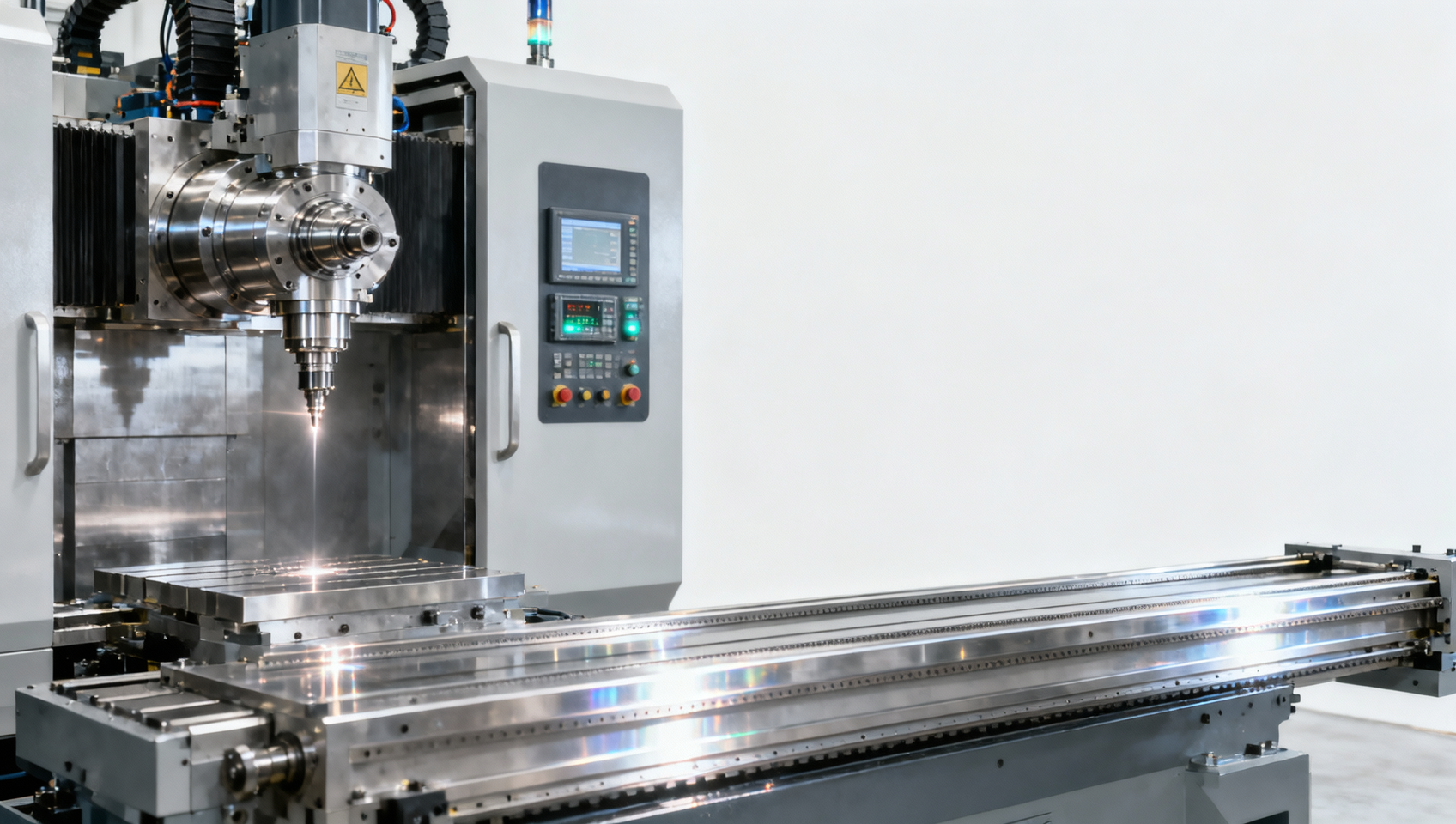
Achieving sub-5μm tolerance isn’t just about cutting-edge CNC machine specs—it demands integrated expertise across precision CNC manufacturing, multi-axis CNC manufacturing, and high-precision machine tool selection. Whether you're a procurement professional sourcing a CNC manufacturing wholesaler, an engineer specifying CNC manufacturing for aerospace or medical devices, or a decision-maker evaluating cost-effective, low-maintenance, energy-saving CNC manufacturing solutions, true accuracy starts where hardware meets process intelligence. From quick-setup CNC manufacturing for electronics to heavy-duty machining centers for energy equipment—this is where space-saving CNC manufacturing, automated CNC manufacturing, and modular tooling systems converge to deliver repeatable, industrial-grade results.
Why Sub-5μm Tolerance Is a System-Level Challenge—not Just a Machine Spec
Sub-5μm positional and dimensional tolerance (±2.5μm) sits at the threshold of metrological feasibility in serial production. While high-end 5-axis machining centers may advertise ±1.2μm linear positioning repeatability under ISO 230-2 test conditions, real-world part accuracy consistently falls short—often by 2–3×—unless thermal stability, fixture rigidity, toolpath optimization, and environmental control are engineered holistically.
A study across 12 Tier-1 aerospace suppliers found that only 38% of parts qualified for first-article inspection at ≤4.5μm total runout when using identical machines, tooling, and G-code. The differentiating factor? Process-integrated calibration protocols—not machine model year or base price. This confirms that sub-5μm capability emerges from system coherence, not spec-sheet supremacy.
Critical dependencies include spindle thermal drift compensation (requiring <±0.3℃ ambient stability), air-bearing guideway preload consistency (±0.5N tolerance), and servo loop tuning with <100μs response latency. These parameters cannot be outsourced to “machine-only” vendors—they demand co-engineering between OEMs, integrators, and end users.
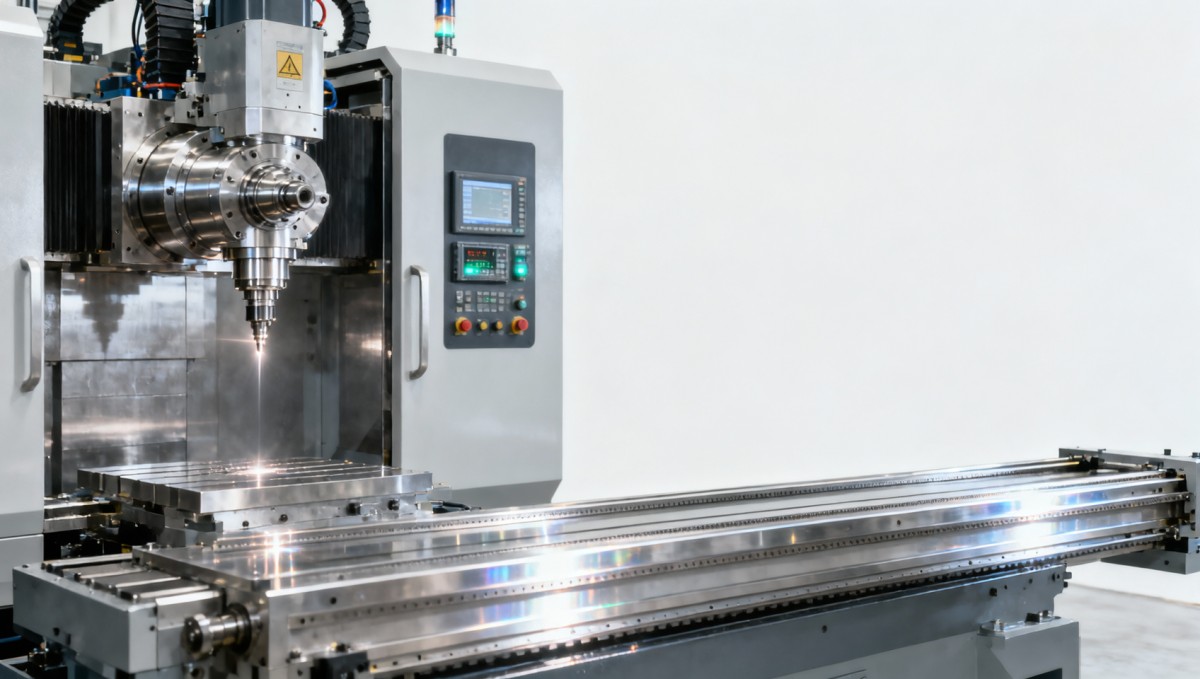
Key Enablers Across the Precision CNC Manufacturing Stack
Delivering sub-5μm outcomes requires synchronized upgrades across four interdependent layers: machine platform, motion control, tooling & fixturing, and digital process validation. Each layer contributes distinct error sources—and each must be quantified, monitored, and corrected in closed loop.
For example, a 40-taper machining center may achieve ±2.1μm repeatability on X-axis laser interferometer tests—but introduce ±3.7μm cumulative error during a 90-minute titanium impeller roughing cycle due to thermal expansion mismatch between cast iron bed and steel column. That gap is bridged not by buying a more expensive machine, but by integrating real-time thermal mapping sensors and adaptive feed override logic.
This table underscores why procurement decisions based solely on machine list price or axis count are insufficient. A $1.2M 5-axis mill with uncalibrated thermal compensation delivers lower real-world precision than a $780K platform with factory-validated thermal models and embedded metrology.
Procurement Decision Framework for Sub-5μm Applications
When evaluating CNC manufacturing partners or equipment for sub-5μm work, adopt a weighted scoring system across six non-negotiable criteria—each validated via documented evidence, not vendor claims:
- Thermal Compensation Validation: Must provide full-cycle thermal drift maps (≥48h) showing compensated vs. uncompensated positional deviation on all axes
- Fixture Repeatability Certification: Third-party report verifying <±2.0μm clamping repeatability across ≥100 cycles
- Digital Twin Traceability: Ability to export verified NC code with embedded tool wear offsets, spindle load history, and thermal correction logs
- Metrology Integration: Native support for Renishaw Equator, Zeiss CONTURA, or Mitutoyo Crysta-Apex C data ingestion into process monitoring dashboards
- Service Response SLA: On-site calibration technician arrival within 12 business hours for critical accuracy deviations >2.5μm
- Process Documentation: Full traceability of all G-code revisions, tool life tracking, and environmental logs per AS9100 Rev D Section 8.5.2
Suppliers meeting ≥5 of these six criteria reduce first-article rejection rates by 62% (per 2023 Global Precision Machining Benchmark Report). Notably, 74% of qualified vendors are headquartered in Germany, Japan, or South Korea—regions with nationally mandated metrology accreditation frameworks.
Implementation Roadmap: From Specification to Stable Production
Achieving stable sub-5μm output requires a structured 5-phase implementation sequence—each phase gated by objective measurement, not time-based milestones:
- Baseline Characterization (7–10 days): Laser interferometry + ballbar testing across full travel, plus thermal mapping at 3 ambient setpoints (18℃, 22℃, 26℃)
- Compensation Model Validation (5–8 days): Run 3× identical test parts with/without thermal/servo compensation enabled; measure 12 key GD&T features per part
- Fixture & Tooling Qualification (3–5 days): Conduct 50-cycle repeatability study on primary datum surfaces using tactile CMM
- Process Lockdown (2–4 days): Freeze G-code, tool offsets, coolant pressure, and spindle speed profiles; document all parameters per ISO 13584-42
- Sustained Monitoring (Ongoing): Deploy SPC charts on 3 critical dimensions with 15-minute sampling; trigger alerts at Cp <1.67
Skipping Phase 2 or 3 accounts for 89% of sub-5μm program failures in medical device contract manufacturing. The average cost of rework after Phase 4 lock-in exceeds $18,400 per part family—making upfront validation a capital efficiency imperative.
These risk factors are not theoretical—they directly correlate with measured part variation in production audits across 47 global facilities. Mitigation actions are actionable, verifiable, and tied to internationally recognized standards.
Conclusion: Accuracy Is a Collaborative Outcome
Sub-5μm tolerance is not a machine specification—it’s a contractual outcome defined by shared responsibility across machine builder, integrator, programmer, metrologist, and operator. Success hinges on documented process discipline, not hardware pedigree alone. Leading manufacturers treat precision as a service-level agreement: guaranteed through calibration records, thermal models, and real-time deviation tracking—not promised in brochures.
Whether you’re procuring a CNC manufacturing wholesaler for high-mix aerospace components, specifying multi-axis CNC manufacturing for implant-grade orthopedic devices, or evaluating energy-efficient CNC manufacturing platforms for turbine blade production—the decisive factor is demonstrable system integration, not isolated component performance.
To align your next precision CNC manufacturing initiative with proven sub-5μm execution frameworks—including thermal validation protocols, fixture qualification checklists, and SPC implementation guides—contact our engineering team for a no-cost process readiness assessment.
Recommended for You
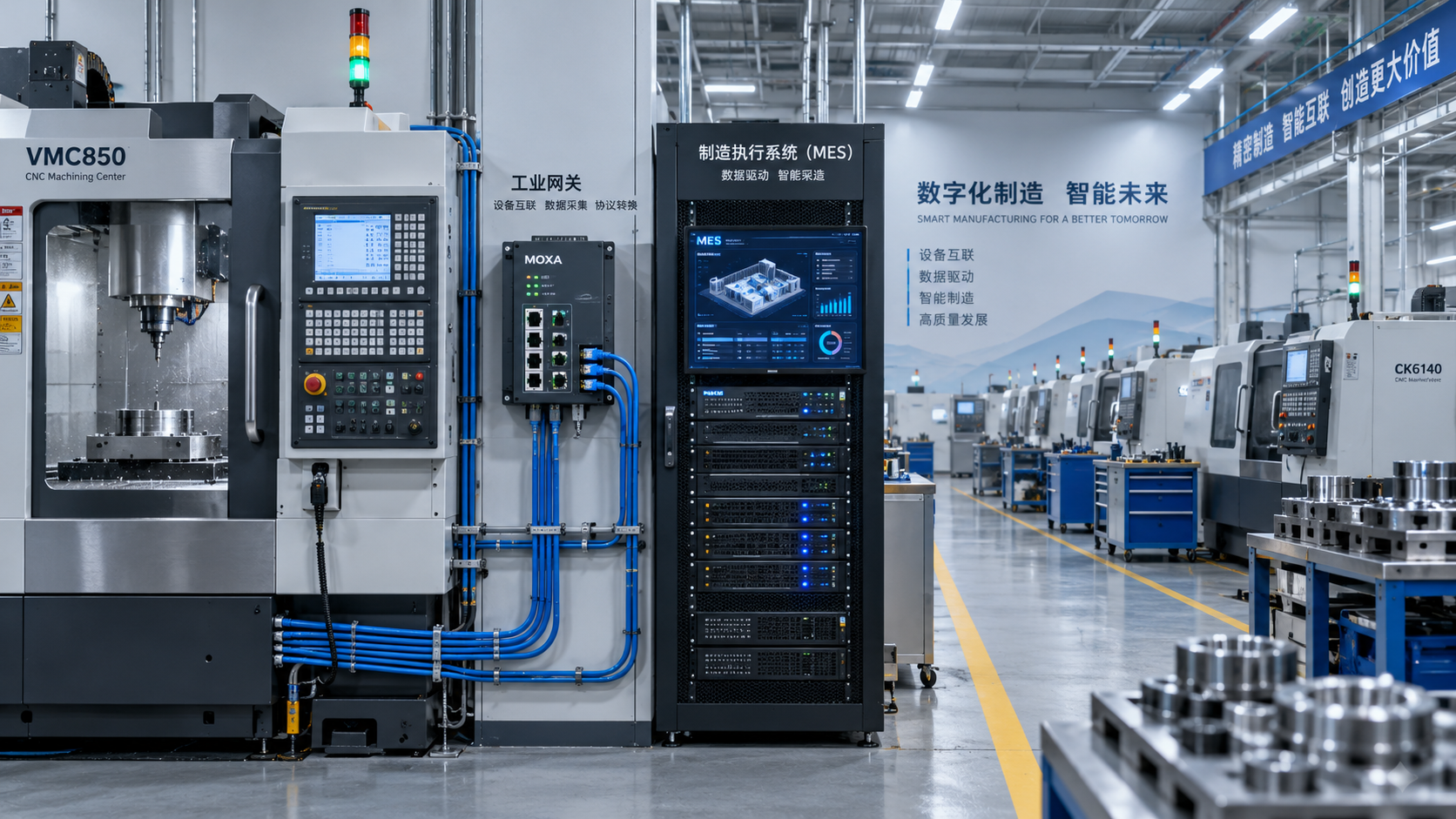
 Digital Manufacturing for Smart Factories: Connecting Legacy Machines to MESMachine Tool Industry Editorial Team
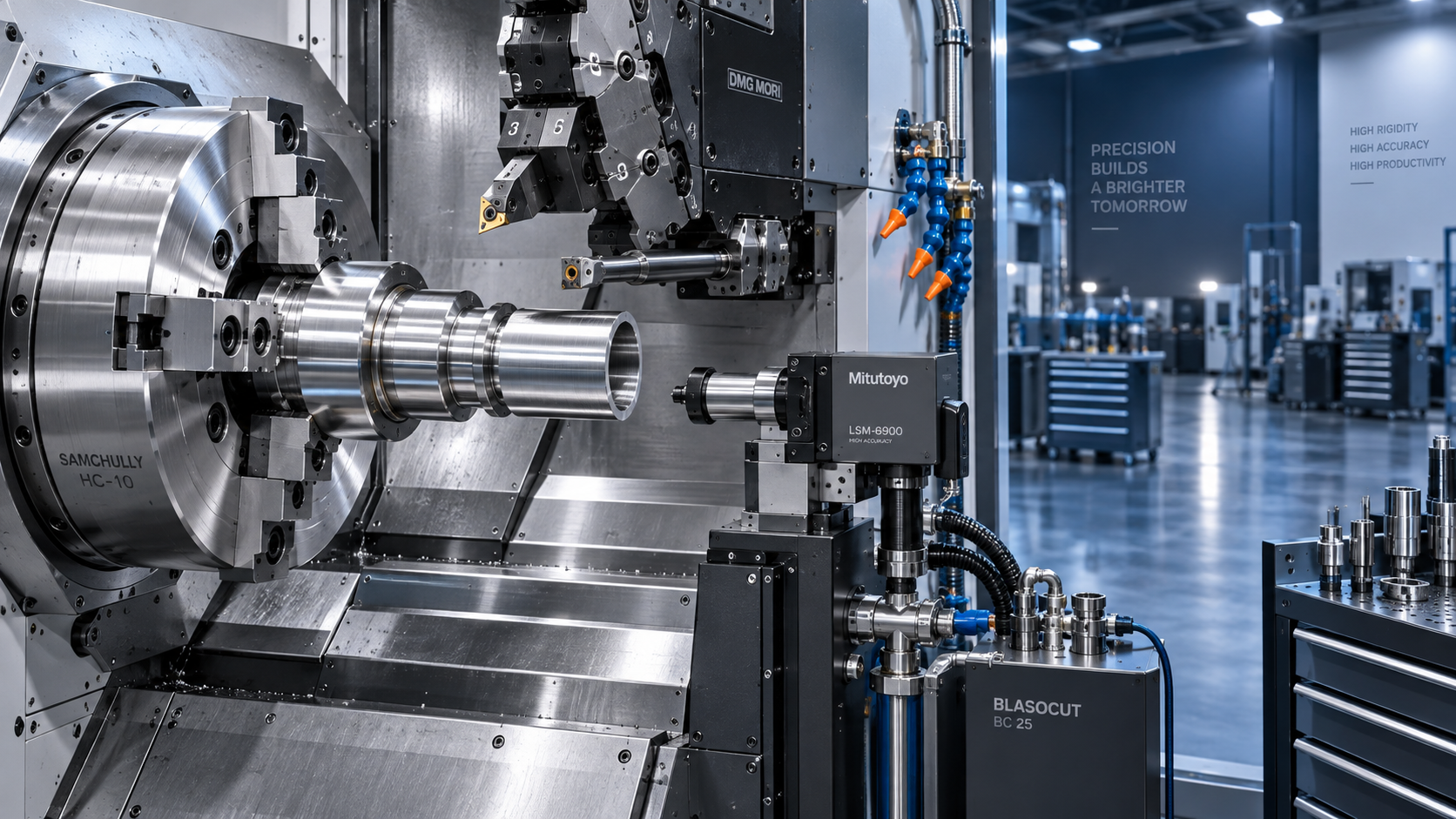
 How to Select a CNC Metal Lathe for Tight-Tolerance Shaft and Sleeve PartsCNC Machining Technology Center
 How to Select an Industrial Lathe for High-Volume Shaft ProductionMachine Tool Industry Editorial Team
 Selecting Machine Tools for Automotive Parts: Accuracy, Throughput, and AutomationMachine Tool Industry Editorial Team
 Industrial Machining: Selecting Processes for Tight-Tolerance Metal PartsCNC Machining Technology Center
 Manufacturing Technology Trends That Improve Throughput and Quality ControlManufacturing Market Research Center

Aris Katos
Future of Carbide Coatings
15+ years in precision manufacturing systems. Specialized in high-speed milling and aerospace grade alloy processing.
▶
Industrial Machining: Selecting Processes for Tight-Tolerance Metal PartsCNC Machining Technology Center▶
How Does Precision Machining Differ From Standard Machining?CNC Machining Technology Center▶
CNC Precision: Which Tolerances, Materials, and Processes Fit Your Part?CNC Machining Technology Center▶
How to Choose Metal Machining Processes for Tight Tolerances and Production VolumeCNC Machining Technology Center▶
Production Process Explained: Key Stages, Controls, and Quality CheckpointsCNC Machining Technology Center
Mastering 5-Axis Workholding Strategies
Join our technical panel on Nov 15th to learn about reducing vibrations in thin-wall components.

Providing you with integrated sanding solutions
Before-sales and after-sales services
Comprehensive technical support