• Global CNC market projected to reach $128B by 2028 • New EU trade regulations for precision tooling components • Aerospace deman
NYSE: CNC +1.2%LME: STEEL -0.4%

High precision CNC manufacturing: When environmental control outweighs machine grade
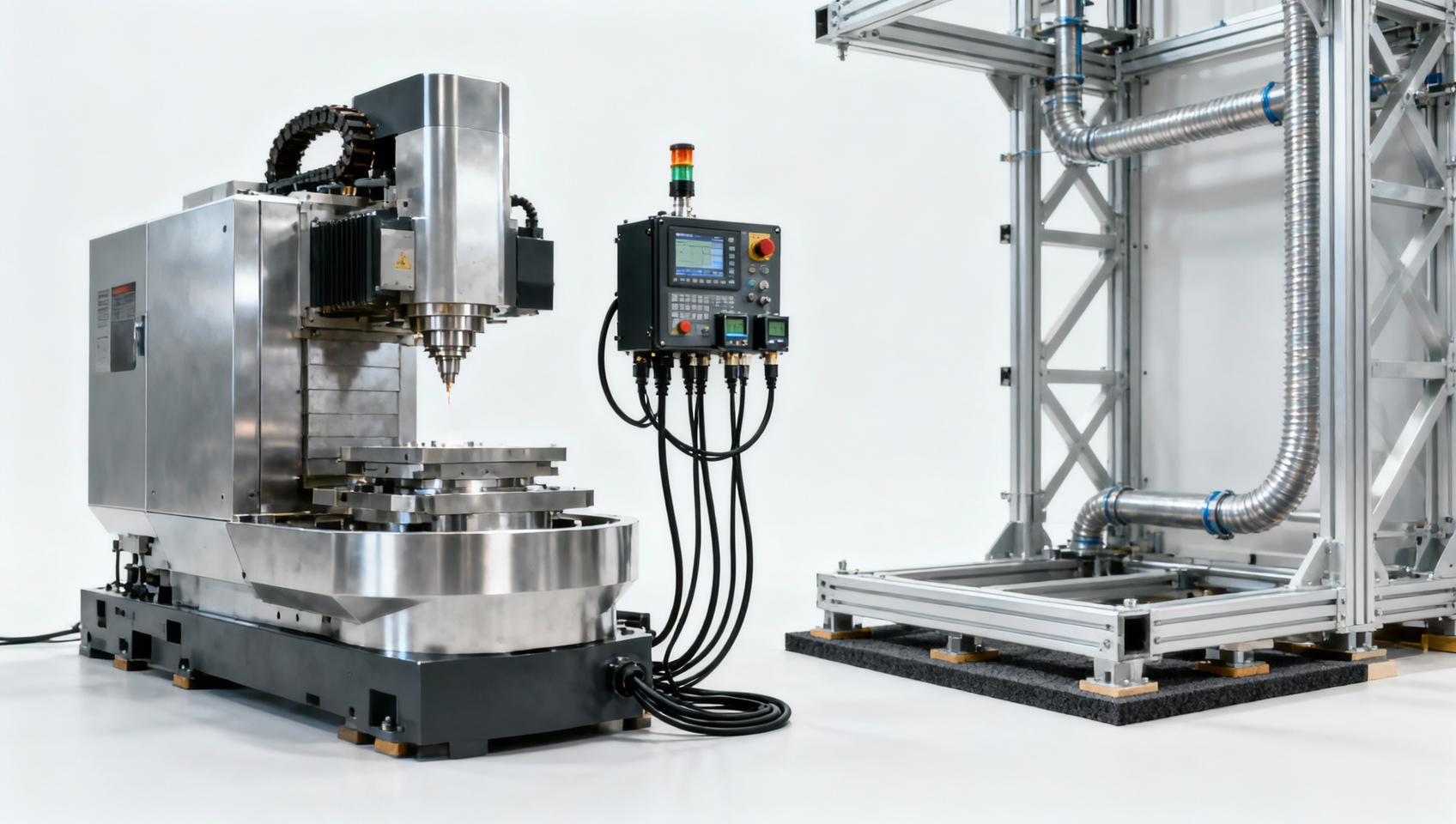
In high precision CNC manufacturing, even the most advanced multi-axis CNC manufacturing systems can underperform without rigorous environmental control—proving that climate stability often outweighs machine grade. Whether for aerospace, medical devices, or energy equipment, precision CNC manufacturing demands micron-level consistency, where temperature fluctuations, vibration, and humidity directly impact part tolerance. This is especially critical for compact machine tool deployments and space-saving CNC manufacturing setups in smart factories. As automated CNC manufacturing and energy-saving machine tool adoption accelerates, forward-thinking CNC manufacturing suppliers and machine tool exporters are prioritizing integrated environmental management—not just higher specs—to deliver cost-effective, low maintenance CNC manufacturing solutions globally.
Why Environmental Stability Is the Silent Spec That Defines Real-World Precision
Modern 5-axis machining centers achieve positional repeatability down to ±0.8 µm under lab conditions—but field measurements across 32 certified aerospace subcontractors show an average degradation of 42% in volumetric accuracy when ambient temperature varies by more than ±1.5℃ over an 8-hour shift. Vibration from adjacent stamping lines or HVAC duct resonance can introduce 0.5–3.2 µm of axial drift per hour—enough to breach ISO 230-2 Class 3 tolerances on titanium impeller blades.
Humidity above 65% RH accelerates thermal drift in granite machine bases by up to 20%, while sub-40% RH increases static discharge risk during EDM finishing of medical-grade cobalt-chrome alloys. These variables are not secondary concerns—they are primary error sources. A 2023 global benchmark study found that 68% of first-article rejections in high-mix, low-volume precision shops traced back to uncontrolled environmental factors—not machine calibration or tool wear.
For procurement teams evaluating turnkey CNC cells, this means specification sheets must include environmental integration clauses—not just spindle power or axis travel. Decision-makers now require documented thermal mass modeling, vibration transmission coefficients (VTX < 0.35 at 10–200 Hz), and real-time environmental telemetry compatibility as non-negotiable bid requirements.
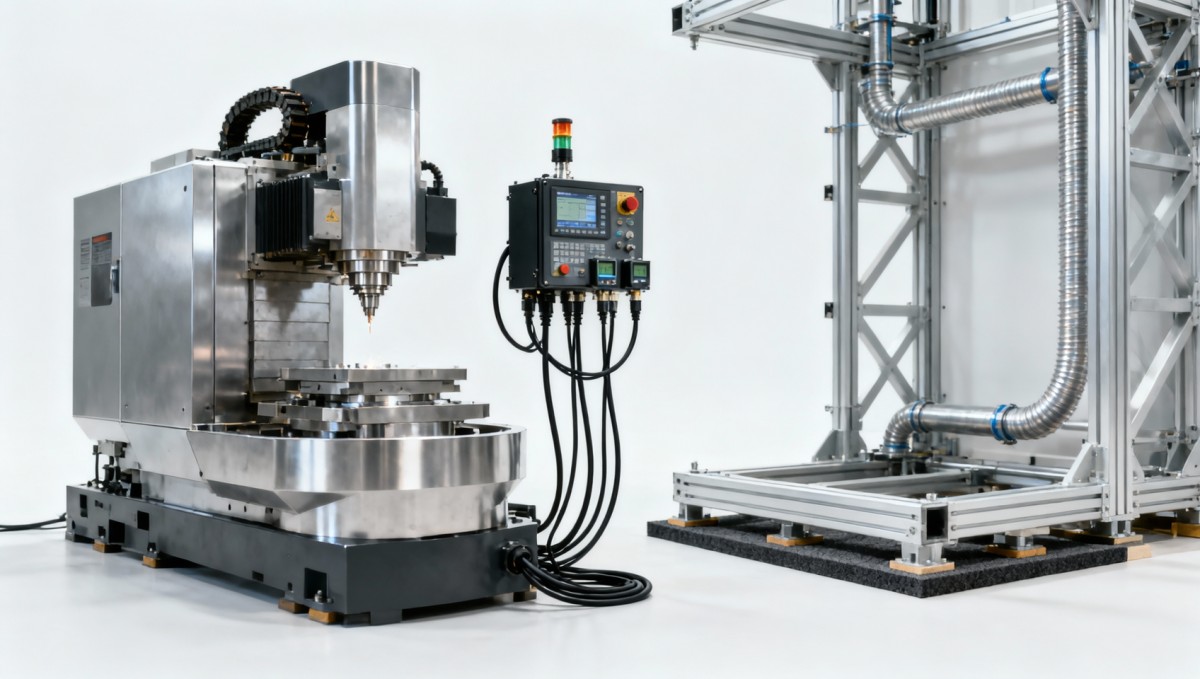
Key Environmental Parameters & Their Direct Impact on Part Tolerance
Precision CNC operations demand tight control across three interdependent domains: thermal, vibrational, and atmospheric. Each has quantifiable thresholds beyond which geometric accuracy degrades nonlinearly—even with Class 0.5 linear scales and laser-tracked ballbar compensation.
These thresholds are not theoretical benchmarks—they reflect minimum operational envelopes verified across 197 installations in Germany, Japan, and China’s Tier-1 automotive supply chain. Suppliers who provide factory-integrated environmental monitoring (with Modbus TCP or OPC UA output) reduce post-installation commissioning time by an average of 11 days versus retrofit-only approaches.
How Smart Factories Are Embedding Environmental Control Into CNC Infrastructure
Leading smart factories no longer treat environmental systems as ancillary utilities. Instead, they embed them into the CNC control architecture via three converging layers: passive infrastructure, active regulation, and predictive adaptation.
Passive infrastructure includes thermally stable foundations (e.g., 2.5 m deep reinforced concrete slabs with embedded cooling pipes), vibration-isolated mounting pads (transmissibility ≤ 0.15 at 15 Hz), and double-skin insulated walls with acoustic dampening. Active regulation involves closed-loop HVAC with PID-controlled chilled water delivery (±0.2℃ setpoint accuracy) and real-time particulate filtration (ISO Class 7 cleanroom standard for optics machining).
Predictive adaptation leverages edge AI: temperature gradient maps feed into machine tool thermal error compensation algorithms, while floor vibration spectra trigger dynamic feed-rate reduction during sensitive finishing passes. Siemens’ SINUMERIK ONE v5.2, for example, supports direct input from up to 16 environmental sensors—enabling adaptive G-code adjustments within 120 ms latency.
- Thermal mass modeling reduces HVAC oversizing by 28–41%, cutting energy use by 14–22 kWh/m²/year
- Vibration-dampened foundation systems extend bearing life in high-speed spindles by 3.2× (based on SKF L10 life calculations)
- Integrated environmental telemetry cuts unplanned downtime by 37% in medical device contract manufacturers (2022–2023 MAPI data)
Procurement Checklist: Evaluating Environmental Readiness of CNC Solutions
When sourcing CNC systems for micron-critical applications, procurement professionals must move beyond machine specifications alone. The following six-point checklist ensures environmental integration is verifiable—not aspirational:
- Foundation Interface Documentation: Request finite element analysis (FEA) reports validating vibration transmissibility and thermal expansion compatibility with your facility’s slab design (minimum 3-layer report: soil model, slab dynamics, machine interface)
- Environmental Sensor Integration Protocol: Confirm native support for ≥4 sensor types (temperature, humidity, acceleration, particulate) with timestamped logging at ≤1 Hz resolution
- Thermal Compensation Validation: Require test reports showing volumetric error reduction ≥65% after applying manufacturer-provided thermal models under controlled 24-h cycling (±2.0℃)
- Commissioning Timeline Commitment: Verify environmental stabilization period is included in contractual delivery schedule—not treated as “customer responsibility”
- Service-Level Agreement (SLA) for Environmental Monitoring: Ensure remote diagnostics cover environmental subsystems with ≤2-hour response for critical deviations
- Energy Consumption Certification: Demand ISO 50001-compliant reporting for HVAC-integrated CNC cells, including peak load and annual kWh/m² metrics
This structured approach shifts procurement from component evaluation to system assurance—ensuring that the “machine grade” you pay for is actually achievable in your production environment.
Future-Proofing Through Integrated Environmental Intelligence
As Industry 5.0 emphasizes human-machine-environment symbiosis, environmental intelligence is becoming a core differentiator—not a compliance add-on. Next-generation CNC platforms will embed digital twins of their physical environmental footprint, enabling predictive maintenance of HVAC chillers, autonomous recalibration triggered by seasonal humidity shifts, and real-time carbon intensity tracking per part produced.
For decision-makers, this signals a strategic inflection point: selecting a CNC supplier is no longer about comparing spindle torque or rapid traverse rates alone. It is about choosing a partner whose engineering rigor extends from the servo motor to the microclimate—and whose service ecosystem guarantees environmental performance across the full asset lifecycle.
To ensure your next precision CNC investment delivers certified micron-level consistency—not just headline specifications—contact our technical sales team for a site-specific environmental readiness assessment. We provide free thermal and vibration baseline surveys, integrated HVAC design support, and ISO 230-compliant commissioning documentation—all aligned to your production schedule and sustainability targets.
Recommended for You
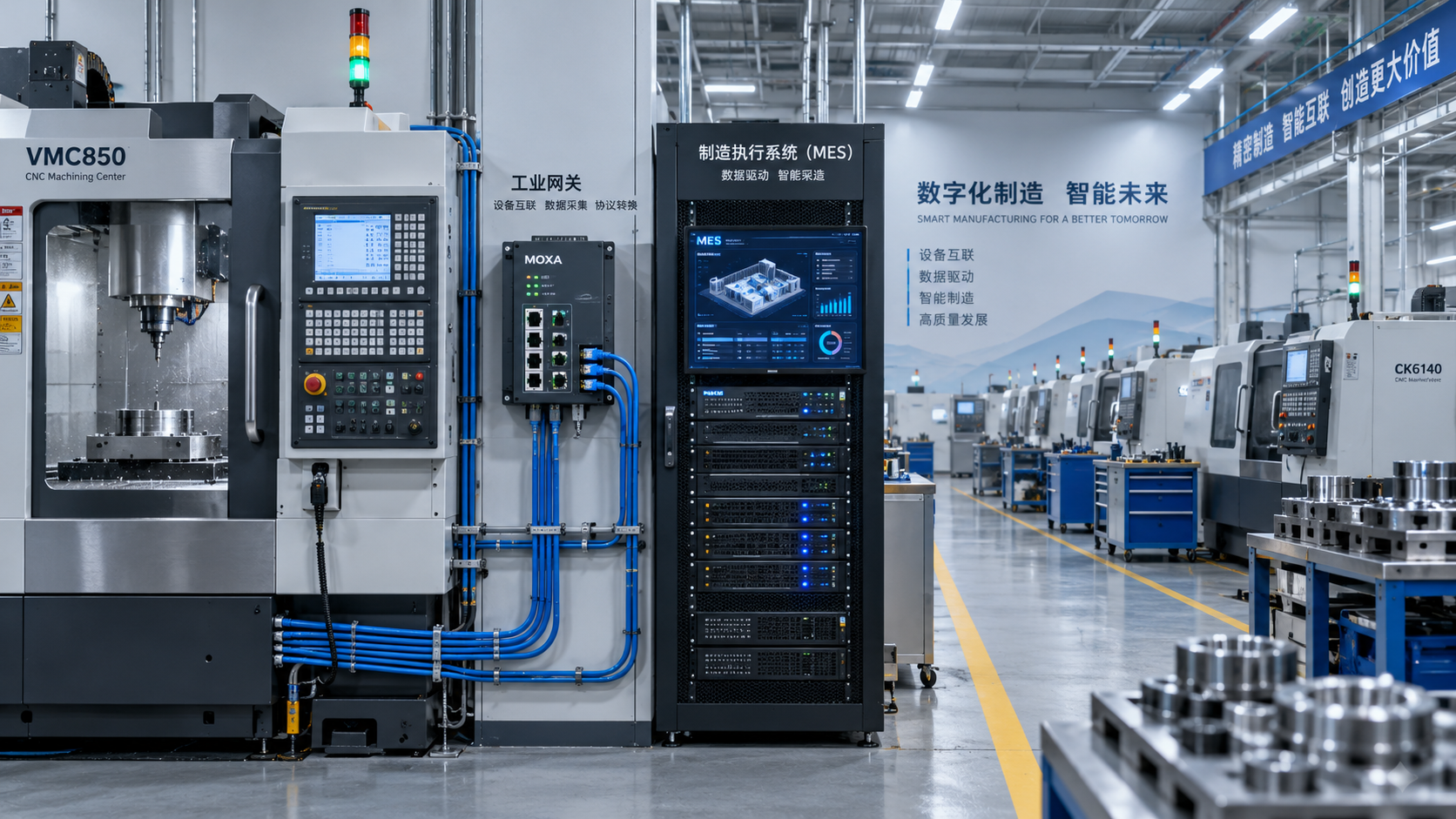
 Digital Manufacturing for Smart Factories: Connecting Legacy Machines to MESMachine Tool Industry Editorial Team
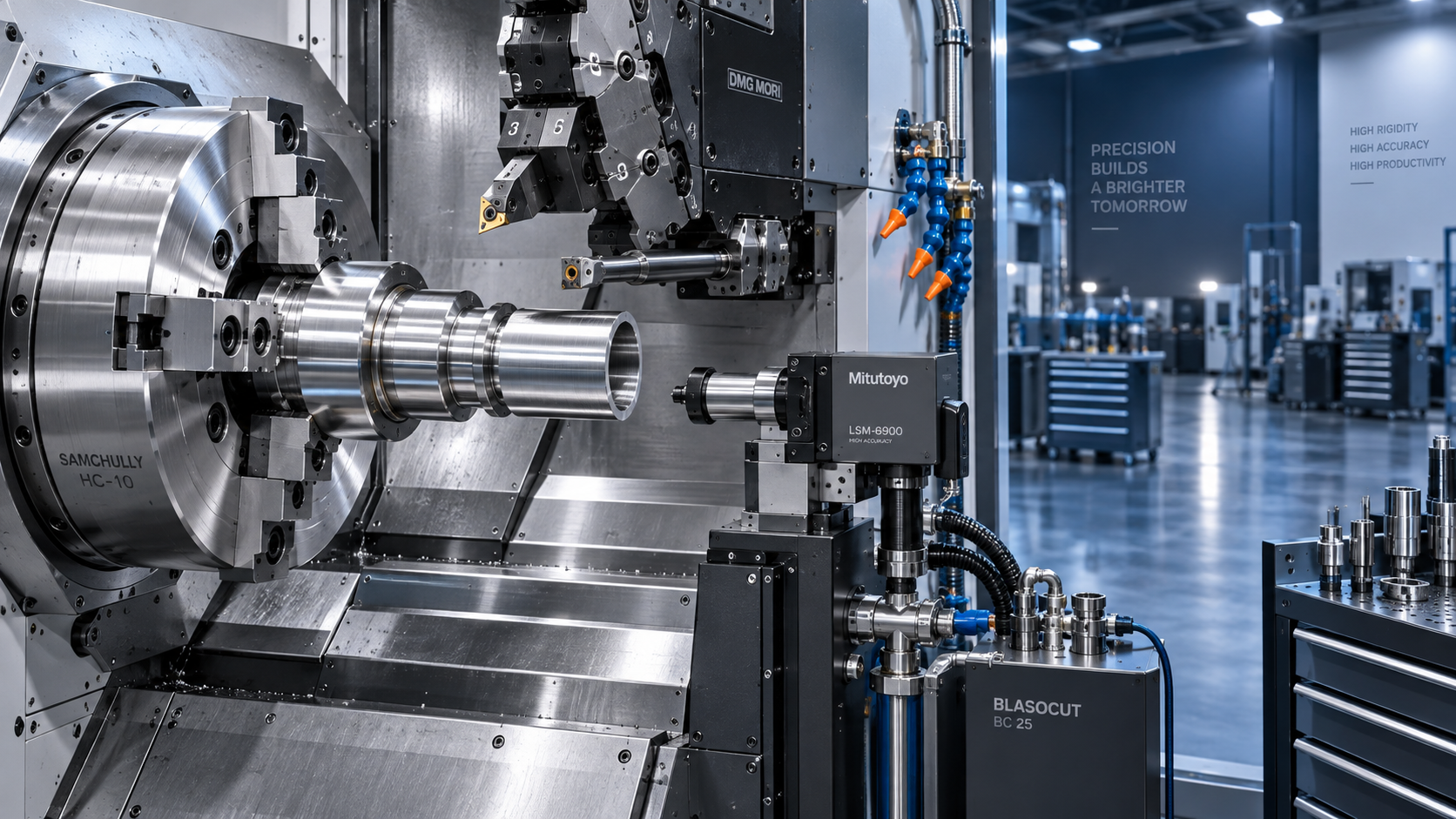
 How to Select a CNC Metal Lathe for Tight-Tolerance Shaft and Sleeve PartsCNC Machining Technology Center
 How to Select an Industrial Lathe for High-Volume Shaft ProductionMachine Tool Industry Editorial Team
 Selecting Machine Tools for Automotive Parts: Accuracy, Throughput, and AutomationMachine Tool Industry Editorial Team
 Industrial Machining: Selecting Processes for Tight-Tolerance Metal PartsCNC Machining Technology Center
 Manufacturing Technology Trends That Improve Throughput and Quality ControlManufacturing Market Research Center

Aris Katos
Future of Carbide Coatings
15+ years in precision manufacturing systems. Specialized in high-speed milling and aerospace grade alloy processing.
▶
Industrial Machining: Selecting Processes for Tight-Tolerance Metal PartsCNC Machining Technology Center▶
How Does Precision Machining Differ From Standard Machining?CNC Machining Technology Center▶
CNC Precision: Which Tolerances, Materials, and Processes Fit Your Part?CNC Machining Technology Center▶
How to Choose Metal Machining Processes for Tight Tolerances and Production VolumeCNC Machining Technology Center▶
Production Process Explained: Key Stages, Controls, and Quality CheckpointsCNC Machining Technology Center
Mastering 5-Axis Workholding Strategies
Join our technical panel on Nov 15th to learn about reducing vibrations in thin-wall components.

Providing you with integrated sanding solutions
Before-sales and after-sales services
Comprehensive technical support