• Global CNC market projected to reach $128B by 2028 • New EU trade regulations for precision tooling components • Aerospace deman
NYSE: CNC +1.2%LME: STEEL -0.4%

Industrial Robotics vs Fixed Automation: Which Fits
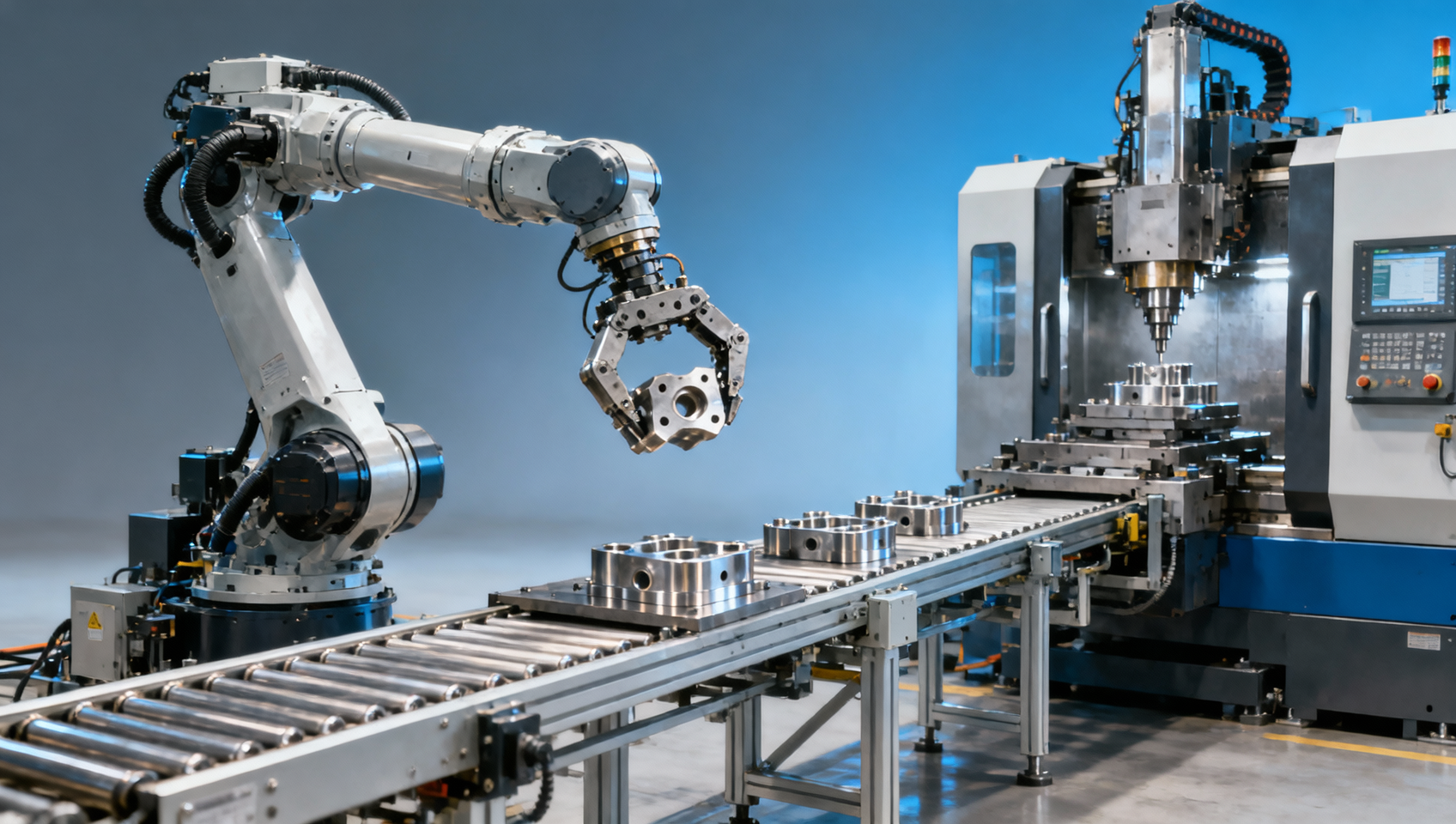
In today’s Global Manufacturing landscape, choosing between Industrial Robotics and fixed automation can reshape the entire Production Process. For companies in metal machining, industrial CNC, and automated production, the right path affects flexibility, cost, speed, and long-term competitiveness. This article explores how CNC production, Automated Production Line systems, and Industrial Automation strategies fit different manufacturing goals, helping buyers, operators, and decision-makers identify the best solution.
For CNC machining, precision manufacturing, and factory investment planning, this decision is rarely just about replacing labor. It influences cycle time, changeover speed, floor space, maintenance planning, operator training, and the ability to serve low-volume and high-mix orders. In sectors such as automotive, aerospace, electronics, and energy equipment, the wrong automation architecture can lock a plant into unnecessary cost for 5–10 years.
Industrial robotics and fixed automation both support higher output and better process consistency, but they solve different production problems. A robot cell may be ideal for varied part handling, machine tending, palletizing, deburring, or inspection. A fixed automation line often performs best when the product design is stable, takt time is strict, and annual volume justifies dedicated tooling and highly repeatable motion.
Understanding the Core Difference Between Industrial Robotics and Fixed Automation
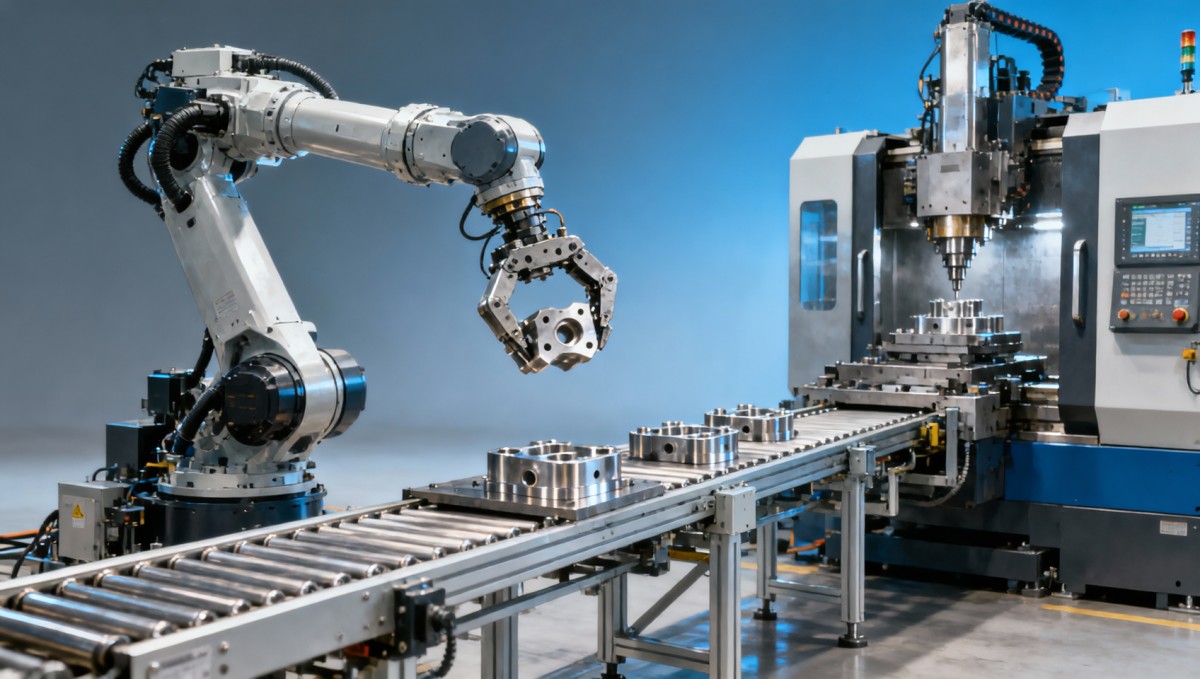
Industrial robotics usually refers to programmable machines that can be reconfigured through software, end-of-arm tooling changes, and safety logic updates. In a CNC workshop, one robot may serve 2–4 machines, transfer parts, orient components, and interface with vision systems. Fixed automation, by contrast, is built around dedicated mechanisms such as feeders, transfer units, indexing tables, hard tooling, and part-specific stations designed for one process path.
The most practical difference is flexibility. A 6-axis robot can often adapt to new part families within days or weeks, depending on gripper redesign and program validation. A fixed automation line may deliver faster cycle times, sometimes by 10%–30% in highly standardized applications, but major product changes can require mechanical redesign, new fixtures, and longer shutdown windows.
For buyers and operations teams, the comparison should start with three production variables: annual output, SKU variety, and process stability. If a plant runs fewer than 5 part families with demand variation below 15% month to month, fixed automation can be economically attractive. If a plant changes setups weekly, handles 20–100 SKUs, or faces volatile order patterns, industrial robotics often reduces operational risk.
Where each option typically fits
In machining and assembly environments, fixed automation is common where part geometry is predictable and throughput must remain constant over 2–3 shifts. Examples include dedicated transfer lines for automotive components, high-volume loading systems for a single casting family, and repetitive packaging cells. Industrial robotics is more common in mixed production cells, CNC machine tending, welding support, flexible loading, and smart factory projects that may later integrate AGVs, MES, or in-line inspection.
Key comparison points
- Programming adaptability: robots can be reprogrammed in hours to several days; fixed systems usually need mechanical intervention.
- Cycle speed: fixed automation often wins in ultra-repeatable tasks with takt times below 10–20 seconds.
- Capital use: robotics may have lower initial tooling commitment; fixed automation may be more efficient at very high volume.
- Expansion path: robot cells are easier to extend in modular stages, especially in facilities adopting smart manufacturing.
The table below compares the two solutions in a way that is useful for CNC manufacturers, precision parts producers, and sourcing teams evaluating a new Automated Production Line.
The main takeaway is simple: industrial robotics favors flexibility and phased growth, while fixed automation favors maximum consistency in a narrow operating window. The right answer depends less on trend adoption and more on part variety, process repeatability, and expected production life.
How the Choice Affects CNC Production, Cost, and Throughput
In CNC production, automation value is measured not only by labor savings but by spindle utilization, scrap control, unattended operation time, and scheduling efficiency. A robot tending cell can increase machine uptime by reducing manual loading gaps of 15–45 seconds per cycle. Across 2 shifts, that improvement may create meaningful extra capacity without adding another machine tool. Fixed automation can push this even further in repetitive operations where workpiece orientation, clamping, and transfer are fully standardized.
However, cost structure differs significantly. Industrial robotics often requires investment in the robot, grippers, safety fencing or collaborative safeguards, integration software, and communication with CNC controls. Fixed automation may require more custom engineering at the beginning, including dedicated fixtures, transfer units, feeders, and precision stations. The first option usually spreads risk across future reusability; the second concentrates value in one optimized product flow.
Procurement teams should also consider utilization over a 36–60 month planning period. If customer demand is uncertain, a robot cell may protect capital because it can be redeployed to another line or process. If annual demand is already contracted and stable, and target output exceeds several hundred thousand units, fixed automation may offer lower cost per part after the initial ramp-up period.
Operational impact in real production environments
For operators, robotics can reduce repetitive lifting, improve ergonomics, and support lights-out machining for 2–8 hours, depending on buffer design and tool life strategy. For plant managers, fixed automation can simplify repeatability once tuned, but downtime recovery may be more complex because multiple linked stations can stop together. In both cases, overall equipment effectiveness depends on fixture quality, tool management, preventive maintenance, and reliable upstream material flow.
A practical cost review checklist
- Estimate changeover frequency per month and assign labor hours lost during each transition.
- Measure current spindle idle time and manual handling time in seconds per cycle.
- Compare expected maintenance intervals, spare part availability, and recovery time after faults.
- Calculate whether the project must pay back in 18–24 months or can be evaluated over 3–5 years.
The following table helps decision-makers compare cost and production implications in common precision manufacturing settings.
In many factories, the best economic result does not come from choosing one technology exclusively. A hybrid layout is often effective: robots for machine tending, part transfer, or end-of-line handling, combined with fixed stations for gauging, clamping, or specialized transfer where high repeatability creates a measurable cycle-time advantage.
Selection Criteria for Buyers, Engineers, and Business Evaluators
Selecting the right Industrial Automation model requires more than comparing equipment quotations. Buyers should review at least 4 dimensions: process stability, part family diversity, target ROI window, and future expansion needs. Engineers should add tool wear behavior, tolerance sensitivity, fixture repeatability, and digital integration requirements. Business evaluators should focus on how the automation project supports customer retention, delivery reliability, and product mix flexibility.
In precision machining, tolerance demands can shift the answer. If the process relies on exact positioning within a narrow handling window, such as ±0.1 mm to ±0.5 mm at a loading point, fixed mechanisms may be easier to validate for one repetitive task. If part sizes vary, and the operation needs machine vision or adaptive gripping, an industrial robot can offer a more practical long-term platform, especially across 3–6 product generations.
Supply chain considerations also matter. Fixed automation depends heavily on custom components and part-specific tooling. If spare parts or redesign support may take 6–10 weeks, downtime risk increases. Robot-based cells often rely on standard robot platforms with easier spare access, though end-of-arm tooling and software support remain critical. The procurement decision should therefore include after-sales support response time, not just purchase price.
Five questions to ask before making a decision
- Will this line produce the same part family for at least 24–36 months?
- How many changeovers occur each week, and what is the current loss per changeover?
- Is the goal maximum takt speed, or flexible output across multiple SKUs?
- Can the site support programming, maintenance, and operator training internally?
- What level of digital integration is required with CNC controls, MES, or quality traceability systems?
Common selection mistakes
A frequent mistake is choosing fixed automation because the cycle time looks attractive in a demonstration, while ignoring future product changes. Another is choosing robotics simply because it appears more advanced, without verifying whether the operation really needs flexibility. A balanced selection process should compare at least 2 scenarios, one based on current demand and one based on a plausible 3-year change in mix or customer requirements.
A second mistake is underestimating fixturing. In CNC automation, grippers, part nests, clamping repeatability, and part presentation are often more important than the robot arm itself. Whether the line uses industrial robotics or fixed automation, poor workholding can increase scrap, reduce machine utilization, and create unstable handoff between stations.
Implementation, Maintenance, and Risk Control in Automated Production Lines
Once the technology is selected, project execution determines whether the expected value is achieved. In most CNC and precision manufacturing environments, implementation follows 5 stages: process study, concept design, detailed engineering, commissioning, and production stabilization. A realistic schedule may range from 8–16 weeks for a simpler robot cell to 12–24 weeks for a more complex fixed automation line, depending on custom tooling, guarding, and software integration.
Maintenance planning should be built into the project from the start. Robot systems need periodic inspection of cables, reducers, grippers, sensors, and safety devices. Fixed automation requires close attention to pneumatic wear, indexing accuracy, mechanical alignment, and dedicated transfer components. In both cases, preventive maintenance intervals are often set monthly, quarterly, and annually, with daily checks for lubrication, air pressure, and fixture cleanliness.
Risk control is especially important in high-precision and high-throughput lines. A single unstable station can reduce the value of the entire Automated Production Line. For this reason, acceptance criteria should include at least 3 categories: output rate, dimensional consistency, and fault recovery performance. It is not enough to confirm that the line runs; teams should verify that it runs repeatedly under normal production conditions across a full shift.
Recommended implementation checkpoints
- Define part families, takt targets, and operator roles before equipment design is frozen.
- Validate grippers, fixtures, and part orientation using sample parts from actual production batches.
- Run FAT and SAT with measurable criteria such as cycle time, repeatability, and alarm recovery steps.
- Train operators, maintenance staff, and supervisors separately, because their responsibilities differ.
The table below outlines practical risk points that procurement and operations teams should review before approval.
Well-planned implementation reduces hidden cost. It also improves operator acceptance, because production teams are more likely to support automation when restart procedures, training content, and daily maintenance responsibilities are clearly defined from day one.
FAQ: Practical Questions Before You Invest
How do I know if industrial robotics is better for my factory?
Industrial robotics is usually the better fit when your factory handles frequent changeovers, multiple part types, or uncertain future demand. If your CNC line supports 10 or more part variants, changes fixtures weekly, or needs machine tending across several machining centers, robotics generally provides stronger flexibility and redeployment value than fixed automation.
When is fixed automation the smarter investment?
Fixed automation is often the smarter choice when product design is stable, annual demand is high, and takt time is tightly controlled. In repetitive production with minimal variation, dedicated tooling can deliver fast, consistent output and lower unit cost after commissioning, especially if the line is expected to run in the same configuration for 3 years or more.
What should procurement teams focus on beyond equipment price?
Procurement teams should review service response, spare part lead times, software support, fixture strategy, and acceptance standards. A lower quotation can become more expensive if commissioning takes 4 extra weeks, if critical spare parts are unavailable, or if the line cannot support future product changes without major redesign.
Can a hybrid solution make more sense than choosing one side?
Yes. Many modern factories use hybrid automation. A robot may load and unload CNC machines, while fixed stations handle clamping, gauging, or high-speed indexing. This approach often balances flexibility with repeatability, and it is especially useful in precision manufacturing where part handling varies but certain core process steps remain stable.
Industrial robotics and fixed automation are not competing answers to the same problem in every case. They are different tools for different production realities. For CNC machining, precision parts manufacturing, and smart factory planning, the best fit depends on volume stability, product mix, takt time, changeover frequency, and long-term capital strategy.
If your operation values flexibility, phased expansion, and support for multiple SKUs, robot-based Industrial Automation may be the better path. If your priority is maximum speed and repeatability in a stable, high-volume process, fixed automation can deliver stronger unit economics. For many businesses, the strongest result comes from combining both in a well-structured Automated Production Line.
If you are evaluating automation for CNC production, machine tending, precision assembly, or a new smart manufacturing project, now is the right time to compare options in detail. Contact us to discuss your application, request a tailored solution, and learn more about practical automation strategies for modern manufacturing.
Recommended for You
 Digital Manufacturing for Smart Factories: Connecting Legacy Machines to MESMachine Tool Industry Editorial Team
 How to Select a CNC Metal Lathe for Tight-Tolerance Shaft and Sleeve PartsCNC Machining Technology Center
 How to Select an Industrial Lathe for High-Volume Shaft ProductionMachine Tool Industry Editorial Team
 Selecting Machine Tools for Automotive Parts: Accuracy, Throughput, and AutomationMachine Tool Industry Editorial Team
 Industrial Machining: Selecting Processes for Tight-Tolerance Metal PartsCNC Machining Technology Center
 Manufacturing Technology Trends That Improve Throughput and Quality ControlManufacturing Market Research Center

Aris Katos
Future of Carbide Coatings
15+ years in precision manufacturing systems. Specialized in high-speed milling and aerospace grade alloy processing.
▶
India PLI Phase II Adds CNC FixturesManufacturing Policy Research Center▶
Japan METI Green Subsidy: Up to ¥4M for Chinese High-Efficiency CNC SystemsManufacturing Policy Research Center▶
Japan METI Boosts Green Subsidies for Chinese CNC SystemsManufacturing Policy Research Center▶
AIMM National Standard Advances for CNC Smart Factory CertificationManufacturing Policy Research Center▶
Industrial Robotics vs Fixed Automation: Which FitsManufacturing Policy Research Center
Mastering 5-Axis Workholding Strategies
Join our technical panel on Nov 15th to learn about reducing vibrations in thin-wall components.

Providing you with integrated sanding solutions
Before-sales and after-sales services
Comprehensive technical support