• Global CNC market projected to reach $128B by 2028 • New EU trade regulations for precision tooling components • Aerospace deman
NYSE: CNC +1.2%LME: STEEL -0.4%

China Tightens Machine Tool Exports to India

Starting June 30, 2026, China will apply tighter export controls to metal-cutting machine tools including lathes, milling machines, and grinding machines. The change matters not only for exporters, but also for Indian buyers, procurement teams, compliance staff, and supply chain service providers, because the new process raises documentation, verification, and retention requirements and is likely to affect order timing, delivery coordination, and purchasing plans tied to the India market.
What the June 30 Measure Confirms
According to Announcement No. 77 of 2026 issued by the General Administration of Customs, China will implement full-process export supervision for specified metal-cutting machine tools from June 30, 2026. The information provided states that the measure covers products such as lathes, milling machines, and grinding machines.
The confirmed requirements include accurate declaration of technical parameters, look-through verification of buyer qualifications, filing of the final use scenario, and long-term retention of related materials. The information provided also indicates that the measure is aimed at India, which is currently the largest export destination for Chinese machine tools.
The stated direct effect is a higher compliance burden and longer delivery timelines for exports to India, with likely consequences for overseas buyers’ purchasing rhythm and supply chain planning.
Where the Immediate Pressure Is Likely to Appear
Export transactions may face a heavier compliance front end
From an industry perspective, direct trading companies are likely to feel the impact first because the new requirements sit at the beginning of the export process. The main pressure points are likely to be technical parameter accuracy, buyer background verification, and document completeness before shipment. What deserves closer attention is whether current internal workflows are detailed enough to support a full-process review standard.
Indian buyers may need to adjust purchasing schedules
Analysis shows that buyers in India may face a more complex procurement process, not necessarily because of product demand itself, but because qualification checks and final-use filing can add friction to ordering and delivery coordination. The practical impact may appear in lead-time expectations, order confirmation cycles, and communication with suppliers on documentation readiness.
Supply chain and logistics coordination may become less flexible
Observably, supply chain service providers and teams responsible for delivery execution may need to work with tighter document control and longer preparation windows. If compliance review becomes more time-sensitive, shipment scheduling, handover timing, and document retention practices may require closer coordination than before.
What Companies Should Watch Now
Follow how the rule is expressed in practice
Analysis shows that the text of a regulatory measure and its operational application are not always identical in day-to-day trade execution. Companies involved in affected machine tool categories should closely watch for any follow-up clarification, implementation language, or procedural interpretation connected to export declarations, buyer verification, and filing requirements.
Check whether product information can support precise filing
What deserves closer attention is the ability to provide accurate technical parameter declarations for relevant machine tools. For exporters and suppliers, this is not just a paperwork issue; it affects whether products can move through the process without avoidable delay.
Review buyer due diligence and end-use documentation
Observably, the look-through review of buyer qualifications and the filing of final use scenarios place more weight on counterpart verification and document collection. Companies should pay attention to whether existing customer onboarding, end-user communication, and recordkeeping processes are sufficient for the new standard.
Prepare for longer delivery communication cycles
From an industry perspective, the stated impact on compliance cost and delivery time means businesses should be careful in how they communicate lead times, contract execution expectations, and shipment planning with customers. The key issue is not to assume business can proceed on previous timelines without adjustment.
How This Signal Should Be Read
This section is an editorial observation. Based on the information provided, this development is more than a routine customs update because it introduces full-process supervision and explicitly points to a market that currently holds a leading position in Chinese machine tool exports. That makes it relevant not only as a compliance issue, but also as a trade-flow signal for a specific overseas market.
At the same time, it is more appropriate to understand this as a policy and execution signal rather than a fully measurable market outcome at this stage. The information provided confirms tighter controls and likely pressure on compliance cost and delivery timing, but it does not by itself establish the full scale, duration, or final commercial impact.
For that reason, the industry still needs continued observation. What deserves closer attention is how consistently the rule is implemented in actual export operations and whether procurement behavior, shipment pacing, or supplier planning for the India market changes over time.
Why the Market Should Keep This in View
In practical terms, this update matters because it shifts attention from product shipment alone to the full chain of export compliance, buyer verification, and end-use documentation. For companies exposed to India-related machine tool trade, the near-term issue is not only whether orders continue, but how much more preparation and coordination each transaction may require.
Overall, it is more appropriate to understand this development as an important near-term operating change with potential longer-term signaling value. The confirmed facts point to stricter process control and possible delays, while the broader market effect still needs to be watched through actual implementation.
Basis of This Article
This article is generated based on the user-provided news title, event date, and event summary. The factual basis includes the stated date of June 30, 2026, the reference to Announcement No. 77 of 2026 by the General Administration of Customs, the listed export-control requirements, and the stated relevance to the India market.
For this type of industry update, commonly relevant source categories may include official announcements, company disclosures, industry association information, authoritative media reporting, and standard-setting documents. No specific official source link was provided in the input, so further verification remains necessary. Areas that still require continued attention include any follow-up official clarification, implementation details in practice, and changes in procurement and delivery arrangements related to the India market.
PREVIOUS ARTICLE
NEXT ARTICLE
Recommended for You
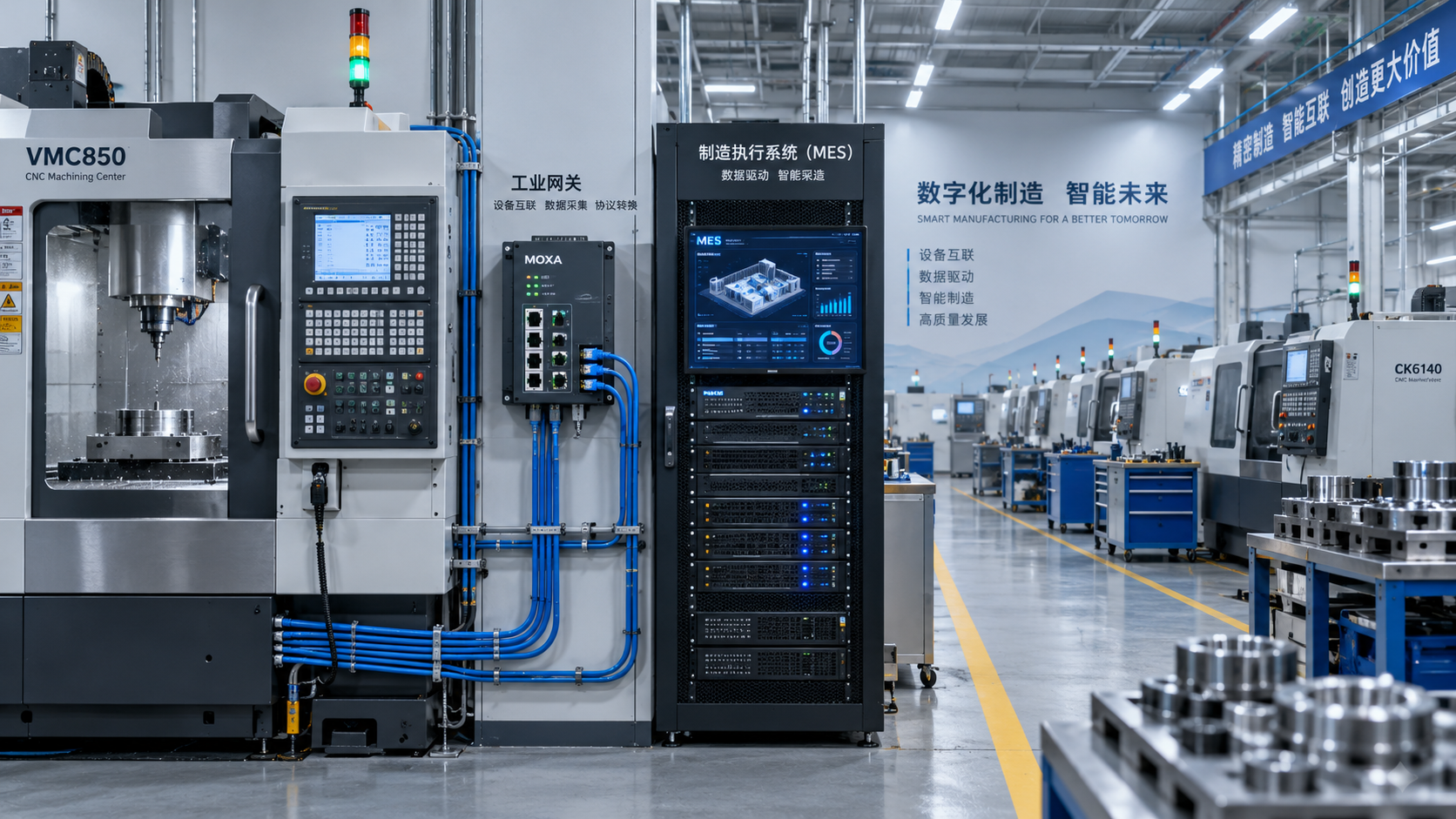
 Digital Manufacturing for Smart Factories: Connecting Legacy Machines to MESMachine Tool Industry Editorial Team
 How to Select a CNC Metal Lathe for Tight-Tolerance Shaft and Sleeve PartsCNC Machining Technology Center
 How to Select an Industrial Lathe for High-Volume Shaft ProductionMachine Tool Industry Editorial Team
 Selecting Machine Tools for Automotive Parts: Accuracy, Throughput, and AutomationMachine Tool Industry Editorial Team
 Industrial Machining: Selecting Processes for Tight-Tolerance Metal PartsCNC Machining Technology Center
 Manufacturing Technology Trends That Improve Throughput and Quality ControlManufacturing Market Research Center





Aris Katos
Future of Carbide Coatings
15+ years in precision manufacturing systems. Specialized in high-speed milling and aerospace grade alloy processing.
▶
日本高端机床出口管制生效,五轴CNC审批趋严Global Machine Tool Trade Research Center▶
Japan Tightens Controls on High-End Machine Tool ExportsGlobal Machine Tool Trade Research Center▶
US Proposes 25% Tariff on China CNC Servo DrivesGlobal Machine Tool Trade Research Center▶
US Adds 37 Chinese Machine Tool Firms to Export ListGlobal Machine Tool Trade Research Center▶
US Tightens CNC Export Curbs, Adds 52 China EntitiesGlobal Machine Tool Trade Research Center
Mastering 5-Axis Workholding Strategies
Join our technical panel on Nov 15th to learn about reducing vibrations in thin-wall components.

Providing you with integrated sanding solutions
Before-sales and after-sales services
Comprehensive technical support