• Global CNC market projected to reach $128B by 2028 • New EU trade regulations for precision tooling components • Aerospace deman
NYSE: CNC +1.2%LME: STEEL -0.4%

20 Stores Open Simultaneously: Sam's Club, Hema Accelerate Community Retail Expansion

On May 15, 2026, Sam’s Club, Hema, China Resources, and Tianhong collectively opened 20 new community-focused retail stores — a coordinated expansion signaling intensified competition in neighborhood-level grocery and convenience commerce. This development is driving increased international inquiries for Chinese-made intelligent warehousing and sorting equipment, particularly among importers serving logistics automation integrators and e-grocery fulfillment centers.
Event Overview
On May 15, 2026, four major Chinese retail brands — Sam’s Club, Hema, China Resources, and Tianhong — launched a total of 20 new stores in a single day. Among them, Hema’s ‘Super Box Suan NB’ format accounted for 16 openings across three cities, emphasizing AI-driven flexible sorting and unmanned material handling. Publicly confirmed details include the scale (20 stores), participants (four retailers), timing (May 15, 2026), and technical focus (AI-enabled sorting, AGV coordination, vision-guided fixtures, and high-cycle servo winding machines for logistics motors).
Which Sub-Sectors Are Affected
Direct Trading Enterprises
Importers and export trading companies engaged in automation components are experiencing rising inquiry volumes — especially for AGV scheduling systems, multi-station vision positioning grippers, and servo winding machines used in logistics motor production. The impact manifests as shorter lead-time expectations and increased demand for documentation supporting small-batch, rapid-iteration delivery capabilities.
Manufacturers of Automation Components
Domestic producers of AGV controllers, machine vision modules, and precision electromechanical assemblies face growing overseas procurement interest. The impact lies not in volume surges per se, but in shifting buyer priorities: foreign buyers are increasingly evaluating suppliers based on responsiveness to mid-volume, configuration-flexible orders — rather than solely on large-scale OEM contracts.
Logistics System Integrators (LSIs)
Integrators deploying last-mile or micro-fulfillment solutions for regional grocers may encounter tighter integration timelines and more frequent specification revisions. The impact appears in revised RFP language emphasizing modularity, API readiness for AI dispatch logic, and compatibility with heterogeneous robotic fleets — reflecting the operational needs observed in Hema’s ‘Super Box Suan NB’ rollout.
Supply Chain Service Providers
Firms offering customs brokerage, technical compliance support (e.g., CE/UL documentation adaptation), and localized after-sales service for automation hardware report heightened consultation requests. The impact centers on complexity: imported components now require alignment not only with functional specs but also with context-specific deployment patterns — such as high-frequency reconfiguration in compact urban fulfillment nodes.
What Relevant Companies or Practitioners Should Focus On
Monitor Technical Specification Updates from Retailer-Operated Fulfillment Hubs
Current deployments — especially Hema’s ‘Super Box Suan NB’ — are generating real-world performance benchmarks for AI-driven sortation throughput and error recovery rates. Importers and manufacturers should track official technical white papers or supplier briefings issued by these retailers, as they may inform upcoming tender requirements or certification thresholds.
Prioritize Documentation Supporting Small-Batch Delivery Capability
Analysis shows that overseas inquiries increasingly reference ‘NPI (New Product Introduction) cycle time’ and ‘variant SKU ramp-up speed’. Firms should ensure internal records — including production scheduling logs, change-control histories, and cross-model component reuse data — are structured to substantiate claims of agile manufacturing response.
Distinguish Between Pilot Signals and Scalable Deployment Standards
Observably, the May 15 rollout includes both pilot formats (e.g., ‘Super Box Suan NB’) and standardized store models. Buyers should treat early-stage formats as indicators of technical direction — not yet as stable procurement baselines. Contract terms, warranty scopes, and integration support obligations may differ significantly between pilot and mature-phase deployments.
Prepare for Increased Demand for Localization Support in Target Markets
From industry perspective, rising inquiries correlate with requests for region-specific compliance validation (e.g., UL 3101-1 for North America, EN 61800-5-1 for EU), multilingual technical manuals, and local service partner networks. Firms with existing distribution or service infrastructure in key logistics hubs (e.g., Rotterdam, Los Angeles, Singapore) may gain evaluation advantage.
Editorial Perspective / Industry Observation
This event is better understood as a strategic signal — not yet an established market shift. Analysis shows it reflects retailer-level investment in algorithmic inventory routing and labor-light fulfillment, rather than broad-based automation adoption across the sector. Observably, the emphasis on ‘flexible’ and ‘high-frequency iteration’ suggests prioritization of adaptability over raw throughput — a nuance that distinguishes this wave from earlier warehouse automation cycles. From industry angle, sustained attention is warranted because it reveals how frontline retail operations are reshaping upstream equipment specifications — moving beyond static capacity metrics toward dynamic system responsiveness.
Conclusion: This coordinated store opening does not indicate immediate, widespread demand acceleration — but rather highlights an evolving procurement priority: automation solutions must now demonstrate agility in configuration, scalability in low-to-mid volumes, and interoperability within AI-coordinated environments. It is more accurately interpreted as a refinement of buyer expectations than a surge in order volume.
Source: Public announcements by Sam’s Club, Hema, China Resources, and Tianhong dated May 15, 2026. Note: Technical performance metrics of ‘Super Box Suan NB’ and long-term procurement roadmaps remain under observation and are not yet publicly disclosed.
Recommended for You
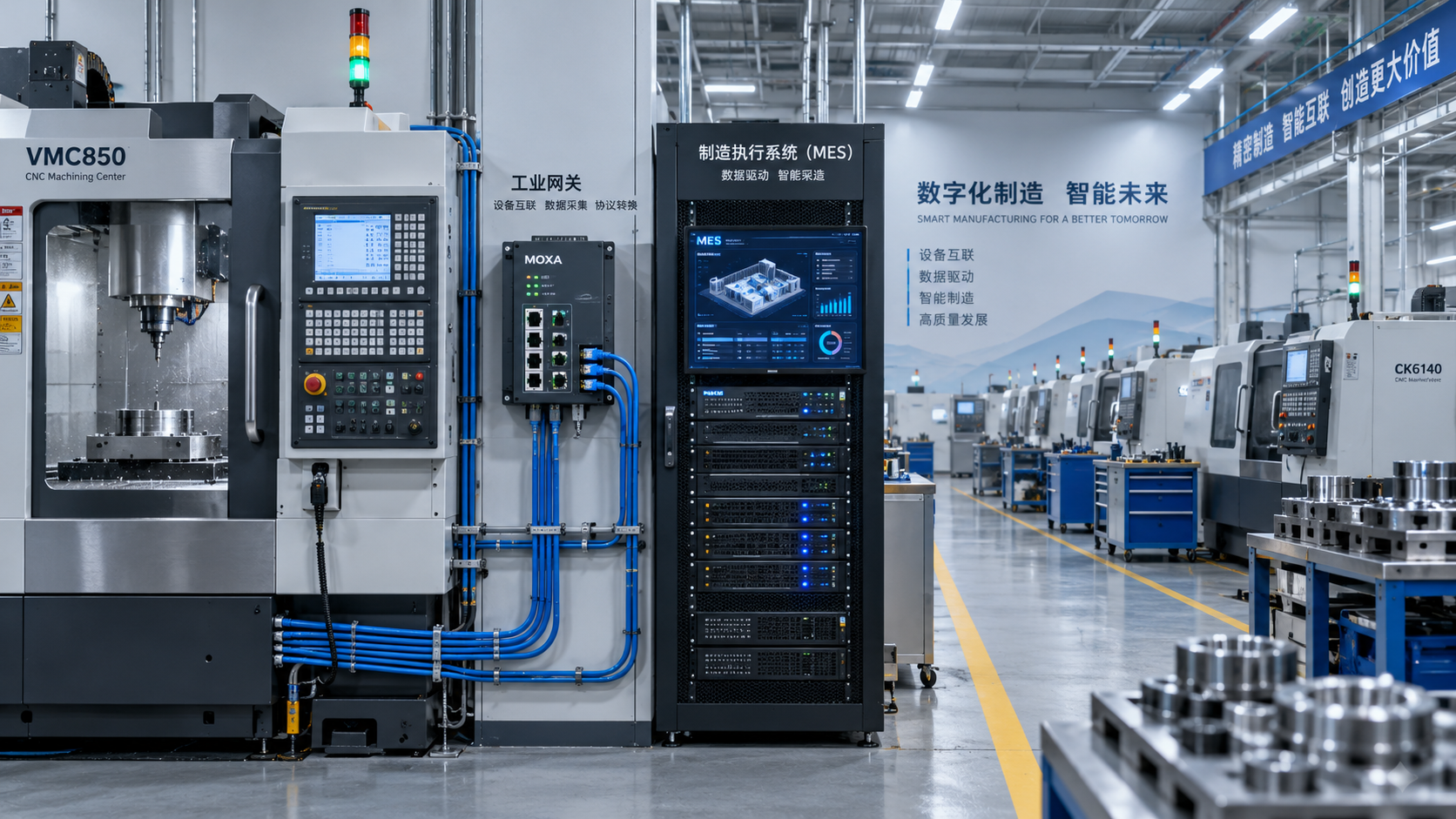
 Digital Manufacturing for Smart Factories: Connecting Legacy Machines to MESMachine Tool Industry Editorial Team
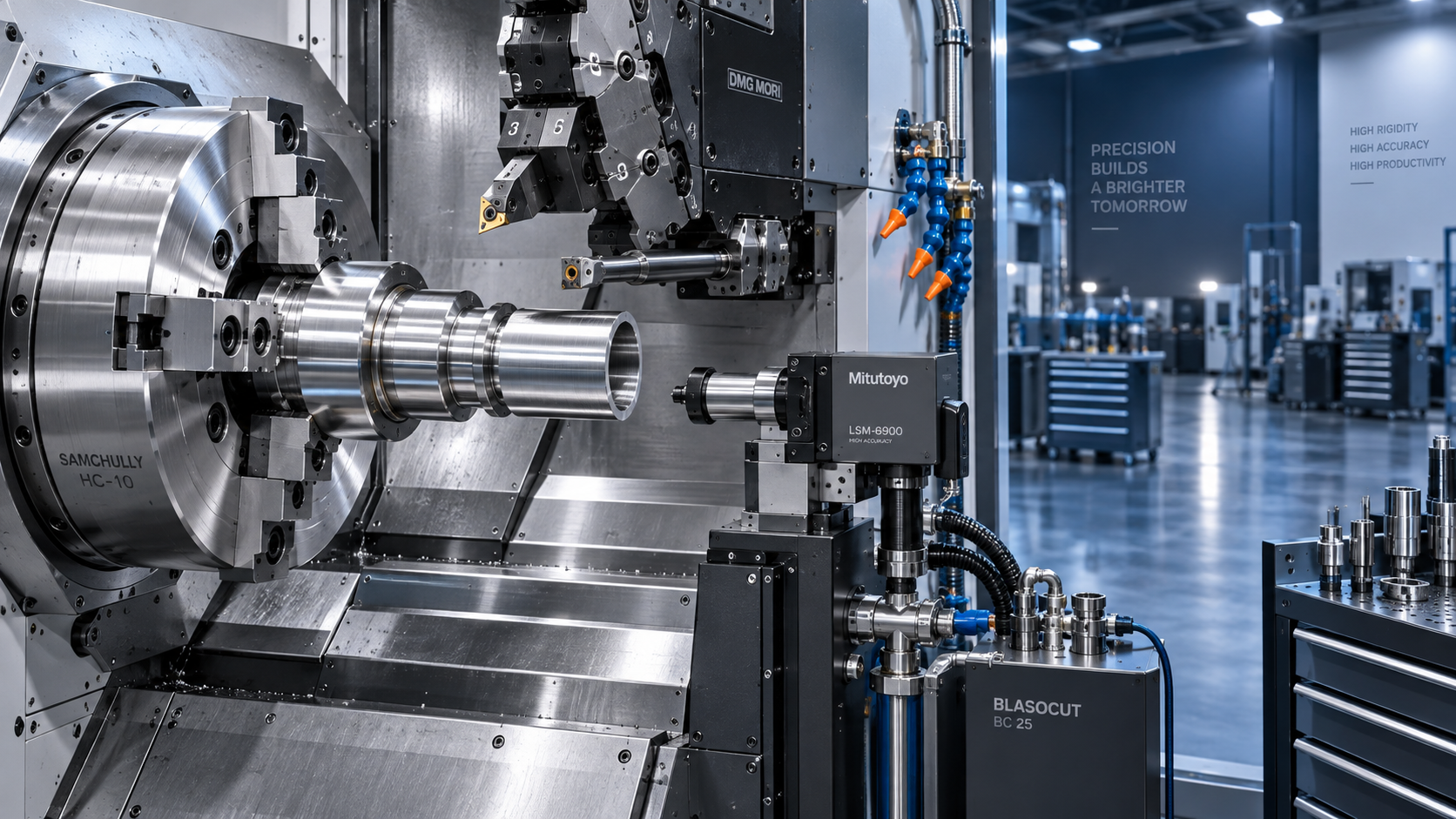
 How to Select a CNC Metal Lathe for Tight-Tolerance Shaft and Sleeve PartsCNC Machining Technology Center
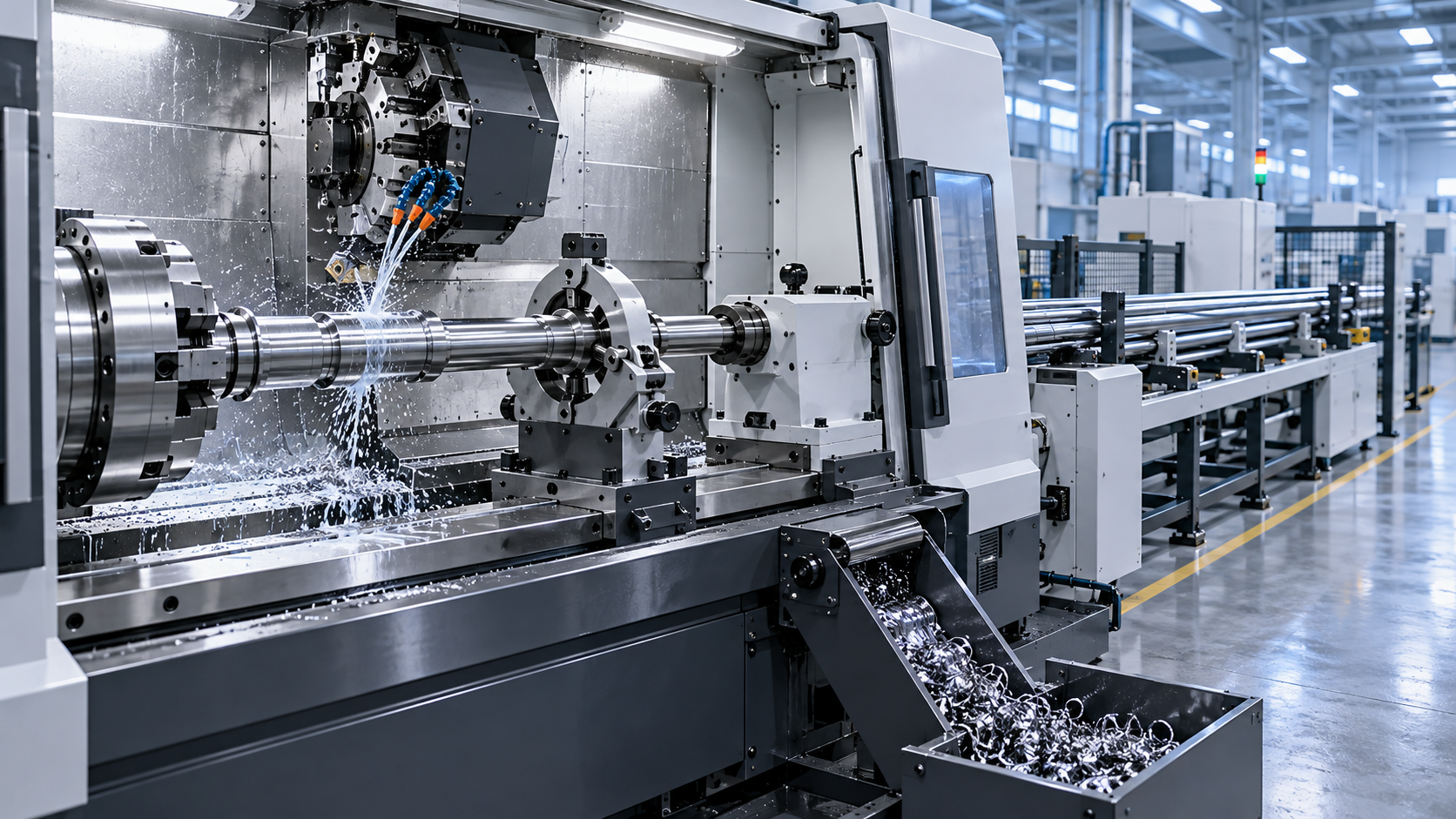
 How to Select an Industrial Lathe for High-Volume Shaft ProductionMachine Tool Industry Editorial Team
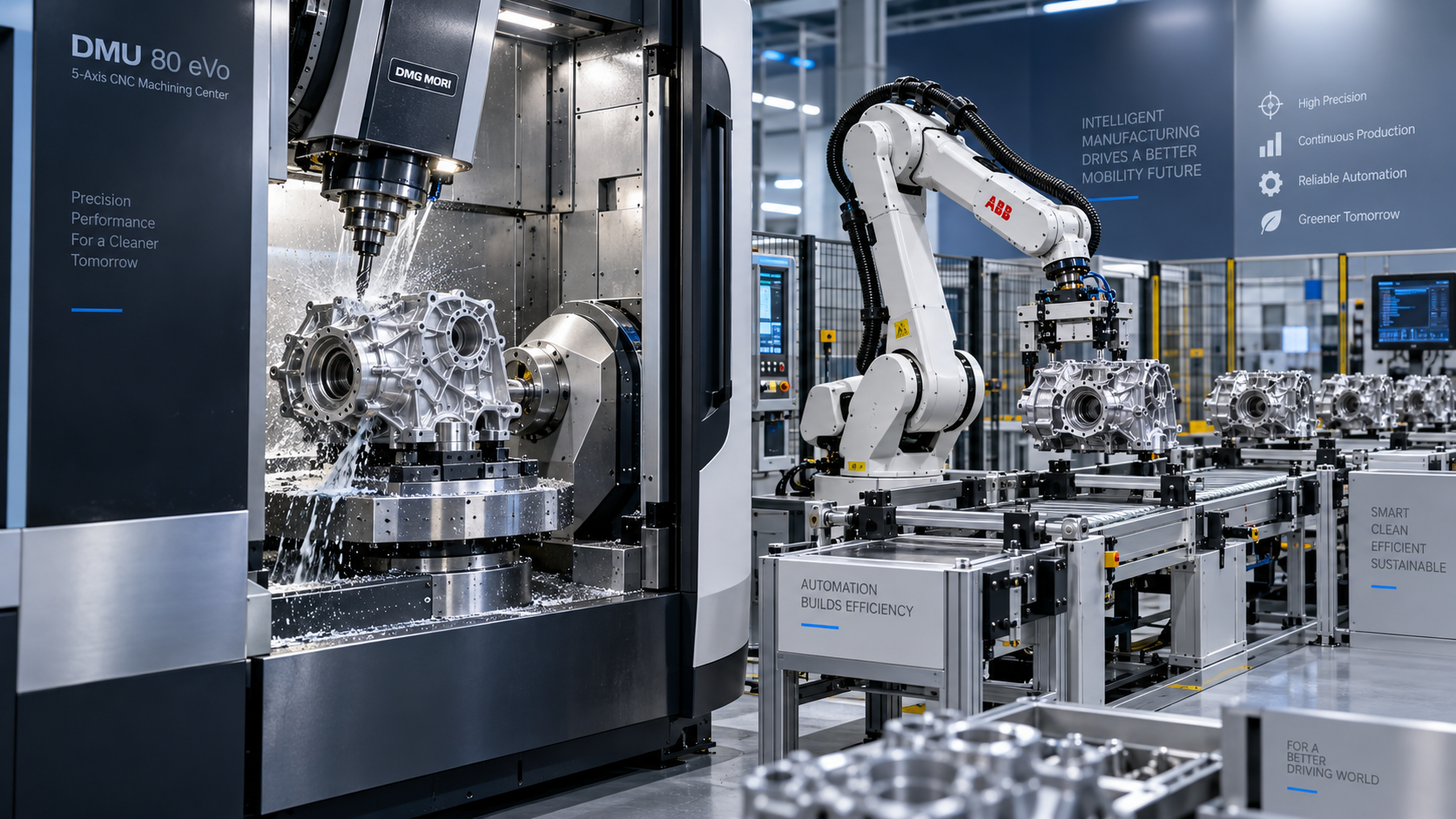
 Selecting Machine Tools for Automotive Parts: Accuracy, Throughput, and AutomationMachine Tool Industry Editorial Team
 Industrial Machining: Selecting Processes for Tight-Tolerance Metal PartsCNC Machining Technology Center
 Manufacturing Technology Trends That Improve Throughput and Quality ControlManufacturing Market Research Center

Aris Katos
Future of Carbide Coatings
15+ years in precision manufacturing systems. Specialized in high-speed milling and aerospace grade alloy processing.
▶
Digital Manufacturing for Smart Factories: Connecting Legacy Machines to MESMachine Tool Industry Editorial Team▶
Selecting Machine Tools for Automotive Parts: Accuracy, Throughput, and AutomationMachine Tool Industry Editorial Team▶
Smart Manufacturing for Small Businesses: Where Automation Delivers the Fastest ROIMachine Tool Industry Editorial Team▶
How Smart Manufacturing Technology Improves OEE Across Industry 4.0 Production LinesMachine Tool Industry Editorial Team▶
How to Evaluate an Automation Line for Electronics Production Before InvestmentMachine Tool Industry Editorial Team
Mastering 5-Axis Workholding Strategies
Join our technical panel on Nov 15th to learn about reducing vibrations in thin-wall components.

Providing you with integrated sanding solutions
Before-sales and after-sales services
Comprehensive technical support