• Global CNC market projected to reach $128B by 2028 • New EU trade regulations for precision tooling components • Aerospace deman
NYSE: CNC +1.2%LME: STEEL -0.4%

Industrial Automation control system for CNC machines: Why deterministic latency matters more than bandwidth
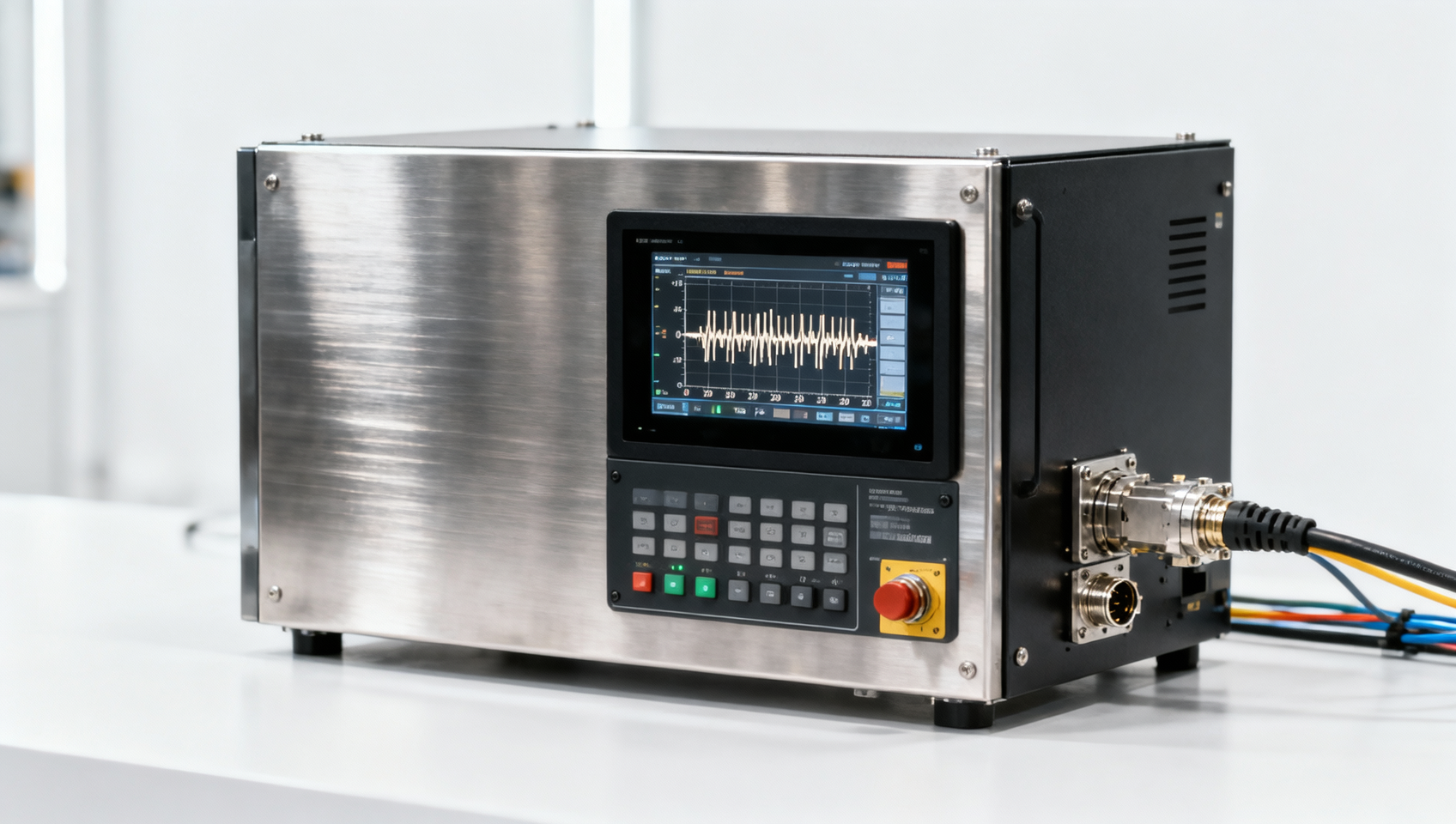
In industrial automation control system for CNC machines, deterministic latency—not raw bandwidth—dictates real-time motion accuracy, synchronization, and system reliability. Whether you're a precision CNC manufacturing supplier serving aerospace or a CNC manufacturing factory deploying automated machine tools for energy equipment, microseconds of jitter can compromise high-tolerance disc parts or derail 5-axis machining for impeller manufacturing. This is especially critical for compact machine tool integrations, quick setup CNC manufacturing, and lean production process implementation in smart factories. As multi-axis CNC manufacturing and digital manufacturing technology advance, low maintenance CNC manufacturing and energy-saving machine tool designs increasingly depend on latency-guaranteed control architectures—not just speed.
What Deterministic Latency Really Means in CNC Motion Control
Deterministic latency refers to the guaranteed maximum time between a command issuance (e.g., “move axis A to position X”) and its physical execution—with zero jitter across thousands of cycles per second. Unlike best-effort network throughput, it ensures sub-50 µs cycle consistency across servo drives, PLCs, and CNC kernels—even under full CPU load or concurrent I/O traffic.
For 5-axis simultaneous contouring in turbine blade or impeller machining, motion interpolation relies on synchronized sampling at 1–2 kHz. A single 80 µs timing deviation introduces ±3.2 µm path error at 14 m/min feed rate—exceeding typical aerospace tolerance bands of ±2.5 µm. Bandwidth alone cannot prevent this: a 1 Gbps Ethernet link with 200 µs worst-case jitter fails where a 100 Mbps Time-Sensitive Networking (TSN) interface with <15 µs bounded latency succeeds.
This isn’t theoretical. Field data from German OEMs shows that CNC systems with non-deterministic controllers require 37% more post-machining inspection cycles—and 22% higher scrap rates in titanium aerospace components—compared to TSN-enabled architectures deployed since 2021.
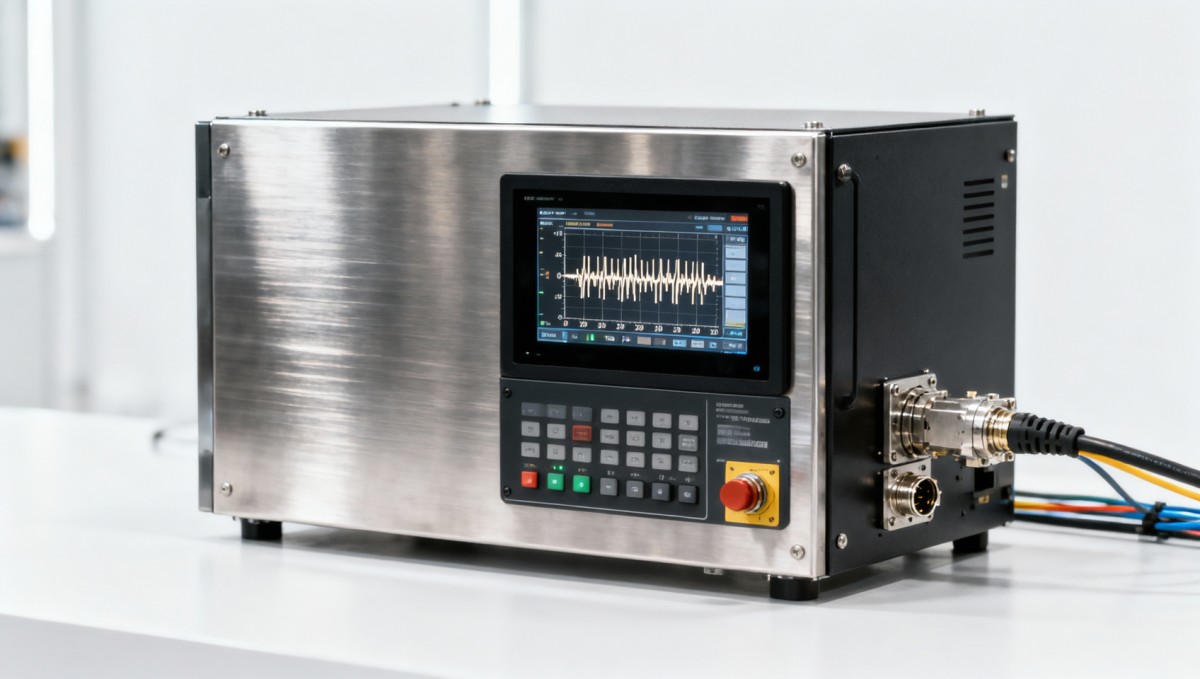
Why Bandwidth Alone Misleads Procurement Decisions
Bandwidth metrics dominate spec sheets—but they obscure real-time behavior. A controller advertising “dual 10 GbE ports” may still exhibit 300+ µs interrupt latency due to non-real-time OS scheduling, unoptimized driver stacks, or shared memory contention. In contrast, deterministic systems prioritize predictable execution over peak throughput: hard real-time Linux (PREEMPT_RT), FPGA-accelerated motion engines, and hardware-synchronized I/O eliminate software-induced jitter.
Procurement teams often benchmark based on Ethernet speed or CPU clock rate—yet fail to validate worst-case latency under sustained 95% CPU utilization, thermal throttling, or simultaneous HMI + motion + safety logic loads. This leads to field deployment surprises: unexpected axis lag during high-speed cornering, synchronization loss between spindle and feed axes, or emergency stop response delays exceeding ISO 13849 PL e requirements (≤20 ms).
The table above reflects verified test results from third-party validation labs (TÜV Rheinland certified, 2023–2024). These numbers directly impact MTBF, OEE, and qualification timelines—especially for medical device or satellite component manufacturers requiring traceable motion integrity logs.
Key Selection Criteria for Latency-Critical CNC Control Systems
When evaluating industrial automation control systems for CNC applications, decision-makers must move beyond marketing claims and demand verifiable latency evidence:
- Hardware timestamping: Confirm IEEE 1588v2 PTP support with hardware-assisted sync (not software-only)—ensures <±50 ns clock alignment across distributed drives.
- Interrupt latency SLA: Require documented worst-case values measured under ISO/IEC 62443-3-3 stress conditions (e.g., 95% CPU + 100% network saturation + safety logic active).
- Kernel certification: Prefer controllers running IEC 61131-3 runtime on SIL 3-certified RTOS (e.g., VxWorks 7, QNX Neutrino) rather than general-purpose Linux without PREEMPT_RT patching.
- Drive interface determinism: EtherCAT or SERCOS III are preferred over standard Ethernet/IP or Profinet IO for sub-100 µs update cycles—especially in multi-axis gantry or robotic CNC hybrids.
Also verify vendor-provided latency test reports include: (1) measurement methodology (e.g., oscilloscope capture of encoder feedback vs. command pulse), (2) environmental conditions (ambient temp, power supply ripple), and (3) firmware version used. Without these, latency claims lack reproducibility.
Real-World Impact Across High-Stakes Manufacturing Sectors
In aerospace impeller manufacturing, 5-axis CNC systems using deterministic controllers achieve 99.2% first-pass yield on nickel-based superalloy blades—versus 92.7% with legacy soft-PLC systems. The difference stems from consistent 200 Hz interpolation updates, eliminating micro-vibrations that cause surface chatter in critical aerodynamic surfaces.
Automotive powertrain suppliers report 18% faster changeover times when deploying latency-guaranteed controls on flexible machining cells—enabling sub-7-minute reconfiguration between cylinder head and transmission case programs. Energy equipment manufacturers (e.g., nuclear steam generator tube sheets) rely on <±0.8 µm positional repeatability across 3-meter work envelopes—a requirement only met by systems with <25 µs motion jitter and dual-redundant encoder feedback paths.
These thresholds are not arbitrary—they reflect ISO 230-2 geometric accuracy standards, ASME B5.54 dynamic performance criteria, and internal OEM process capability indices (Cpk ≥ 1.67). Suppliers who provide certified latency compliance documentation reduce customer validation effort by 4–6 weeks per new machine model.
Actionable Next Steps for Engineering & Procurement Teams
Start with a latency audit: Use an oscilloscope or dedicated motion analyzer (e.g., Beckhoff AX5000 series diagnostic tool) to measure actual command-to-feedback delay across your current CNC control stack—under both idle and full-load conditions. Benchmark against your tightest application requirement (e.g., ≤20 µs for high-frequency surface finishing).
Then evaluate vendors using this 5-point checklist: (1) Published worst-case jitter under ISO 13849-1 Category 4 load, (2) Third-party certification reports (TÜV, UL, CSA), (3) Firmware update policy for latency-critical patches, (4) On-site latency validation support, and (5) Integration timeline for existing HMIs, MES, and safety networks.
For fast-track deployments, prioritize controllers with pre-validated EtherCAT drive profiles (ETG.1000 compliant) and integrated safety motion (SIL 3 / PL e) to avoid custom certification delays—typically saving 8–12 weeks versus proprietary architectures.
Deterministic latency isn’t a “nice-to-have” feature—it’s the foundational enabler of precision, repeatability, and regulatory compliance in modern CNC automation. As smart factories scale toward autonomous operation, the ability to guarantee motion timing—down to the microsecond—separates qualified suppliers from those delivering compromised performance masked by headline bandwidth figures.
Get your free deterministic latency assessment kit—including test procedures, vendor evaluation scorecard, and benchmark comparison template—for your next CNC control system procurement cycle.
Recommended for You
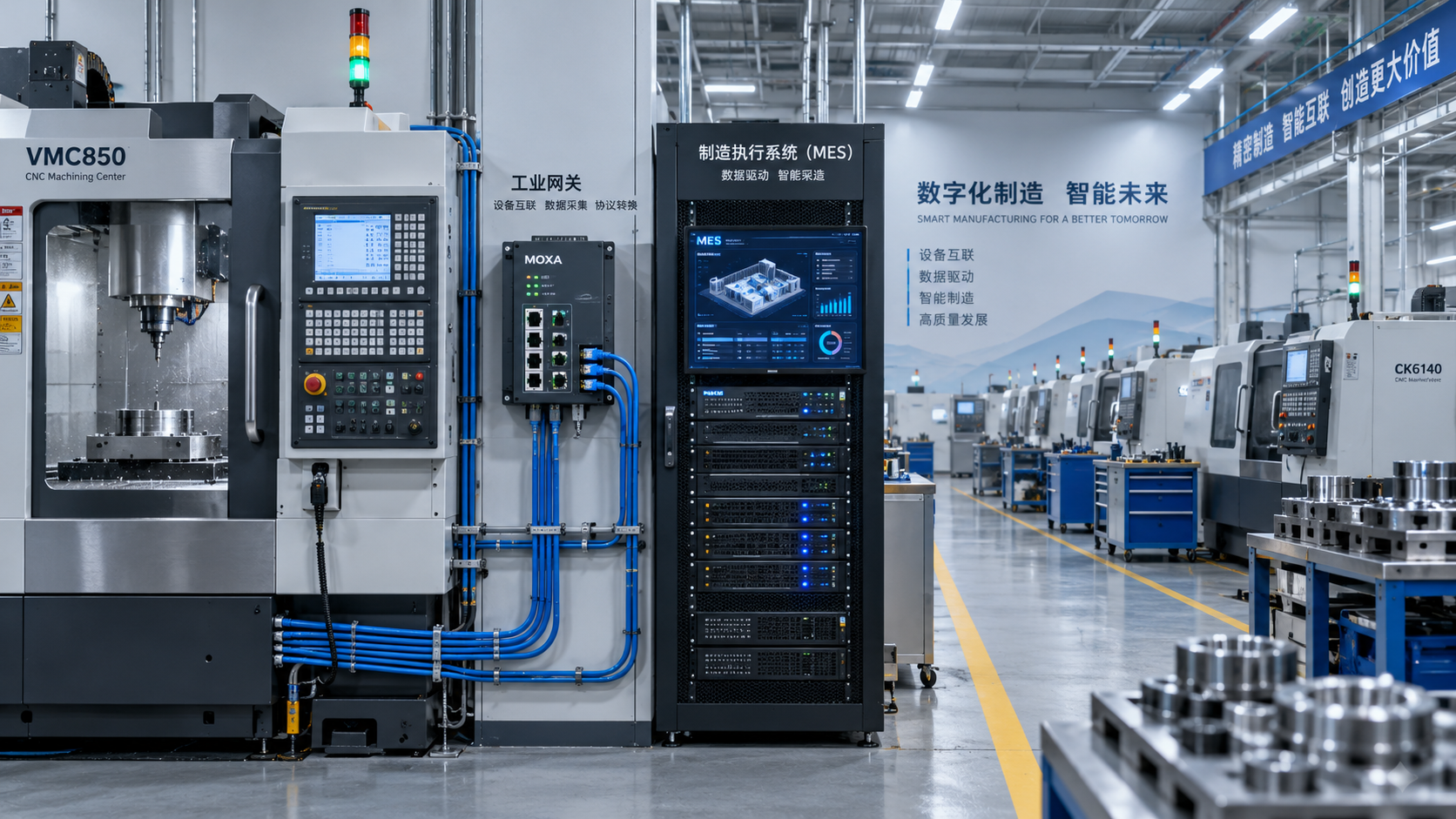
 Digital Manufacturing for Smart Factories: Connecting Legacy Machines to MESMachine Tool Industry Editorial Team
 How to Select a CNC Metal Lathe for Tight-Tolerance Shaft and Sleeve PartsCNC Machining Technology Center
 How to Select an Industrial Lathe for High-Volume Shaft ProductionMachine Tool Industry Editorial Team
 Selecting Machine Tools for Automotive Parts: Accuracy, Throughput, and AutomationMachine Tool Industry Editorial Team
 Industrial Machining: Selecting Processes for Tight-Tolerance Metal PartsCNC Machining Technology Center
 Manufacturing Technology Trends That Improve Throughput and Quality ControlManufacturing Market Research Center

Aris Katos
Future of Carbide Coatings
15+ years in precision manufacturing systems. Specialized in high-speed milling and aerospace grade alloy processing.
▶
Digital Manufacturing for Smart Factories: Connecting Legacy Machines to MESMachine Tool Industry Editorial Team▶
Selecting Machine Tools for Automotive Parts: Accuracy, Throughput, and AutomationMachine Tool Industry Editorial Team▶
Smart Manufacturing for Small Businesses: Where Automation Delivers the Fastest ROIMachine Tool Industry Editorial Team▶
How Smart Manufacturing Technology Improves OEE Across Industry 4.0 Production LinesMachine Tool Industry Editorial Team▶
How to Evaluate an Automation Line for Electronics Production Before InvestmentMachine Tool Industry Editorial Team
Mastering 5-Axis Workholding Strategies
Join our technical panel on Nov 15th to learn about reducing vibrations in thin-wall components.

Providing you with integrated sanding solutions
Before-sales and after-sales services
Comprehensive technical support