• Global CNC market projected to reach $128B by 2028 • New EU trade regulations for precision tooling components • Aerospace deman
NYSE: CNC +1.2%LME: STEEL -0.4%

Industrial Robotics can raise output, but where is the risk?
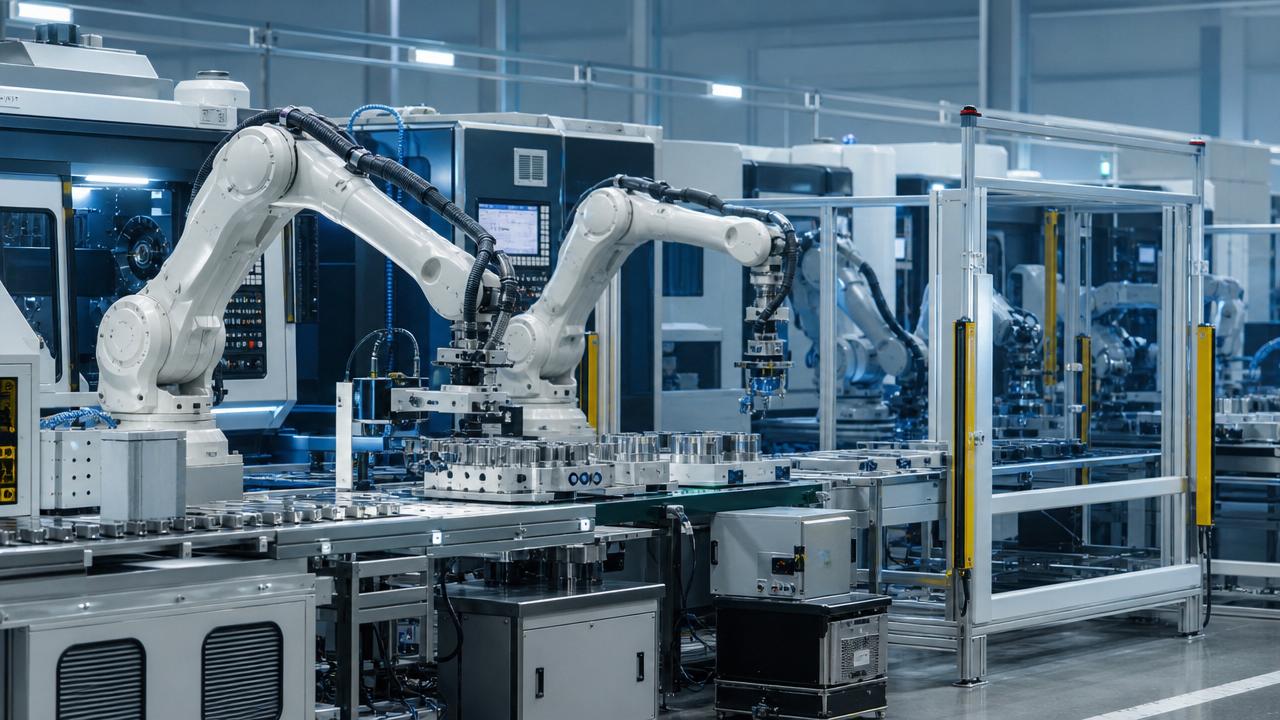
Industrial Robotics can transform manufacturing by lifting output, stabilizing quality, and reducing repetitive labor pressure. Yet higher automation also introduces operational, financial, digital, and organizational exposure.
In CNC machining, precision machine tools, and automated production lines, the promise is clear. Faster cycle times, lower variation, and better equipment utilization often justify investment.
The harder issue is risk location. Problems rarely begin with the robot alone. They often emerge at integration points, software layers, maintenance routines, and supplier dependencies.
For global precision manufacturing, especially across automotive, aerospace, electronics, and energy equipment, understanding Industrial Robotics means balancing measurable gains with hidden fragility before scaling.
What Industrial Robotics Means in Modern Manufacturing
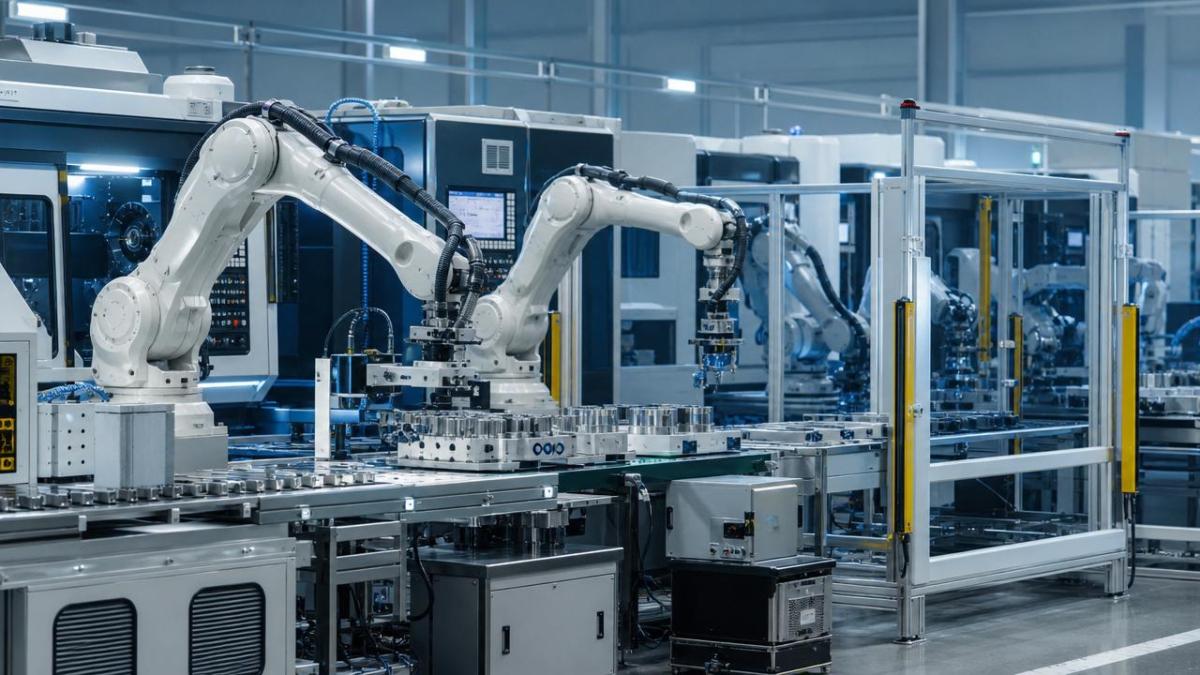
Industrial Robotics refers to programmable machines that perform material handling, welding, assembly, inspection, packaging, machine tending, and other repeatable industrial tasks with controlled motion.
Within the CNC machine tool industry, Industrial Robotics often connects lathes, machining centers, multi-axis systems, conveyors, vision units, and automated storage into coordinated production cells.
The value is not limited to motion. Industrial Robotics also supports data capture, process consistency, traceability, and safer handling of hot, sharp, or heavy components.
However, automation performance depends on the entire production architecture. Robot speed alone cannot compensate for weak fixturing, unstable tooling, poor programming, or disconnected software systems.
Core elements usually involved
- Robot arms, controllers, and end-of-arm tooling
- CNC machines, fixtures, and cutting tools
- Sensors, vision systems, and safety equipment
- MES, ERP, PLC, and industrial network connections
- Maintenance plans, spare parts, and operator training
Industry Context and the Current Risk Conversation
The global machine tool sector is moving toward higher precision, digital integration, and flexible production. Industrial Robotics has become central to smart factory strategies across major manufacturing economies.
China, Germany, Japan, and South Korea continue expanding machine tool ecosystems. At the same time, labor volatility, energy costs, and quality pressure make automation financially attractive.
Still, the market no longer treats Industrial Robotics as a simple productivity purchase. It is increasingly evaluated as a system-level investment with wider enterprise consequences.
Key signals shaping decisions
Where Industrial Robotics Creates Real Business Value
The strongest case for Industrial Robotics appears when output constraints come from repetitive handling, machine idle time, or inconsistent manual loading across multiple production shifts.
In CNC environments, robots can keep spindle utilization higher by loading raw blanks, unloading finished parts, orienting components, and linking secondary operations with minimal delay.
Industrial Robotics also improves repeatability. Precise and consistent positioning reduces variation caused by fatigue, changing work methods, or uneven part presentation.
Safety benefits matter as well. Robots can remove people from hazardous zones involving coolant exposure, metal chips, sharp edges, hot surfaces, or heavy workpieces.
Typical value drivers
- Higher throughput through longer unattended production windows
- Better consistency in loading, handling, and inspection
- Lower scrap linked to process variation and handling errors
- Improved labor allocation toward programming, quality, and maintenance
- More stable planning for mixed-volume and multi-part production
These benefits are strongest when cycle balancing, fixture design, and upstream material flow are solved first. Poor line design can hide losses behind impressive robot movement.
The Main Risks Behind Higher Output
Industrial Robotics carries risk in five major areas: capital structure, technical integration, operational continuity, cyber resilience, and organizational capability.
1. Integration and commissioning risk
A robot cell can underperform when interfaces between machines, grippers, sensors, and software are not fully validated. Delays often appear during commissioning, not purchase approval.
Legacy CNC machines may require custom communication, guarding redesign, or manual workaround logic. That raises engineering time, debugging effort, and launch uncertainty.
2. Downtime concentration risk
When one automated cell feeds several operations, a single fault can stop an entire production segment. Output gains can therefore come with larger outage impact.
This is especially relevant in high-precision manufacturing where takt balance is tight and buffers are intentionally limited to reduce inventory and floor space.
3. Skills gap and support risk
Industrial Robotics requires programming, troubleshooting, calibration, safety validation, and preventive maintenance skills. Without internal depth, dependence on external support rises sharply.
A shortage of trained technicians can turn minor stoppages into long delays, especially during night shifts or multi-site production schedules.
4. Cybersecurity and data integrity risk
Connected Industrial Robotics systems exchange production data, recipes, alarms, and status signals. Weak network segmentation can expose controllers and adjacent machines to unauthorized access.
Even without sabotage, corrupted parameters or software mismatch can degrade quality silently, creating traceability issues and delayed defect discovery.
5. Vendor and spare parts dependence
A robot may run for years, but controller boards, drives, reducers, and proprietary software updates shape true lifecycle resilience. Single-source dependency is often underestimated.
If spare parts availability changes, downtime risk increases. If software licensing changes, upgrade cost and interoperability risk may follow.
Typical Application Scenarios and Risk Profiles
Not every automation target carries the same exposure. In precision manufacturing, risk varies by process complexity, part diversity, and required uptime discipline.
Practical Guidance for Reducing Industrial Robotics Risk
The safest Industrial Robotics strategy begins with process discipline, not hardware enthusiasm. Strong automation results usually come from staged deployment and measurable control points.
Recommended practices
- Map the full process before purchase, including loading, clamping, inspection, and rework loops.
- Run total cost analysis covering integration, software, training, spare parts, and planned downtime.
- Pilot Industrial Robotics in one high-repeatability process before expanding into mixed-part complexity.
- Set cybersecurity rules for controller access, backups, segmentation, and software change approval.
- Build internal capability for maintenance, alarm diagnosis, and recovery procedures.
- Qualify alternate suppliers where possible for critical components and consumables.
Performance metrics should include more than output. Track OEE, scrap, mean time to repair, programming change time, and recovery speed after unplanned interruption.
This broader view reveals whether Industrial Robotics is creating resilient productivity or simply shifting instability into less visible layers of the operation.
A Clear Next Step for Smarter Automation Planning
Industrial Robotics can absolutely raise output, especially in CNC machining, precision production, and automated factory environments. The real advantage comes when output growth is matched by controlled risk.
A practical next step is to audit one production cell across technical fit, support depth, cyber readiness, and spare parts resilience. That single review often exposes the true expansion path.
When Industrial Robotics is evaluated as a connected manufacturing system rather than a standalone machine, investment decisions become more accurate, scalable, and durable in global industrial competition.
PREVIOUS ARTICLE
Recommended for You
 Digital Manufacturing for Smart Factories: Connecting Legacy Machines to MESMachine Tool Industry Editorial Team
 How to Select a CNC Metal Lathe for Tight-Tolerance Shaft and Sleeve PartsCNC Machining Technology Center
 How to Select an Industrial Lathe for High-Volume Shaft ProductionMachine Tool Industry Editorial Team
 Selecting Machine Tools for Automotive Parts: Accuracy, Throughput, and AutomationMachine Tool Industry Editorial Team
 Industrial Machining: Selecting Processes for Tight-Tolerance Metal PartsCNC Machining Technology Center
 Manufacturing Technology Trends That Improve Throughput and Quality ControlManufacturing Market Research Center

Aris Katos
Future of Carbide Coatings
15+ years in precision manufacturing systems. Specialized in high-speed milling and aerospace grade alloy processing.
▶
Digital Manufacturing for Smart Factories: Connecting Legacy Machines to MESMachine Tool Industry Editorial Team▶
Selecting Machine Tools for Automotive Parts: Accuracy, Throughput, and AutomationMachine Tool Industry Editorial Team▶
Smart Manufacturing for Small Businesses: Where Automation Delivers the Fastest ROIMachine Tool Industry Editorial Team▶
How Smart Manufacturing Technology Improves OEE Across Industry 4.0 Production LinesMachine Tool Industry Editorial Team▶
How to Evaluate an Automation Line for Electronics Production Before InvestmentMachine Tool Industry Editorial Team
Mastering 5-Axis Workholding Strategies
Join our technical panel on Nov 15th to learn about reducing vibrations in thin-wall components.

Providing you with integrated sanding solutions
Before-sales and after-sales services
Comprehensive technical support