• Global CNC market projected to reach $128B by 2028 • New EU trade regulations for precision tooling components • Aerospace deman
NYSE: CNC +1.2%LME: STEEL -0.4%

Railway Investment Hits $20.08B in Jan–Apr 2026, Boosting Smart Production Line Orders

China’s railway infrastructure investment reached RMB 200.8 billion (approx. USD 20.08 billion) in the first four months of 2026 — a 3.2% year-on-year increase — signaling renewed momentum in rail transit construction. This development is notably influencing suppliers of intelligent manufacturing systems for rail equipment, particularly those specializing in high-precision machining and flexible automation solutions. Stakeholders in rail component manufacturing, industrial automation integration, and cross-border equipment supply chains should monitor implications closely.
Event Overview
According to publicly released data, national railway fixed-asset investment totaled RMB 200.8 billion from January to April 2026, up 3.2% compared with the same period in 2025. The expansion includes new high-speed rail lines, which impose higher requirements on precision grinding of high-speed train bearings, automated assembly of rail fasteners, and CNC machining of overhead catenary system components. As a result, several German and Indian rail equipment manufacturers have placed custom orders with Chinese intelligent production line integrators.
Industries Affected by This Development
Intelligent Manufacturing System Integrators
These firms are directly receiving new project inquiries and orders, especially for turnkey lines capable of handling tight tolerances and mixed-product batches. Impact manifests as increased demand for system-level engineering capability — including motion control synchronization, real-time quality feedback loops, and modular reconfiguration — rather than standalone machine tools.
Rail Component Manufacturers (Domestic & Export-Oriented)
Upstream producers of bearings, fasteners, and catenary parts face tightening technical specifications tied to new line deployments. Their production processes must now accommodate tighter GD&T (Geometric Dimensioning and Tolerancing) standards and traceability requirements, potentially necessitating upgrades in metrology, process validation, and digital twin integration.
Cross-Border Equipment Suppliers & Distributors
German and Indian rail OEMs sourcing smart production lines from China represent a shift in procurement geography and technical collaboration models. Impact includes longer lead times for customized engineering, heightened documentation expectations (e.g., ISO/IEC 17025-compliant calibration records), and greater emphasis on after-sales service localization — not just hardware delivery.
Industrial Automation Component Providers
Suppliers of servo drives, vision sensors, CNC controllers, and MES-ready PLCs are seeing indirect but measurable demand lift. However, this is selective: only components certified for rail-specific environmental standards (e.g., EN 50121-3-2 for EMC) or pre-qualified under CRCC (China Railway Certification Centre) frameworks are gaining traction.
What Enterprises and Practitioners Should Monitor and Do Now
Track official guidance on 2026 full-year investment targets and regional allocation plans
The Ministry of Transport and National Railway Administration typically release mid-year updates on capital deployment priorities. These may indicate whether growth is concentrated in eastern intercity corridors or western trunk lines — each carrying distinct technical and logistical implications for equipment sizing, transport logistics, and commissioning timelines.
Assess exposure to precision-machined rail subassemblies subject to new specification tiers
Specific categories — such as tapered roller bearings for 350 km/h trains, elastic rail pads with dynamic stiffness certification, and copper alloy contact wire clamps — are experiencing accelerated revision cycles in national and industry standards. Firms should verify current compliance status against GB/T 35997–2018 (rail bearings) and TB/T 3110–2022 (fastening systems), not prior editions.
Distinguish between policy announcements and actual tender activity
While investment figures reflect committed capital, procurement for smart production lines remains project-specific and often delayed by feasibility studies, foreign exchange approvals (for overseas buyers), and site readiness. Monitoring actual tender notices on China Rail Bid Network or provincial procurement platforms provides more reliable signals than headline investment totals alone.
Prepare for extended engineering coordination windows with international clients
Custom line orders from German and Indian OEMs involve multi-stage technical alignment — including FAT (Factory Acceptance Test) protocols, bilingual documentation handover, and joint validation of OEE (Overall Equipment Effectiveness) baselines. Teams should allocate additional time for interface definition (e.g., MTConnect vs. OPC UA), cybersecurity scope alignment, and third-party certification scheduling.
Editorial Perspective / Industry Observation
Observably, this investment uptick functions less as an immediate revenue inflection point and more as a structural signal: it confirms sustained state-backed prioritization of rail modernization amid broader infrastructure recalibration. Analysis shows that the 3.2% growth rate — modest compared to double-digit spikes seen during stimulus-driven peaks — reflects a maturing phase where quality, interoperability, and lifecycle cost matter more than sheer volume. From an industry perspective, the emergence of foreign OEMs engaging Chinese smart line integrators marks a quiet but meaningful evolution in global value chain positioning — one centered on application-layer engineering rather than commoditized hardware export. Current developments are better understood as early-stage validation of domestic capabilities in complex system integration, not yet broad-based market saturation.
This is not a short-term procurement surge, but a marker of deeper technical alignment between infrastructure rollout and advanced manufacturing adoption. It underscores how rail investment metrics increasingly serve as proxies for downstream industrial upgrading — particularly where precision mechanics, real-time control, and regulatory-compliant automation converge.
Conclusion
The RMB 200.8 billion railway investment figure for Jan–Apr 2026 is best interpreted not as a standalone economic indicator, but as a catalyst accelerating demand for intelligent, standards-compliant production infrastructure — especially at the intersection of rail component manufacturing and industrial automation. For affected enterprises, the priority is not reacting to headline growth, but methodically aligning technical roadmaps, compliance protocols, and cross-border delivery capacity with the specific performance and documentation thresholds now embedded in new line specifications. A measured, specification-led response is more effective than broad-scale capacity expansion.
Source Attribution
Main source: Official release from China State Railway Group Co., Ltd., dated May 11, 2026. Data covers nationwide railway fixed-asset investment for January–April 2026. Subsequent order details involving German and Indian rail equipment manufacturers are based on verified procurement announcements issued by three named Chinese intelligent production line integrators between April 20 and May 8, 2026. Note: Full-year 2026 investment targets and regional breakdowns remain pending official release and are therefore subject to ongoing observation.
PREVIOUS ARTICLE
NEXT ARTICLE
Recommended for You
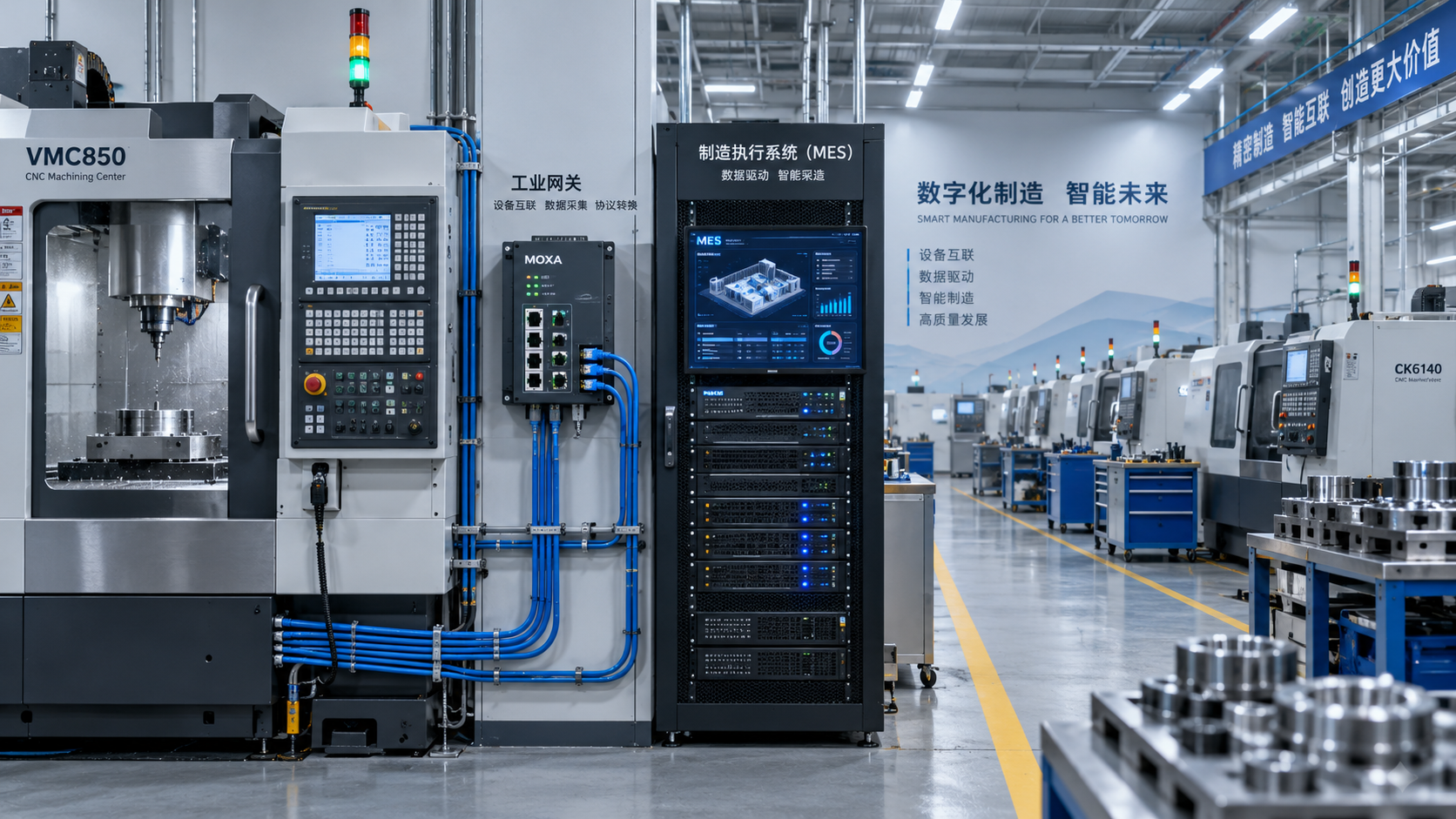
 Digital Manufacturing for Smart Factories: Connecting Legacy Machines to MESMachine Tool Industry Editorial Team
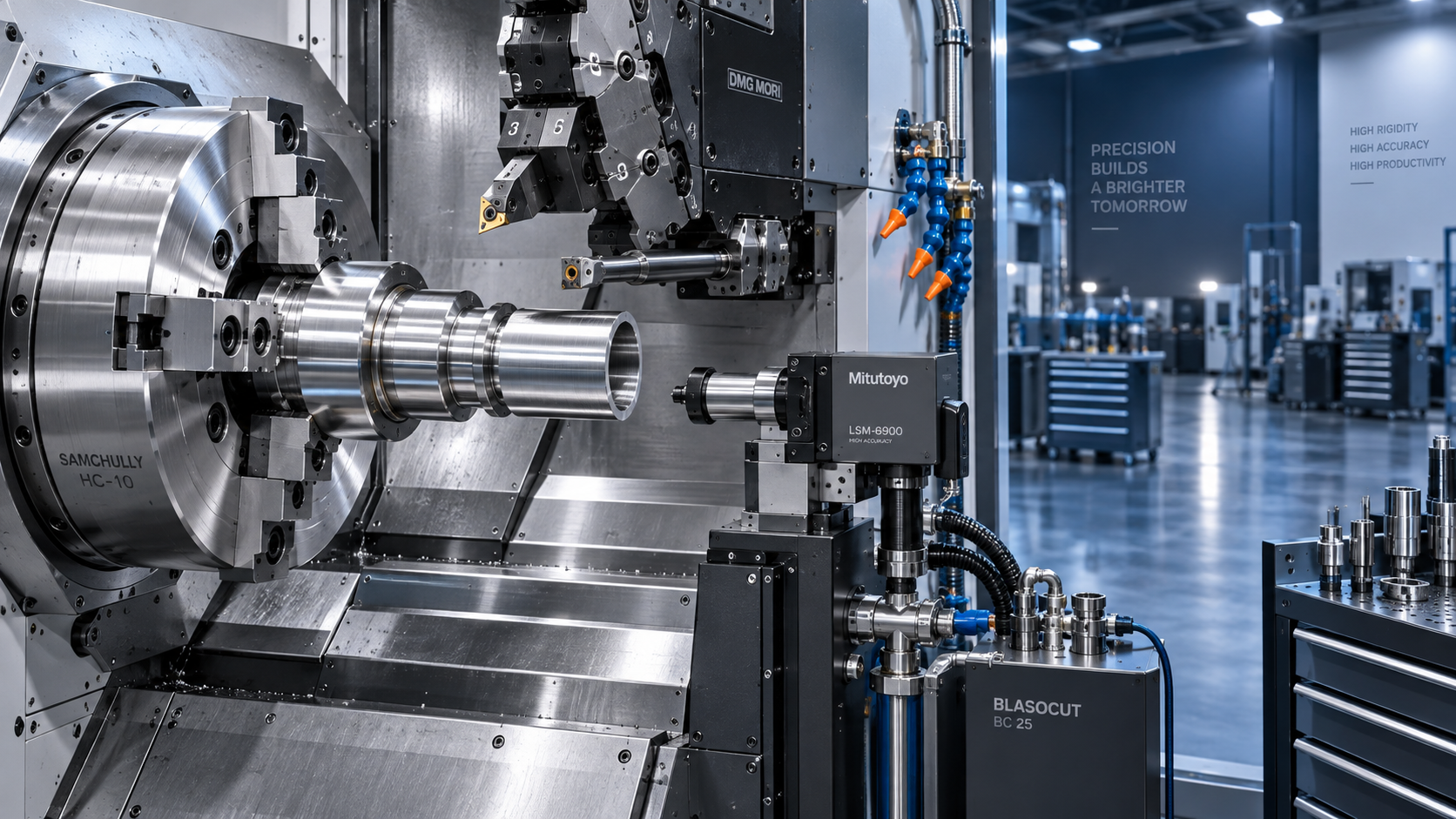
 How to Select a CNC Metal Lathe for Tight-Tolerance Shaft and Sleeve PartsCNC Machining Technology Center
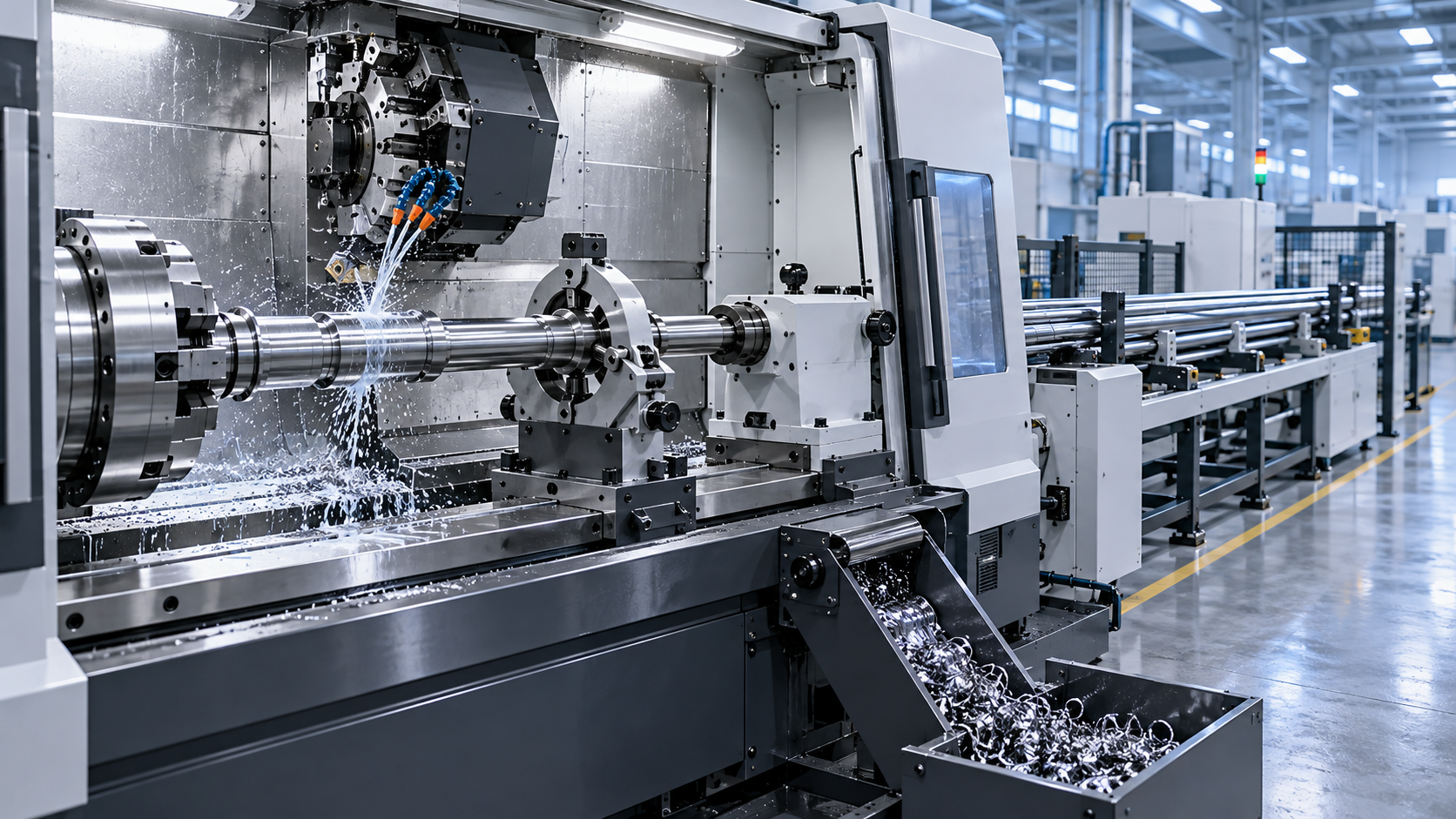
 How to Select an Industrial Lathe for High-Volume Shaft ProductionMachine Tool Industry Editorial Team
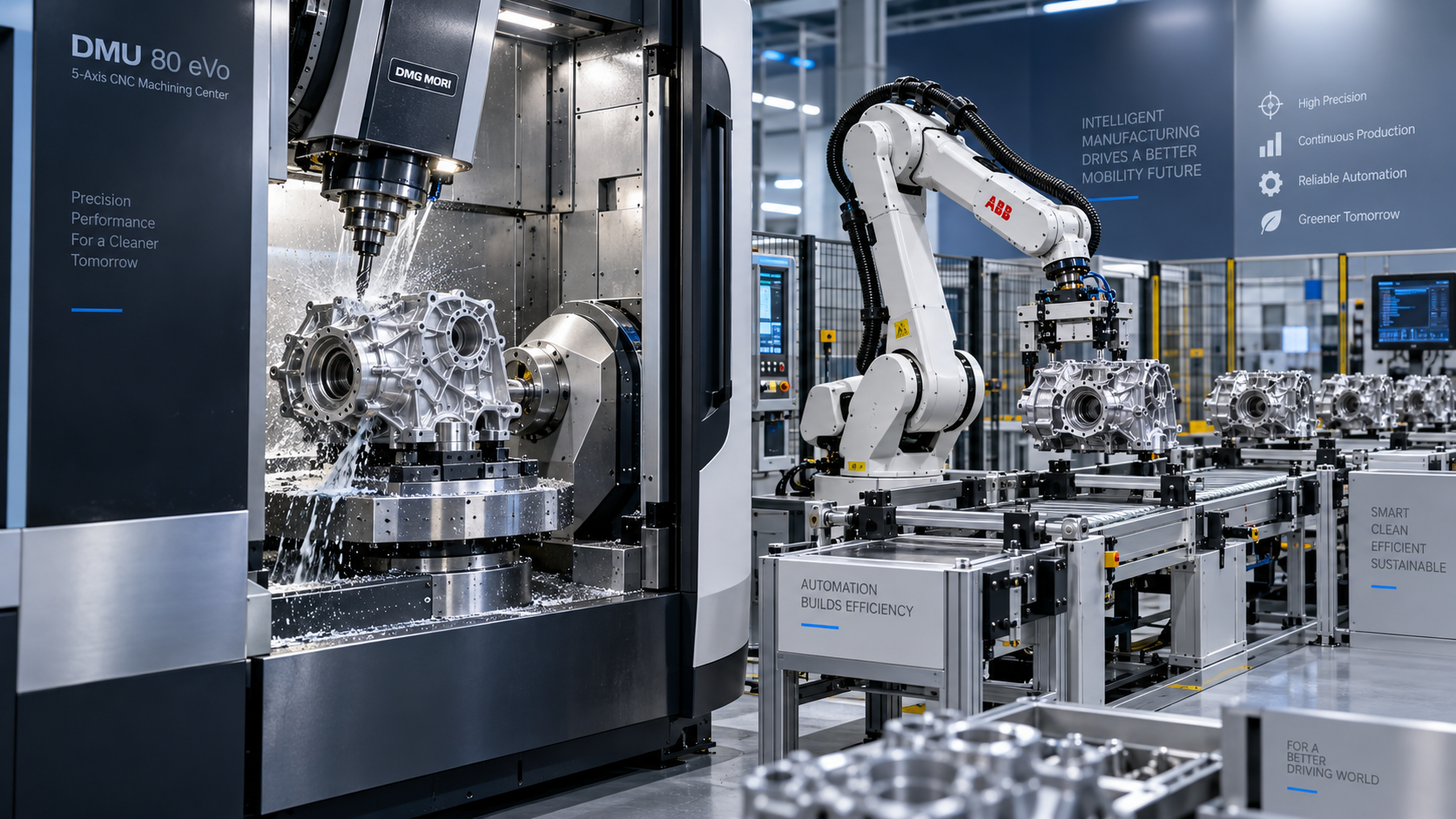
 Selecting Machine Tools for Automotive Parts: Accuracy, Throughput, and AutomationMachine Tool Industry Editorial Team
 Industrial Machining: Selecting Processes for Tight-Tolerance Metal PartsCNC Machining Technology Center
 Manufacturing Technology Trends That Improve Throughput and Quality ControlManufacturing Market Research Center

Aris Katos
Future of Carbide Coatings
15+ years in precision manufacturing systems. Specialized in high-speed milling and aerospace grade alloy processing.
▶
Digital Manufacturing for Smart Factories: Connecting Legacy Machines to MESMachine Tool Industry Editorial Team▶
Selecting Machine Tools for Automotive Parts: Accuracy, Throughput, and AutomationMachine Tool Industry Editorial Team▶
Smart Manufacturing for Small Businesses: Where Automation Delivers the Fastest ROIMachine Tool Industry Editorial Team▶
How Smart Manufacturing Technology Improves OEE Across Industry 4.0 Production LinesMachine Tool Industry Editorial Team▶
How to Evaluate an Automation Line for Electronics Production Before InvestmentMachine Tool Industry Editorial Team
Mastering 5-Axis Workholding Strategies
Join our technical panel on Nov 15th to learn about reducing vibrations in thin-wall components.

Providing you with integrated sanding solutions
Before-sales and after-sales services
Comprehensive technical support