• Global CNC market projected to reach $128B by 2028 • New EU trade regulations for precision tooling components • Aerospace deman
NYSE: CNC +1.2%LME: STEEL -0.4%

Cutting Tools Wholesale: How to Compare Grades, Coatings, MOQ, and Lead Times
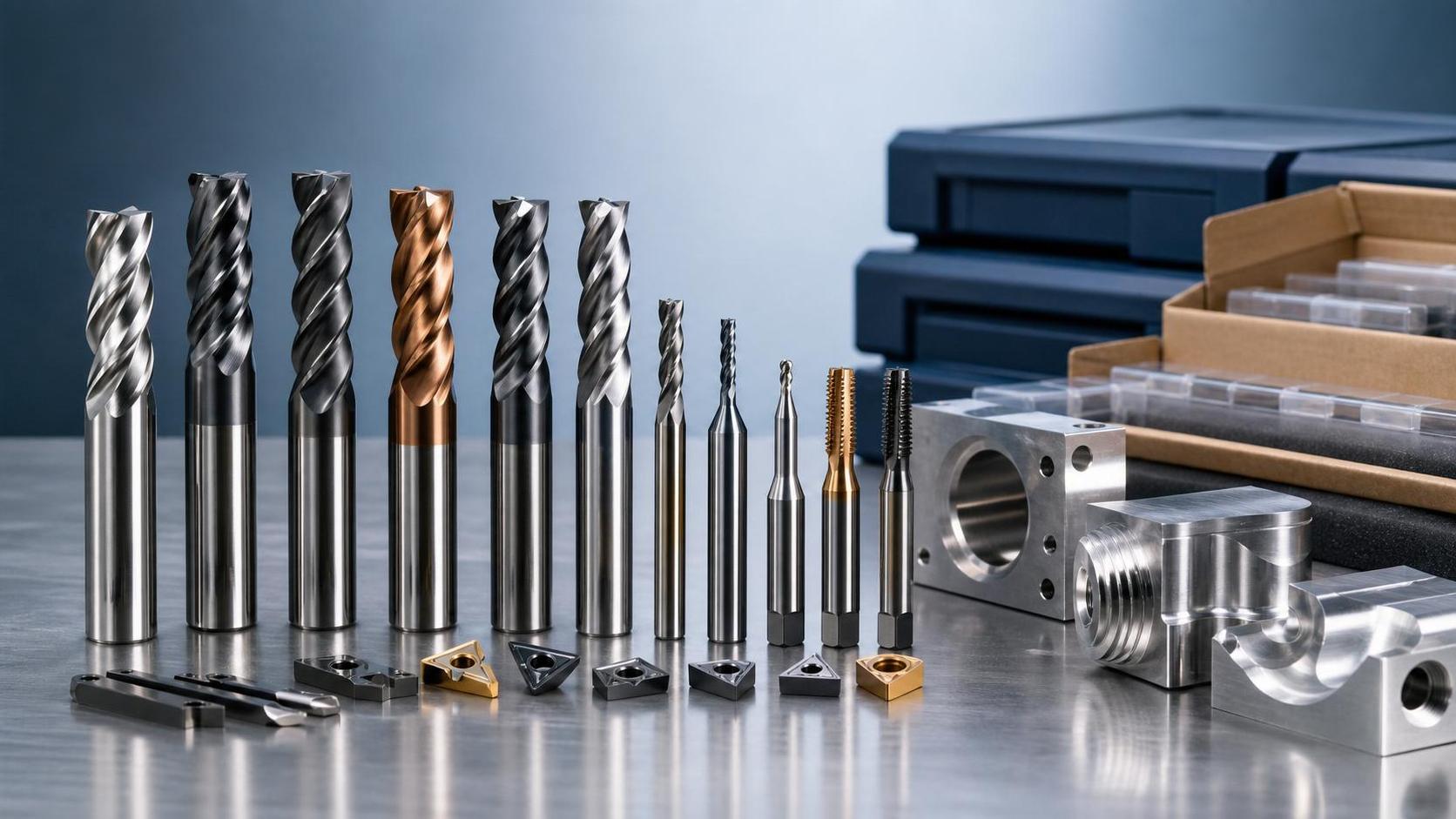
Cutting Tools Wholesale: How to Compare Grades, Coatings, MOQ, and Lead Times
In Cutting Tools Wholesale, choosing the right supplier goes far beyond price.
A lower quote can hide unstable quality, long replenishment cycles, or difficult minimum order terms.
That creates pressure on inventory, cash flow, and customer delivery promises.
In real sourcing work, the smarter comparison starts with four factors.
They are tool grades, coatings, MOQ, and lead times.
These four points shape margins, service reliability, and long-term account growth.
This guide explains how to compare Cutting Tools Wholesale offers in a practical way.
The goal is simple: reduce buying risk and improve purchasing decisions in a competitive CNC market.
Why Cutting Tools Wholesale Evaluation Needs More Than a Price List
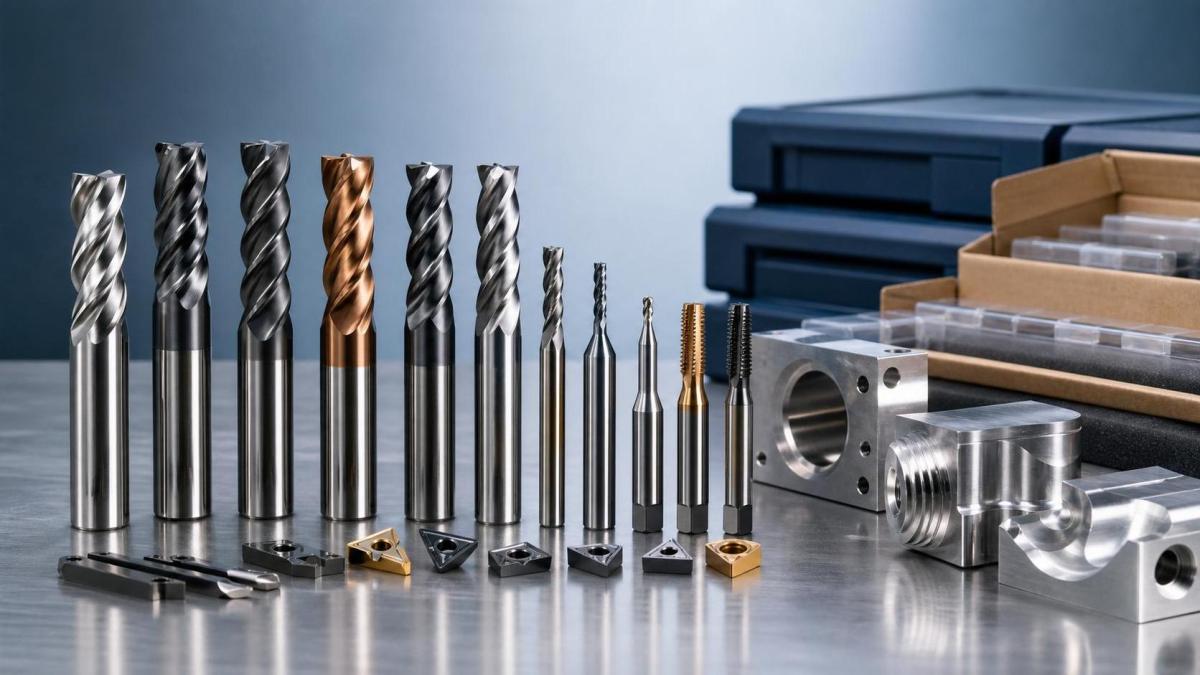
Many buyers begin with unit price, but that is only the visible layer.
A drill, insert, end mill, or tap performs differently under different materials and cutting speeds.
If tool life falls short, a cheap tool becomes expensive very quickly.
That is even more obvious in automotive, aerospace, and precision component machining.
From recent market shifts, customers also expect faster response and smaller replenishment batches.
This means a Cutting Tools Wholesale partner must support both performance and flexibility.
In practice, buyers need to ask three questions before comparing quotes.
- Will this tool grade match the actual workpiece material?
- Can the coating support the customer’s speed, heat, and wear conditions?
- Will MOQ and lead time fit local demand patterns?
When these answers are clear, price becomes easier to judge in context.
How to Compare Tool Grades in Cutting Tools Wholesale
Tool grade is one of the biggest performance drivers in Cutting Tools Wholesale.
It affects toughness, wear resistance, heat stability, and machining consistency.
However, grade comparison is often confusing because suppliers use different naming systems.
A smart comparison starts with application, not brand code.
Match grades to material groups
Start by mapping the grade to steel, stainless steel, cast iron, aluminum, or superalloys.
A grade that performs well in carbon steel may fail in stainless due to heat buildup.
This also matters when customers switch jobs across mixed materials.
Check toughness versus wear resistance
Some grades are tougher and better for interrupted cuts.
Others resist wear better in stable, high-speed production.
For Cutting Tools Wholesale, this difference affects how often customers reorder.
It also affects complaint rates and replacement cost.
Ask for test data, not just claims
Reliable suppliers can provide cutting parameters, tool life comparisons, and recommended applications.
That does not need to be a long technical report.
Even simple benchmark data can reveal whether the grade is positioned honestly.
In short, grade comparison should focus on fit, stability, and repeatability.
Why Coatings Matter in Cutting Tools Wholesale Decisions
Coatings are often presented as a premium feature, but they should be judged by application value.
In Cutting Tools Wholesale, the wrong coating can increase cost without improving real performance.
The right coating, however, can protect margins by extending tool life and reducing downtime.
Understand common coating functions
TiN is often used for general wear resistance.
TiAlN and AlTiN are common where higher heat resistance is needed.
DLC may help in non-ferrous machining where low friction matters.
The point is not to memorize names.
The point is to connect coating function with cutting conditions.
Review the coating with the substrate
A coating does not work alone.
Its result depends on the carbide substrate, geometry, and application range.
This is where many wholesale comparisons become misleading.
A supplier may advertise advanced coating technology, while the whole tool system remains average.
Focus on customer-specific use cases
For general engineering accounts, versatile coatings may sell better than specialized ones.
For aerospace or mold machining, higher-end coatings may justify the premium.
This also means your stock strategy should follow customer mix.
- General accounts often prefer balanced stock and stable availability.
- High-end machining accounts often accept higher cost for longer tool life.
- Fast-growing regions may need broader coating options for trial orders.
Better coating decisions lead to better SKU planning in Cutting Tools Wholesale.
How MOQ Shapes Inventory Risk and Cash Flow
MOQ is one of the most overlooked factors in Cutting Tools Wholesale.
A good price can still create poor returns if order quantities are too high.
This matters even more when buyers manage broad SKU portfolios.
Separate standard items from special items
Standard inserts, drills, and end mills usually support lower MOQ.
Special geometries, private labeling, or custom packaging often raise MOQ sharply.
That is not always bad, but it should match realistic sales velocity.
Calculate landed cost per usable cycle
Do not stop at ex-works price.
Include freight, duties, local warehousing, and expected turnover time.
Then compare that cost against projected selling speed and margin.
This gives a more realistic view of wholesale value.
Use tiered MOQ negotiation
Many suppliers are flexible if the discussion is structured well.
You can ask for trial MOQ first, then volume pricing after confirmed sell-through.
This reduces entry risk while giving the supplier a growth path.
- Request trial MOQ for market validation.
- Set reorder targets tied to monthly demand.
- Lock in future pricing bands early.
- Review slow-moving SKUs every quarter.
This approach makes Cutting Tools Wholesale more scalable and less speculative.
Lead Times, Replenishment Speed, and Service Reliability
Lead time is no longer just a logistics detail.
In Cutting Tools Wholesale, it directly affects customer trust and stock planning.
Shorter lead times help reduce safety stock, but only if delivery performance is consistent.
Ask for real lead time data
Quoted lead time and actual lead time are often different.
Ask suppliers for average dispatch time, stock availability rate, and on-time shipment records.
That gives a more dependable picture than a sales promise.
Check regional supply support
Suppliers with overseas inventory or local partners may respond faster.
This is especially useful for urgent replacement demand.
More importantly, it lowers the chance of losing business due to stockouts.
Build a lead time risk matrix
Not all tools need the same replenishment model.
Fast-moving tools need tighter restock control.
Slow-moving tools may tolerate longer lead times if margins are healthy.
This kind of framework makes supplier comparison far more practical.
A Simple Buying Checklist for Cutting Tools Wholesale
By this stage, the best offer is usually not the cheapest offer.
It is the one that balances tool performance, stock risk, and delivery reliability.
To make comparisons easier, use a repeatable checklist.
- Confirm grade suitability by material group and cutting condition.
- Review coating value based on actual end-use, not marketing language.
- Compare MOQ against forecasted sell-through and storage cost.
- Verify actual lead time performance with shipment records.
- Test a small batch before scaling broader SKU commitments.
- Track customer feedback on tool life, breakage, and repeat orders.
In today’s CNC and precision manufacturing market, sourcing speed alone is not enough.
A strong Cutting Tools Wholesale strategy depends on better judgment at the comparison stage.
When grades, coatings, MOQ, and lead times are reviewed together, purchasing becomes more predictable.
That also makes future growth easier to support.
Use this framework to shortlist suppliers, run trial orders, and refine your sourcing model with real market feedback.
NEXT ARTICLE
Recommended for You
 Digital Manufacturing for Smart Factories: Connecting Legacy Machines to MESMachine Tool Industry Editorial Team
 How to Select a CNC Metal Lathe for Tight-Tolerance Shaft and Sleeve PartsCNC Machining Technology Center
 How to Select an Industrial Lathe for High-Volume Shaft ProductionMachine Tool Industry Editorial Team
 Selecting Machine Tools for Automotive Parts: Accuracy, Throughput, and AutomationMachine Tool Industry Editorial Team
 Industrial Machining: Selecting Processes for Tight-Tolerance Metal PartsCNC Machining Technology Center
 Manufacturing Technology Trends That Improve Throughput and Quality ControlManufacturing Market Research Center







Aris Katos
Future of Carbide Coatings
15+ years in precision manufacturing systems. Specialized in high-speed milling and aerospace grade alloy processing.
▶
KATS Expands CE Recognition for CNC Clamping SystemsMachine Tool Industry Editorial Team▶
How to Evaluate a Tooling System for Precision Machining: 7 Key Specs That MatterMachine Tool Industry Editorial Team▶
ITC Opens 337 Probe Into Chinese CNC Tool CoatingsMachine Tool Industry Editorial Team▶
Vietnam Ends 5% Tariff on Chinese CNC Tool ImportsMachine Tool Industry Editorial Team▶
Japan Ends Import License Rule for Chinese Cutting ToolsMachine Tool Industry Editorial Team
Mastering 5-Axis Workholding Strategies
Join our technical panel on Nov 15th to learn about reducing vibrations in thin-wall components.

Providing you with integrated sanding solutions
Before-sales and after-sales services
Comprehensive technical support