• Global CNC market projected to reach $128B by 2028 • New EU trade regulations for precision tooling components • Aerospace deman
NYSE: CNC +1.2%LME: STEEL -0.4%

What Automotive CNC Manufacturing Must Deliver in 2026
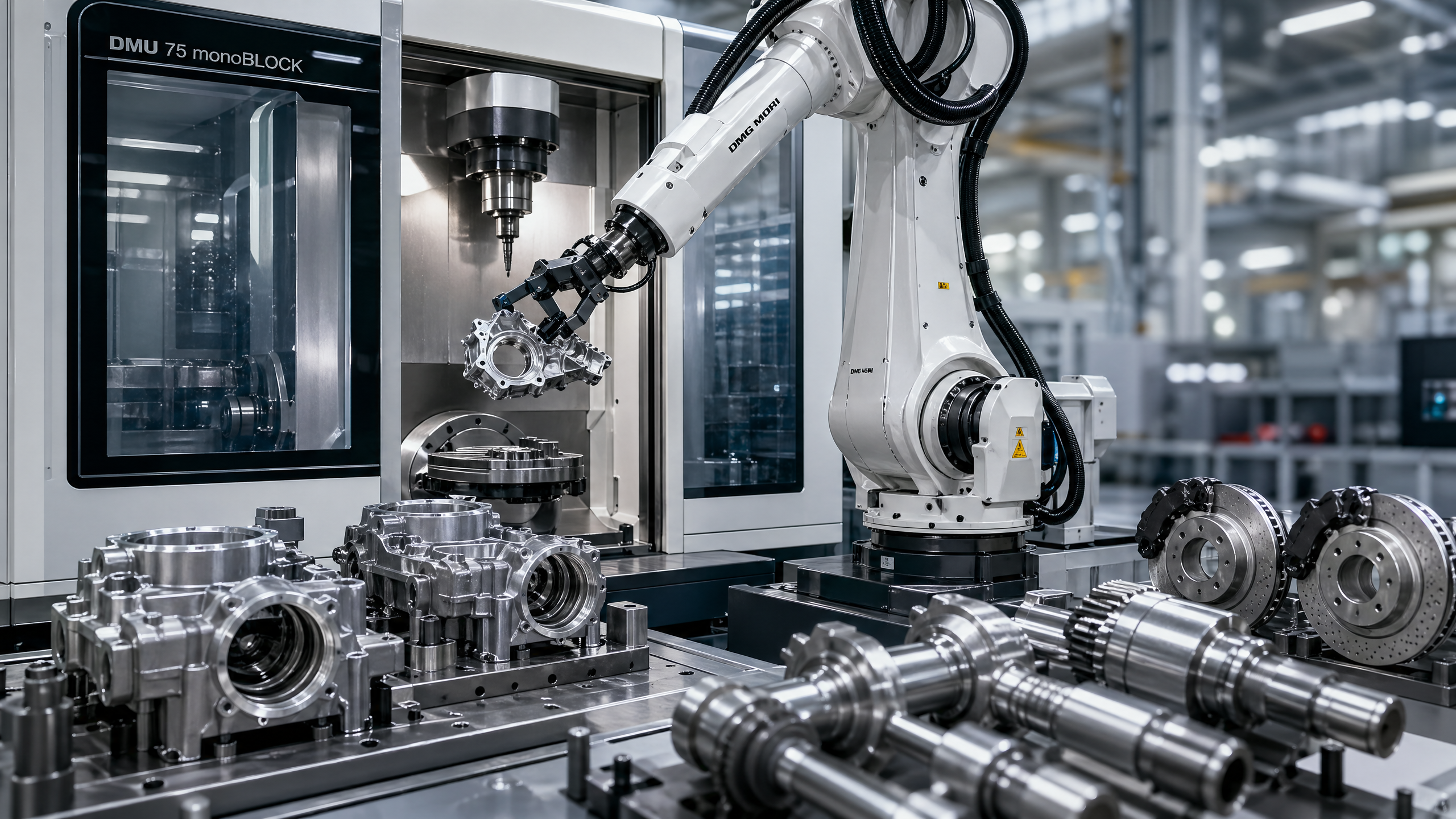
In 2026, automotive buyers and engineers will expect CNC manufacturing for automotive industry to combine high precision CNC manufacturing, automated CNC manufacturing, and cost-effective performance. From multi-axis machine tool integration to Digital Manufacturing Technology for smart factory deployment, the winners will be suppliers that deliver faster changeovers, stable quality, lower maintenance, and scalable output across complex vehicle components.
What will automotive CNC manufacturing need to prove in 2026?
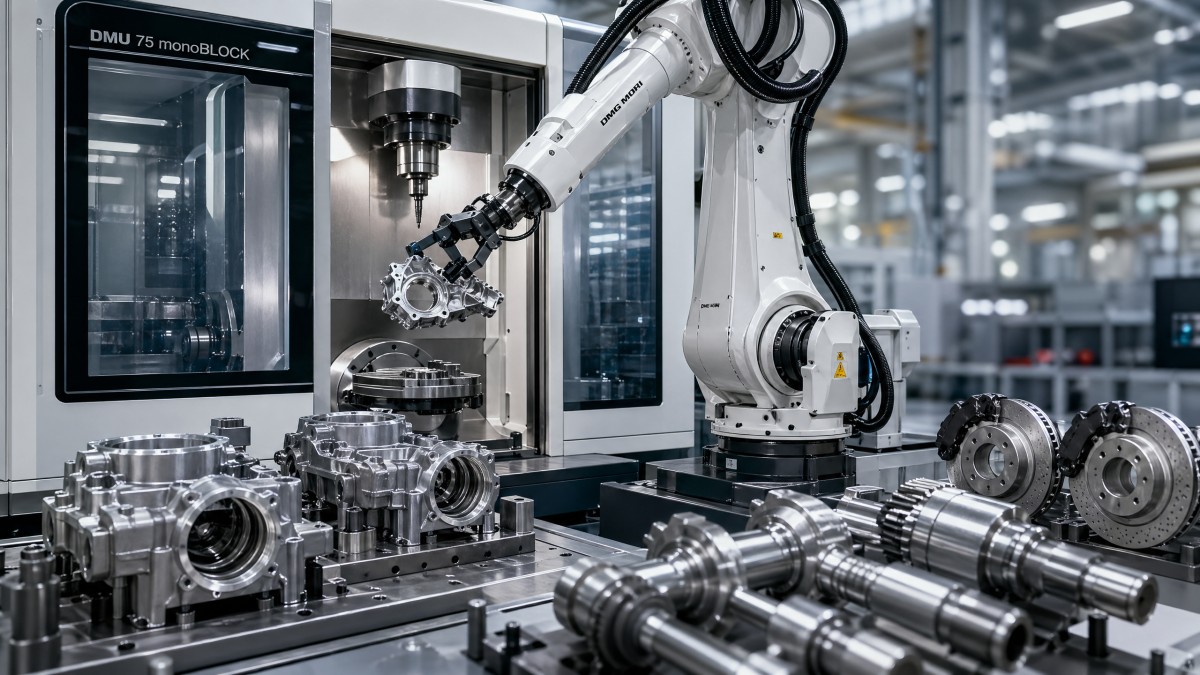
Automotive CNC manufacturing is no longer judged only by whether a part can be machined to drawing. In 2026, procurement teams, plant engineers, and business evaluators will look at the full production system: tolerance stability over long runs, setup efficiency across multiple part families, machine uptime, traceability, and compatibility with automated lines. For many vehicle programs, the difference between an acceptable supplier and a preferred supplier will be the ability to support 2-shift or 3-shift production without unstable quality.
This matters because automotive components are becoming more complex while delivery windows are getting tighter. EV platforms, lightweight structures, transmission parts, steering components, braking systems, and e-axle housings all require different machining strategies. A supplier may handle shafts, discs, and structural parts, but unless its CNC manufacturing for automotive industry can support repeatable changeovers within 15–45 minutes and hold process capability across batches, scalability becomes a risk.
For information researchers, the key question is simple: what capabilities define a future-ready automotive CNC source? For operators, the concern is whether the process is stable, maintainable, and practical on the shop floor. For buyers, the decision often comes down to total cost, lead time, and quality risk. For business evaluators, the issue is whether the manufacturing partner can support growth across 12–36 months, not just a single RFQ.
A strong supplier in this market usually combines precision machine tools, multi-axis machining systems, fixtures, cutting tools, automation interfaces, and digital monitoring into one coordinated production model. That is where high precision CNC manufacturing and automated CNC manufacturing stop being marketing phrases and become purchasing criteria.
The 4 performance expectations buyers increasingly compare
- Dimensional consistency across small-batch trials, medium-volume launch runs, and large-volume production lots.
- Changeover efficiency for mixed-model production, especially where 3–8 part variants share one manufacturing cell.
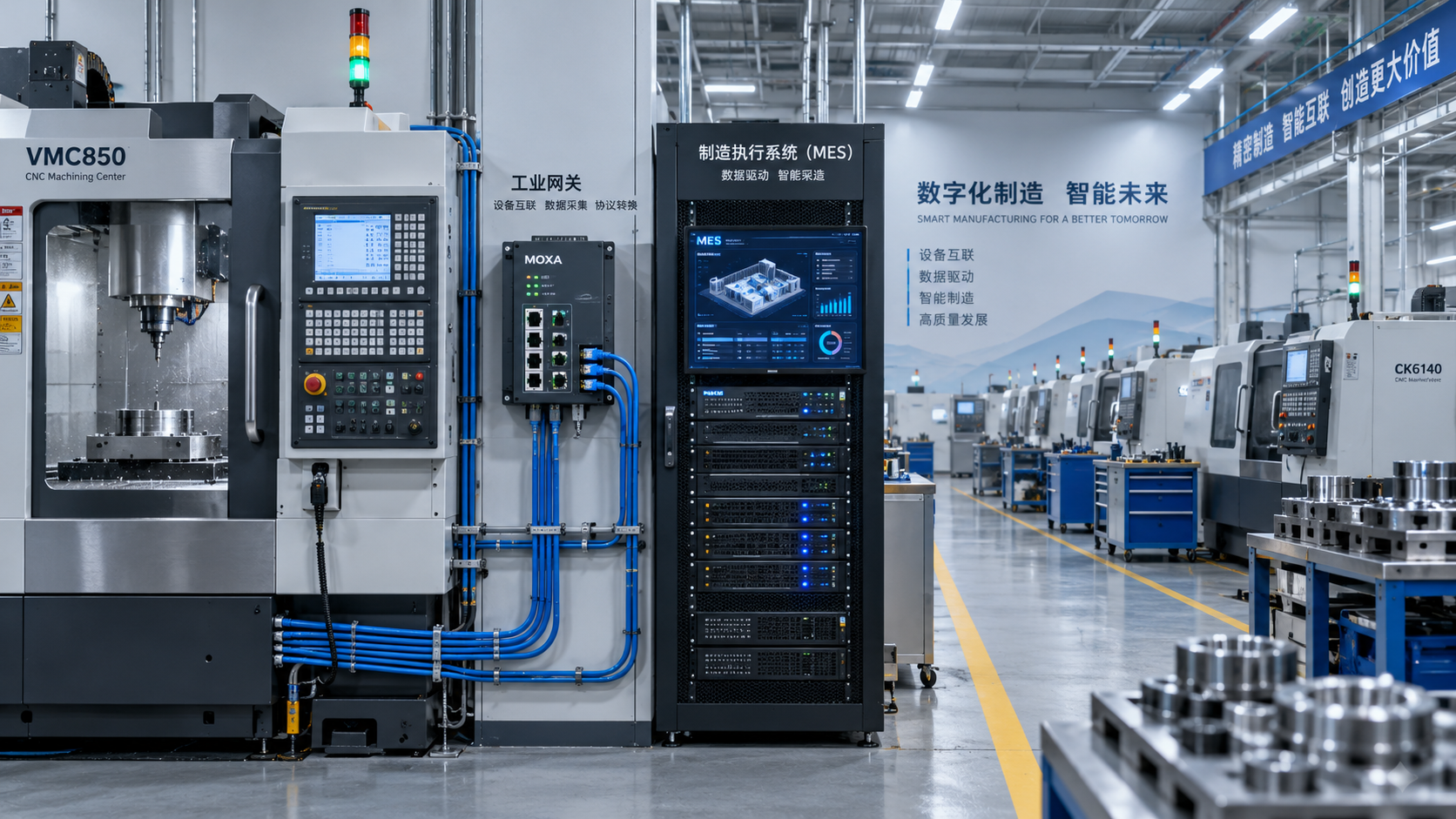
- Integration with robots, probing, MES connectivity, and Digital Manufacturing Technology for smart factory visibility.
- Maintainability, including spare parts planning, preventive service intervals, and operator-friendly troubleshooting.
Why machine capability alone is not enough
A 5-axis or multi-axis machine tool can expand machining access and reduce fixture transfers, but the automotive customer still evaluates output, not brochure features. If process planning is weak, if the fixture design lacks repeatability, or if tool wear compensation is not controlled every shift or every lot, even an advanced machining center can underperform in real production. That is why the best automotive CNC manufacturing solutions focus on system control rather than isolated equipment specs.
In practical terms, a qualified source should be able to discuss cycle time ranges, material families, process routing, inspection frequency, and automation logic in a clear way. When a supplier can explain where roughing ends, where semi-finishing begins, how probing is used, and how first-article approval fits into the workflow, buyers gain confidence much faster.
Which technical capabilities matter most for high precision CNC manufacturing?
For automotive parts, technical performance should be evaluated through production reality, not just nominal machine data. Typical decision points include spindle configuration, axis count, thermal stability, workholding repeatability, in-process inspection, and tool management. Different parts demand different setups: a shaft component may prioritize concentricity and long-run stability, while a housing may require complex surface access, multi-face machining, and burr control.
In many automotive CNC manufacturing projects, the useful benchmark is not the tightest theoretical tolerance, but the tolerance that can be held repeatedly over 8–16 hours of continuous production. That is where machine rigidity, coolant management, chip evacuation, and compensation routines become commercially important. A supplier that can hold a stable tolerance window and document control methods often delivers more value than one that simply promises extreme precision.
Digital Manufacturing Technology also enters this conversation. In 2026, buyers increasingly expect machine data collection, alarm traceability, tool-life records, and process visibility. This does not require every factory to be fully autonomous, but it does require a practical level of digital integration. Even a 3-step data chain—machine status, inspection results, and maintenance records—can improve decision-making for both plant teams and sourcing managers.
The table below helps compare the technical factors that often influence supplier qualification for CNC manufacturing for automotive industry programs, especially when the project involves repeat orders, multiple SKUs, or future automation upgrades.
This comparison shows why high precision CNC manufacturing should be evaluated as a controlled process rather than a single machine feature. Automotive programs reward predictable throughput, documented control, and flexible architecture. Those strengths are especially valuable when part revisions, new variants, or output increases occur during the life of a project.
How multi-axis machine tool integration changes production economics
Multi-axis machine tool integration often reduces secondary handling, fixture transfers, and stack-up error. In suitable applications, one setup can replace 2–3 separate operations. That can shorten routing, improve datum consistency, and reduce labor dependency. However, the return depends on part geometry, annual volume, and inspection requirements. For simple rotational parts, a CNC lathe with automation may be more cost-effective than a more complex 5-axis route.
This is why technical discussions should include the full part family. A supplier that understands whether the project is prototype, SOP launch, or mature volume production can recommend the right balance between flexibility and capital efficiency.
Three indicators operators and engineers should verify
- Whether offsets, probing, and wear compensation can be managed consistently across shifts.
- Whether fixtures support repeat clamping without creating excessive distortion on thin-wall or lightweight parts.
- Whether maintenance windows are planned every week, every month, and every quarter for stable output.
How should buyers compare automated CNC manufacturing options?
Automated CNC manufacturing can mean very different things depending on the supplier. In one factory it may refer only to bar feeding or pallet exchange. In another, it may include robot loading, in-process gauging, tool data management, part traceability, and MES connection. Buyers should separate “machine automation” from “production automation” because the second has more impact on labor planning, output stability, and smart factory readiness.
For purchasing teams, the best approach is to compare automation by use case. Low-volume, high-mix work often benefits from flexible cells with faster setup and manual intervention options. Medium- to high-volume automotive parts may justify dedicated automation if demand is stable for 12–24 months. Business evaluators should also ask how easy it is to expand from one cell to several lines without rebuilding the whole process architecture.
The next table provides a practical comparison for sourcing decisions. It is useful when reviewing RFQs for shafts, hubs, housings, brackets, motor parts, or other precision components within CNC manufacturing for automotive industry projects.
The best option depends on output target, part variety, labor availability, and launch timing. Automated CNC manufacturing is most effective when paired with suitable fixtures, process validation, and digital feedback. Without those foundations, added automation can simply increase the speed of producing variation instead of the speed of producing good parts.
A practical 5-point RFQ review checklist
- Confirm annual volume by phase: prototype, pilot, SOP, and stable production.
- Check target changeover time and whether common fixtures can support 2–6 variants.
- Review inspection logic, including first article, in-process checks, and final audit frequency.
- Ask what machine data or traceability records are available for quality follow-up.
- Verify spare parts, maintenance response, and backup capacity for urgent orders.
These five points help buyers move beyond a simple piece-price comparison. They reveal whether a supplier can actually support delivery reliability, engineering changes, and long-term production planning.
What should procurement and business teams check before awarding a project?
Price pressure remains real, but automotive sourcing cannot treat CNC manufacturing as a commodity. A lower unit price may come with higher launch risk, slower PPAP-style preparation, weaker traceability, or longer recovery time after a machine issue. Procurement teams should compare total operating impact over the first 6–18 months, especially for programs with tight launch windows or multiple engineering changes.
A practical supplier review should cover at least 3 categories: technical fit, commercial fit, and operational fit. Technical fit means the process can hold the required dimensions and surface conditions. Commercial fit means the quote structure aligns with volume, tooling, and revision control. Operational fit means the supplier can manage scheduling, maintenance, quality response, and export coordination when needed.
Standards and compliance also deserve attention. Without inventing special claims, buyers can still request evidence of common process discipline such as documented inspection plans, calibration control, material traceability where applicable, and routine maintenance records. Depending on the part type and supply chain, references to common frameworks such as ISO-based quality management or automotive-specific customer requirements may also be relevant during evaluation.
The table below summarizes a balanced procurement framework for CNC manufacturing for automotive industry decisions, particularly when comparing multiple suppliers across quality, cost, and delivery factors.
This framework is useful because it connects quotation review to long-term production performance. It also helps business evaluators distinguish between a low initial quote and a sustainable manufacturing partner.
Common sourcing mistakes that create avoidable risk
One common mistake is overvaluing nominal machine count while undervaluing process engineering depth. Another is assuming automation always means lower cost, even when the part mix changes weekly. A third is failing to define approval gates. In many automotive programs, a 4-step gate structure works well: drawing review, process plan confirmation, sample validation, and mass production release. Without these checkpoints, issues often appear late and cost more to correct.
A disciplined sourcing process should also ask what happens when demand doubles, when the part revision changes, or when one machine is down for 24–72 hours. Those questions reveal true resilience much faster than promotional claims do.
Where is the market heading, and how should manufacturers prepare now?
The direction is clear: automotive CNC manufacturing will keep moving toward higher precision, deeper automation, and stronger digital integration. This shift is not limited to premium factories. As labor costs, quality expectations, and traceability requirements rise, even mid-scale manufacturers are adopting smarter machine tools, more structured tool control, and data-led maintenance practices. In the next 12–24 months, suppliers that cannot show measurable process control may struggle to win higher-value programs.
Another trend is production flexibility. Vehicle platforms are changing faster, and component mix is becoming more diverse. That means CNC manufacturing for automotive industry must handle both efficiency and change. Suppliers should prepare for shorter product life cycles, more frequent drawing updates, and wider use of modular fixtures, multi-axis machine tool integration, and inspection routines that can adapt without excessive downtime.
Global competitiveness will also matter. Manufacturing clusters in China, Germany, Japan, and South Korea continue to influence machine capability, component supply, and technical exchange. Buyers are increasingly open to international sourcing, but they still expect consistent communication on lead time, compliance, documentation, and process control. A supplier with strong trade coordination and technical transparency gains an advantage here.
For companies planning investment, the most practical path is often phased. First, stabilize core machining and inspection. Second, improve changeover and tool control. Third, connect machine data, maintenance records, and production reporting. This 3-stage approach is easier to scale than trying to deploy a full smart factory model in one step.
FAQ: questions buyers and engineers often ask
How do I choose between standard CNC machining and a more automated cell?
Start with volume stability and part variety. If output is low and revisions are frequent, a flexible standard CNC setup may be more practical. If annual demand is stable and cycle time is a bottleneck, automated CNC manufacturing usually becomes more attractive. Review labor dependency, target uptime, and whether the project is expected to run for 12 months or longer.
What lead time is typical for automotive CNC project launch?
It depends on drawing maturity, tooling complexity, material readiness, and validation requirements. For many programs, sample preparation may take 2–6 weeks, while a fuller production launch with fixture completion, inspection planning, and process tuning can take longer. Buyers should request a milestone plan rather than only a final delivery date.
What are the most overlooked risks in high precision CNC manufacturing?
The biggest overlooked risks are usually thermal drift, fixture repeatability, uncontrolled tool wear, and weak response plans when dimensions move toward the limit. These problems may not appear in short trials but can become serious during 8-hour to 24-hour production windows. That is why real process monitoring matters.
How important is Digital Manufacturing Technology if I mainly care about cost?
It matters because digital visibility often reduces hidden cost. Better records of alarms, tool life, downtime, and inspection trends can prevent scrap, speed up troubleshooting, and support more accurate quoting. Not every project needs advanced analytics, but most automotive programs benefit from at least basic digital traceability and maintenance tracking.
Why contact us when evaluating automotive CNC manufacturing for 2026?
If you are comparing suppliers, planning a new automotive part program, or reviewing whether your current process can scale, we can help you focus on the factors that actually affect delivery and commercial results. Our platform tracks global CNC machining and precision manufacturing developments across machine tools, automation, smart production, and international trade, making it easier to connect market insight with sourcing decisions.
You can contact us for practical support on parameter confirmation, part-family process review, machine architecture selection, and supplier comparison logic. We can also help structure discussions around changeover targets, lead-time planning, digital readiness, inspection flow, and whether a standard machining route or automated CNC manufacturing model is the better fit for your application.
For procurement teams and business evaluators, we can support quote communication by clarifying cost drivers, tooling assumptions, capacity planning, and common risk points before award. For engineers and operators, we can help break down machining requirements by material, geometry, batch size, and stability expectations so that supplier conversations become more technical and more efficient.
If you need guidance on CNC manufacturing for automotive industry projects, send your drawing scope, target volume range, expected delivery cycle, quality concerns, or automation goals. That makes it possible to discuss product selection, custom solutions, compliance expectations, sample support, and quotation direction with clearer priorities and faster follow-up.
PREVIOUS ARTICLE
Recommended for You
 Digital Manufacturing for Smart Factories: Connecting Legacy Machines to MESMachine Tool Industry Editorial Team
 How to Select a CNC Metal Lathe for Tight-Tolerance Shaft and Sleeve PartsCNC Machining Technology Center
 How to Select an Industrial Lathe for High-Volume Shaft ProductionMachine Tool Industry Editorial Team
 Selecting Machine Tools for Automotive Parts: Accuracy, Throughput, and AutomationMachine Tool Industry Editorial Team
 Industrial Machining: Selecting Processes for Tight-Tolerance Metal PartsCNC Machining Technology Center
 Manufacturing Technology Trends That Improve Throughput and Quality ControlManufacturing Market Research Center

Aris Katos
Future of Carbide Coatings
15+ years in precision manufacturing systems. Specialized in high-speed milling and aerospace grade alloy processing.
▶
Japan Subsidy Plan Narrows CNC Export OpeningsManufacturing Market Research Center▶
Industrial Robotics ROI: Cost Drivers, Integration Risks, and Payback Benchmarks for BuyersManufacturing Market Research Center▶
India’s 20% Rice Export Tax Lifts Demand for Processing EquipmentManufacturing Market Research Center▶
Anhui Growth Lifts Demand for High-End Machine ToolsManufacturing Market Research Center▶
China CNC Rate to Hit 75% by 2027Manufacturing Market Research Center
Mastering 5-Axis Workholding Strategies
Join our technical panel on Nov 15th to learn about reducing vibrations in thin-wall components.

Providing you with integrated sanding solutions
Before-sales and after-sales services
Comprehensive technical support