• Global CNC market projected to reach $128B by 2028 • New EU trade regulations for precision tooling components • Aerospace deman
NYSE: CNC +1.2%LME: STEEL -0.4%

Is Industrial Automation worth it for mid-size factories now?
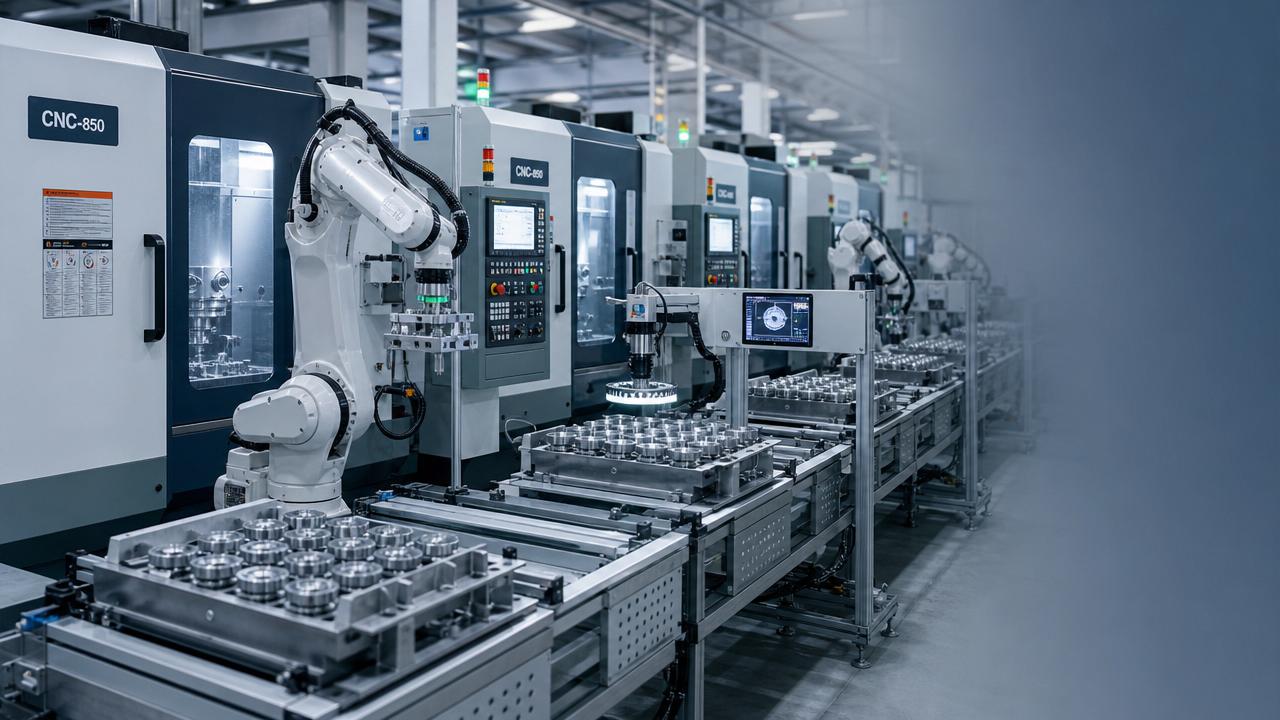
For mid-size factories facing rising labor costs, tighter quality requirements, and pressure to improve throughput, Industrial Automation is no longer just a long-term vision. It has become a practical option for boosting precision, reducing downtime, and strengthening competitiveness. But is the investment truly worth it now? The answer depends on production complexity, ROI expectations, and how quickly a factory can turn automation into measurable business value.
For business evaluation teams in CNC machining, precision manufacturing, and related production environments, the real question is not whether automation is important. The practical question is where it creates measurable value within 12 to 36 months, and where it may add cost without enough operational gain.
Mid-size factories often sit in a difficult middle ground. They are too large to rely on manual flexibility alone, yet not large enough to absorb poorly planned capital spending. That makes Industrial Automation a strategic decision tied to throughput, scrap reduction, machine utilization, labor structure, and customer delivery performance.
Why Industrial Automation is gaining urgency in mid-size factories
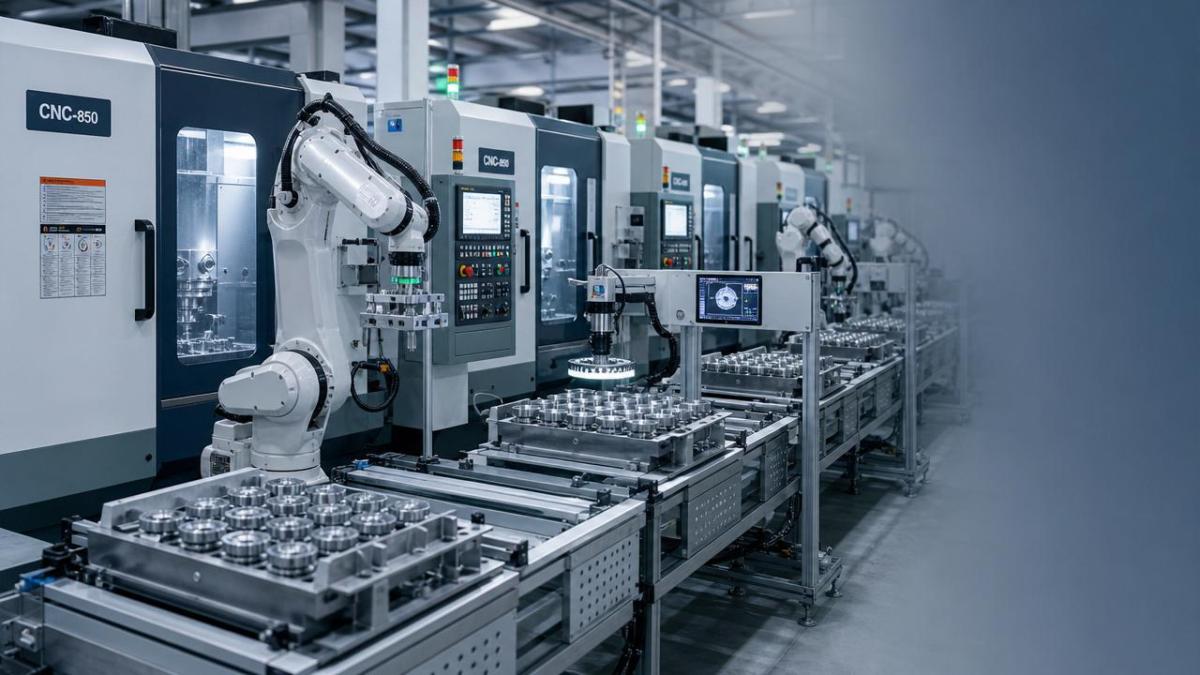
In CNC machine tool operations, cost pressure is no longer limited to labor rates. Many factories now face 3 simultaneous constraints: tighter tolerances, shorter lead times, and greater order variability. In this environment, Industrial Automation helps stabilize process output rather than simply replacing operators.
A mid-size factory with 20 to 80 CNC machines typically feels these issues quickly. If spindle uptime stays below 65% to 70%, or if changeovers regularly exceed 30 to 45 minutes, even profitable contracts can become less attractive. Automation can address these bottlenecks when applied to loading, unloading, inspection, tool monitoring, or material flow.
The main business pressures behind the shift
- Rising labor costs in machining, night shifts, and repetitive handling tasks
- Customer demand for repeatability, traceability, and defect control
- Low utilization of high-value CNC lathes, machining centers, and multi-axis systems
- Higher risk of production loss from operator turnover or skills gaps
- Pressure to reduce work-in-process and shorten delivery cycles from 4 weeks to 2 weeks
For factories supplying automotive, energy equipment, electronics, or aerospace-related components, consistency matters as much as capacity. If a plant must maintain tolerance bands such as ±0.01 mm to ±0.05 mm across multi-batch production, manual variability becomes a financial issue, not just a technical issue.
Where Industrial Automation usually delivers the fastest return
Not every process should be automated first. The best early targets are repetitive tasks with stable geometry, predictable takt time, and measurable labor content. In CNC and precision manufacturing, these usually include robot machine tending, pallet handling, automatic part measurement, tool life monitoring, and integrated loading systems.
The table below shows where mid-size factories often find the strongest business case based on common machine tool applications.
The key takeaway is that Industrial Automation pays back fastest when it protects expensive machine capacity. In many mid-size plants, labor savings alone do not justify the project, but higher spindle utilization, lower scrap, and fewer stoppages often do.
When the investment is worth it and when it is not
Industrial Automation is worth it when it solves a specific production constraint with clear financial impact. It is less attractive when factories pursue it for image, trend alignment, or vague “smart factory” goals without baseline data. Mid-size manufacturers need a disciplined threshold for approval.
A practical ROI lens for business evaluation
A practical review usually starts with 4 numbers: current machine utilization, direct labor hours per part, scrap or rework rate, and average delivery delay cost. If automation improves at least 2 of these by 10% to 25%, the project often deserves deeper analysis.
For example, if a machining cell runs 16 hours per day but produces only 10 to 11 effective cutting hours, adding robotic tending may recover 1.5 to 3 productive hours daily. Across 250 working days, that can materially change capacity planning without purchasing another CNC machine.
Typical signals that timing is right
- Repeat orders account for more than 40% of annual output.
- At least 1 bottleneck line runs near full load for 2 or more shifts.
- Operator recruitment or retention has become difficult for 6 months or longer.
- Quality escapes or rework regularly affect customer schedules.
- Management already tracks OEE, scrap, and downtime by machine or cell.
Signals that a factory should wait or narrow scope
- Product mix changes every few days with no standard fixturing strategy.
- Programming, tooling, and process planning remain unstable.
- Preventive maintenance is weak, causing frequent manual workarounds.
- Management expects payback in less than 6 months on a complex cell project.
The lesson is simple: Industrial Automation should be added to a controlled process, not used to compensate for unmanaged production basics.
Cost factors that matter more than the purchase price
Business evaluation teams often focus first on equipment cost, but total project value depends on integration effort, ramp-up time, changeover flexibility, floor layout, operator training, and support response. A lower upfront quote can become more expensive if commissioning takes 10 weeks instead of 4.
The table below can help structure a realistic comparison before issuing an internal investment recommendation.
This comparison shows why Industrial Automation should be evaluated as a production system, not as a standalone machine purchase. The most successful projects combine equipment, process control, training, and support planning from day one.
How mid-size factories should choose the right automation scope
The best approach is usually phased, not all at once. For mid-size factories, one pilot cell can produce better business insight than a large factory-wide rollout. A 3-stage plan often works well: identify the bottleneck, validate technical fit, then expand only after stable output is proven for 8 to 12 weeks.
Start with a process map, not with a robot brochure
Before comparing suppliers, map the full process from raw material input to finished part release. In CNC production, delays often come from fixture waiting, gauging bottlenecks, manual deburring, or internal transport rather than the cutting cycle itself. Automating the wrong step will not solve the real capacity problem.
Five questions to define project scope
- Which operation loses the most time per shift: loading, setup, inspection, or transfer?
- How many part families share similar geometry, clamping logic, and takt time?
- Can the target cell run for at least 60 to 90 minutes with minimal manual intervention?
- What defect types are most frequent: dimension drift, tool breakage, surface issues, or handling damage?
- How quickly can the line recover after alarm events or part variation?
These questions help separate attractive ideas from viable investments. Industrial Automation works best when the target process is measurable, repetitive, and operationally mature.
Common application paths in CNC and precision manufacturing
In machine tool environments, the first wave of automation usually follows one of 3 paths. The first is single-machine tending for stable parts. The second is linked cells combining machining, gauging, and sorting. The third is flexible production using pallet systems, AGVs, or robotic transfer between several machines.
For many mid-size plants, path one is the lowest-risk starting point. It requires less layout change, fewer interlocks, and simpler training. Once basic reliability reaches an acceptable level, more advanced integration can follow.
Implementation risks, operational discipline, and what buyers often miss
The biggest risk in Industrial Automation is not the robot or handling device itself. It is the gap between design assumptions and shop-floor reality. If part variation, coolant contamination, chip evacuation, or fixture wear are underestimated, performance may fall below plan during the first 30 to 90 days.
Operational risks that affect payback
- Part presentation is inconsistent, causing pickup failures or cycle interruptions.
- Tool wear is not monitored, leading to defects during unattended operation.
- Chip build-up affects clamping, probing, or dimensional repeatability.
- Changeovers require too many manual adjustments, reducing actual usage.
- Maintenance ownership is unclear across production, engineering, and service teams.
In precision manufacturing, these risks are manageable, but only with process discipline. Buyers should ask not only “Can the automation run?” but also “Under what conditions does it keep running for 3 shifts with acceptable quality?”
How to reduce implementation risk
A strong rollout plan usually includes simulation or trial validation, fixture review, cycle-time balancing, alarm logic testing, operator training, and spare-part planning. Even a modest project benefits from a written acceptance checklist covering safety, output, repeatability, and recovery time.
For example, many factories use 3 acceptance layers: safety verification before startup, production verification during continuous operation, and quality verification after batch completion. This structure helps prevent early disputes about whether the system is “running” but not delivering the agreed value.
A practical acceptance checklist
- Cycle time remains within target range for at least 50 to 100 consecutive parts.
- Dimensional results stay within the agreed tolerance band under continuous operation.
- Alarm recovery steps can be executed by trained shift personnel.
- Daily maintenance tasks take a predictable amount of time, such as 10 to 20 minutes.
- Critical spare parts and service contacts are confirmed before full handover.
Final decision guidance for business evaluation teams
So, is Industrial Automation worth it for mid-size factories now? In many CNC and precision manufacturing operations, yes, but only when the investment is tied to a defined bottleneck, measurable baseline, and phased implementation path. The strongest cases are usually built on capacity recovery, quality stability, and labor resilience rather than labor reduction alone.
Factories producing repeat components, operating multi-shift schedules, or facing consistent delivery pressure are often in the best position to benefit. Those with unstable routing, weak process control, or unrealistic payback expectations should first improve fundamentals and narrow project scope.
For buyers and evaluators, the decision should come down to 3 points: whether the target process is stable enough to automate, whether the expected gain can be measured within 12 to 24 months, and whether internal teams can support the system after launch.
If you are assessing Industrial Automation for CNC machining, precision machine tools, or automated production lines, now is the right time to compare options with a practical ROI framework. Contact us to discuss your production scenario, get a tailored solution, and explore the right automation path for your factory.
PREVIOUS ARTICLE
Recommended for You
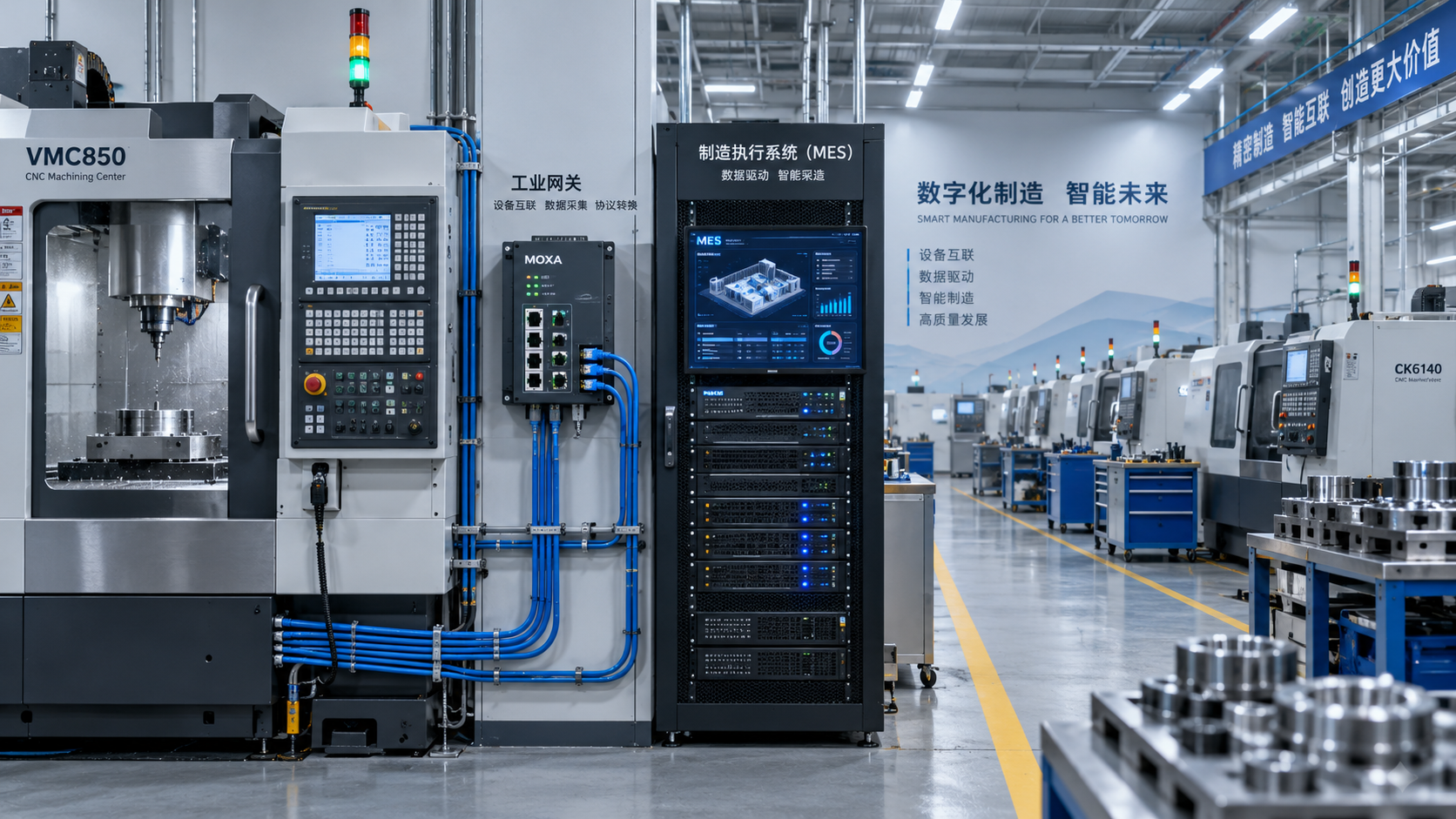
 Digital Manufacturing for Smart Factories: Connecting Legacy Machines to MESMachine Tool Industry Editorial Team
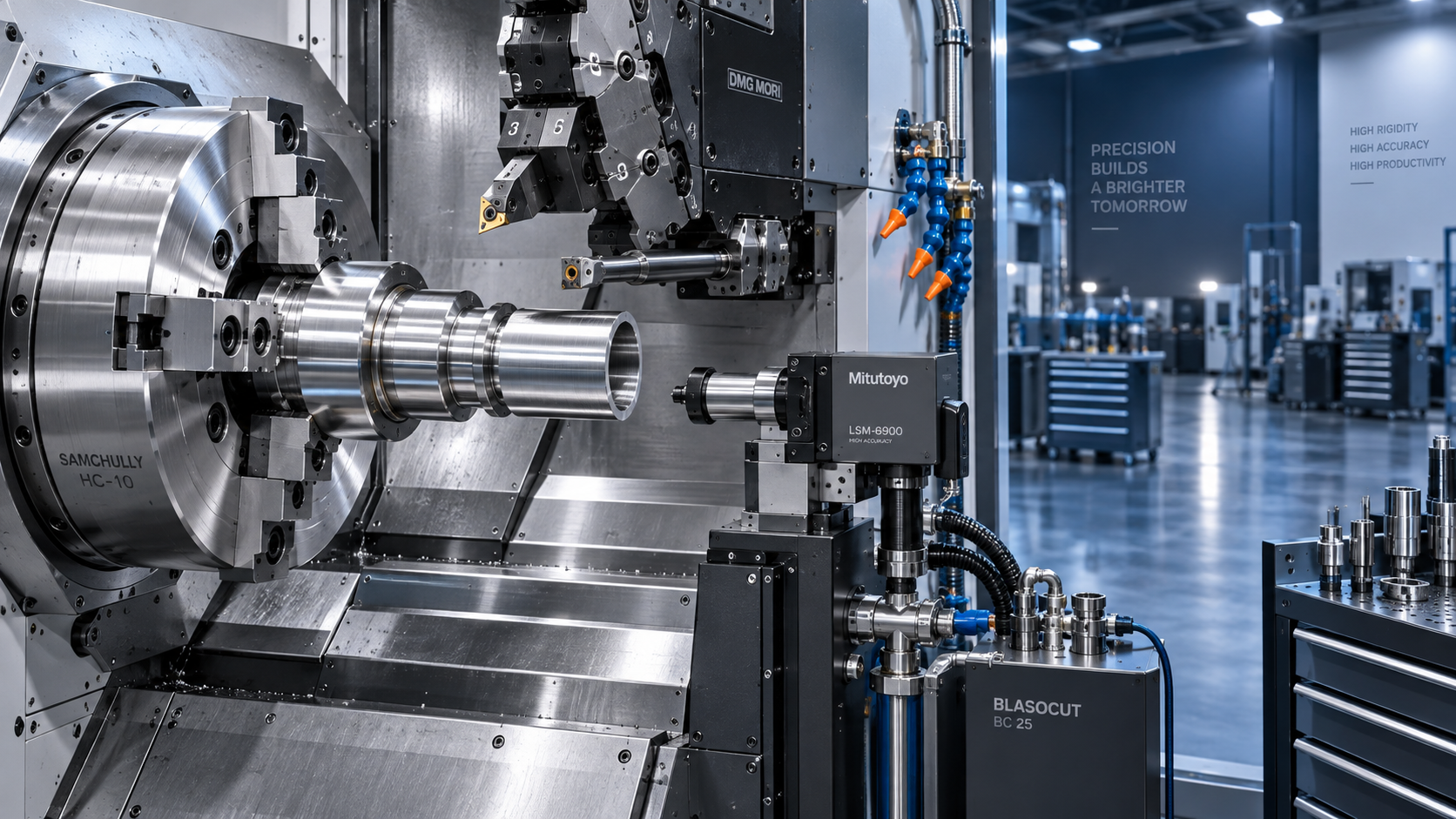
 How to Select a CNC Metal Lathe for Tight-Tolerance Shaft and Sleeve PartsCNC Machining Technology Center
 How to Select an Industrial Lathe for High-Volume Shaft ProductionMachine Tool Industry Editorial Team
 Selecting Machine Tools for Automotive Parts: Accuracy, Throughput, and AutomationMachine Tool Industry Editorial Team
 Industrial Machining: Selecting Processes for Tight-Tolerance Metal PartsCNC Machining Technology Center
 Manufacturing Technology Trends That Improve Throughput and Quality ControlManufacturing Market Research Center

Aris Katos
Future of Carbide Coatings
15+ years in precision manufacturing systems. Specialized in high-speed milling and aerospace grade alloy processing.
▶
What Production Volume Justifies a CNC Turning Investment?Manufacturing Market Research Center▶
What to check before investing in Industrial RoboticsManufacturing Market Research Center▶
What to check before investing in Industrial RoboticsManufacturing Market Research Center▶
Is Industrial Automation worth it for rising labor costsManufacturing Market Research Center▶
When does Industrial Automation actually pay for itself?Manufacturing Market Research Center
Mastering 5-Axis Workholding Strategies
Join our technical panel on Nov 15th to learn about reducing vibrations in thin-wall components.

Providing you with integrated sanding solutions
Before-sales and after-sales services
Comprehensive technical support