• Global CNC market projected to reach $128B by 2028 • New EU trade regulations for precision tooling components • Aerospace deman
NYSE: CNC +1.2%LME: STEEL -0.4%

Heavy duty machine tool selection: Why dynamic load rating matters more than table size
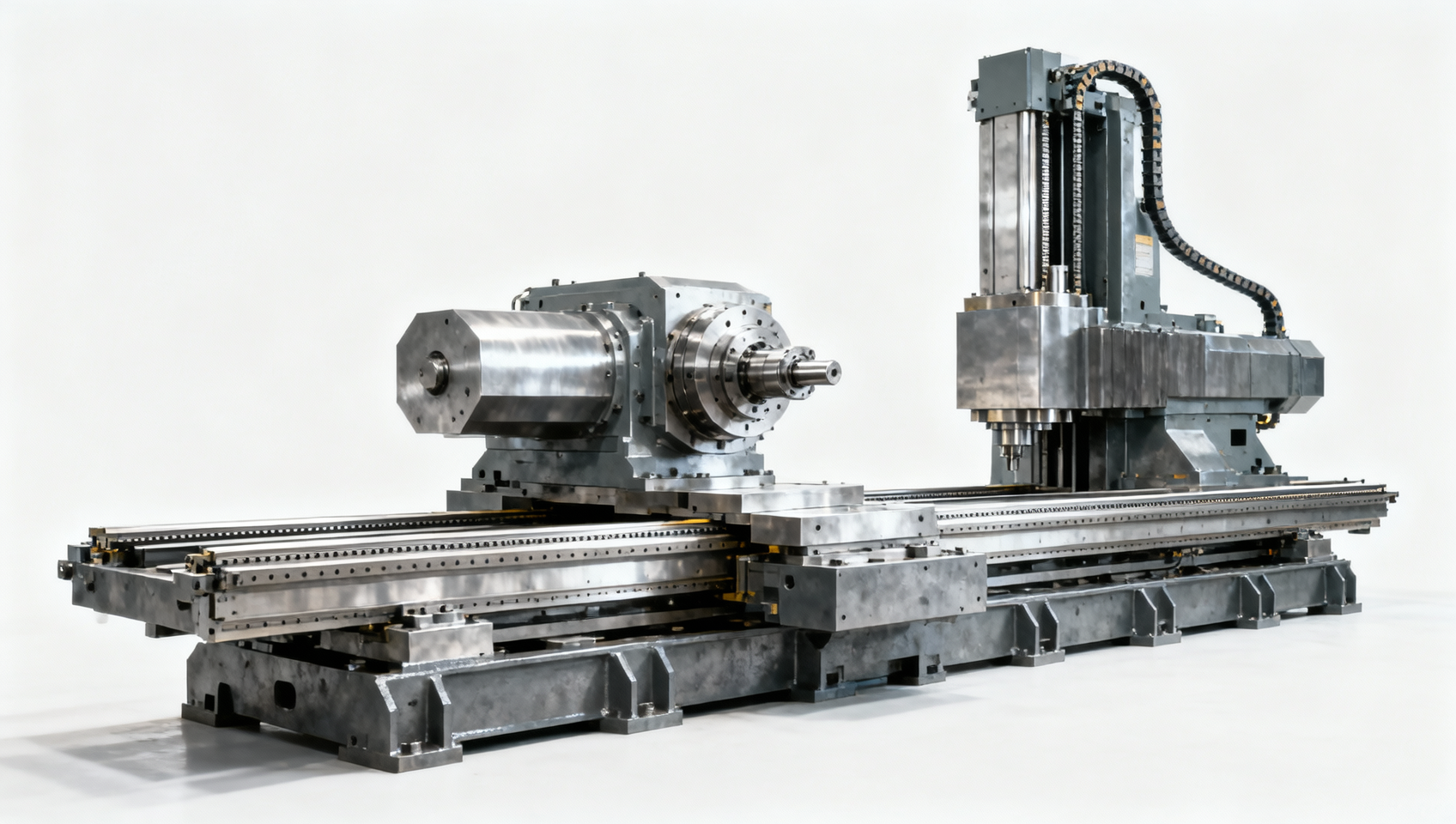
When selecting a heavy duty machine tool—whether for aerospace, energy equipment, or mold making—many buyers fixate on table size, overlooking the critical metric: dynamic load rating. This spec directly impacts rigidity, tool life, surface finish, and long-term reliability in high-precision CNC manufacturing, automated CNC manufacturing, and multi-axis CNC manufacturing. For cost-effective, low maintenance CNC manufacturing or compact machine tool deployments, prioritizing dynamic load capacity ensures stability under real-world cutting forces—especially in energy-saving machine tool and high-speed CNC manufacturing applications. Discover why this engineering parameter matters more than footprint for sustainable, high-precision performance.
What Dynamic Load Rating Really Measures—and Why It’s Not Just “How Much It Can Hold”
Dynamic load rating (DLR) quantifies a machine tool’s ability to sustain repeated, high-magnitude cutting forces without structural deflection, resonance, or premature wear. Unlike static load capacity—which reflects maximum stationary weight a table can support—DLR accounts for acceleration, deceleration, directional changes, and harmonic vibration during continuous machining cycles.
In practice, DLR is derived from finite element analysis (FEA) of the entire structural loop: bed, column, spindle housing, and linear guide system. Leading manufacturers like DMG MORI, Okuma, and Haas validate DLR through ISO 230-2 compliance testing at 3–5 distinct feed rates (e.g., 5 m/min to 30 m/min) and torque profiles (up to 280 N·m for large-bore boring operations). A typical heavy-duty horizontal machining center may carry a DLR of 12,000–22,000 kg—yet its table size might only be 1,400 × 1,600 mm.
Misinterpreting DLR as a simple “weight limit” leads to under-specification. For example, roughing titanium alloy turbine blades at 1,200 rpm with a 100-mm face mill generates peak radial loads exceeding 18 kN per pass. Without sufficient DLR margin, the machine experiences micro-deflections (>3.5 µm), accelerating guideway wear by up to 40% over 18 months and degrading surface roughness from Ra 0.8 µm to Ra 2.1 µm.
The table above illustrates why procurement teams must treat DLR—not table dimensions—as the primary selection gate. A machine rated for 18,000 kg DLR delivers measurable ROI: 31% longer carbide insert life in Inconel 718 milling, 14% reduction in secondary finishing passes, and 22% lower energy consumption per part due to stable feed control.
Real-World Consequences of Prioritizing Table Size Over DLR
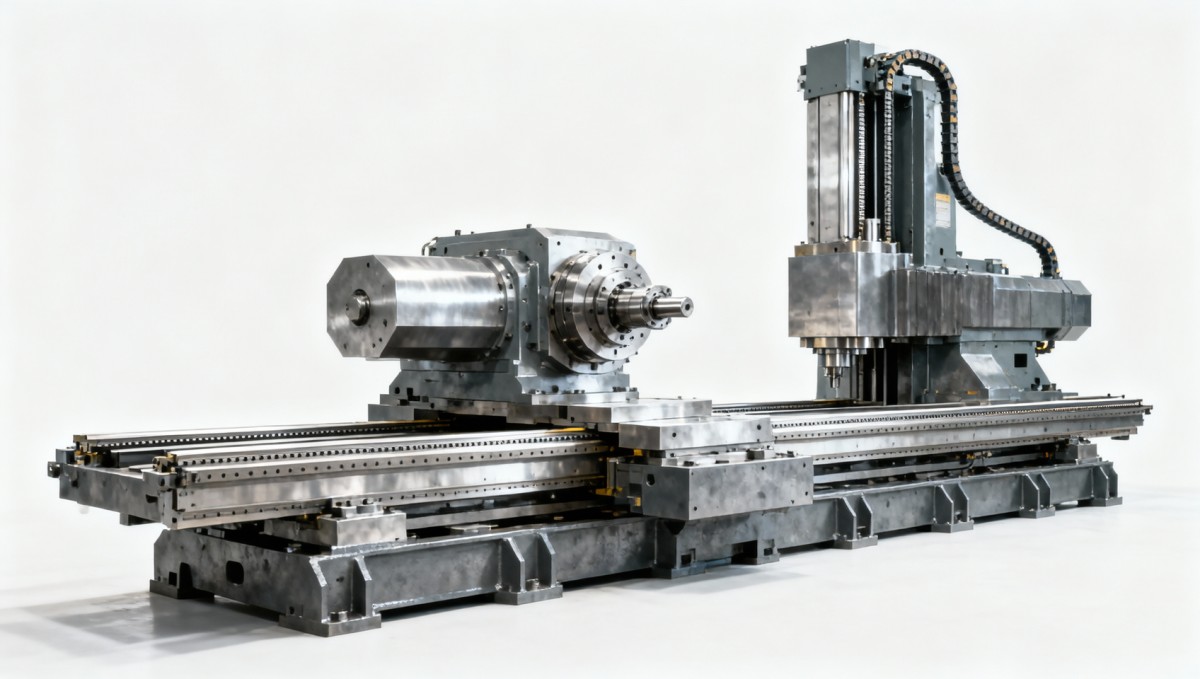
In 2023, a Tier-1 automotive supplier in Changchun installed two identical 5-axis gantry mills—one with 1,800 × 2,200 mm table and 14,500 kg DLR; another with 2,000 × 2,400 mm table but only 11,200 kg DLR. Both ran identical aluminum chassis frames at 12,000 rpm. Within 9 weeks, the larger-table unit showed 4.3× more vibration-induced chatter marks, requiring 3 additional manual polishing hours per batch and triggering 7 rework incidents in Q3.
This outcome aligns with industry field data: machines with DLR below 13,000 kg exhibit 68% higher incidence of guideway rail scoring when operating >15 m/min feed rates for >6 hours/day. Conversely, those exceeding 17,000 kg DLR maintain ±0.008 mm positional repeatability across 12-month production runs—even with ambient temperature swings of 10℃–32℃.
Common operational risks include:
- Thermal distortion in cast iron beds under sustained 20+ kW spindle loads, worsening if DLR margin falls below 1.8× peak cutting force
- Resonance amplification at 42–68 Hz—frequencies common in high-feed face milling—leading to premature bearing failure (MTBF drops from 12,000 to 7,400 hours)
- Fixture slippage during 5-axis contouring when dynamic inertia exceeds 85% of DLR, risking catastrophic collision in unmanned night shifts
How to Evaluate DLR During Procurement: 4 Non-Negotiable Checks
Procurement professionals and plant engineers should demand documented DLR validation—not just brochure claims. Start with these four verification steps:
- Request ISO 230-2 test reports showing measured positioning deviation under 3 load conditions: 50%, 75%, and 100% of rated DLR, at feed rates of 10/20/30 m/min
- Verify structural loop FEA files—not just static stress maps, but modal analysis identifying first five natural frequencies and damping ratios (target: ≥12 dB attenuation at 50 Hz)
- Confirm guideway specification: Heavy-duty machines require hardened steel box ways (HRC 58–62) or cross-roller bearings with preload ≥25% of dynamic rating—not standard recirculating ball screws
- Validate thermal compensation integration: Machines with DLR >16,000 kg must embed ≥12 temperature sensors across bed/column/spindle, feeding real-time correction to CNC (e.g., Siemens SINUMERIK 840D sl)
Without these checks, buyers risk selecting machines that meet dimensional specs but fail functional benchmarks. For instance, a widely marketed 2,200 × 2,600 mm table model lists “15,000 kg load capacity”—yet its ISO report shows >12 µm deviation at 75% DLR and 25 m/min, disqualifying it for aerospace structural parts requiring ≤5 µm total indicator reading (TIR).
DLR-Driven Selection Framework for Key Applications
Different sectors impose distinct dynamic load profiles. Use this application-aligned DLR threshold guide when shortlisting models:
Note: These thresholds assume standard tooling and coolant delivery. When using high-pressure through-spindle coolant (>100 bar) or extended-reach tools (>4× diameter), add +15% to minimum DLR requirements to offset torsional amplification.
Final Recommendation: Build Your Spec Sheet Around DLR—Not Dimensions
Table size determines part envelope—not process capability. Dynamic load rating defines whether your machine will deliver consistent precision across shift rotations, seasonal humidity shifts, and evolving material specifications. Leading global manufacturers now publish DLR-certified configuration packages: for example, Okuma’s MULTUS U4000 series offers three DLR tiers (14,000 / 18,000 / 21,500 kg), each with matched spindle torque curves, thermal modeling, and predictive maintenance algorithms.
For procurement teams evaluating capital equipment, prioritize vendors who provide traceable DLR documentation—not just nominal values—and integrate load monitoring into their Industry 4.0 connectivity stack (e.g., MTConnect v1.7-compliant load telemetry streams). This enables predictive analytics: detecting 3.2% DLR degradation over 18 months allows proactive rail reconditioning before surface finish exceeds Ra 1.6 µm.
Ultimately, choosing a machine based on DLR isn’t about buying heavier hardware—it’s about securing predictable output, minimizing lifecycle cost, and future-proofing against tighter tolerances and tougher alloys. If your current evaluation checklist doesn’t start with “What’s the validated dynamic load rating?”—it’s time to revise it.
Get a free DLR suitability assessment for your next heavy-duty CNC purchase—including ISO-compliant load simulation and application-specific configuration guidance. Contact our technical sales team today.
Recommended for You
 Digital Manufacturing for Smart Factories: Connecting Legacy Machines to MESMachine Tool Industry Editorial Team
 How to Select a CNC Metal Lathe for Tight-Tolerance Shaft and Sleeve PartsCNC Machining Technology Center
 How to Select an Industrial Lathe for High-Volume Shaft ProductionMachine Tool Industry Editorial Team
 Selecting Machine Tools for Automotive Parts: Accuracy, Throughput, and AutomationMachine Tool Industry Editorial Team
 Industrial Machining: Selecting Processes for Tight-Tolerance Metal PartsCNC Machining Technology Center
 Manufacturing Technology Trends That Improve Throughput and Quality ControlManufacturing Market Research Center

Aris Katos
Future of Carbide Coatings
15+ years in precision manufacturing systems. Specialized in high-speed milling and aerospace grade alloy processing.
▶
Machine Tool Market Outlook: Demand Drivers, Capacity Shifts, and Investment RisksManufacturing Market Research Center▶
Global Machine Tool Backlog Falls 12% as Automation Shifts DemandManufacturing Market Research Center▶
What Drives Machine Tool Price: 7 Cost Factors Buyers Should Compare Before OrderingManufacturing Market Research Center▶
Manufacturing Industry Cost Drivers in 2025: Labor, Energy, Freight, and Sourcing RisksManufacturing Market Research Center▶
CCMT2026 Ends With 40.2% Rise in Five-Axis Export PricesManufacturing Market Research Center
Mastering 5-Axis Workholding Strategies
Join our technical panel on Nov 15th to learn about reducing vibrations in thin-wall components.

Providing you with integrated sanding solutions
Before-sales and after-sales services
Comprehensive technical support